
Ámsterdam
Six Prides To Watch This Month: From Liberated Budapest To New York Under The Shadow Of Trump

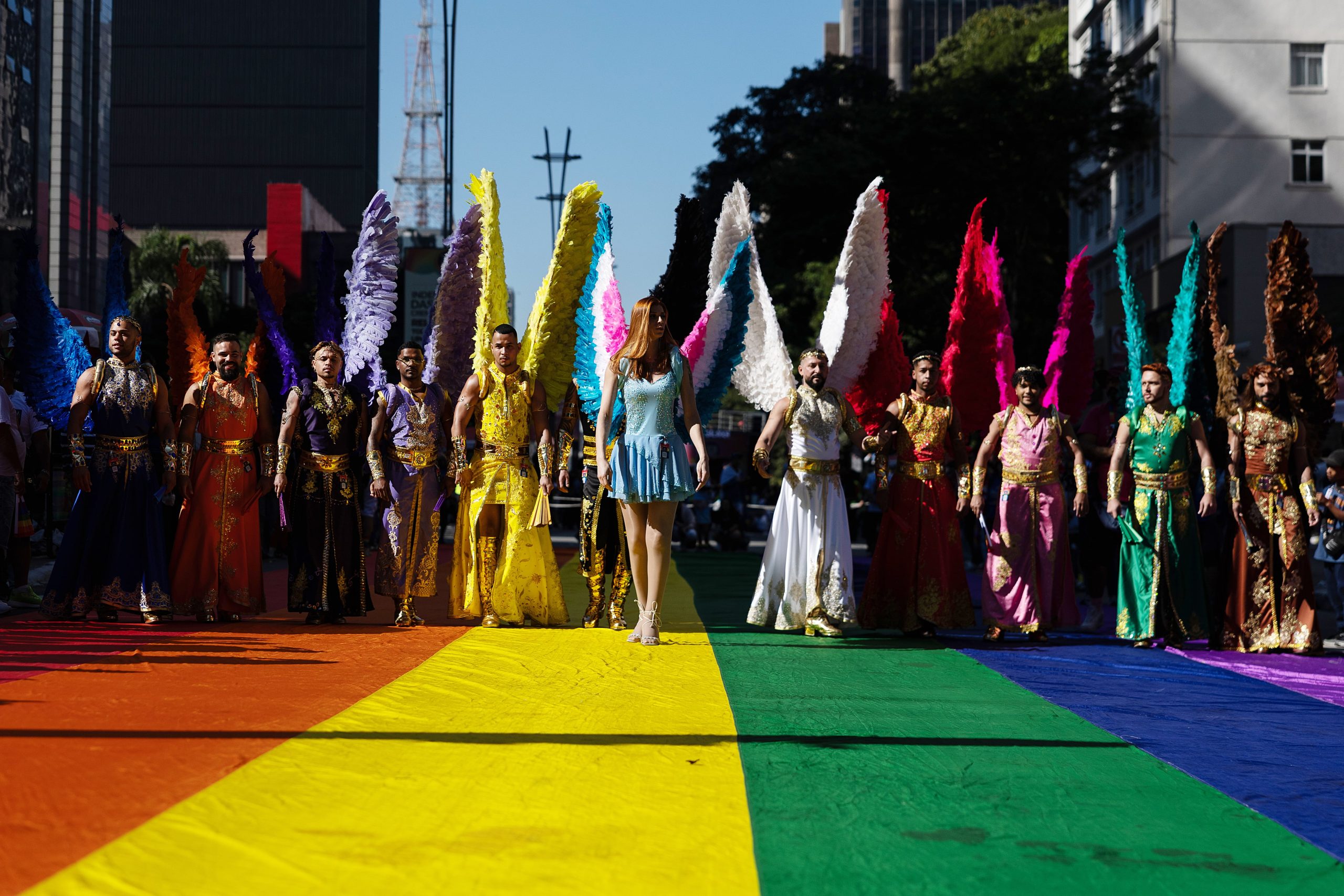
June is Pride Month for sexual and gender diversity. On June 28 the International LGBTQ+ Pride Day is observed in homage to the Stonewall uprising, which took place in 1969 in New York and is considered the cradle of the rights movement. Throughout the month —with some celebrations extending into July— rights are asserted, cultural events are scheduled and demonstrations are organized.
However, Pride is not celebrated the same way in every country. In some, in fact, nothing can be organized at all, as in Russia. In others, the festivities cannot conceal a certain unease over threats to the rights that have been gained so far. In São Paulo (Brazil), one of the largest Pride events in the world was held a few days ago, on June 7, with a political focus —the country holds general elections in October and the far right aspires to return to power. Thus the march’s slogan read, “the streets call, the polls confirm.”
Of all the Prides in 2026, six are of particular relevance.
Budapest (Hungary). This year’s Pride in Hungary’s capital is the first free from harassment and threats by the far-right government. After Viktor Orbán and his Fidesz party lost power, the 2026 demonstration is expected to be even larger than last year’s, when the far-right executive banned the event, threatened to detain the organizers, filed charges against the city’s mayor, Gergely Karácsony, and allowed several extremist rallies to be held along the route of the diversity march. In the end, Budapest Pride drew a record number of attendees —about 350,000, according to organizers, including EU politicians — and exposed the far right’s weakness, paving the way for its defeat.
This year, with the rule that prohibited the event revoked and the charges against Budapest’s mayor dropped, the demonstration will be held on Saturday, June 27, from 2.00 pm, culminating with the Rainbow Party at Budapest Park.
Oradea (Romania). Oradea is a Romanian city of just over 200,000 people in the Transylvania region, near the Hungarian border. Since 2023 the group Ark Oradea has held Pride in defiance of a ban that City Hall, led by mayor Florin Birta of the conservative National Liberal Party (PNL), seeks to impose. Last year, as in Budapest, city officials tried to ban the march. Nevertheless, more than 500 people demonstrated —illegally— for LGBTQ+ rights. This year the organizers face a similar situation.
“We are pleased to announce that on July 25, 2026 we will once again fill Oradea’s streets with smiles and colour, and deliver a clear message about the importance and strength we have together,” Ark Oradea said. Inspired by last year’s banned Pride in Budapest, they appeal to international solidarity and frame the march as support for democratic values, with special emphasis on freedom of assembly. “Oradea Pride is an invitation to dialogue, reflection and coexistence. It is essential to build a society in which every person can feel safe, respected and represented,” said the organisation’s president, Iulian Dițiu.
Although LGBTQ+ visibility is growing in Romania, the struggle for real equality remains arduous and complex, as discrimination and LGBTphobia persist. In Bucharest, Pride is not banned as it is in Oradea and moves forward, albeit with financial strains and various difficulties.
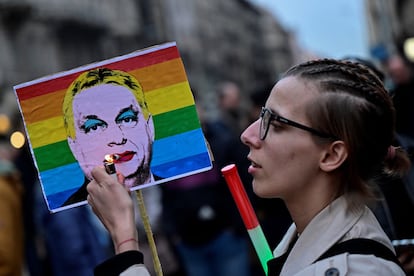
New York (US). In the United States, LGBTQ+ rights are in the crosshairs of the Donald Trump administration. Attacks from the MAGA universe have pushed respect for the community’s rights to its lowest point in years, mainly due to falling support among Republicans. In response to those attacks from the federal government, cities like New York offer refuge and care to LGBTQ+ people. “New York is proud of its LGBTQ+ community,” Mayor Zohran Mamdani said; he has created a municipal office to serve the community and appointed attorney Taylor Brown, the first transgender woman to lead a city department, to head it.
In this context, New York Pride, an icon as the birthplace of the rights movement and marking its 57th edition this year, has become an event to watch. “This past year we have learned that rights and Pride cannot be taken for granted,” said Im Lynde, executive director of NYC Pride. For the 2026 celebration they have therefore planned a program that will bring the community together not only in joy and celebration, “but also in the fight for equality.”
The march is scheduled for Sunday, June 28, starting at 12.00 pm, and begins at the intersection of Fifth Avenue and 26th Street.
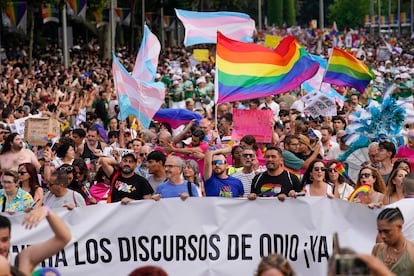
Madrid (Spain). Step by step, Madrid Pride has become an undisputed benchmark. In addition to drawing one of the capital’s largest demonstrations, with one million attendees and accommodation almost fully booked, this 2026 Pride takes place after Spain assumed the lead of the Rainbow Map compiled annually by ILGA, the international LGBTQ+ organization. That does not mean there is no longer room for demands: although legislation and the legal framework are favorable, “rights do not enforce themselves,” the State LGBTQ+ Federation reminds, calling for the approval of a national pact against hate speech and recognition of the rights of intersex and non-binary people.
Ahead of the demonstration, which will take place on July 4 under the slogan “Take to the streets with pride! Dissent and resistance,” cultural activities are scheduled, such as the Muestra-T series, which marks 20 years of championing queer culture, and La Oculta, coordinated by Cogam; events focused on human rights; and the traditional opening speech on July 1 in Pedro Zerolo Square in Chueca neighbourhood.
Mexico City (Mexico). Mexico City’s Pride march, held since the 1970s, celebrates its 48th year in a country that is is also hosting the FIFA World Cup as one of three host countries. Mexico City Pride is a benchmark for its tradition and its powerful, inspiring demands. This year’s chosen slogan is: “Before the world’s eyes: my struggle is your struggle. Equality, peace and solidarity!” There is also an official hashtag: #ElOrgulloPermanece. The march will be held on June 27, but in the days before and after there will be numerous activities to assert and make visible queer people and their rights.
Amsterdam (Netherlands). The world’s first same-sex marriage law was passed on April 1, 2001 in the Netherlands. A few years later Belgium (2003), Spain and Canada (both in 2005) followed. Thus the first gay and lesbian couples to marry in the world did so in April 25 years ago at Amsterdam City Hall. To mark the quarter-century anniversary of those weddings, the Dutch capital is hosting World Pride and EuroPride. Celebrations, from July 25 to August 8, will be grand, with protests, canal parties, film and music festivals, dozens of cultural events and two demonstrations: July 25 (the Pride Walk) and August 8 (the World Pride march).
Sign up for our weekly newsletter to get more English-language news coverage from EL PAÍS USA Edition








Ámsterdam
Scottish Mafia Boss Steven Lyons Vows To Fight Spain Extradition Ahead Of Crunch Amsterdam Court Hearing


 ONE of Scotland’s most notorious gangland bosses has vowed to fight his planned extradition to Spain after a humiliating arrest in Indonesia earlier this year. Arne Kloosterman, the lawyer of

California Is Suing The Trump Administration To Block A New ICE Facility

México – Sudáfrica, En Vivo | Comienza La Inauguración Del Mundial 2026 Con Shakira, Maná Y J Balvin
Última Hora De La Guerra De Estados Unidos E Israel Contra Irán, En Directo | Irán Desmiente A Trump Y Asegura Que No Ha Aprobado Ningún Acuerdo Con EE UU


-

 Uncategorized2 weeks ago
Montoya vs Brundle BEEF, Newey
-

 %2 weeks ago
Fake Hacienda Text Targets Taxpayers
-

 Africa1 week ago
Europe Enters The ‘era Of Deportations’
-
 %2 weeks ago
Tourist Begs Police Not To Fine Her After Swimming In The Trevi Fountain During Heatwave
-

 New Developments2 weeks ago
Luxury Villas For Sale, Estepona – ProjectL1
-

 Foreign demand2 weeks ago
German Demand For Spanish Property Cools After A Strong Run
-

 Alberto Fujimori4 days ago
Peru’s Roberto Sánchez And Keiko Fujimori Urge Caution As Vote Count Continues In Very Tight Presidential Election
-

 %2 weeks ago
Portugal Notifies Of Temporary Suspension Of EU Border Biometric Checks