Connect with us

Caracas

Early Data On The Devastating Twin Earthquakes In Venezuela

Published

on

early-data-on-the-devastating-twin-earthquakes-in-venezuela

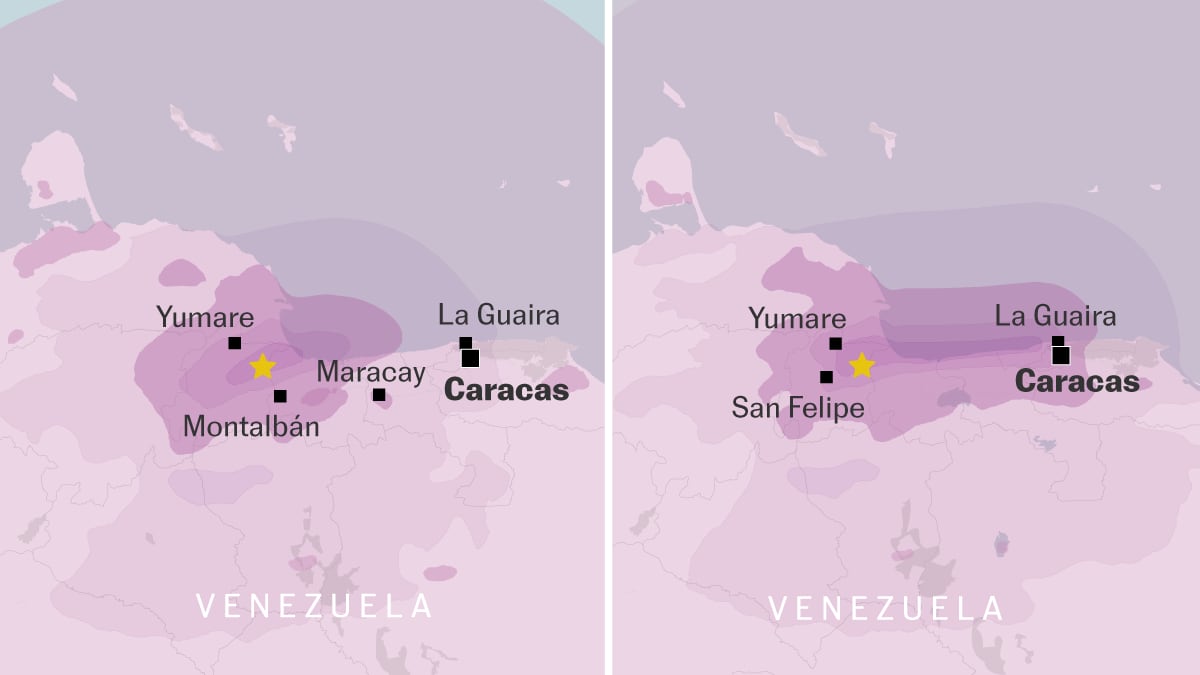
Two strong earthquakes, magnitudes 7.2 and 7.5, struck northern Venezuela at 6:05 p.m. local time. The first tremor’s epicenter was between the towns of Yumare and Montalbán.

But the more devastating quake came 39 seconds later, with an epicenter very close to the first and a magnitude 0.3 higher: 7.5 on the Richter scale. That difference may seem small, but it is not. Magnitude is a logarithmic scale. Measured by energy released, the second quake was almost three times more powerful than the first.

Death toll

Venezuela’s acting president, Delcy Rodríguez, reported that the death toll from the earthquakes has risen to 188, according to Reuters. However, the final figure could be much higher. The United States Geological Survey (USGS) provides estimates that combine the intensity of the quake with population density in the affected areas. According to its calculations, it is highly likely that the death toll will exceed 1,000 (92% probability), likely that it will surpass 10,000 (59%), and figures above 100,000 cannot be ruled out.

The population in this region lives in structures that are highly vulnerable to seismic shaking, according to the U.S. Geological Survey. The most common types of construction are unreinforced brick masonry and adobe block buildings.

The following table shows population centers with more than 1,000 inhabitants affected by the earthquakes, along with the level of intensity they experienced.

The largest quake of the century in the region

Today’s earthquake is the strongest recorded in more than 100 years in the seismic zone north of Venezuela. To surpass its magnitude of 7.5, one must go back to the 1900 earthquake, which reached 7.7 and struck the central coast — in Macuto, near Caracas — killing around 25 people. In 2018, there was a quake measuring 7.3, nearly as powerful, but it originated at a depth of almost 150 kilometers (31 miles) — too deep to cause major destruction — and resulted in just five fatalities.

A resident of La Guaira, José Rolón, told Spanish Television that the situation amounts to “total collapse.” “There’s no electricity, internet, water — no services at all,” he said.

Only people who, like him, have access to a satellite phone are able to communicate. He described widespread destruction: “The buildings that were there are gone, it’s as if there had been an explosion or a controlled demolition: there isn’t a single building standing.”

The scene is being repeated in Caraballeda, where many structures are also heavily damaged.

Sign up for our weekly newsletter to get more English-language news coverage from EL PAÍS USA Edition

Caracas

Two Shallow Quakes In 39 Seconds: Why Venezuela’s Earthquakes Have Been So Destructive

Published

on

two-shallow-quakes-in-39-seconds:-why-venezuela’s-earthquakes-have-been-so-destructive

Two powerful earthquakes less than 40 seconds apart struck Venezuela, causing widespread destruction and killing more than 160 people on Wednesday. The U.S. Geological Survey (USGS) estimates that the final death toll could reach into the tens of thousands. The agency also warns that aftershocks are almost certain, with nearly a 30% probability that they could exceed magnitude 6 on the Richter scale.

Its automated hazard assessment system has flagged potential landslides and liquefaction — a phenomenon that can cause buildings to sink into the ground, as has occurred in earthquakes in Japan. The USGS estimates a 42% probability that the death toll could range between 10,000 and 100,000, with economic losses of between $10 billion and $100 billion.

Venezuela is a high seismic-risk zone. It lies near the boundary between the Caribbean and South American tectonic plates, which move in nearly opposite directions, building up seismic tension. The two earthquakes occurred along the Boconó fault, one of the most active and dangerous in the country. At present, around 80% of the population lives in areas of high seismic hazard, a factor that increases overall risk — intensifying as population density rises and infrastructure investment expands — according to the Venezuelan Foundation for Seismological Research.

The first foreshock measured magnitude 7.2 and struck at a depth of 12.4 miles. Just 39 seconds later, a second, larger quake of magnitude 7.5 hit at a depth of 6.2 miles. Both tremors occurred southeast of Yumare, in northwestern Venezuela.

Northern Venezuela has a history of large, destructive earthquakes. However, within a 155-mile radius of this Wednesday’s twin quake — recorded at 6 p.m. local time — only seven earthquakes of magnitude 6 or higher had been recorded over the past century.

The region recently experienced another doublet in September 2025, consisting of a magnitude 6.2 earthquake followed by a 6.3 event to the west-southwest of the most recent tremors. That 2025 sequence caused at least one fatality, more than 110 injuries, and extensive structural damage in the states of Zulia and Lara.

In September 2009, a magnitude 6.4 earthquake east-northeast of Morón injured 18 people and damaged buildings, and a magnitude 6 event in 1989 caused light damage in the Valencia area. Further west, a magnitude 6.1 quake shook the region in April 1975.

The most devastating modern earthquake in the vicinity was the July 1967 Caracas quake (magnitude 6.6), with an epicentre about 81 miles to the east. It caused roughly 240 deaths, hundreds of injuries, and led to the collapse of multiple high-rise residential buildings and widespread destruction. In a broader Venezuelan context, there have been five earthquakes of magnitude 7 or greater in the country’s north or near the coast since 1900.

In 1812, during Venezuela’s fight for independence from Spain, another devastating earthquake originating on the Boconó fault struck the country, causing some 30,000 deaths, according to the United States Geological Survey.

“Not only was the energy high, but the quakes were also very shallow, especially the second, which is devastating,” says Miguel Ángel Rodríguez Pascua, director of the Geological Hazards Department at the Geological and Mining Institute (IGME-CSIC). “Venezuela’s tectonic situation is dominated by the boundary between the Caribbean plate and the South American plate, an active contact that creates a roughly 100-kilometre-wide [62-mile] seismic belt where most of the country’s earthquakes are concentrated.”

IGME geologist Raúl Pérez notes: “This type of earthquake is not common in this configuration, and worse, they are tremendously damaging.”

The two quakes were so close together that people felt them as a single long earthquake.

“Normally, when one quake is followed by a second, the epicentres are separated by hundreds of kilometres, which spreads out the damage,” he says. “In this case, the area of greatest intensity overlaps. And on top of that, they occurred right at the confluence of two faults, the San Sebastián and Boconó faults, which have high tectonic slip rates and a huge capacity to store energy. Bear in mind that this confluence had not been active since 1900, so it had been building up tectonic energy for 100 years that was released in these two quakes that happened, let’s say, one on top of the other.”

The Boconó fault runs for about 310 miles through the Andes mountain range. Numerous faults converge with or diverge from its main axis. It extends across western Venezuela in a southwest direction between the town of San Cristóbal, near the Colombian border, and Morón on the Caribbean coast of Golfo Triste.

Pablo Silva, chair of Geological Hazards at the University of Salamanca, explains that the Boconó fault passes through the middle of Caracas, a city of about three million people with many high-rise buildings. “Automatic casualty estimates are made based on population and using the capital’s building types as a baseline, but those building types are actually very different in the rural areas also hit by the quake, which could significantly raise the final casualty count,” he says.

The seismologist explains that although a doublet like this Wednesday’s was “to be expected,” “you are never prepared for something like this.” On the possibility of preventing earthquake impacts, he says there is only one sure method: enact and enforce seismic-resistant building standards. He points to the 2010 Haiti earthquake, magnitude 7.2, which caused about 300,000 deaths because of the poor state of buildings. By contrast, he says, a similar quake years later in San Francisco, where structures are earthquake-resistant, caused negligible fatalities.

Sign up for our weekly newsletter to get more English-language news coverage from EL PAÍS USA Edition

Continue Reading

America

El Terremoto En Venezuela, En Vivo | Dos Potentes Terremotos Sacuden El País Dejando Al Menos 164 Muertos Y Un Millar De Heridos

Published

on

By

Dos fuertes terremotos de magnitudes 7,2 y 7,5 han sacudido el norte de Venezuela. Los sismos se han producido en torno a las 18.04, hora local (medianoche en la España peninsular). La presidenta, Delcy Rodríguez, ha confirmado que hay al menos 164 muertos y un millar de heridos.El Servicio Geológico de Estados Unidos (USGS) ha publicado un informe en el que estima que existe una posibilidad del 42% de que las víctimas mortales de los terremotos en Venezuela estén entre 10.000 y 100.000. Rodríguez ha añadido que La Guaira, un estado costero en el norte del país y cercano a Caracas, es el más afectado con “decenas” de edificios colapsados. “Podemos decir que el estado La Guaira es una verdadera tragedia y se convierte en una zona de desastre”, ha dicho Rodríguez.

Seguir leyendo

Continue Reading

Caracas

Powerful Twin Earthquakes Kill At Least 164 People, Injure 1,000 In Venezuela

Published

on

By

powerful-twin-earthquakes-kill-at-least-164-people,-injure-1,000-in-venezuela

Two powerful earthquakes of magnitude 7.2 and 7.5, just 39 seconds apart, struck several regions of northern Venezuela on Wednesday afternoon, killing at least 164 people and injuring upwards of 1,000, according to the latest government figures.

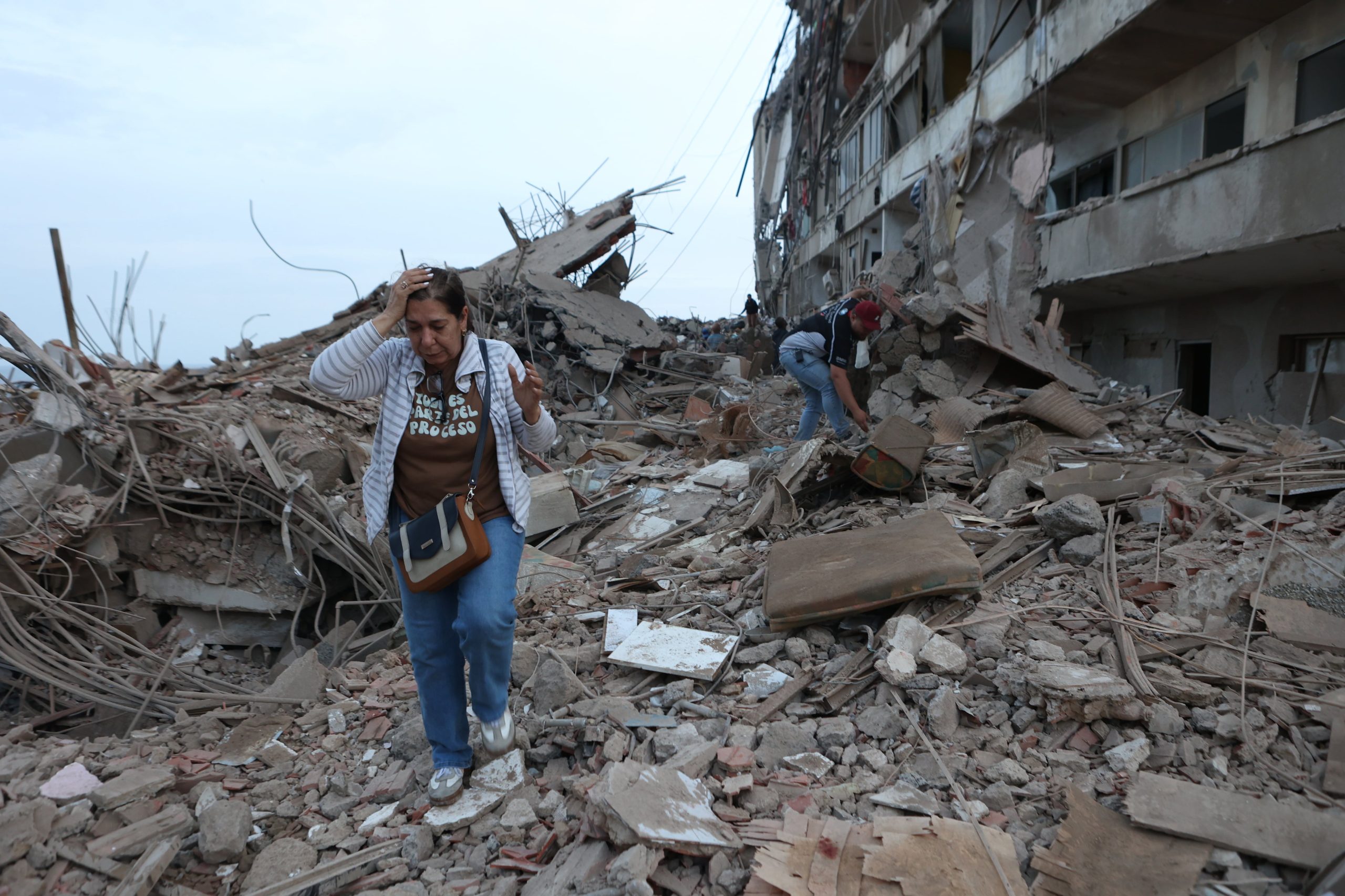
This figure does not include the coastal state of La Guaira, at the epicenter of the tragedy, where dozens of buildings have reportedly collapsed and the extent of the damage remained unclear early Thursday morning.

The U.S. Geological Survey (USGS) has published a report estimating that there is a 42% chance that the number of fatalities could be between 10,000 and 100.000.

Acting president Delcy Rodríguez has declared a state of emergency and warned that the fatality count will almost certainly rise as crews rush to pull people from the rubble of collapsed buildings. “We can say that the state of La Guaira is a real tragedy and has become a disaster zone,” said Rodríguez.

The tremors were among the strongest to strike Venezuela in more than a century, and were felt as far as Brazil’s Amazon about 1,700 kilometers (1,050 miles) from Venezuela’s capital Caracas, where the roof of the Simón Bolivar international airport has caved in. Subway and natural gas services in Caracas have been canceled, the government said.

Venezuela’s plight has triggered a flood of offers for help from various countries in the region, including the United States.

A “seismic doublet”

The epicenter was located northwest of the municipality of Montalbán, in the state of Carabobo in central Venezuela. The tremor also reached the capital, Caracas, some 300 kilometers east from the epicenter. The U.S. National Tsunami Warning Center said the two quakes formed a “seismic doublet” — a phenomenon in which two large earthquakes occur within seconds of each other in the same area.

“A seismic event has occurred that all indications suggest exceeded magnitude 7,” Interior Minister Diosdado Cabello announced shortly after the quake. “It was felt most strongly in Trujillo, Yaracuy, Carabobo, Aragua, Miranda, Caracas and La Guaira.” Cabello confirmed that buildings had collapsed in Caracas and that several areas of the capital faced “alarming” situations, including Palos Grandes —a known seismic zone— and Altamira, where at least one building collapsed entirely. In Caracas, the roof of Maiquetía airport caved in and all flights have been cancelled. The minister urged residents not to stay indoors due to the risk of aftershocks. The number of injured remains unknown, and it is unclear whether there are any fatalities. Venezuela’s acting president, Delcy Rodríguez, has announced that she will hold a press conference “shortly” after 9 p.m., local time, to provide an update on the situation.

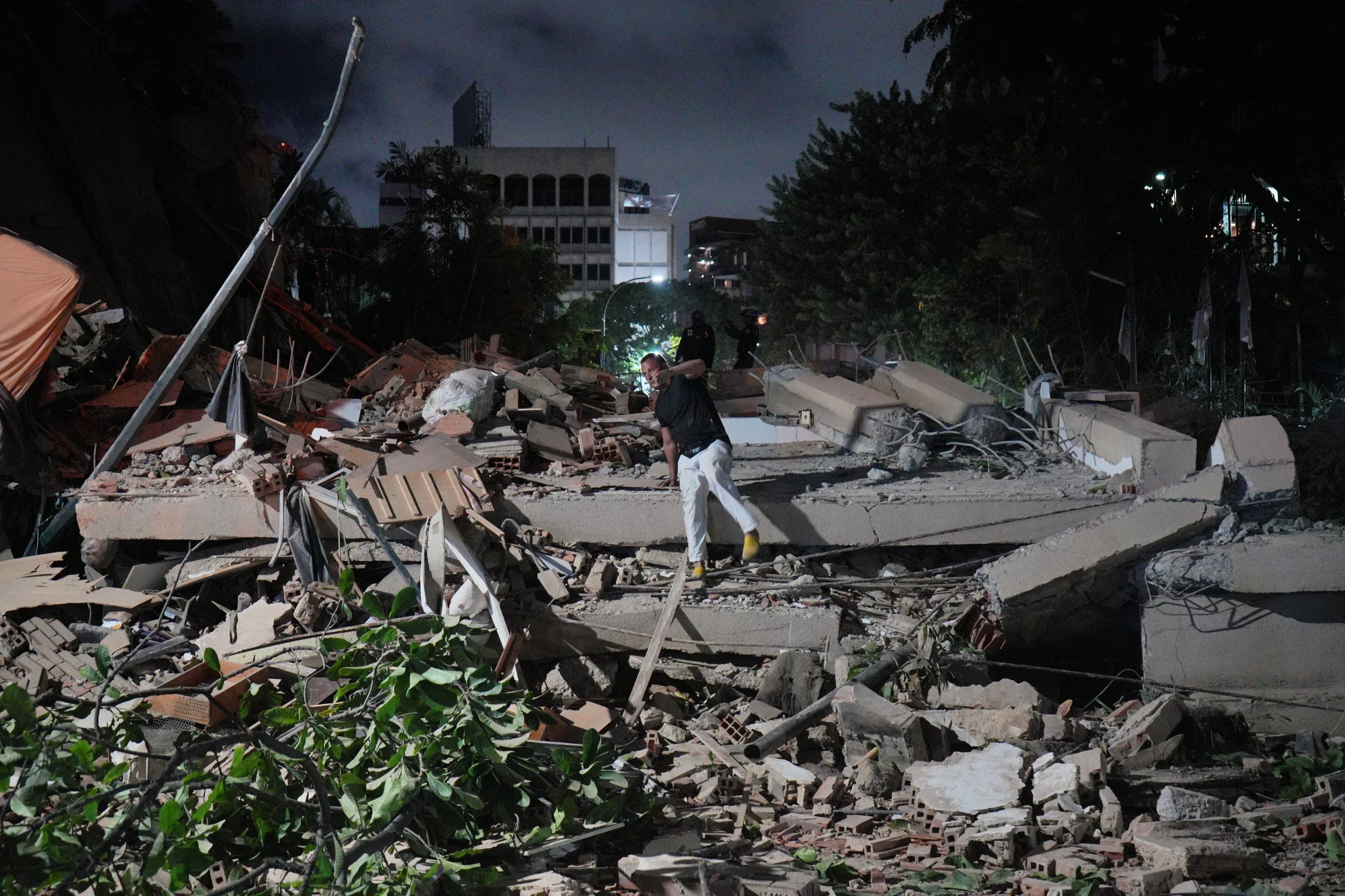
Residents rushed to evacuate as the earthquake shook the buildings. Videos that have emerged of the earthquake in Caracas show several collapsed structures, as well as others that were severely damaged. “We were on the street and had to hold on to cars,” Michael Alicastro said, describing the tremor. He helped rescue five people and a pet from a 14-story building that had collapsed. That residential complex has two towers, but only one collapsed.

Rescue workers, mostly police officers, lack equipment. They are asking for ropes and flashlights. Family members of residents from the collapsed building are shouting out names beside the rubble. “Antonio is alive!” shouted a desperate woman who managed to get in touch with someone inside the building. Meanwhile, other neighbors have gone inside to help see if they can find more people. The Venezuelan government announced in a statement that, as a preventive measure, it has authorized the shutting off of the direct gas supply to “some buildings because certain structures are damaged and the necessary assessments must be carried out.”

The U.S. Geological Survey, which monitors and documents earthquakes worldwide, estimates that the powerful quake will result in a high death toll. The agency anticipates extensive property damage in the areas of Puerto Cabello, San Felipe, and Ocumare de la Costa—three of the regions where the tremor, which occurred at a depth of 13.2 kilometers, was felt most strongly. Meanwhile, the U.S. Tsunami Warning System issued a tsunami warning for Puerto Rico and the U.S. Virgin Islands following the earthquake but later canceled it.

Javier, 53, who lives in La Candelaria, in downtown Caracas, is staying informed through what he hears from acquaintances, sees on the streets, and on some social media platforms: “When you turn on the TV, no channel is reporting what’s happening. There’s no official information; we don’t know how many people are affected or how they’re organizing to help. You don’t see any police or firefighters on the streets.” The walls of their homes are cracked and the windows are broken. When he and his wife went out onto the street —a few minutes after the earthquake— they saw a column of dust rising several meters from where they were standing, which they assume was caused by the collapse of a building.

“I was driving down the highway and it felt as if I’d run over someone,” says Favio, a driver from Caracas. “Then everyone started coming out of the buildings; several walls cracked and things fell down,” says another witness from the capital.

Caracas suffered a strong earthquake—the strongest to date—in 1967, which left 236 dead and about 2,000 injured. It had a magnitude of 6.7 on the Richter scale.

María José del Pino, a veterinarian, felt the earthquake at her home in Chivacoa, in the northern part of the country. “I felt the earthquake while I was having a snack with my children, and I heard a loud noise; I thought it was a truck parking outside, and I found that strange. But soon everything started shaking: people were running through the streets in fear, and some were screaming. We’re still out on the street; we don’t want to go back inside our homes for fear they might collapse, because the structures of many houses in Venezuela are fragile,” she said. “We don’t have cell service, just Wi-Fi. And we don’t know what happened to our families in Caracas, because we can’t reach everyone. An uncle of mine, who was in downtown Chivacoa, told me he could see the utility poles and power lines swaying.”

So far, several Venezuelan political figures have reacted to the news. “My prayers are with every Venezuelan household during these hours of anguish,” wrote María Corina Machado, who called for unity and solidarity in the face of the catastrophe. Edmundo González denounced on social media “the information blackout” that is preventing people from obtaining information about the extent of the two earthquakes: “Venezuelans abroad cannot know if their families are safe. Those inside the country do not understand the magnitude of what happened. Uncertainty adds another layer of anguish, and it’s not just a network outage: it’s the systematic and prolonged information blockade that Venezuelans are experiencing.” Juan Guaidó, the Venezuelan opposition leader in exile, also reacted: “I sincerely hope that those who need help will receive it soon and that the coming hours will bring certainty for everyone.” On the international stage, Nayib Bukele, the president of El Salvador, has expressed his concern for the Venezuelan people: “We send them all our solidarity and our prayers.”

Continue Reading
Advertisement
Advertisement

Spanish Real Estate Agents

Tags

Trending

Copyright © 2017 Spanish Property & News