Connect with us

%

Santa Ponsa Venue Change Sparks Criticism

Published

on

santa-ponsa-venue-change-sparks-criticism

A long-time visitor to Santa Ponsa has criticised this year’s Fiestas del Rocío after the celebrations were moved from their traditional beachfront setting, claiming the change left the resort noticeably quieter and disappointed many regular attendees.

The reader contacted Euro Weekly News following last weekend’s festival, saying they felt compelled to speak out after attending the event, which has become a popular fixture in Santa Ponsa’s annual calendar. The Fiestas del Rocío, inspired by the famous Andalusian pilgrimage, typically bring together live music, dancing, food stalls and traditional dress, attracting residents and visitors alike.

According to the resident, who says they have attended the celebrations for around 20 years, relocating the festivities from the usual beach area to a nearby car park dramatically changed the atmosphere.

“I’ve been coming to the two main fiestas in the resort for 20 years now and am still shocked at what I witnessed,” they wrote.

Comparison photos highlight concerns

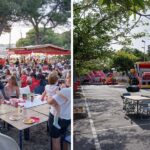
The reader also supplied comparison photographs from this year and last year’s event, saying they illustrate the difference in visitor numbers.

They described arriving in the town centre at around 6.30pm on Saturday and said the area was “deserted”, adding that the decision to move the celebrations “simply beggars understanding.”

The resident said they could have listed several organisational issues but felt the most obvious impact was the lack of people in the resort’s main streets during what is usually one of Santa Ponsa’s busiest weekends of the year.

Businesses reportedly felt the impact

The reader also claimed nearby businesses appeared to suffer as a result. They said the restaurant where they traditionally dine during the festivities was only half full, despite usually being surrounded by bustling market stalls and crowds of visitors.

“I chatted to the owner. It was very clear that she wasn’t happy with the so-called arrangements,” the reader said.

The email concluded with a call for the organising committee to reflect on this year’s event, with the resident arguing that “the big loser in this disaster has got to be Santa Ponsa itself.”

What do you think?

The comments represent the views of one festivalgoer. Euro Weekly News would be interested to hear from other residents, visitors and local businesses about their experiences of this year’s Fiestas del Rocío and perhaps next year, the community voice can be heard.

%

Cancer Charity Gala And Golf Tournament

Published

on

cancer-charity-gala-and-golf-tournament

Marbella biggest charity weekend against cancer returns with a golf tournament and a landmark 41st gala dinner. Organised by the Spanish Association Against Cancer (AECC), the double bill will bring together hundreds of residents, businesses and institutions on Friday, July 31 and Saturday, August 1, with every euro raised going towards free support programmes for cancer patients and their families.

Council backs “essential” local charity

Social rights councillor Isabel Cintado praised AECC’s work as vital to the community. She highlighted the year-round efforts of staff and volunteers who provide emotional support, social assistance and specialist resources all free of charge, urging residents to get involved since every contribution helps.

AECC Marbella president Santiago Gomez-Villares noted that funds raised from the event sustain services benefiting hundreds of families annually. Last year, the local branch supported 462 patients and 135 relatives, delivering 2,318 care sessions, 847 psycho-oncology sessions for 290 patients, and 732 oncological physiotherapy sessions for 171 users, as well as social support for 127 people.

Politician Borja Semper to collect ‘The Fighter’ award

This year will be the 41st gala, and is among Spain’s oldest charity dinners. The goal is to attempt to draw more than 600 guests at Finca de la Concepcion. National PP deputy Borja Semper will receive the association’s ‘The Fighter’ award, recognising his role in normalising conversations around cancer and giving hope through his own testimony. Hosts Eva Ruiz and Poty Castillo return for another year, with performances from Efecto Mariposa and The Vintage Experience, plus a traditional raffle and charity auction. Comedian Federico de Juan joins the event to assist with the auction.

Golf tournament gathers 120 players at Las Brisas

Proceedings kick off a day earlier at Real Club de Golf Las Brisas, where 120 players will compete in a Better Ball Pairs Stableford format on July 31. Entry costs €130 with a shared buggy for non-members, or €30 without one for club members, participants receive a welcome pack and trophies made from recycled plastic via the Ecomarb sustainability project.

If you would like to participate in this incredible event, tickets and tournament entries can be booked by calling 952 776 800, weekdays from 9am to 2pm.

Continue Reading

%

Valuable Sorolla Painting Left On Sevilla Pavement Picked Up After Passerby Liked Frame

Published

on

valuable-sorolla-painting-left-on-sevilla-pavement-picked-up-after-passerby-liked-frame

a family had placed the painting outside their home. Photo credit: Kirk Fisher/Shutterstock

A valuable painting by Spanish artist Joaquín Sorolla has been recovered after it has an unexpected journey from a pavement in Sevilla to a home in Murcia and back again, after a brief moment of confusion during a family trip led to one of Spain’s more unusual art recoveries of the week. It all began on Calle Rafael González Abreu, where a family had placed the painting outside their home while loading a car for a holiday.

It was meant to be a temporary move, something set down for just a moment. But in that short gap, it was forgotten. A passerby walking through the area stopped when he saw it. Later identified as Andrés, a visitor staying in central Sevilla assumed it had been left behind or discarded. What caught his attention first was not the painting itself, but the frame, which he later described as decorative and worth a closer look. He picked it up and took it back to his hotel. By the time the family realised something was wrong, the painting was already gone.

A mistake during a holiday departure

The family had been preparing to leave Sevilla when the incident happened. The painting was placed outside briefly while they loaded luggage into their car. It was not intended to be left unattended, only set down during the final stages of leaving. That short window was enough. Once they reached their destination, they noticed the painting was missing. At first, there was confusion about where it had been left, then concern when it became clear it was not inside the home or the vehicle,

From Sevilla to Murcia

Unaware of the urgency developing in Sevilla, Andrés continued his journey with the painting and later returned to Murcia with it. At that point, he still believed it was most likely a decorative piece that had been left outside by mistake. It was only after spending more time with it that doubts began to form. From his home in Murcia, curiosity led him to search online for similar works. He compared images, styles, and possible artists using digital tools to narrow down what he had found. The name that repeatedly appeared was Joaquín Sorolla.

Realisation after online search

Sorolla is one of Spain’s most recognised painters, known for capturing natural light in coastal and everyday scenes. As Andrés continued his search, the possibility that the painting could be linked to him became harder to ignore. What had started as a casual find on a pavement in Sevilla now looked more significant. Once he saw that the painting might be connected to a missing artwork being discussed in reports, he contacted police to report that he had it in his possession.

Recovery of the Artwork

Police sources confirmed that Andrés called on Monday afternoon to say he had the painting at his home in Murcia after recognising its possible importance. Officers said initial checks suggested it matched the missing Sorolla work, although verification was still required at that stage. A unit travelled from Sevilla to Murcia to inspect the painting directly and confirm its identity. The family in Sevilla were also informed that the artwork had likely been located, bringing the search into its final stage.

Search and posters in Sevilla

Before the painting was traced, the family had launched their own search. Posters were placed around Sevilla in both Spanish and English asking for help locating the missing artwork. They described it as a piece of strong sentimental value and offered a reward for its return. No mention was made at that point of its artistic significance, with the focus kept on recovering a family item rather than identifying its origin.

Who was Sorolla

Joaquín Sorolla (1863–1923) remains one of Spain’s most important painters. His work is known for its ability to capture natural light, particularly in coastal scenes and everyday life across Spain. His paintings are held in major museums and collections across Europe and the United States, and continue to attract strong interest due to his influence on Spanish art history. Even works outside his most famous series are treated as culturally significant because of his reputation and legacy.

A chain of small decisions

A moment during a move in Sevilla quickly became something more complicated, as a painting placed briefly on a pavement was mistaken for something discarded, picked up for its frame, and taken to Murcia before anyone realised what had happened.

From there, a few online searches, a closer look at the painting, and a phone call to the police were enough to bring it back into official hands. It was not theft, nor intention, just a series of small decisions made in passing that carried a Sorolla painting from one city to another and back again, ending where it began, on a family wall in Sevilla.

Continue Reading

%

Could Wearable Air Conditioning Become The Next Summer Essential In Spain?

Published

on

could-wearable-air-conditioning-become-the-next-summer-essential-in-spain?

Most battery-powered cooling clothing can run for several hours before needing to be recharged. Photo credit: Freer/Shutterstock

Spain is once again enduring another summer of relentless heatwaves, with soaring temperatures making everyday life increasingly uncomfortable. Whether you’re working outdoors, sightseeing or simply walking to the shops, staying cool in hot weather is becoming more of a challenge as periods of extreme heat grow longer and more frequent. In response, companies are experimenting with clothing that actively cools the body, almost like wearing a personal air conditioner, in the hope of helping people cope with a warming climate.

One of the latest examples comes from Adidas, which has teamed up with fashion designer Rick Owens to unveil a futuristic cooling jacket. While the concept has attracted attention for its striking appearance, it is really part of a much bigger trend. Rather than creating the next fashion statement, companies are exploring how wearable air conditioning and wearable cooling technology could help people stay safer and more comfortable during increasingly hot summers.

Why companies are developing cooling clothing

Climate experts have warned that southern Europe is becoming increasingly vulnerable to longer, more frequent and more intense heatwaves. Spain has already experienced repeated periods of dangerously high temperatures this summer, prompting health alerts and renewed concerns about the risks of heat exhaustion and heatstroke.

While advice such as drinking plenty of water, staying in the shade and avoiding the hottest part of the day remains essential, these measures are not always practical for people who work outdoors. That is driving interest in new technologies that can help reduce heat stress, particularly as climate change makes extreme weather more common.

How the technology works

The Adidas concept uses built-in miniature fans alongside the company’s Climacool technology to circulate air around the body. By increasing airflow, the jacket helps sweat evaporate more efficiently, creating a cooling effect while the wearer is moving.

The project also includes a cooling vest developed for athletes competing in extreme heat, helping to lower body temperature before events in hot conditions.

Although the design looks futuristic, the underlying idea has been around for years. In Japan, battery-powered fan jackets have long been used by construction workers, factory employees and other outdoor labourers to make physically demanding jobs more comfortable during hot, humid summers.

It’s not just one futuristic jacket

Wearable cooling technology already extends well beyond the Adidas concept. Fan-powered work jackets, evaporative cooling vests, phase-change garments that absorb body heat and wearable neck coolers are already available in Europe, particularly for people who work in high temperatures or spend long periods outdoors.

Most battery-powered cooling clothing can run for several hours before needing to be recharged, although battery life depends on fan speed and battery size. There are still practical limitations. Batteries add weight, fans produce some noise and the garments work best when they can help sweat evaporate naturally. However, as batteries become smaller and lighter, experts expect these systems to become more practical and affordable over time.

Could people in Spain eventually wear it?

If Spain heatwave conditions continue to become the norm, wearable cooling technology could eventually find a wider audience other than elite athletes.

Outdoor workers such as builders, gardeners, delivery drivers and agricultural staff are among the people who could benefit most from clothing designed to reduce heat stress. But it could also prove useful for hikers, cyclists, golfers and even tourists spending hours exploring cities such as Sevilla, Córdoba or Madrid during the height of summer.

Rather than replacing air conditioning or other heat protection measures, cooling clothing could become another tool for helping people cope with rising temperatures when staying indoors simply isn’t an option.

Is wearable cooling the future?

Wearable air conditioning is unlikely to become an everyday sight overnight, and today’s high-profile concepts remain more experimental than practical. But the technology itself is already being used in workplaces, sport and specialist industries, and it continues to evolve.

As Europe adapts to hotter summers, clothing that actively helps cool the body could become another way of living safely with extreme heat. Whether it remains a niche innovation or develops into a new category of everyday clothing remains to be seen, but one thing is clear: as temperatures continue to rise, the race to stay cool is driving innovation far beyond the air conditioner.

Continue Reading

Trending

Copyright © 2017 Spanish Property & News