
ElPais
Russia Uses Arrests And Coercion To Send More Recruits To The Front In Ukraine

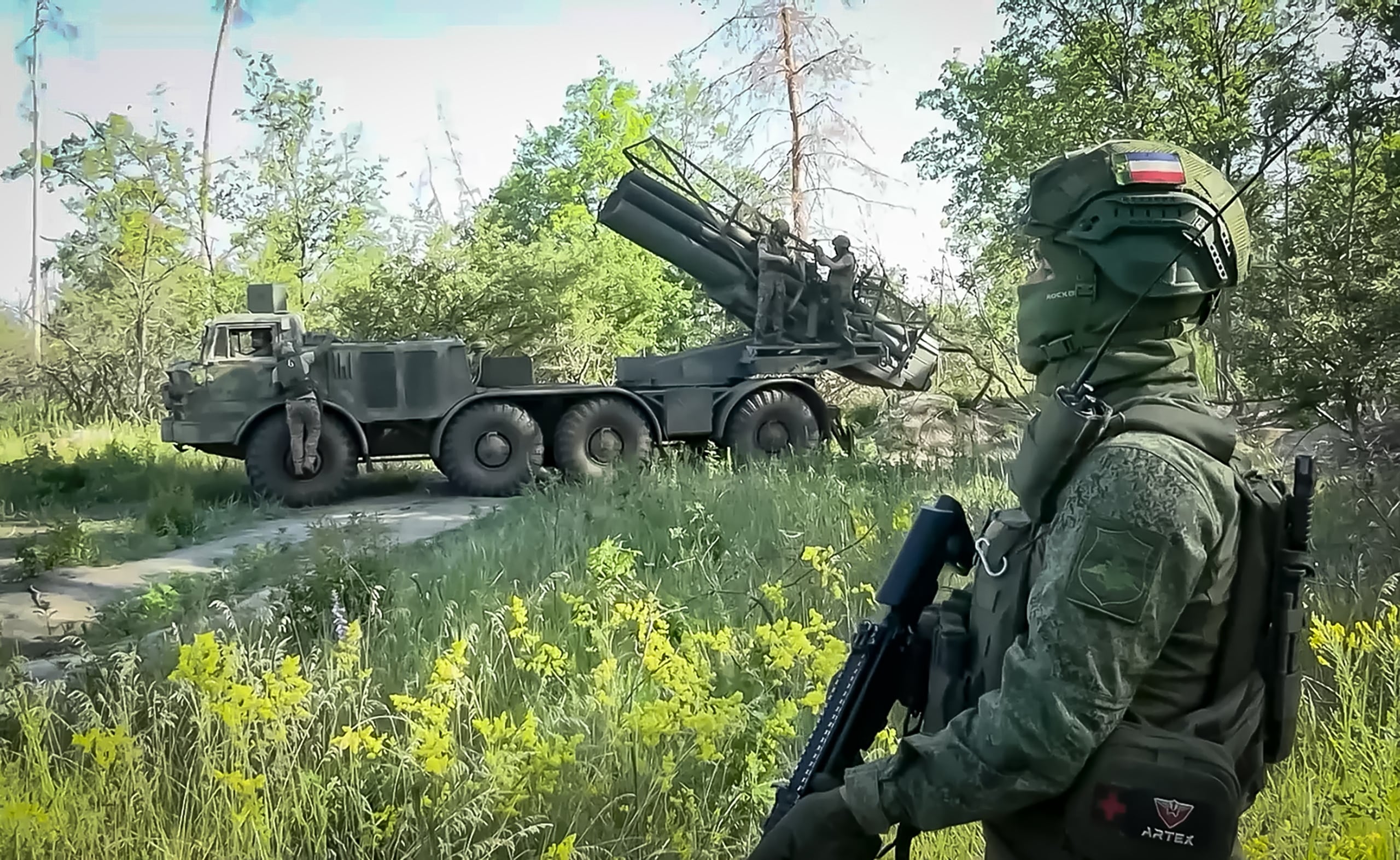
Russian authorities have been paying people to enlist in the army, and now they are also paying them to recruit others. A perverse incentive that has led to a rise in recent months in cases of citizens being taken by force to sign contracts with the army. The Kremlin is trying to avoid an unpopular, open mass mobilization, but is tightening the screws covertly to fill losses that volunteers have not replaced in its offensive in Ukraine. Recruiter work has been very well paid in recent months. Their targets are people who live alone, those with criminal records, or the sick or indebted, who are taken by force to recruitment centers.
“It is not a widespread problem, but it happens with regularity,” a source at the human rights group Call to Conscience [Prizyv k sovesti] told this newspaper. In Russia, unlike in Ukraine, there is currently no open mobilization. Alarm was raised in June when a video filmed in the Penza region, about 340 miles east of Moscow, went viral showing the wives of several men locked inside a minibus trying to stop the vehicle from leaving a recruitment center bound for the war. Family members say all had been forced to join the army against their will.
“Normal people stay home at night,” a mother heard as a rebuttal in August when she reported to the authorities that her son had been abducted on the street and coerced into traveling to the front lines.
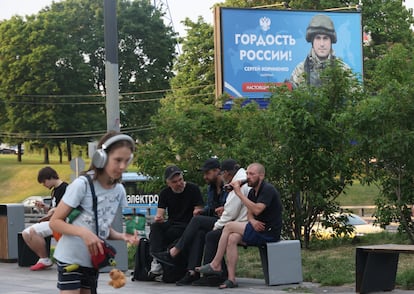
Call to Conscience recorded “a sudden increase” in these incidents in July when 12 were documented, and recorded six more by mid-August in several regions of Siberia and the Caucasus, far from the big cities. Another organization, Take a Walk in the Woods (Idite lesom), designated a foreign agent by the Kremlin, received 26 complaints in August, and Conscript School (Shkola prizyvnika) reports 11 complaints in the past two months.
A separate issue is cases of young people doing mandatory military service who were coerced into signing professional contracts, since by law they cannot be sent to fight unless they are regular soldiers. Take a Walk in the Woods and Conscript School received 51 and 13 complaints of this type, respectively, in August.
Authorities have incentivized police, private recruiters, and even relatives to push people to go to war. “At least 44 regions have implemented a bonus for recruiters for each newly contracted soldier. Payments range from 10,000 to 1,000,000 rubles [between $115 and $11,615],” Timofey Vaskin, head of the legal department at the human rights group Conscript School, told this newspaper.
“In almost all known cases, the victims are socially vulnerable people. This includes those suffering alcohol or drug addiction, mental illness, the elderly, people who live alone, or those with criminal records or debts,” Vaskin added before explaining the two reasons for this selection: first, it is easier to coerce those with fewer legal defenses; second, they are easier to identify.
“Local authorities have all kinds of records: criminal records, people who are presumed to live alone, and medical histories. It is easy to verify indebted people in public court records. Recruiters can obtain or buy all this data easily,” the Conscript School representative said.
Fear and helplessness
Russian President Vladimir Putin denied twice last week that he plans a new forced mobilization. “There is no scenario that requires it; it is an attack of enemy disinformation before the elections,” the Russian leader said Thursday in Vladivostok. “It’s bullshit,” he summed up two days earlier in the Kyrgyz capital, Bishkek.
Russia has “more than 700,000 troops” deployed in Ukraine, according to Putin. Those figures roughly match estimates by Russian and Western experts such as Janis Kluge of the German Institute for International and Security Affairs. According to Moscow, in addition to the mobilized forces, the army has recruited about 400,000 contract soldiers on an annual basis since 2023, which, compared with current deployments, suggests losses have been and remain enormous. Analysts say the pace of Russian recruitment has slowed this year while the front remains a meat grinder with around 20,000 casualties a month.

And as the war drags on, the pool of volunteers is running out and the Kremlin is stepping up pressure to enlist. Some people are missing, others are hiding to avoid being taken to the front. NGOs shared several cases with this newspaper with extreme caution.
“My uncle, an ordinary elderly man, lived alone in a village in Penza,” relatives of a 62-year-old who has been missing since July 29 said. “He left home frightened and in great emotional distress. They took him to the city; we believe he was forced to sign a military service contract.”
Take a Walk in the Woods recounts the case of a 19-year-old from Rostov province. Relatives say he went to an inspection at the Federal Penitentiary Service over an outstanding fine, where he was arrested and handed over to officers from a recruitment center. “There he saw others being beaten and was threatened with criminal charges. They promised he would assemble drones, but after signing the contract they took him to an assault troop unit in the Samara region,” the NGO said. The life expectancy of such troops under drone attack is usually short.
The same NGO is trying to locate a Russian citizen born in Ukraine who disappeared in August in Novorossiysk. His sister asked the organization for help when he was arrested. “The man was taken to a police station. There he was beaten, his phone was taken and about 10 hours later they brought out a bag of drugs, supposedly his. He was given a choice between a criminal case, which could carry up to 20 years in prison, or a contract. The man signed,” Take a Walk in the Woods said. His family tried to visit him in jail on August 13, but the visit was canceled. His brother called and said he was being sent to a military unit.
Coercion at universities
A source at the university in the Khanty-Mansi region in central Siberia told this paper that rectors have asked professors to persuade students to enlist. They are advised to promise lagging students that they will be assigned to drone units and “pass the course” if they spend a year at the front. However, these are regular contracts and they could end up as assault troops. According to two sources in the government cited by journalist Farida Rustamova, the administration has achieved a quota of 2% of students.
“Universities and higher education centers are actively campaigning to help, and threats of expulsion are common, but we have not seen any physical coercion,” said Vaskin of Conscript School.
Companies have also been ordered to send employees to the war. The NGO cites another case. A woman asked them for help to get her 61-year-old stepfather, who has serious health problems, out of the army. “He was taken to Kazan at the beginning of August under the pretext of a business trip and from there to Sverdlovsk [in central Russia]. The last time we spoke to him, on August 11, he was talking nonsense, saying he was shoveling snow and cutting hay. Now we know he was taken to a recruitment center,” the relative told this newspaper.
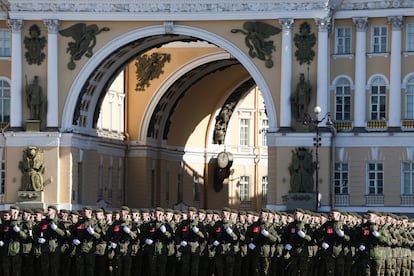
The organization also reports the case of a 30-year-old man who “was intoxicated and the police acted in collusion with the recruitment office.” He had no phone and could not contact his relatives when he arrived at the place they had assigned him. “They gave him no documents, they only copied the information from his passport into the contract, indicating he would be responsible for guarding some facilities,” the NGO said.
Reservists are another target of recruiters. “They are being summoned more often, and at recruitment offices they are pressured to accept a regular contract,” a source at Call to Conscience said. The Defense Ministry issued an order in October 2025 that allowed summons of reservists, supposedly to defend strategic facilities inside Russia from Ukrainian drones. According to the General Staff, they would only be sent “to special groups […] within their own regions.”
This newspaper has learned of a reservist from Murmansk who received a notice to verify his data at the recruitment office. The employee tried to convince him to sign a contract by assuring him he would only be part of anti-drone defense units in the region “that are not regular military, but reservists.” The man was promised a three-year contract, payments of between 200,000 and 250,000 rubles — about $2,900 a month — and the possibility of staying at home. In reality, it was an ordinary contract and his deployment could be changed.
Call to Conscience has also documented several cases of fathers and uncles who were detained on the street for not having proper papers and taken by the police directly to a recruitment center. Their families only know that they were sent to war, but they receive no further information. “If you’re lucky, they’ll be able to identify [his whereabouts] in two weeks,” they were told by relatives of a man from Ulyanovsk, on the Volga.
Sign up for our weekly newsletter to get more English-language news coverage from EL PAÍS USA Edition







ChatGPT
People Are Using AI For Personal Questions Almost Twice As Often As For Work-Related Queries


Barcelona
Marc Orriols, Egyptologist: ‘Hollywood Has Done Great Damage To Our Perception Of Sex In Ancient Egypt’

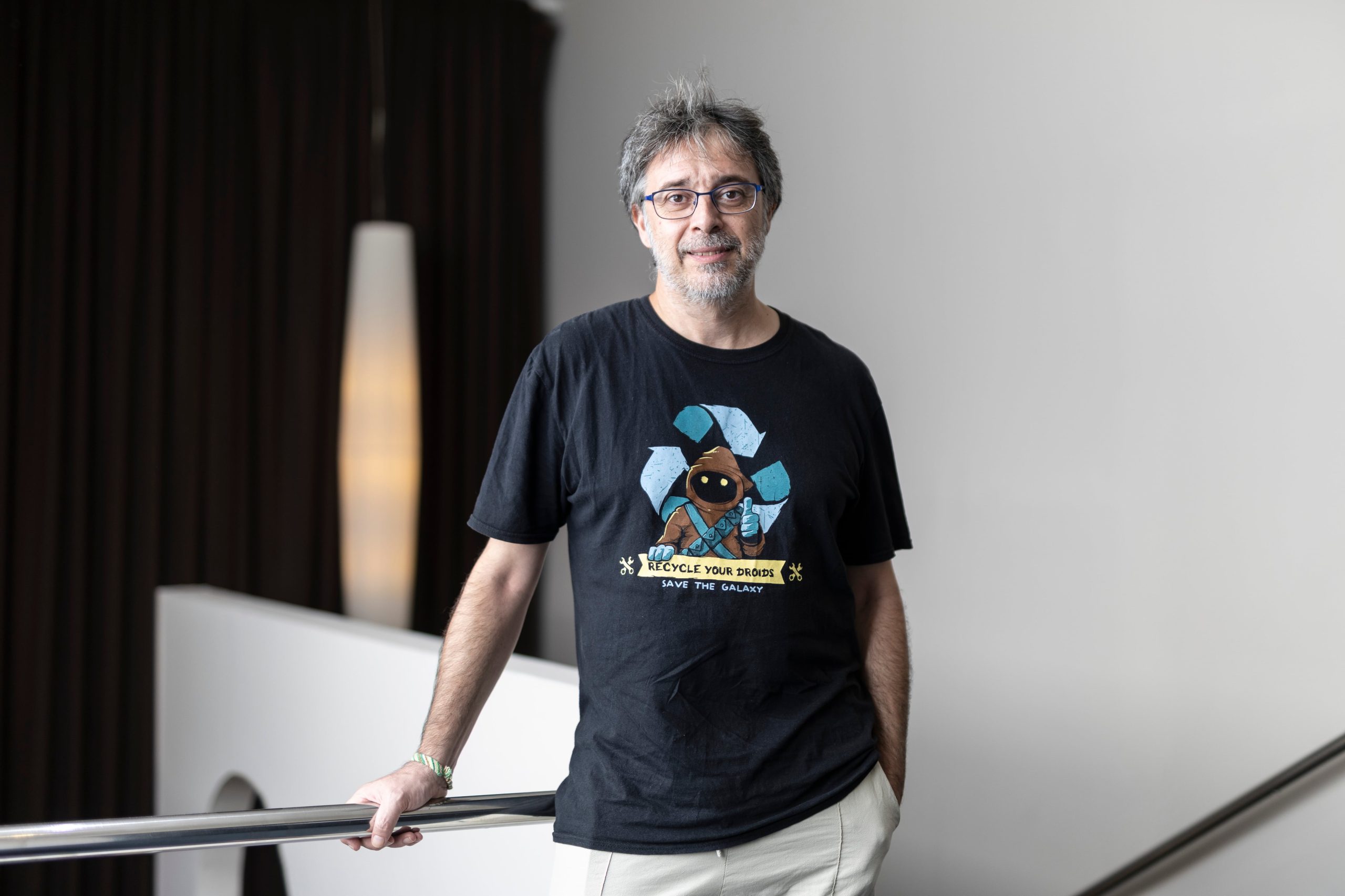
Exactly 20 years ago, a young Marc Orriols surprised attendees at the III Ibero-American Congress of Egyptology held in La Laguna, Tenerife, in Spain’s Canary Islands, with a paper on the sexual habits of Ancient Egyptians, specifically the practice of copulation from behind, based on iconography in graffiti and ostraca (pieces of pottery or stone with drawings).
Now, at the VIII congress at the Autonomous University of Barcelona (UAB), Orriols, 51, who now holds a PhD in Egyptology, has once again made an impression with an exhaustive lecture on the famous Turin Erotic Papyrus, a scroll painting created during the Ramesside period that depicts in detail several sexual acts. According to Orriols, the 3,150-year-old painting is a “mockery of hegemonic masculinity” and may be the first depiction in history of female ejaculation.
Question. What new insights have emerged about sex in Ancient Egypt?
Answer. Basically, it confirms our view that, despite the popular reputation of the Ancient Egyptians as uninhibited or indecent — an image shaped by biased Greek and Roman accounts and by the movies (Hollywood has done great damage to our perception of sex in Ancient Egypt) — they were, in fact, a rather modest society. Although religion shows a certain sexual fluidity, with gods who copulate or masturbate, that belongs to the celestial sphere; there are almost no depictions of it in everyday life.
Q. So they were prudish.
A. Human sex does not appear in official art, only in those, let’s say, non‑normative representations, of which there are very few — around 30 across as many years of history. One even depicts sex with a donkey. It is true that traditional Egyptologists probably hid or destroyed things they found offensive. If [English Egyptologist Flinders] Petrie came across a scene of fellatio…
Q. That’s quite a contrast with the conventional image of those women in sheer dresses and men in loincloth.
A. The Egyptians didn’t dress like that. Those are iconographic conventions: there was no silk until the Ptolemaic period, and the linen used does not produce that kind of transparency — just try leaving so much of your body exposed under the Egyptian sun. We confuse religious and symbolic images, largely funerary, with reality. Figures that seem erotic to us refer to fertility.

Q. Did the concept of non-binary identity exist?
A. There were deities that we might consider as fitting that category, such as Atum, Hapi, Sekhmet and Neith… and in society you can sense a kind of third gender, but they more closely resemble castrated figures; children were considered without gender, which happens in many cultures. In any case, identity issues did not exist culturally, and homosexuality — male or female — is not documented. The Ancient Egyptians were, formally, binary and heteronormative, as is common in a patriarchal society.
Q. Can we identify any preferred sexual positions?
A. In the scant record, the position from behind and the woman with her legs over the man’s shoulders appear. Both allow deep penetration and were possibly associated with female pleasure. But we are still talking about marginal representations. The Turin Papyrus, with its exceptional detail, shows the woman on top, but my interpretation is that it was a humiliating practice for the man and that the entire document echoes a tale about the degradation of a powerful individual and an inversion of the norm — a world turned upside down. An extraordinary mockery of hegemonic masculinity.

Q. What about the existence of prostitution? The character Nefernefernefer in Sinuhe the Egyptian was paid for her relationships.
A. It is not documented. We have yet to find evidence of sex for economic exchange in Ancient Egypt. Today one cannot assert that prostitution existed; in this case it is not the oldest profession in the world.
Q. What about oral sex?
A. Again, it is practically only for the gods. There is little evidence of fellatio. A deceased person in the Book of the Dead says he has not tried it, as if that made him more virtuous. And there is an ostracon that appears to show a woman being ejaculated into the mouth, externally.
Q. So much for Cleopatra’s kiss.
A. The cliché of Cleopatra as the great, lustful Eastern fellatrix weighs heavily. The Romans foisted it on her to denigrate — and brutally sexualize — a powerful woman who instilled fear in them. The name Cleopatra is still common in porn movies.
Q. At the very least, did Ancient Egyptians recognize orgasms?
A. There is the word nedjemet, which means something pleasant or sweet, but it seems to refer only to male pleasure…
Sign up for our weekly newsletter to get more English-language news coverage from EL PAÍS USA Edition

15 fotos
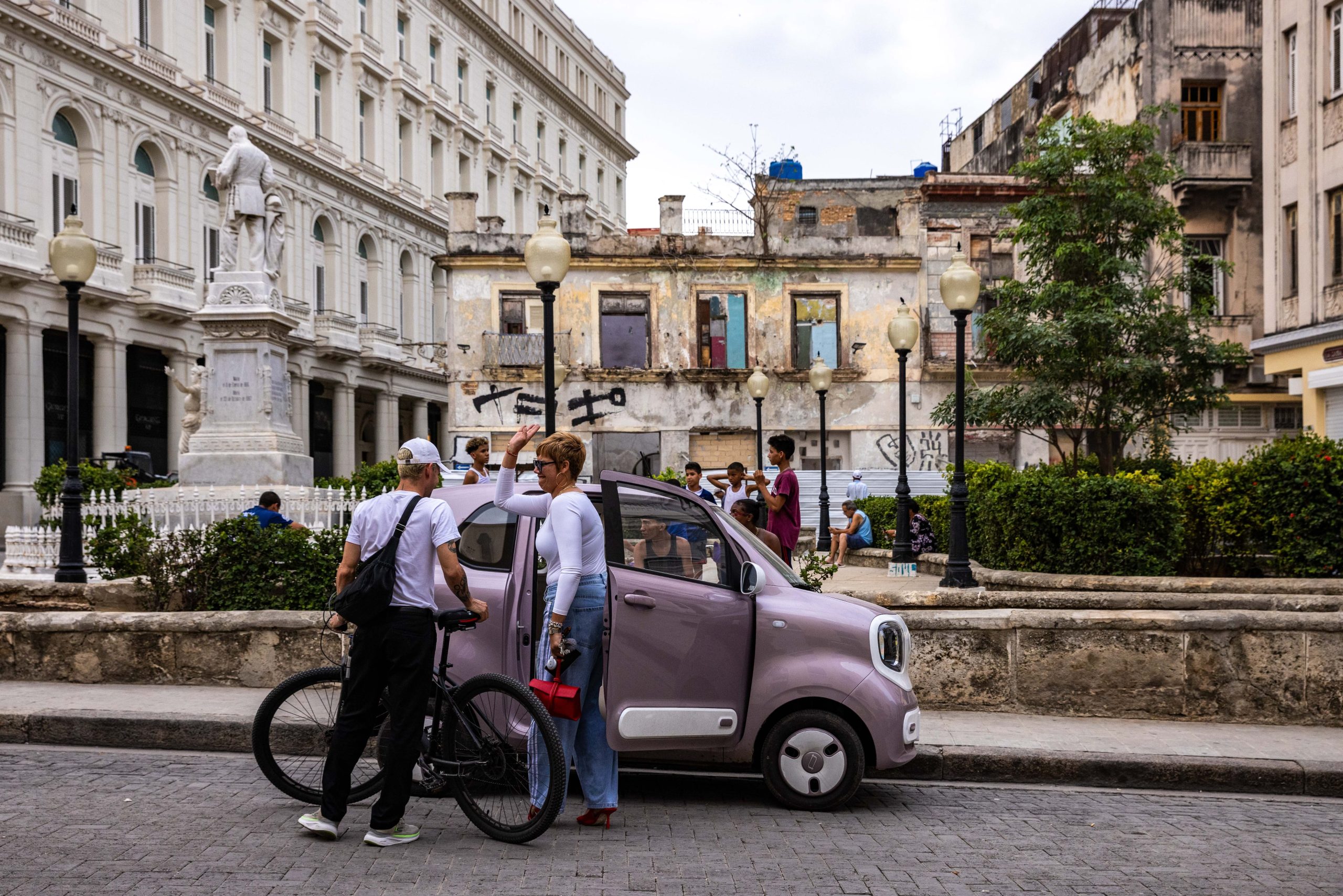
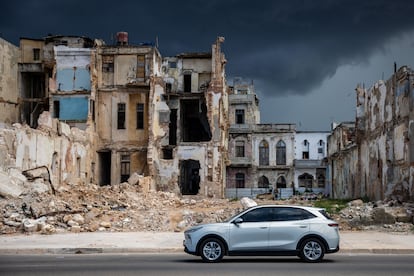
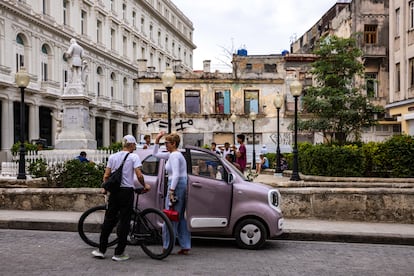
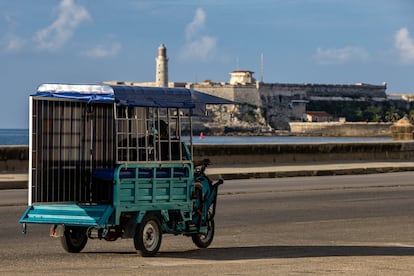
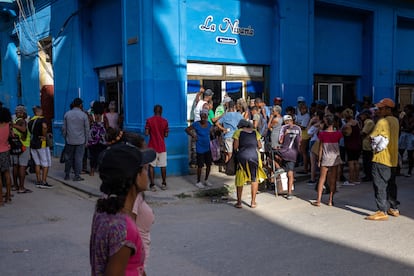
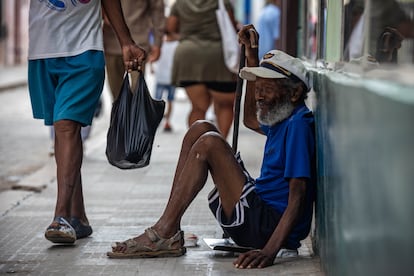
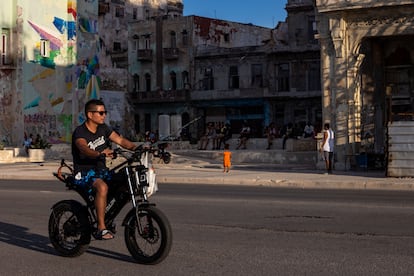
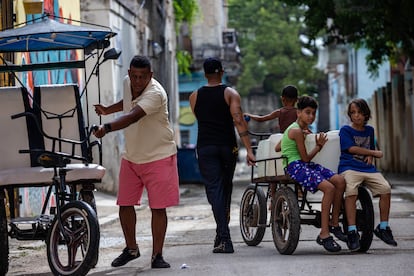
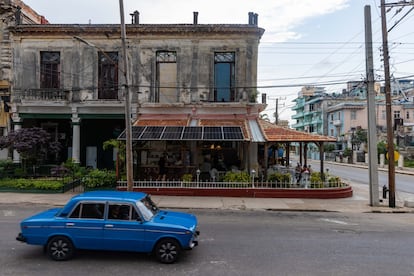
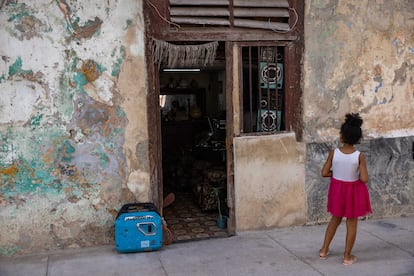
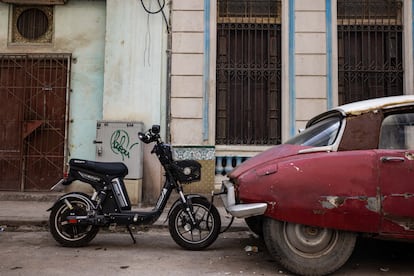
The island’s economic and energy crisis, worsened by the U.S. embargo, is widening the gap between those who can afford to import luxury cars and buy solar panels, and an impoverished majority that faces blackouts, food shortages, deteriorating housing and growing difficulty meeting their basic needs





Zverev – Shelton, La Final Del US Open En Directo | Shelton Se Repone Y Gana El Tercer Set De La Final
El Atlético Vence Pero No Convence Ante Una Sólida Real Sociedad

Los Socialdemócratas Ganan En Suecia, Pero Las Proyecciones Apuntan A Un Escenario De Igualdad Máxima Entre Bloques

Afghanistan, Somalia And Yemen Disappear From The Latest US Famine Reports: ‘Trump Is Politicizing The Analysis’
Wealth management for Americans in Spain

Max Verstappen works with new race engineer at Italian Grand Prix


-
 Donald Trump2 weeks ago
Afghanistan, Somalia And Yemen Disappear From The Latest US Famine Reports: ‘Trump Is Politicizing The Analysis’
-
bissan wealth management2 weeks ago
Wealth management for Americans in Spain
-
 Uncategorized1 week ago
Max Verstappen works with new race engineer at Italian Grand Prix
-
Costa del Sol2 weeks ago
Marbella puts Ranchon Cubano back on the beach: Eco campaigners want it stopped
-

 %2 weeks ago
Portuguese Man O’ War Warning
-

 Asesinatos2 weeks ago
Prisión Sin Fianza Para La Mujer Que Apuñaló Mortalmente A Un Hombre En Un Bar De Valencia
-
Costa del Sol2 weeks ago
Fuengirola starts €49m Los Boliches megapark as demolition begins
-

 Crime & Law2 weeks ago
Investigation Into Brutal Stabbing Of German Tourist In Huelva Takes Major Turn After Italian Partner Is Cleared Of Involvement