
Donald Trump
Afghanistan, Somalia And Yemen Disappear From The Latest US Famine Reports: ‘Trump Is Politicizing The Analysis’











America
El Tribunal Supremo Autoriza Definitivamente La Construcción Del Salón De Baile De Trump En La Casa Blanca


Andalucia
US Military To Expand Jointly-Operated Moron Air Base In Southern Spain Despite Lingering Tensions Over Iran War


 THE United States is set to expand its military presence in Spain after formalising plans to revamp a strategically vital air base in Andalucia.
Donald Trump
The ‘new Era’ Of Latino Socialists In New York: ‘If The Democratic Party Wants To Lead, It Must Create A Solution To The Immigration Problem’

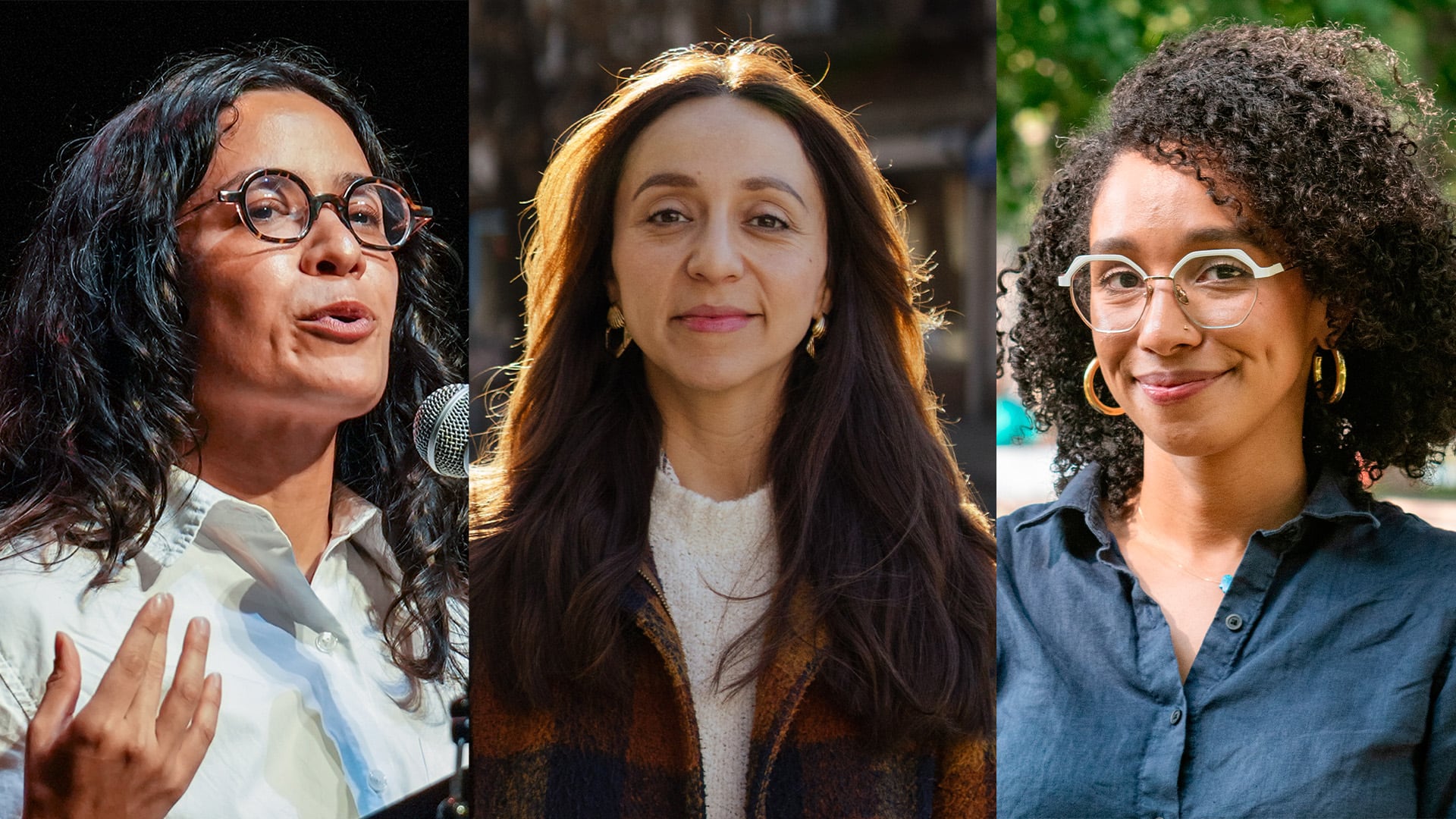
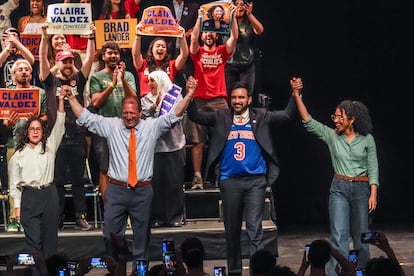
On the cover of issue number 304 of The Indypendent, a “free and progressive” paper printed on gray stock that New Yorkers pick up in libraries, laundromats, conference rooms and subway stations, Claire Valdez and Darializa Ávila Chevalier appeared back to back, both with broad smiles, in those June days when Mayor Zohran Mamdani endorsed them in the state Democratic primaries. When they finally became the nominees for the November congressional elections, Valdez and Chevalier grabbed the issue of The Indypendent, recreated their poses from the cover in person—victorious and amazed that the future had been sketched out for them in advance. One striking detail: both were Latina, the former of Mexican roots; the latter a daughter of Dominican parents. Both alternated Spanish and English on the campaign trail, self-identify as socialists, and worry about the things that concern people like themselves these days: that immigration enforcement might take a neighbor, or that paychecks won’t stretch to the end of the month.
Shortly after the primaries, the Instagram page DSA Latinos Socialistas invited everyone to a conversation where they would sell Venezuelan empanadas and, at the same time, raise funds to help Venezuelans who survived the earthquakes. Four panelists were scheduled for the talk: Ecuadorian Diana Moreno, who had filled Mamdani’s vacated seat as state assembly member for Queens’s 36th District; Illapa Sairitupac, the son of indigenous Peruvian immigrants whom Mamdani also backed and who won the Democratic primary for Assembly District 65; Claire Valdez, running for the 7th Congressional District seat; and Darializa Ávila Chevalier, the candidate for the 13th. A poster in large letters read: “Latina socialist politics in New York: a new era.” They were coining the idea that times had changed.
They were all fresh faces, people in their thirties; none yet had the look or cadence of a conventional politician. They came from roles as community organizers, artists, PhD students, political science graduates and social workers. Politics had not yet left its mark on them, they had not promised anything they hadn’t delivered, and so people went out to vote for them to get rid of the old establishment players. They were part of—and also a product of—the aura Mamdani left in an election that revived the American left, and therefore shared what, as a generation and as members of the Democratic Socialists of America (DSA), others also defended: rejecting any money from the American Israel Public Affairs Committee (AIPAC), condemning the genocide in Gaza, and pushing for more affordable cities.
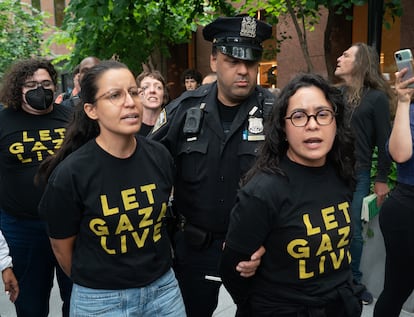
But one thing set Latino politicians apart from their colleagues: when they talked about abolishing the U.S. Immigration and Customs Enforcement agency, or ICE, they did not see the idea only as a necessary political stance but as the possibility of ending an agency that detains and deports migrants; migrants were, and are, their own families, friends or neighbors. “At parties or at the dinner table we talked about how much it costs to change immigration status, whether the neighbor was having trouble with immigration authorities. That’s how politics was talked about in my house,” Chevalier told EL PAÍS, recalling the days when she was still a girl born in Miami.
When these candidates talk about labor rights, they do so after having been employed and paid very little themselves: “I’ve had to work since I was 14,” Valdez says; she grew up in Lubbock, in northwest Texas. “I worked in fast-food restaurants and supermarkets. Once, at a Taco Bell, I messed up an order and my manager put those tacos in front of my face and said: you just wasted seven dollars of our product. He threw them in the trash in a very dramatic way to make me feel bad. I was paid $7.25 an hour, so those three tacos were worth an hour of my life.”
These new Latino politicians come from families that invested time and money so their children could study; they later moved, came to New York, and are now holding or seeking federal or state office. It’s not that they were the first Latinos in local or national politics: by then there were already names like Tiffany Cabán, Alexa Avilés, Marcela Mitaynes, Jessica González-Rojas, Kristen González, and the prominent figure Alexandria Ocasio-Cortez, but more were joining at a moment they described as very particular.
“We are being attacked by agencies like ICE and, obviously, the high cost of living affects Latino families a lot,” says Moreno, who arrived from Ecuador as a child with her sister and parents, who survived by washing dishes in a Mexican restaurant and cleaning hotel rooms. “Our community is living with a lot of fear. Trump is creating undocumented people because he is ending all temporary protected status programs and asylum protections, and that’s something we also have to lead on.”
Just as it’s symptomatic that the DSA’s strength has emerged, precisely, during the Trump era, almost as an immunological reaction, Moreno finds it coherent that more Latinos are becoming interested in socialist policies in the United States. Their own message includes them; the opponent’s excludes them. “It’s like a mirror of what’s happening in Latin America, where we have many governments that, sadly, with the support of the Trump administration, have turned to the far right. In Latin America people are also living the same affordability crisis.”
If Chevalier reaches Congress next year, she would be the first Dominican woman to do so. She sees it as an achievement. “I would be one of the few people in Congress who can speak directly in Spanish to the Latino community,” she says. “We’re seeing more and more Latinos voting for Trump, but we can’t complain when we are not speaking directly to that community. It’s a huge responsibility for me to take this position, to take this office, a responsibility to my district in New York but also to a community that has felt abandoned.”
The district Valdez represents, covering parts of Brooklyn and Queens, has for decades been home to Latino communities that have recently been displaced by high prices and gentrification. She wants to address that. “It’s really important that we have Latino socialists going to Washington to fight specifically for those communities,” she says. “Especially in my district, there’s a long history of organizing, particularly within the Puerto Rican diaspora, to fight bad landlords, build homes and communities specifically in Bushwick and Williamsburg. It’s the same community now under attack due to rising rents, low wages, poor working conditions and ICE harassment.”
And this is precisely one of the common demands all these candidates plan to take to Washington, Albany or City Hall: unite to abolish ICE. “If we take back the House of Representatives, there will be a Democratic majority in Congress that will open a lot of space for us to do work. We have to address the immigration crisis. We have to start exercising real oversight over ICE. That agency has to be abolished and we have to push for an immigration policy that is humane, that is welcoming,” Valdez says.
Chevalier, for her part, says it is possible to return to a country like the one where she was born, back when an agency like ICE did not exist. “What we’re seeing is an enormous risk to our community’s safety; people are being killed in the streets, they’re being separated from their families, children are being separated, jailed and disappearing in detention centers. That does not provide security for anyone. There’s no reason a civil process should look like a concentration camp.”
Rise and criticism of the DSA
Years ago, before she moved to Brooklyn to pursue a career as a visual artist, one of Claire Valdez’s aunts fell ill. She had to be airlifted to a hospital in Texas and remained hospitalized for quite some time. She had no health insurance and was left with thousands of dollars in medical debt. “She was a working-class person who had no ability to pay that money back,” Valdez says. It was 2017, right after the high-profile campaign of independent Vermont Senator Bernie Sanders, who identified as a democratic socialist, a leftist ideology that talked about narrowing economic inequality, expanding social programs and advocating for working-class rights.
Sanders’s proposal to spark a “political revolution” was rejected by many sectors, especially those who saw in the idea the specter of communism. Claire felt that, for the first time, someone was speaking for people like her. “Bernie Sanders had been the only person who spoke so clearly about how outrageous medical debt is in the United States, one of the richest countries the world has known. So when he ran again in 2019, I volunteered on that campaign and knocked on doors across the city; I even went to New Hampshire to canvass for him. I got involved in political organizing thanks to Bernie Sanders.”
Sanders’ spectacular campaign was the gateway to the path later taken by the DSA, which drew an army of young people from across the country and then gained strength with the arrival of figures like Alexandria Ocasio-Cortez. Ten years after that campaign, Sanders, now 84, was first at Zohran Mamdani’s swearing-in as New York mayor and later supporting Chevalier and Valdez in the primaries. The DSA arrived at this moment much stronger: with more than 100,000 members across nearly 200 chapters in the United States, which have found in it the only group that, in the Trump era, speaks openly about responsibility in the Israel–Palestine war, condemns corporate money’s influence, and proposes a reform of the country’s economic system.
“We are in a unique political moment where people are hungry for a new kind of politics in which they can also participate,” Diana Moreno says. The figure of the volunteer knocking on doors has been essential: Mamdani managed to gather about 100,000 people who knocked on some 1.6 million doors across New York City, and who have since recruited other DSA members.
“We’re not telling people: ‘vote for me, I will save you, I will fulfill all those promises.’ Rather we’re inviting people to be part of the movement. You have to put in the work, because democracy is a team sport and that’s something that people aren’t used to. Most of us think participating in democracy means voting every one or two years, or every four, but we’re saying: ‘No, it doesn’t end and begin when we win; it has to be defended and maintained and for that we need you,” Moreno says.
Amid the DSA’s rise—first with Mamdani’s campaign, then with his decision as mayor to back three socialist candidates (nine of the ten New York City candidates endorsed by the DSA won the Democratic primaries), and later with victories by other members nationwide—the organization began to face some pushback. The establishment has compared them to Cuban or Venezuelan ideologies, and many migrant communities from those countries feel a rejection of any proposal that sounds like “socialism.” Moreno does not rule out that the organization needs to reach out to those people.

“Many have negative memories and experiences with their governments, and that’s something we must take seriously, not ignore, and we must speak clearly about the kind of democratic socialism we offer,” she says. “For us it’s extremely important to tie socialism to democracy. Our socialism aims to respond to the current problems of the majority of people; we want more people to participate. People have lost faith in both Democrats and Republicans, because they have seen a Republican Party focused only on its racist project of expelling immigrants, stealing from public funds to give to Israel or their billionaire friends, and Democrats aren’t fighting hard enough to stop those changes. The American people are going through a crisis of democracy, and we want them to find in us, the democratic socialists, an answer and hope for the future of democracy.”
The seventh district, represented by Valdez and covering parts of Brooklyn and Queens, has been labeled the “Communist Corridor” because of the DSA’s electoral strength there. According to Valdez, the criticism comes from many people who “have family experiences, or have themselves experienced authoritarianism and do not want to be associated with democratic socialism or communism.” Still, a Gallup poll last year showed that 49% of Americans aged 18 to 34 had a positive view of socialism, compared with 30% of those over 55.
“I think what we’ve been showing, at least over the last few years, is that democratic socialism in the United States right now has particular characteristics and a particular history. It’s the socialism of Martin Luther King Jr., Helen Keller and many other leaders—something very different from authoritarianism elsewhere,” Valdez says. “For me, democratic socialism is about expanding democracy, ensuring people can be political actors in their own lives. It’s about universal programs like universal childcare, free public schooling, higher education, universal healthcare, expanding rent stabilization and making sure people can afford to live and have real dignity.”
The other criticism socialists have faced recently doesn’t come only from the far-right end of the spectrum but also from mainstream Democrats. Some argue this leftist movement poses a danger to the Democratic Party in the upcoming presidential elections. But the socialists agree that that party has not offered a better option in its recent shots at the White House.
“That’s always been the Democrats’ excuse; they’ve never been able to offer their own vision of what they will give us. It always has to be compared with the fear we should have of the Republicans,” Moreno says, then cites the current immigration crisis as an example. “If the Democratic Party wants to lead, it must create a solution to the immigration problem. They must offer comprehensive, humane immigration reform, which unfortunately has been completely erased from Democrats’ language. I mean, when we now talk about immigration, we only talk about ICE. But when we talk about immigration we have to talk about immigration reform and a dignified path to citizenship that doesn’t take advantage of people, because this country, like it or not, will always depend on our labor, will always depend on our work. The question for Democrats is whether they will accept us as human beings, not just our labor.”
Sign up for our weekly newsletter to get more English-language news coverage from EL PAÍS USA Edition

Afghanistan, Somalia And Yemen Disappear From The Latest US Famine Reports: ‘Trump Is Politicizing The Analysis’

Caught Sock-Handed

Hasta Tres Años Antes De La Primera Regla: Las Señales Que Avisan De Futuros Periodos Dolorosos
Make a small donation at Miramar shopping centre and transform a child’s first day back at school

How Kimi Antonelli saved Red Bull as Max Verstappen signs blockbuster F1 deal

How To Get A Tourist Rental Licence In Andalusia (Spain) – Step-By-Step Guide 2025


-
back to school2 weeks ago
Make a small donation at Miramar shopping centre and transform a child’s first day back at school
-
 Uncategorized2 weeks ago
How Kimi Antonelli saved Red Bull as Max Verstappen signs blockbuster F1 deal
-
 New Developments2 weeks ago
How To Get A Tourist Rental Licence In Andalusia (Spain) – Step-By-Step Guide 2025
-
Alicant2 weeks ago
British pub giant bans loud phone videos and calls, should bars in Spain follow?
-

 BCE2 weeks ago
Los Precios De La Energía En Europa Volvieron A Escalar Por Encima Del 10% En Julio
-
bullfighting2 weeks ago
Ronda’s September Feria returns with bulls back in the ring after two years away
-

 Housing politics2 weeks ago
Barcelona Rent Controls: Rents Rise While Rental Opportunities Remain Scarce
-
airports in Spain2 weeks ago
British families flying between UK and Spain given fresh EES warning for under-12s