Connect with us

%

Cocaine Bricks Stamped With Luxury Watch Logo Expose €50m Costa Del Sol Empire

Published

on

cocaine-bricks-stamped-with-luxury-watch-logo-expose-e50m-costa-del-sol-empire

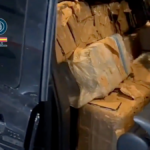
Cocaine packages stacked inside a seized vehicle during the Costa del Sol raids. Credit: Policía Nacional / X

Police cutting open the cocaine found it stamped with a Swiss watchmaker’s logo, one flourish in a network that had been hiding behind Marbella’s showroom cars and hillside mansions. The €50 million operation then used those same cars to run convoys all over Spain.

Cocaine bricks stamped with a luxury watch logo

Officers cutting into the seized packages found a stamp pressed into the cocaine itself: the logo of Vacheron Constantin, the Swiss watchmaker whose timepieces sell for tens of thousands of euros. Police said it was a branding trick used by producers to mark which shipment a batch belonged to. It fit a network that dealt almost entirely in appearances. The Policía Nacional has dismantled a family-run cocaine operation that used the Costa del Sol’s luxury car trade, and the image that comes with it, to move drugs worth an estimated €50 million. 

Fifteen arrested and 2,700 kilos of cocaine seized

Fifteen people have been detained and 12 have been sent to prison while the case continues, according to the Policía Nacional. Officers seized more than 2,700 kilos of cocaine in total, alongside 800 grams of tusi, a pink synthetic drug mixture increasingly common on the Spanish party scene.

The arrests came in two main waves. Four simultaneous raids on April 10 targeted three homes and a workshop around Málaga, recovering 1,434 kilos of cocaine, while a separate raid on a villa in Sant Just Desvern, near Barcelona, turned up a further 1,351 kilos that had been stored there. A second wave of raids in June, focused on Marbella and Estepona, picked up more suspects working further down the chain, with additional arrests made over the summer through European arrest warrants.

How the Costa del Sol became a hidden ‘nursery’ for the drugs

Investigators said the cocaine arrived in Spain from Colombia through the port of Algeciras. From there it was driven to safe houses and workshops around Málaga, Estepona, Marbella and Churriana, which the organisation used purely to store the drugs before moving them on.

Investigators have described the role played by these Costa del Sol properties as a ‘guardería’ (Spanish for nursery), reflecting how the drugs were minded and kept safe rather than sold locally. The towns used, Estepona, Marbella and Churriana among them, are some of the most popular on the coast with British and other foreign residents, though nothing in the investigation suggests the drugs were intended for local distribution. 

Barcelona worked the same way. The villa in Sant Just Desvern held more than a tonne of cocaine and nothing else, investigators found, its sole function to keep the shipment out of sight until it was ready to travel again, onward through Madrid and the Levante towards France and the rest of the European Union.

How a family network ran like a military unit

The organisation, described by investigators as Albanian in origin, had operated since at least 2016 and relied on family ties to keep outsiders out. Police said its leaders lived in mansions around Marbella, avoided phones and other traceable communication, and only ever discussed business face to face.

Some of those lower down the organisation were recruited specifically to rent flats and garages in their own names, according to investigators, giving the leadership an important amount of distance from the properties used to store the drugs. Carlos Prieto, the Spanish government’s delegate in Cataluña, said after the Barcelona arrests that organised crime would find no refuge in the region.

The investigation opened last year after Colombian authorities warned Spanish police about a shipment heading their way. What followed was months of surveillance before the raids in April finally moved in.

Showroom cars, fake jobs and 200km/h convoys

The group’s cover came from a network of businesses in the car trade, which supplied high-end vehicles registered to front men and handed out employment contracts that let members appear to hold down ordinary jobs. Police seized 29 luxury vehicles this way, with a further eight embargoed, alongside two motorcycles, two handguns, more than €13,800 in cash, jewellery, watches and frozen cryptocurrency and bank accounts. 

The fleet included high-performance Audi models used instead of trucks to move the cocaine itself, with four or five lookout vehicles escorting each convoy to watch for police. Investigators believed the organisation acted as a logistics contractor in its own right, moving shipments on behalf of other criminal groups rather than only trafficking on its own account.

Convoys like these covered vast distances, and fast. Investigators tracked one that travelled more than 2,000 kilometres in a single day, at speeds above 200 kilometres an hour, running on provisional number plates that never showed up in police databases.

The case is the latest in a summer of heavy anti-trafficking activity along the coast, after Guardia Civil raids on Gibraltar border towns and a Policía Nacional operation against a ‘go fast’ cocaine run through Mijas.

A separate summer operation across Spain saw 78 people arrested and €24 million worth of drugs seized in a combined smuggling and migrant-trafficking case. All those detained retain the presumption of innocence while the case continues through the instrucción (the pre-trial phase in which Spanish investigating judges gather evidence before deciding whether it goes to trial).

%

British Couple On Holiday In Morocco Face Bizarre Roadside Encounter On Final Day

Published

on

british-couple-on-holiday-in-morocco-face-bizarre-roadside-encounter-on-final-day

The couple were stopped by a Moroccan police officer. Photo credit: Mary. W

Picture this: you spend a wonderful week driving through Morocco, taking in the sights, food, traditions and some of the country’s most fascinating cities, only to have the whole trip end on an odd note when getting pulled over by a police officer, and that is exactly what happened to a British couple during their Moroccan road trip. Frank and Mary W., who live in Almería, had been looking forward to visiting Morocco for a while.

When they finally managed to arrange their holiday, they spent several days exploring the country. Their trip had taken them through several Moroccan cities, including Fez, Chefchaouen, Al Hoceima and Rabat, giving them the chance to experience the country’s culture and traditions at their own pace. But on their final day, as they were leaving Rabat, the holiday took a turn that left the couple more confused than anything else.

Pulled over by police

The couple were stopped by a Moroccan police officer, and when Frank asked why they had been pulled over, the explanation seemed remarkably simple. They had, the officer told them, “driven over a white line.” For the couple, that raised more questions than it answered.

They tried to understand exactly what they had done wrong and why crossing the particular road marking warranted a fine, but before they had managed to make sense of the situation, the officer began writing out the penalty. The amount, they were told, was 400 Moroccan dirhams, around €37. There was just one problem: they did not have 400 dirhams on them. That was when the situation became even more confusing.
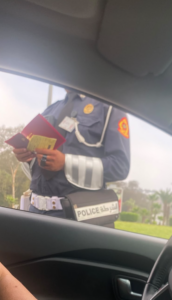
Moroccan Police officer writing a fine
The officer lowered the amount to 350 dirhams. Photo credit: Mary. W

When a fine starts to look negotiable

After being told they could not pay the full amount, the officer lowered the figure to 350 dirhams, around €32. For the couple, this was difficult to understand. A fine is normally a fixed penalty: you break a rule, you receive the corresponding fine and you pay it. At this point, however, the amount appeared to have some room for negotiation. The officer began haggling with them over how much they could pay, rather than simply telling them how to settle a fixed penalty.

They were not trying to negotiate the fine; they were simply trying to explain that they did not have the amount the officer had initially demanded. Eventually, the officer agreed to accept 150 dirhams, roughly €14, and they were allowed to continue their journey. After a week of sightseeing, driving and exploring Morocco, their final encounter with the country’s roads had left them with a very strange impression of how a traffic fine was supposed to work.

What the rules actually say

There is an important distinction between the couples experience and the formal Moroccan system. Being stopped by police while driving is not unusual in Morocco, and current government travel advice warns motorists that driving conditions can differ considerably from those in Britain and Spain and advises particular care on the roads. Morocco does have an official system of fixed traffic penalties. The country’s General Treasury publishes three classes of road offence, with standard amounts of 700, 500 and 300 dirhams.

Reduced amounts can apply when fines are paid promptly, meaning the amount paid can legitimately vary according to the offence and when the penalty is settled. That is different from what happened here, however. In this case, the amount appeared to change after the couple explained that they did not have enough cash to pay the original 400-dirham demand.

Not necessarily the usual process

There are, however, published reports of corruption involving Moroccan law enforcement, including allegations of officers soliciting money during traffic stops. A 2025 review by the U4 Anti-Corruption Resource Centre, operated in collaboration with Transparency International, says such reports include motorists paying less than the prescribed fine.

That does not establish that corruption occurred in this case, but it pretty well seems like it. The experience left them questioning how the system worked after the officer repeatedly changed the amount he was prepared to accept.

A strange end to the trip

For the couple, the experience left them questioning how the system worked and, in particular, how a penalty could change during a roadside conversation. For anyone from Spain considering driving to Morocco, it is worth remembering that roadside procedures may work differently from those they are used to at home.

A police stop itself is not unusual, and Morocco has formal traffic penalties, but this experience was far removed from the straightforward fixed fine they had expected. They paid their 150 dirhams and were able to continue on their way, but the explanation they were left with was still the same one that had started the whole episode. So remember when visiting, don’t drive over white lines, regardless of where on the road they are located.

Continue Reading

%

The Spanish City Where Britain Built A Neighbourhood, Started Football And Introduced Golf

Published

on

the-spanish-city-where-britain-built-a-neighbourhood,-started-football-and-introduced-golf

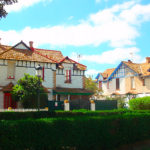
Walk through the Barrio Reina Victoria and the British influence is difficult to miss. Photo credit: Jose A CC 2.0/Wikipedia

Would you believe me if I told you there is a little British neighbourhood hidden away in Huelva? Known as the Barrio Reina Victoria, the Barrio Obrero and, rather fittingly, the Barrio Inglés, it isn’t an expat community living in Spain. The entire neighbourhood was built in British styles, with pitched roofs, chimneys, timber details, gardens and the sort of architecture you would expect to find in Britain rather than southern Spain.

But the really fascinating part is that Huelva became home to what has been described as Spain’s first unofficial British colony.  Long before British retirees began settling along the Spanish coast, the Rio Tinto mines attracted a British community that established its own homes, clubs, sports and way of life in this corner of Andalucía. The Barrio Reina Victoria was one of the most visible results of that extraordinary period, a British-built neighbourhood that has survived for more than a century.

When Britain arrived in Huelva

The story starts in 1873, when the Rio Tinto mines were sold to foreign investors and the British-owned Rio Tinto Company Limited took control of the operation. The mines were enormously important to the local economy, and British engineers, managers and workers began arriving in the province, many bringing their families with them. The community became remarkably self-contained. The British established housing, social clubs and recreational facilities, while bringing familiar customs and pastimes from home. Huelva was developing a British presence unlike anything most people would associate with Spain today.

As the population connected to the mining company grew, so did the demand for suitable housing. In 1916, the Rio Tinto Company commissioned architects Gonzalo Aguado and José Pérez Carasa to design a new residential neighbourhood in Huelva. The development followed the principles of the British garden-city movement, with houses surrounded by gardens and plenty of open space. The first plans contained 71 buildings and 213 homes, with the first phase completed by 1919. More houses were added during the 1920s, creating the neighbourhood that remains today.

A British neighbourhood under the Andalucían sun

Walk through the Barrio Reina Victoria and the British influence is difficult to miss. The houses feature pitched roofs, chimneys, exposed brick, timber framing, gables and dormer windows, while gardens and open spaces form an important part of the neighbourhood’s layout. Some of the later homes designed by British architect R.H. Morgan in the 1920s made the connection even more obvious, incorporating Old English architectural features and decorative timber work.

Yet this isn’t simply an English village transported wholesale to Spain. Local Andalusian influences were incorporated into the designs, producing an unusual combination of British architecture and southern Spanish surroundings. The result is particularly striking under the Huelva sunshine. Traditional British-looking houses sit behind gardens and colourful façades, creating a neighbourhood that feels familiar and completely foreign at the same time. The Barrio Reina Victoria was declared a Cultural Heritage Site and protected as a Historic Site in 2002, ensuring that this unusual piece of Huelva’s history is preserved.

The British brought football to Huelva

Believe it or not the mining community didn’t just come to mine, they also left an extraordinary sporting legacy. The Real Club Recreativo de Huelva was founded on 18 December 1889, emerging from the British community and its sporting activities. The club is officially recognised as the oldest football club in Spain. Its first recorded football match followed just days later, on 29 December 1889, when the then called ‘Huelva Recreation Club’ played against sailors from ships in the city’s port.

Huelva continued to make football history. On 13 August 1892, the Velodrome was inaugurated, becoming the first purpose-built football ground in Spain. So while football is now inseparable from Spanish culture, one of the country’s earliest chapters in the sport was written by British residents in Huelva more than 130 years ago.

And they brought golf too

Football wasn’t the only British sport to take root, golf arrived with the British mining community too. The North Lode Golf Club was established at Minas de Rio tinto in 1914, making it one of Spain’s earliest golf clubs.

Then, in 1916, the Club de Golf de Huelva was founded on land provided by the Rio Tinto Company. Huelva consequently became one of the country’s early centres for the sport, decades before golf courses became such a familiar sight to visitors and expats across Spain. The British miners had brought the sports they enjoyed at home and established them in their new surroundings.

The British legacy is still here

The Rio Tinto Company and the British mining era are no longer the force they once were, but their fingerprints remain all over Huelva. They can be found in the old mining and railway infrastructure, in the history of Recreativo, in the city’s early golf clubs and, perhaps most charmingly, in the streets of the Barrio Reina Victoria.

For British expats living in Spain, it is a reminder that the British connection with Andalucía didn’t begin with package holidays, cheap flights or retirement communities on the coast. It stretches back to the 19th century, when British workers arrived in Huelva in search of opportunity in one of the world’s most important mining regions. More than 150 years later, the neighbourhood they helped create still stands, with its British-style houses sitting beneath the Andalusian sun. You don’t need to cross the Channel to find ‘little Britain’, It’s hiding in Huelva.

Continue Reading

%

Breaking Point For Spanish Farmers As Soaring Diesel Costs Threaten To Bring Roads To A Standstill

Published

on

breaking-point-for-spanish-farmers-as-soaring-diesel-costs-threaten-to-bring-roads-to-a-standstill

”We’re already struggling to pay for the fuel” Photo credit: Pedro Pascual/Shutterstock

Farmers have finally reached breaking point, as diesel has become so expensive the people producing the food on Spain’s shelves say they can no longer absorb the extra cost, and with a fuel subsidy due to disappear at the end of September, the tractors are preparing to hit the roads.

For anyone living in Spain, this is not simply another farmers’ dispute happening somewhere in the countryside. If the protests turn into major road blockades, getting around could become more difficult. If fuel costs keep climbing, the food bill could rise again. And if farming becomes too expensive to make a living from, there is a much bigger question about who will produce the food we all expect to find in the shops.

Farmers say diesel costs have become impossible

Spain’s three main agricultural organisations, ASAJA (Spanish Association of Young Farmers), COAG (Coordinator of Farmers’ and Livestock Farmers’ Organisations) and UPA (Union of Small Farmers and Livestock Farmers), have announced nationwide mobilisations over the price of agricultural diesel. The dates and locations have not yet been confirmed, but the organisations say the price of agricultural diesel has risen by 48 per cent in a year, reaching €1.649 per litre on September 7. 

The timing could hardly be worse for farmers. September and October are not exactly quiet months on Spanish farms, with harvesting, grape picking, cereal sowing, maize work and the olive harvest all requiring machinery and fuel. ASAJA estimates that autumn agricultural work across 22 million hectares could cost farmers at least €200 million more in diesel than last year. 

What happens when farmers take to the roads?

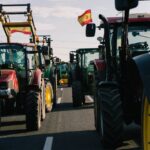
Nobody yet knows exactly what the coming protests will look like because the organisations have not announced their routes. But anyone who remembers Spain’s previous tractor protests will know why motorists should pay attention. Large agricultural demonstrations can involve convoys of tractors moving slowly along roads, concentrations around cities and blockades affecting major routes. That can mean delays for commuters, people travelling to airports and holidaymakers trying to cross affected areas. It does not mean Spain is about to grind to a halt. Nor does it mean every motorway will be blocked.

But if sizeable tractor protests take place on important transport routes, there could be local disruption and longer journey times, particularly in agricultural regions. There is a good reason to take the possibility seriously. In January this year, road restrictions that held up almost 2,000 lorries in northern Spain were enough to disrupt supermarket deliveries, with around 150 shops in Galicia, Asturias, Cantabria and León reporting supply problems, particularly involving fresh food. More than 90 per cent of goods consumed in Spain are transported by road, according to transport-sector representatives cited at the time.

Why should shoppers care about diesel?

Because diesel does not just power tractors, it is used to plough fields, sow crops, harvest them and transport produce. Fuel is also part of the cost of moving food between farms, warehouses, processors, markets and supermarkets. That means a prolonged rise in energy costs can work its way through the food chain. Farmers may initially absorb some of the increase themselves, particularly when they have little power to negotiate the price they receive for their crops. But if production becomes too expensive, some of those costs can eventually be passed along the chain.

And there is another problem: farmers cannot simply decide to charge whatever they like. Eurostat reported this month that agricultural input prices across the EU rose 4.7 per cent year-on-year in the second quarter of 2026. Energy and lubricants were up 22 per cent and fertilisers 13.4 per cent, while average agricultural output prices actually fell 5.8 per cent. In other words, farmers can be paying more to produce food while receiving less for what they sell, and that is a pretty unpleasant business model.

Could food become even more expensive?

Without a doubt yes, It could. Particularly if high fuel prices persist, and Spain’s latest inflation figures already show how closely transport costs are hitting household finances. The annual inflation rate reached 4.3 per cent in August, with transport prices rising 9.5 per cent, largely because of fuel. Food and non-alcoholic beverages were also up 2.3 per cent year-on-year. That does not mean a 48 per cent rise in agricultural diesel will translate into a 48 per cent rise in food prices. Fuel is only one part of the cost of producing and transporting food.

But if diesel, fertiliser and other inputs remain expensive at the same time, the pressure builds at several stages of the supply chain. The European Commission tracks this transmission from what farmers receive, through processors and retailers, to what consumers eventually pay. For shoppers, that could mean more expensive fruit, vegetables, cereals, meat and other products over time, particularly where production or transport is particularly fuel-intensive.

A farmer talks the truth

For farmers on the ground, the rising costs are already being felt. Carlos, a farmer in Cádiz, told the EWN: “Things are getting serious. We’re already struggling to pay for the fuel, which means working our fields is more expensive. Feeding our animals and caring for our crops is more expensive, which means we need to sell them for more.

“It’s not just going to affect farmers. Food will become more expensive, and people are already struggling with the rising costs. If the government doesn’t step in, I don’t see things getting better. And, to be honest, I think we’re in this situation because of this government.”

Why farmers need to be able to keep farming

Whatever you think about tractor protests, there is a fairly straightforward reason for consumers to care about farmers being able to cover their costs, Spain needs farmers to keep producing food. If running a farm becomes financially impossible, the consequences do not stop at the farm gate. Production can fall, more food may need to be sourced from elsewhere and the country becomes more exposed to price and supply problems beyond its control.

That does not mean every demand made by an agricultural organisation has to be accepted. It does mean the underlying problem deserves attention. The government has already been warned that the sector is reaching its limit. Agriculture Minister Luis Planas is due to meet ASAJA, COAG and UPA on September 22, while Economy Minister Carlos Cuerpo is meeting representatives of the food industry, agricultural commodities trade and fertiliser manufacturers.

What happens after September 30?

The immediate issue is the €0.20-per-litre agricultural diesel support, which expires on September 30. The government has extended the measure until that date, but farmers say there is still no clear replacement on the table. For people filling their own cars, paying the supermarket bill and trying to get around Spain, what happens next matters.

If the tractors stay parked, farmers say they cannot afford to keep working, if they take to the roads, drivers may face disruption. And if fuel prices continue climbing without relief anywhere along the food chain, it will not be farmers alone who end up paying the price so now more than ever we need to support our local farmers.

Continue Reading
Advertisement
Advertisement

Spanish Real Estate Agents

Tags

Trending

Copyright © 2017 Spanish Property & News