
€50m drug bust
Cocaine bricks stamped with luxury watch logo expose €50m Costa del Sol empire

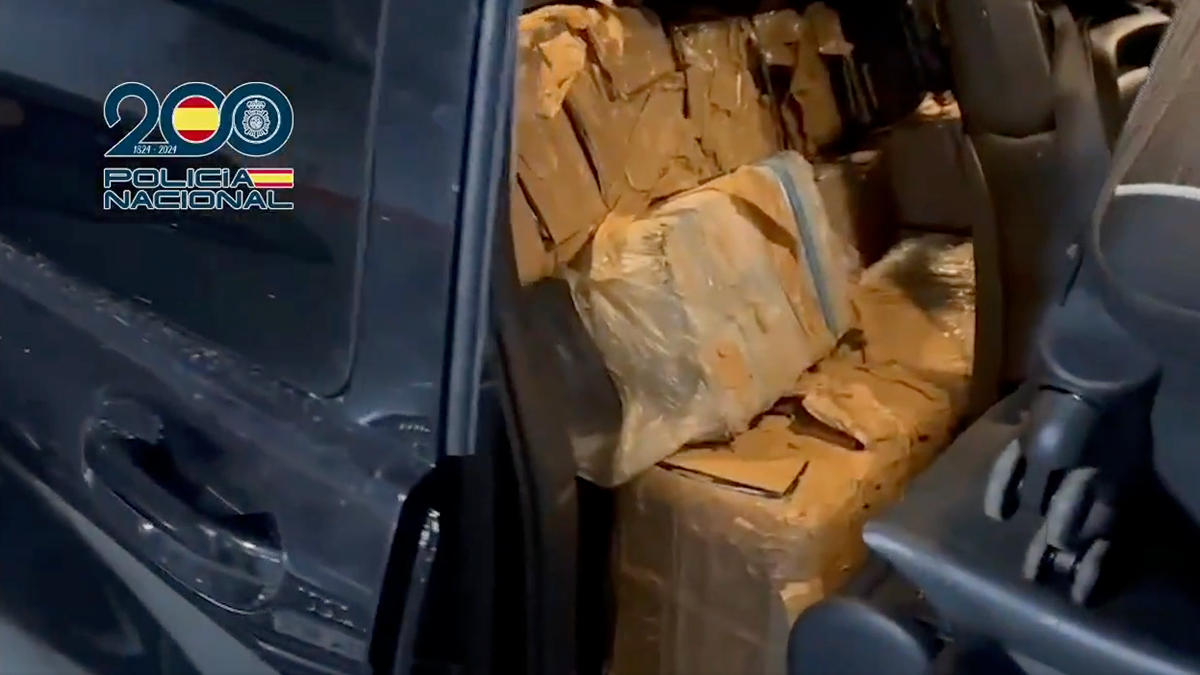
Cocaine packages stacked inside a seized vehicle during the Costa del Sol raids. Credit: Policía Nacional / X
Police cutting open the cocaine found it stamped with a Swiss watchmaker’s logo, one flourish in a network that had been hiding behind Marbella’s showroom cars and hillside mansions. The €50 million operation then used those same cars to run convoys all over Spain.
Cocaine bricks stamped with a luxury watch logo
Officers cutting into the seized packages found a stamp pressed into the cocaine itself: the logo of Vacheron Constantin, the Swiss watchmaker whose timepieces sell for tens of thousands of euros. Police said it was a branding trick used by producers to mark which shipment a batch belonged to. It fit a network that dealt almost entirely in appearances. The Policía Nacional has dismantled a family-run cocaine operation that used the Costa del Sol’s luxury car trade, and the image that comes with it, to move drugs worth an estimated €50 million.
Fifteen arrested and 2,700 kilos of cocaine seized
Fifteen people have been detained and 12 have been sent to prison while the case continues, according to the Policía Nacional. Officers seized more than 2,700 kilos of cocaine in total, alongside 800 grams of tusi, a pink synthetic drug mixture increasingly common on the Spanish party scene.
The arrests came in two main waves. Four simultaneous raids on April 10 targeted three homes and a workshop around Málaga, recovering 1,434 kilos of cocaine, while a separate raid on a villa in Sant Just Desvern, near Barcelona, turned up a further 1,351 kilos that had been stored there. A second wave of raids in June, focused on Marbella and Estepona, picked up more suspects working further down the chain, with additional arrests made over the summer through European arrest warrants.
How the Costa del Sol became a hidden ‘nursery’ for the drugs
Investigators said the cocaine arrived in Spain from Colombia through the port of Algeciras. From there it was driven to safe houses and workshops around Málaga, Estepona, Marbella and Churriana, which the organisation used purely to store the drugs before moving them on.
Investigators have described the role played by these Costa del Sol properties as a ‘guardería’ (Spanish for nursery), reflecting how the drugs were minded and kept safe rather than sold locally. The towns used, Estepona, Marbella and Churriana among them, are some of the most popular on the coast with British and other foreign residents, though nothing in the investigation suggests the drugs were intended for local distribution.
Barcelona worked the same way. The villa in Sant Just Desvern held more than a tonne of cocaine and nothing else, investigators found, its sole function to keep the shipment out of sight until it was ready to travel again, onward through Madrid and the Levante towards France and the rest of the European Union.
How a family network ran like a military unit
The organisation, described by investigators as Albanian in origin, had operated since at least 2016 and relied on family ties to keep outsiders out. Police said its leaders lived in mansions around Marbella, avoided phones and other traceable communication, and only ever discussed business face to face.
Some of those lower down the organisation were recruited specifically to rent flats and garages in their own names, according to investigators, giving the leadership an important amount of distance from the properties used to store the drugs. Carlos Prieto, the Spanish government’s delegate in Cataluña, said after the Barcelona arrests that organised crime would find no refuge in the region.
The investigation opened last year after Colombian authorities warned Spanish police about a shipment heading their way. What followed was months of surveillance before the raids in April finally moved in.
Showroom cars, fake jobs and 200km/h convoys
The group’s cover came from a network of businesses in the car trade, which supplied high-end vehicles registered to front men and handed out employment contracts that let members appear to hold down ordinary jobs. Police seized 29 luxury vehicles this way, with a further eight embargoed, alongside two motorcycles, two handguns, more than €13,800 in cash, jewellery, watches and frozen cryptocurrency and bank accounts.
The fleet included high-performance Audi models used instead of trucks to move the cocaine itself, with four or five lookout vehicles escorting each convoy to watch for police. Investigators believed the organisation acted as a logistics contractor in its own right, moving shipments on behalf of other criminal groups rather than only trafficking on its own account.
Convoys like these covered vast distances, and fast. Investigators tracked one that travelled more than 2,000 kilometres in a single day, at speeds above 200 kilometres an hour, running on provisional number plates that never showed up in police databases.
The case is the latest in a summer of heavy anti-trafficking activity along the coast, after Guardia Civil raids on Gibraltar border towns and a Policía Nacional operation against a ‘go fast’ cocaine run through Mijas.
A separate summer operation across Spain saw 78 people arrested and €24 million worth of drugs seized in a combined smuggling and migrant-trafficking case. All those detained retain the presumption of innocence while the case continues through the instrucción (the pre-trial phase in which Spanish investigating judges gather evidence before deciding whether it goes to trial).



Spanish airline Vueling named Europe’s best low-cost carrier for 2026
Former Brookside actor on UK’s Most Wanted list arrested in Spain over £13.6m fraud
Cocaine bricks stamped with luxury watch logo expose €50m Costa del Sol empire

One Critically Injured And Nine Others Hurt After Carbon Monoxide Leak Aboard Ship Docked In Barcelona Port

Max Verstappen works with new race engineer at Italian Grand Prix

EXPLAINER: Inside The Row Over The Right-Wing Mayor Of Madrid’s €6m Penthouse – And Why It Could Offer A Lifeline To Pedro Sanchez


-
 Barcelona2 weeks ago
One Critically Injured And Nine Others Hurt After Carbon Monoxide Leak Aboard Ship Docked In Barcelona Port
-
 Uncategorized2 weeks ago
Max Verstappen works with new race engineer at Italian Grand Prix
-
 Chamberi2 weeks ago
EXPLAINER: Inside The Row Over The Right-Wing Mayor Of Madrid’s €6m Penthouse – And Why It Could Offer A Lifeline To Pedro Sanchez
-
Holiday rentals1 week ago
Ibiza council hits illegal tourist rental with €793,000 fine – but will the owner pay that much?
-

 New Developments2 weeks ago
Luxury Villas For Sale, Estepona – ProjectL1
-
bravery2 weeks ago
10-year-old jumps from burning French farmhouse, saves two dogs and teddy
-
Central European Time2 weeks ago
Spain’s 2026 plan to end clock changes has failed, and the next change is already locked in
-
 Uncategorized2 weeks ago
Max Verstappen hails