Connect with us

%

Drivers Name Spain’s Best And Worst Motorway Stops And Andalucía Features At Both Ends

Published

on

drivers-name-spain’s-best-and-worst-motorway-stops-and-andalucia-features-at-both-ends

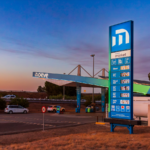
Prices are a particularly common complaint at several of Spain’s poorly rated larger motorway service areas. Photo credit:Miguel Perfectti/Shutterstock

A dirty toilet, an expensive sandwich or an unfriendly member of staff can turn a quick motorway stop into one of the worst parts of a long journey. And according to millions of online reviews, Spain has some serious room for improvement when it comes to its motorway service stations.

A new European ranking has placed Spain among the countries with the lowest-rated motorway stops, with one Spanish petrol station receiving just 2.44 stars out of five. However, there are also establishments receiving almost perfect scores, including one in Cantabria that ranks among the best in Europe.

Spain’s best-rated motorway service stations

The highest-rated establishment in Spain is Moeve Castañeda, located on the A-8 westbound near Puente Viesgo in Cantabria. It received 4.72 stars out of five from 103 Google ratings, putting it second in the entire European ranking.

In second place nationally is Plenergy Fontellas, on the A-68 near Fontellas in Navarra, with 4.63 stars from 246 ratings. Unlike a traditional motorway service station, it offers toilets but no shop or restaurant. Drivers particularly praise its cheaper fuel and helpful staff. Third place goes to La Noguera de Pozoseco, a Repsol station on the A-3 in Cuenca, with 4.59 stars from 712 ratings. 

The highest-rated Andalucían establishment to appear in Spain’s national top ten is Canges del Hoyo, on the A-376 southbound near Utrera in Sevilla province. It received 4.50 stars from 160 ratings, placing fourth nationally.

The study did not publish a breakdown of the individual positive comments for Canges del Hoyo or Moeve Castañeda, so it is not possible to establish precisely which facilities account for their scores. However, the review analysis suggests that customer service, clean toilets, general cleanliness and parking are among the things drivers appreciate most.

The worst-rated petrol stations in Spain

At the other end of the ranking is Agla Carmona, on the A-4 southbound near Carmona in Sevilla province. With just 2.44 stars from 409 Google ratings, it is the lowest-rated establishment in Spain and the fifth worst in the entire European study. The complaints are particularly revealing. According to the researchers, almost all its one-star reviews criticise staff or describe being refused access to the toilets without making a purchase.

For drivers who have stopped after hours on the road, being told they cannot use a toilet without buying something is clearly a source of considerable frustration. The second-lowest Spanish rating belongs to Área de Servicio Lleida, on the AP-2 near Alfés, with 2.76 stars from 1,953 reviews. La Plana on the AP-7 near Nules in Castellón follows with 2.79 stars from 4,719 ratings. Prices are a particularly common complaint at several of Spain’s poorly rated larger motorway service areas. 

What were the complaints?

The research also examined what people actually write in their reviews, revealing that the price of petrol is not the biggest source of frustration when stopping during a journey Toilets account for 22.6 per cent of complaints across Europe, followed by staff and customer service at 13.8 per cent. Prices account for 10.1 per cent, while general cleanliness represents another 9.3 per cent.

Interestingly, customer service also receives the largest share of positive comments, accounting for 17.8 per cent of praise. Toilets come second at 15.4 per cent, followed by cleanliness at 12.8 per cent. The findings also challenge the assumption that bigger motorway service stations necessarily offer a better experience. Eight of Spain’s ten highest-rated establishments are petrol stations without hot food, while seven of the ten lowest-rated are larger service areas with more extensive facilities.

%

Munch And Picasso Together In Artistic First

Published

on

munch-and-picasso-together-in-artistic-first

Picasso and Munch side by side. Credit MPFB

Art enthusiasts can explore more than 100 works by two modern masters at the Costa del Sol museum until February 2027.

Malaga is welcoming an unusual meeting of two artistic giants, with a new exhibition bringing together the work of Norwegian painter Edvard Munch and the city’s own Pablo Picasso in an expressionism extravaganza.

Munch-Picasso opened at the Museo Picasso Malaga on October 30 and runs until February 28, 2027. Around 100 paintings, drawings and prints allow visitors to compare two artists who helped transform modern art. Although the pair never met, their work shares a fascination with human emotion, experimentation and the boundaries of traditional painting.

What makes the exhibition special?

Curated by art historian Paloma Alarcó, the exhibition explores how Munch and Picasso used art to express complex feelings and experiences. Munch is known for works such as The Scream, with its haunting portrayal of anxiety. Picasso, born in Malaga in 1881, became famous for his radical approach to form and perspective, particularly through Cubism.

Rather than suggesting one directly influenced the other, the exhibition presents an imaginary encounter between two artists who challenged convention in their own ways.

Their shared subjects include love, death, loneliness, desire and modern life. Visitors can see how Munch used intense colour and expressive lines, while Picasso experimented with fragmented forms and multiple viewpoints.

A journey through modern art

The exhibition is arranged across two floors of the museum, with themed sections examining the artists’ lives, creative processes and recurring interests.

Sections explore self-portraits, the impact of illness and loss, and the cafes and bohemian settings that shaped their work. The display also examines how both artists transformed the human figure, using distortion and fragmentation to communicate feelings that conventional representation could not easily express.

Organisers say the exhibition offers new perspectives on two of the most important figures in twentieth-century art.

How to visit Munch-Picasso

The Museo Picasso Malaga is housed in the Palacio de Buenavista on Calle San Agustín, in the city’s historic centre. The museum has previously received support to preserve and display Picasso’s work in his home city, as reported in this EWN article about funding for the Picasso Museum.

General admission costs €13 and includes access to the museum’s other current exhibitions. Visitors can check official museum tickets and opening times before travelling. The exhibition has been made possible with the collaboration of the Munch Museum in Oslo and the Fundación Almine y Bernard Ruiz-Picasso.

For readers planning a cultural day out, the show offers a chance to see how two very different artists explored many of the same questions about what it means to be human.

For more background on Malaga’s art scene, EWN has also covered a modernist exhibition at the Carmen Thyssen Museum.

Continue Reading

%

Black Friday Shock As Just 6% Of Deals Pass OCU’s Genuine Bargain Test

Published

on

black-friday-shock-as-just-6%-of-deals-pass-ocu’s-genuine-bargain-test

The OCU compared the proportion of bargains found on different retail websites. Photo credit:No-Mad/Shutterstock

Black Friday shoppers hoping to find a genuine bargain may have to search harder than expected. Just 6 per cent of more than 12,000 online prices checked by the Organisation of Consumers and Users (OCU) qualify as real and significant discounts, according to its analysis published on November 24.

The investigation covers electronics and household appliances, comparing current prices with the lowest prices at which the same products had been available in recent months. The monitoring covers several major online retailers. The results suggest that worthwhile offers remain scarce, even across categories heavily promoted during the annual sales event.

Which products offer the best chance of a bargain?

Sound equipment and robot vacuum cleaners are currently the strongest categories, with 26 per cent of prices checked in each group qualifying as significant offers. Kitchen robots follow at 17 per cent, while televisions reach 13 per cent. E-readers, headphones, smartwatches, activity trackers and computers also have more than one in ten prices meeting the OCU’s criteria.

The picture is less encouraging for anyone planning to replace a major household appliance. Just 3 per cent of prices checked for tumble dryers, washing machines, dishwashers and fridges were considered genuine bargains. These percentages show the share of prices meeting the OCU’s test, not the amount shoppers could save. They do not mean every model in a category is discounted.

Where are the strongest offers?

The OCU compared the proportion of bargains found on different retail websites. Xiaomi currently leads, with 24 per cent of monitored prices classed as significant discounts. Amazon follows on 19 per cent, ahead of MediaMarkt on 17 per cent and Fnac on 11 per cent. Carrefour, Cecotec and SiHogar each have up to 9 per cent of prices classed as worthwhile offers.

The figures are a starting point, not a guarantee of the lowest price for a particular product. Shoppers should compare the exact model and delivery costs before ordering.

How the OCU is judging a genuine deal

The key test is whether the current price beats the lowest price at which the product had been available on major online platforms during the preceding months. A discount against a higher reference price may look impressive without making the offer a good buy. The organisation says its analysis is finding more price rises than reductions overall and warns that some advertised promotions are not genuine.

Last year, the OCU reported nine online platforms to consumer authorities over alleged false discounts. It said reductions had been calculated using arbitrary reference prices, such as manufacturers’ recommended prices, rather than the lowest price applied during the previous 30 days.

Check the price before you buy

Under Spain’s Retail Trade Regulation Act, the previous price shown when a retailer advertises a reduction must generally be the lowest price it charged for the identical product during the 30 days before the discount. The OCU offers two free online tools: a deal-finding service and price adviser. They allow consumers to check prices and assess whether a promotion represents a real saving.

It is also asking shoppers who spot suspicious promotions to flag them on social media using #timofertasBF, so potential breaches can be passed to consumer authorities. With Black Friday falling on November 27, shoppers still have a few days to compare prices. A sale label alone is no reason to rush.

Continue Reading

%

Costa Del Sol Walking Football Grows

Published

on

costa-del-sol-walking-football-grows

At the Finca Naundrup in Cañahonda. Credit: RCFB

From six-a-side beginnings to international tournaments, Walking Football is attracting players across the coast.

Walking football in Costa del Sol is growing from Nerja to Estepona, with more Spanish-born players joining expatriates, according to Mark Coleman, founder of Spain Walking Football.

The game was created in Chesterfield, England, in 2009 by John Croot, chairman of Chesterfield FC. He wanted older players to keep enjoying football and support active ageing. “John invented Walking Football, a slower paced small sided hybrid of the chaotic 11 a side version that we all know,” Coleman told Euro Weekly News.

Usually aimed at men over 50 and women over 40, the game keeps football’s passing and teamwork but removes running. Smaller teams and modified rules make it accessible to people who want to stay active or return after years away.

Walking football is widely acknowledged by cardiologists and chief medical officers as an ideal activity after heart surgery. In the UK more than 100,000 people play every week, and the sport is now played in over 60 countries. Its rapid growth has also earned recognition from both UEFA and FIFA.

From expat beginnings to Spanish participation

Walking football arrived in Spain through expatriate players around 2015, Coleman said. Growth has accelerated over the past five years, with clubs now playing across mainland Spain. “More and more Spanish born players and clubs made up of entirely Spanish players are participating in the game,” he said.

Coleman said local interest is helping the sport develop beyond its original expatriate base. Players can take part socially at a nearby club or work towards selection for teams.

“Despite the project making huge progress and the opportunities for players to represent Spain multiplying fivefold in a relatively short space of time it is still the subject of criticism from those that see the project as a ‘Guiri group’ . ”

Team Spain expands fivefold

Team Spain Walking Football was formed in late 2022 after Coleman was approached to send a team to the World Nations Cup at St George’s Park, England’s national football centre. The men’s over-50s side reached the semi-finals at its first tournament, losing 1-0 to eventual winners England.

Since then, Team Spain has grown from one representative side to five: men’s over-50s and over-60s, plus women’s over-40s, over-50s and over-60s.

Coleman said the project developed through recruitment drives, trials and visits to groups around Spain. He said it gives players chances to represent Spain internationally while encouraging more people to try the sport.

Costa del Sol teams make their mark

Results show local progress. CD Marbella Walking Football won the fifth Esquina Park Rangers tournament in Torrevieja, finishing on 38 points — one ahead of hosts Esquina Park Rangers.

Sixteen clubs took part, representing England, Wales, Scotland, Argentina and regions of Spain. Marbella won all eight matches on the final day to claim the title.

The result adds to a competition calendar for Costa del Sol players. At the European Walking Football Championships in November, Spain’s women’s over-60s team won silver.

Why players keep coming back

Walking football offers more than a match. Coleman points to its physical and mental health benefits, social inclusion and community links as reasons for its growth.

The format is slower than traditional football, but still rewards passing, positioning and teamwork. Players can enjoy competition without the sprinting and physical contact of the full game. For many, the social side matters just as much: a session offers exercise, friendship and a reason to get together.

How to get involved

Players can find local clubs through the Spain Walking Football club directory, which lists teams and contact details. Costa del Sol clubs include Real Calahonda, Malaga WFC, Torrox Tornadoes, Nerja United and Benalmadena.

Those interested in Team Spain or trials can contact Coleman through the organisation’s contacts page. Newcomers should check with their chosen club about age groups, session times and whether they need to register before attending.

With participation spreading from Nerja to Estepona and more Spanish players joining, Coleman’s message is clear: walking football is becoming a game for the whole community.

Continue Reading

Trending

Copyright © 2017 Spanish Property & News