Connect with us

%

Calvia Crowned European Capital Of Tourism

Published

on

calvia-crowned-european-capital-of-tourism

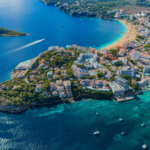
Calvia is crowned European Capital of Tourism 2027 Credit: Shutterstock/MikeWorkman

For decades, British holidaymakers have flocked to Mallorca’s southwestern coastline in search of sunshine, sandy beaches and Mediterranean living. Now, the municipality behind some of the island’s best-known holiday resorts is receiving international recognition for its efforts to reinvent the very industry that put it on the map.

Calvia has officially been named European Capital of Tourism 2027, securing a prestigious European Commission award in the category for destinations with populations of between 25,000 and 100,000.

Home to popular resorts including Magaluf, Palmanova, Santa Ponsa, Peguera and Portals Nous, the municipality will spend the coming year showcasing its transformation from a traditional mass-market holiday destination into one with a more sustainable, diverse and year-round tourism offering.

Mallorca triumphs over European rivals

The announcement was made in Brussels on Thursday, November 19, following a presentation by Calvia mayor Juan Antonio Amengual before a panel of European judges.

Calvia emerged victorious from an initial pool of 40 applicants representing 17 countries, beating seven other finalists, including fellow Balearic destination Ibiza, France’s Calais and Croatia’s Zadar.

The award recognises destinations that are pioneering improvements in environmental sustainability, accessibility, technology, cultural heritage and the promotion of local creativity.

During the final presentation, Calvia’s delegation showcased how the municipality has evolved over the past three decades, highlighting its efforts to develop a tourism industry that benefits both visitors and the people who call the area home.

Slovenia’s capital, Ljubljana, secured the equivalent title in the category for destinations with more than 100,000 inhabitants.

Moving beyond Mallorca’s sun-and-sea reputation

For many British visitors, the name Magaluf still conjures up images of lively nightlife and traditional package holidays. However, Calvia is increasingly looking to attract visitors for reasons that extend far beyond its beaches and entertainment venues.

The European Commission singled out the municipality’s determination to reduce its dependence on high-volume tourism and develop an industry that operates more sustainably throughout the year.

Calvia’s broader tourism strategy includes promoting its gastronomic scene, sporting events, cultural heritage and natural surroundings, encouraging visitors to discover a different side to the municipality.

Recent promotional efforts have also highlighted the ecological importance of Magaluf’s wetlands and the area’s potential as a destination for film and cultural events.

Rather than simply encouraging more people to visit Mallorca, the approach seeks to reconsider when they visit, what they experience and how their holidays benefit the surrounding community.

What could the award mean for British expats and local businesses?

For Calvia’s sizeable international community, one of the most significant aspects of the recognition is its emphasis on improving the relationship between tourism and everyday residential life.

The European jury acknowledged the municipality’s efforts to ensure that the tourism industry contributes to the long-term economic, social and environmental wellbeing of the area.

A stronger year-round tourism economy could also bring advantages for restaurants, shops and leisure businesses that traditionally experience a considerable downturn during the winter months.

For residents, a less seasonal economy could potentially translate into more businesses remaining open outside the summer season, greater employment stability and a wider choice of activities throughout the year.

However, the award itself does not introduce new tourism regulations or guarantee immediate changes to local services.

What can visitors expect in 2027?

Calvia Town Hall is already preparing a programme of initiatives to mark its year as European Capital of Tourism.

The municipality will receive promotional backing from the European Commission and join an international network of destinations working towards more responsible and innovative tourism.

Throughout 2027, Calvia will have opportunities to share its experience with other European destinations while highlighting its own environmental projects and achievements.

The full calendar of activities has yet to be announced in the official statements published so far.

For an area that has welcomed generations of British holidaymakers, the recognition represents an important milestone. Calvia’s next chapter is not simply about attracting tourists, but about creating a destination that remains an appealing place to visit, live and work throughout the year.

%

Andy Taylor: Duran Duran Guitarist Dies Aged 65

Published

on

andy-taylor:-duran-duran-guitarist-dies-aged-65

Rest in peace Andy Taylor. Credit: ATFB

North East lad who helped shape pop in Duran Duran history leaves a lasting legacy.

Andy Taylor, the guitarist whose electrifying riffs helped make Duran Duran one of the biggest bands of the 1980s and 90s, has died aged 65 following a long battle with prostate cancer.

The musician, who lived in Ibiza for many years, died peacefully at home on November 23, surrounded by his family. His death was announced on November 25 by his family and former bandmates. The band’s official announcement of Andy Taylor’s death confirmed the news and included heartfelt tributes from his wife Tracey and his former bandmates.

Taylor passes after lengthy battle with cancer

Taylor was diagnosed with advanced prostate cancer in 2018. He revealed his condition publicly in 2022, when Duran Duran were inducted into the Rock & Roll Hall of Fame. His wife, Tracey, described him as a loving husband, father and grandfather, saying family always came first.

The band’s statement paid tribute to the guitarist’s distinctive sound, fiery playing and dry wit, remembering how he helped give their music its unmistakable character. Simon Le Bon, the group’s frontman, wrote: “There’s a massive Andy Taylor shaped hole in my heart. It’ll never close up; I won’t let it.”

From Northumberland to worldwide fame

Born Andrew James Taylor in Tynemouth, Northumberland, in 1961, he grew up in nearby Cullercoats, where his family worked in the fishing industry. He picked up a guitar aged 11 and began playing with local bands, performing at working men’s clubs and air force bases before leaving school early to pursue music.

His journey towards stardom began in April 1980, when he answered an advert in Melody Maker magazine seeking a “live-wire guitarist” for a Birmingham band. Taylor travelled south to audition for Duran Duran, impressing Nick Rhodes, John Taylor and Roger Taylor with his talent and experience. He was offered the job and moved to Birmingham. The classic line-up was completed when singer Simon Le Bon joined shortly afterwards.

Their early sound combined new wave, electronic pop and Taylor’s powerful guitar playing, helping create classics including Girls on Film, Rio and Hungry Like the Wolf. The band’s rise was unstoppable, with MTV videos introducing their music to millions around the world.

A legacy beyond the stage

Taylor left Duran Duran in 1986, later forming Power Station with John Taylor, Robert Palmer and Tony Thompson. He also enjoyed a successful solo career and worked as a producer. He reunited with Duran Duran in the early 2000s, recording the album Astronaut and touring with the original line-up.

Although illness prevented him from attending their 2022 Hall of Fame induction, he continued making music, contributing to their 2023 album Danse Macabre.

His final confirmed Spanish performance with Duran Duran was at San Javier, Murcia, in May 2005. The band returned to Spain in 2025, playing Marbella without him.

Duran Duran’s official tour archive lists the band’s Spanish dates in Barcelona, San Javier and Madrid in May 2005. Fans in Spain had another chance to see the group when Duran Duran performed at Marbella’s Starlite festival in July 2025, although Taylor was not part of that line-up.

Taylor leaves behind a remarkable musical legacy, a devoted family and millions of fans who will forever hear his guitar in the soundtrack of their lives.

Continue Reading

%

Canaries Migrant Crisis At Emergency Level

Published

on

canaries-migrant-crisis-at-emergency-level

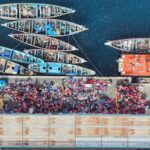
100s more migrants arrive in El Hierro. Credit: Salvamento Maritimo

Record arrivals overwhelm El Hierro as officials seek urgent support.

El Hierro in the Canaries has declared a Level Two emergency after a record influx of migrants overwhelmed services on the island, with more than 2,100 people rescued in a single day.

The Canary Islands Government activated its regional emergency plan at 3pm on Wednesday, November 25, citing exceptional health, social and security pressures caused by continued arrivals from West Africa.

The emergency follows Tuesday’s unprecedented arrivals. The previous daily high was set on November 14, when 1,580 people arrived across El Hierro, Gran Canaria and Tenerife. Tuesday’s arrivals included at least 203 women and 127 children; some boats had spent five to nine days at sea.

Fifteen cayucos brought around 2,100 people to El Hierro, according to emergency services. One person died during the crossing. Among those rescued was a four-day-old baby girl born at sea.

November has become the busiest month in the 32-year history of the Atlantic migration route, with more than 16,000 people reaching the islands, according to the regional government. The previous monthly record was 6,814 arrivals in November 2024.

Why are so many arriving now?

The massive surge has prompted questions about whether migrants are trying to reach Spain before a possible change of government, or believe they may benefit from the last days of the Sánchez government’s immigration policies.

The government’s proposed regularisation of undocumented migrants has become a major issue in the election campaign. Some political voices argue that a more welcoming approach could encourage arrivals. However, there is no evidence establishing that the current surge is being driven by people trying to arrive before a change of government.

Reasons for the journeys are varied. Many people come from countries facing poverty, instability or violence, including Senegal, Gambia, Mali and Guinea. Seasonal sea conditions can also make departures more likely in autumn. The crossing is still incredibly treacherous, and record arrivals do not mean the journey is safe.

Where are people being housed?

El Hierro, with a population of around 12,000, has become the main arrival point. Hundreds of people were still at the port of La Restinga on Wednesday after Tuesday’s rescues. The temporary reception centre and other accommodation were unable to cope with the volume.

Transfers to Tenerife and mainland Spain have been accelerated. Around 865 people who had arrived earlier left the island on Wednesday. The pressure is particularly acute for unaccompanied children: the regional government says more than 1,100 arrived in November, while thousands are already in its care.

What is the government proposing?

Madrid announced €15.18 million in additional funding earlier this month for more places in state-run centres and transfers between the islands and mainland Spain. A further €1 million was earmarked for Red Cross healthcare and first-response services, and an additional coastguard vessel was deployed.

The central government says it is also working with Senegal and Gambia to discourage dangerous departures. Sánchez said on Wednesday he hoped arrivals would fall in the coming days.

Clavijo has called for urgent European support and asked European Commission president Ursula von der Leyen for a meeting. He has also called for faster transfers of unaccompanied minors to other regions.

Is there a solution?

The island’s president, Alpidio Armas, has previously said more resources and faster transfers are needed, warning that more people are arriving than can be moved on.

The immediate challenge is to move people safely from El Hierro, increase reception capacity and provide enough staff for rescue and healthcare teams. Longer-term measures depend on cooperation with countries of origin and transit, as well as European support.

Will arrivals keep rising?

A further increase cannot be ruled out. Autumn often brings more favourable conditions for Atlantic crossings, and arrivals can change quickly with weather and departure patterns. But a continued rise is not certain; sea conditions can deteriorate rapidly as winter approaches.

The political debate may influence perceptions, but it is not possible to predict arrivals on that basis alone. The recent record figures show the scale of the pressure, not what will happen next.

Salvamento Marítimo under strain

Salvamento Marítimo crews have reported exhaustion and shifts lasting up to 18 hours. The agency says it has reinforced its operation around El Hierro with additional vessels and crews.

The human cost was illustrated by the baby born during the crossing. Clavijo said he had just been told about the four-day-old girl and described it as “the reality we have to live with”. He added that people cannot fully understand the situation until they have stood at the quay and seen how exhausted arrivals are. The mother and baby were reported to be in good health, although medical staff said the birth had been extremely difficult.

For El Hierro, the emergency declaration is an attempt to bring more help to an island whose reception and rescue systems are stretched. Whether new resources can match the pace of arrivals remains the central question.

Continue Reading

%

New 400km Underwater Electricity Link

Published

on

new-400km-underwater-electricity-link

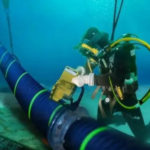
A 400km connection beneath the Mediterranean Credit: Pinterest/NetworkEncyclopedia

Hundreds of kilometres beneath the Mediterranean, a new electricity connection is set to reshape how Mallorca powers its homes, businesses and tourism industry, marking a significant milestone in the Balearic Islands’ transition towards cleaner energy.

Spain’s Council of Ministers approved its Electricity Transmission Grid Plan for 2030 on Friday, November 20, paving the way for a second electricity connection between Mallorca and mainland Spain, alongside major improvements to the islands’ existing infrastructure.

The developments form part of a record €17.143 billion national investment programme designed to strengthen electricity supplies, accommodate growing demand and increase the use of renewable energy.

A 400km connection beneath the Mediterranean

One of the most ambitious projects affecting the Balearics is a new electricity link connecting Castellón, on Spain’s eastern coastline, with a new converter station at Sant Martí in Mallorca.

Stretching approximately 400 kilometres, the connection will run beneath the Mediterranean for around 390 kilometres, with a combined transmission capacity of 400 megawatts.

According to Spanish electricity transmission operator Red Eléctrica, the new infrastructure, working alongside the existing mainland connection, will be capable of meeting 65 per cent of the Balearic Islands’ electricity demand.

The environmental benefits are also expected to be considerable, with the project forecast to prevent more than 900,000 tonnes of carbon dioxide emissions annually.

For an archipelago traditionally reliant on local power generation, strengthening its connection with mainland Spain represents an important step towards a more interconnected energy system.

What does it mean for Mallorca’s residents?

From air conditioning during the height of summer to the growing number of electric vehicles on Mallorca’s roads, the island’s electricity infrastructure must accommodate evolving demands from residents, businesses and visitors.

The approved plan includes improvements to the distribution network to support growing residential and industrial electricity requirements.

Inca has been identified as an area for infrastructure development, while new substations are planned in locations including Cala d’Or, Carnatge, Labritja and Figueral across the Balearics.

For homeowners and businesses, the wider objective is to create a more resilient electricity network capable of accommodating future demand while improving security of supply.

However, the announcement does not include any immediate reductions in household electricity bills, and the projected savings for Spain’s electricity system should not be interpreted as guaranteed savings for individual consumers.

Palma and Alcudia ports prepare for a greener future

The transformation will extend beyond homes and businesses, with the electrification of the Balearic Islands’ ports forming another important element of the investment programme.

Palma is set to benefit from a new electricity substation and a high-voltage connection between Santa Ponsa and the Port of Palma, alongside three additional power lines linking existing substations.

Infrastructure improvements are also planned to support the electrification of Alcudia’s port, as well as ports in Ibiza and Menorca.

Port electrification can enable vessels to connect to land-based electricity supplies while berthed, reducing the need to keep onboard engines running and potentially helping to improve air quality in surrounding areas.

This could be particularly significant for communities living close to Mallorca’s busy maritime gateways.

Mallorca and Menorca to become better connected

The mainland connection is not the only major underwater infrastructure project included in the approved plan.

A third electricity link between Mallorca and Menorca will connect Alcudia with Ciutadella, covering a total distance of 82 kilometres.

Approximately 64.5 kilometres of the connection will be submerged, reaching depths of up to 146 metres.

Red Eléctrica expects the project to improve the reliability of Menorca’s electricity supply, reduce its reliance on the Maó thermal power station and prevent approximately 154,000 tonnes of carbon dioxide emissions annually.

Spain’s biggest electricity grid investment

The nationwide programme represents the largest investment ever allocated to Spain’s electricity transmission network.

Plans include more than 6,700 kilometres of new power lines, 193 substation complexes and improvements to thousands of existing substations.

The government expects the measures to generate annual savings exceeding €3.5 billion across the electricity system, while enabling greater integration of renewable energy and accommodating future increases in consumption.

For Mallorca, where the demands of a thriving tourism industry must be balanced with the everyday needs of residents, the investment represents a significant development in the island’s long-term energy strategy.

While much of the infrastructure will remain invisible beneath the Mediterranean, its intended benefits could be felt across the islands for decades to come.

Continue Reading

Trending

Copyright © 2017 Spanish Property & News