Street vendors and market stalls begin to pack up by mid-afternoon on Saturday. In the narrow streets there is the smell of roast lamb and on the terraces locals from the neighborhood, retired laborers, and third-generation immigrants mix with groups of young people with a hipster look wearing expensive clothes and drinking IPA beers. Saint-Ouen marks the first boundary between that Haussmannian Paris, already unaffordable for many family budgets, and its famous banlieue, until recently known for youth unrest, episodes of jihadist terrorism, and large concrete apartment blocks. But it is also the product of investment from the Olympic Games, a symbol of the gentrification of the Paris periphery and the home of the city’s oldest and most charismatic soccer club: Red Star.
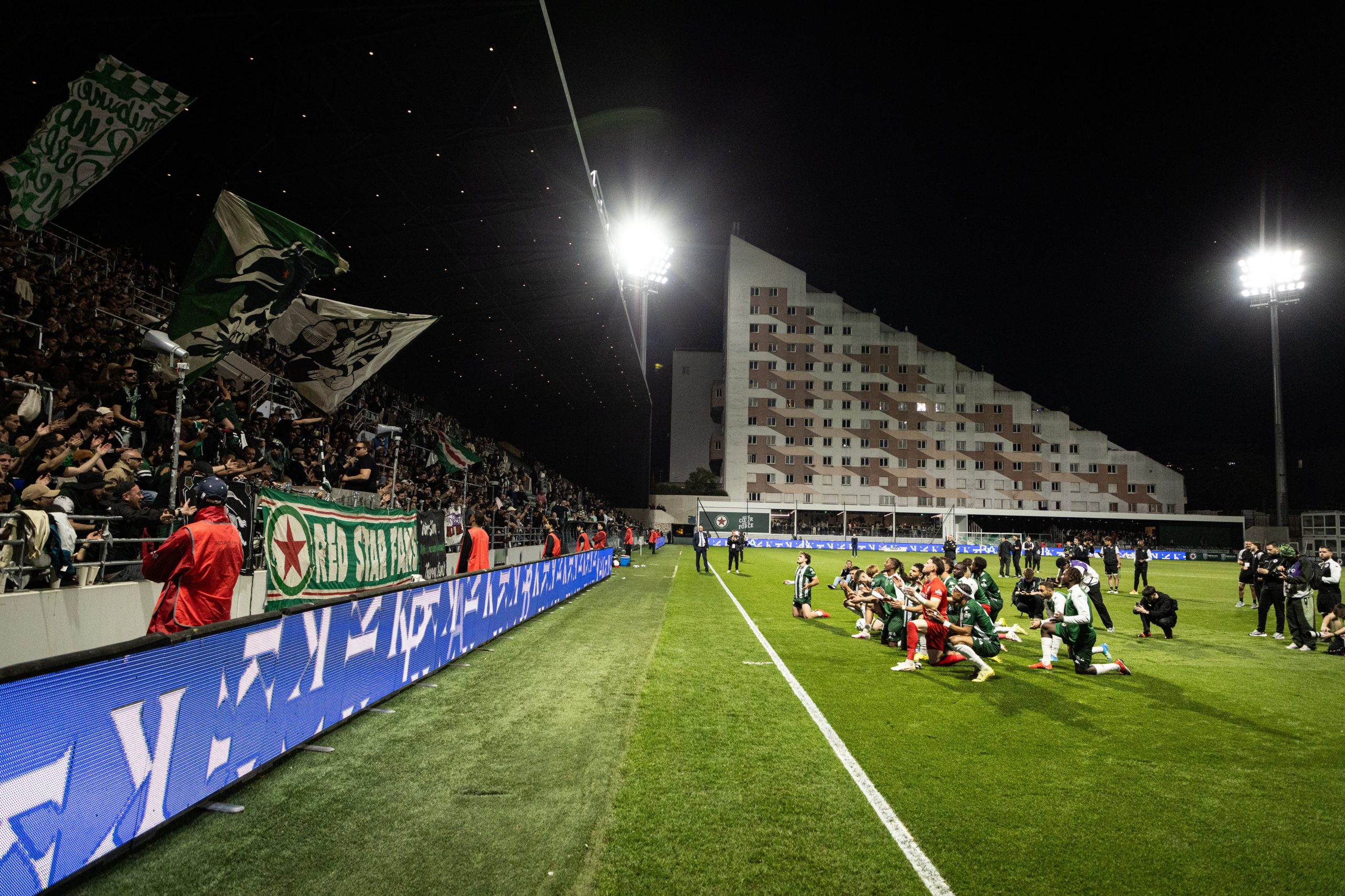
Six miles northeast of PSG’s stadium, the Parc des Princes, wedged between a large social housing block whose residents lean out of their windows on match days and a complex of modern glass-fronted offices, stands a temple for thousands of fans and, at the same time, a metaphor for the transformation of this old working-class suburb.
Stade Bauer is the home of the city’s oldest club, founded in 1897 by Jules Rimet, the father of the World Cup. A countercultural institution in modern soccer, inclusive, anti-fascist, and opposed to the global commercial drift of the sport. “This is something different. It’s true that lately the stands have filled with many bo-bos [a French term combining bohemian and bourgeois], but it still maintains its own identity, apart from the other clubs,” says Jean-François, a member of a club that has become a banner for the left.
Red Star, beyond the communist overtones suggested by its crest and the chants from its terraces, takes its name from a shipping company’s logo. Its best sporting years ended with World War II, after four Coupe de France titles in the interwar period and a final one in the early 1940s.
It was then that Rino della Negra, a lightning-fast forward for the team, joined the Manouchian Resistance group. Arrested by the Nazis, he was summarily tried in early 1944 and executed at the Fort de Mont-Valérien on February 21 alongside 23 comrades-in-arms, four of them Italian. He is buried today in the Ivry‑sur‑Seine cemetery, but the stand where the ultras gather each week bears his name.
The club, linked with other left-leaning neighborhood teams such as Spain’s Rayo Vallecano or Germany’s St. Pauli, was playing two weeks ago for promotion to France’s top division against Montpellier. Also at stake was the chance to see three Paris teams competing at the highest level — much younger clubs than Saint-Ouen’s: the all-powerful PSG, Paris FC — the new toy of the wealthy Arnault family (owners of the luxury group LVMH) — and the anti‑system Red Star.
Bauer was sold out (the club has been expanding the stands to increase capacity since a controversial investment fund that speculated on the stadium’s land bought it). “Flic, arbitre ou militaire, qu’est‑ce qu’on ne ferait pas pour un salaire,” is heard in the ultras’ stand — “Whether a cop, a referee, or a soldier, what wouldn’t you do for a paycheck?” The bar sells halal merguez sandwiches and IPA beer. Children play at the stadium gates. There are no insults, no racism, no homophobia, no violence. “Sometimes there aren’t even chants of encouragement,” a supporter says with a sardonic tone. “You’ve got to shout more, for God’s sake,” he insists.
The mood of concord is complete, and by the 80th minute there is already a sense of relief. But the team lapses and Montpellier scores an equalizer three minutes from time, forcing Red Star to play a playoff days later that it will not win either. Fifty‑one years since it last played in Ligue 1 (the 1974–75 season), the Saint-Ouen club will not return to the top level of French football. Another year in the second tier. Another year outside the elite, television rights windfalls, and the vast advertising revenues. Perhaps that is a blessing.
Sign up for our weekly newsletter to get more English-language news coverage from EL PAÍS USA Edition












 New Developments3 weeks ago
 New Developments3 weeks ago