Colombia
A Week After The Brooklyn Building Collapse, One Question Unites Victims And Investigators: ‘What Exactly Happened There?’

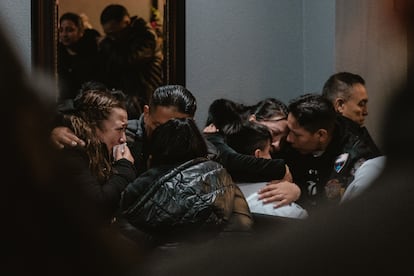
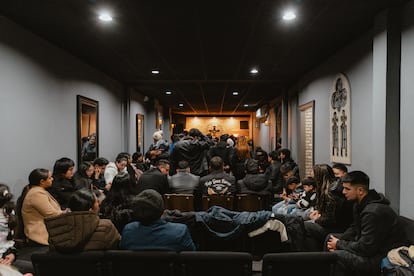
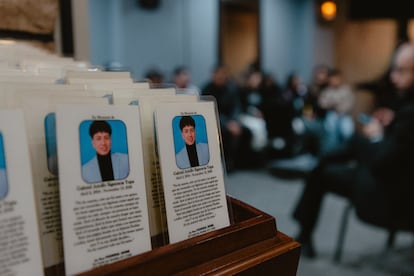
A Wednesday that changed everything; a collapsed building; eight families mourning their dead and a week in which Luis Siguencia has kept asking the same questions about the Brooklyn collapse that killed his son Gabriel: “What exactly happened there?” he says. “I see many comments saying that the construction had been halted and yet they were still working. Why? What caused that collapse?”
No authority, as of today, has approached Siguencia to brief him on the investigation led by the New York City Department of Buildings (DOB) into the collapse of the property at 1321 Flatbush Avenue. Two days earlier, Gabriel, a 22-year-old Ecuadorian, had begun working on the excavation of the adjacent lot, 2625 Bedford Avenue, before a wave of concrete fell on him, killing him and seven other migrant workers from Guatemala, Colombia, Ecuador and Guinea.
The tragedy has exposed several clashes in the city that is both the world’s most multicultural and one of its major financial centers: gentrification and rampant construction in neighborhoods such as Little Caribbean; residents’ complaints about rising rents; the vulnerability of construction workers, most of them immigrants; and the alleged tricks used by construction companies and building owners despite numerous complaints lodged with New York authorities.
What those affected want in the short term is clarity on several questions surrounding the disaster: What was the direct cause of the collapse? And when will an investigation shed light on the incident?
Ryan J. Degan, senior press officer at the DOB, told EL PAÍS that the investigation “is ongoing.” “We are working in close coordination with our law enforcement partners on their parallel investigations,” he told this newspaper. To assist the forensic probe, the city has hired an outside engineering firm to produce an independent investigative report, and inspections have begun on about 160 projects linked to six entities from the crew working on the excavations. For safety reasons, he said, the names of the six entities would not be disclosed.

“It’s too early in the investigation to determine the cause of the collapse,” Degan says, “but these inspections are an important part of our ongoing inquiry and are being carried out in the interest of public safety.”
The day after the tragedy, under torrential rain that interrupted search-and-rescue efforts, Mayor Zohran Mamdani arrived at the spot on Flatbush Avenue and vowed to carry out “a thorough investigation.” “That includes both the site work and the building that collapsed,” he said.
Experts consulted by this newspaper say the results of an investigation could come as soon as two weeks or take up to two months. Meanwhile, several details that have emerged focus attention on one man and a history of violations, neglect and lawbreaking: Robert Fischman, the owner of the lot where the construction workers were excavating that led to one of the deadliest incidents in New York’s construction sector.
A long list of complaints, fines and tenant displacements
In the days after the collapse, many neighbors gathered in disbelief outside a building that could have been any one of theirs. It was the typical building in this Brooklyn neighborhood: three stories, brick facade and tall glass windows, with a business on the ground floor.
More than once, according to Dominican resident Eneroliza Pérez, they felt the neighborhood’s streets shake because of the construction work that was underway. Fischman intended to erect on the adjacent lot a structure that would initially be three stories tall, though the owner later sought to expand it to nine stories with 64 residential units, according to information provided by the DOB.
At first, the project team filed an application and obtained approvals and permits to carry out underground work associated with the three-story project. In other words, they were authorized to perform earthmoving, excavation shoring and foundation work. What the DOB never approved was a permit to build nine stories.
“At the time of the collapse, the application had been returned by the DOB with objections,” Degan says, adding that as part of the ongoing investigation they are reviewing whether the work was being performed in accordance with the approved plans.
This was not the only construction going on in the neighborhood. In this area of Brooklyn, many new buildings have been erected recently, some unaffordable to longtime residents. “Small buildings are being torn down and replaced by larger ones,” says George M. Janes, an urban planner and planning consultant in New York. He says access to housing began to tighten about 20 years ago. “In many of these neighborhoods, rising housing costs and the lack of affordable housing are making these areas increasingly unaffordable for many lifelong residents.”
Last June, Fischman sent a letter to the residents of 1321 Flatbush to inform them that the noisy excavation would become part of the neighborhood’s soundtrack. What Flatbush residents did not know was that construction would go ahead despite the owner having violated the law on two occasions.
On March 20, 2026, the DOB issued a stop-work order at the excavation site. After its inspectors found that the demolition of the existing building was being carried out without protective structures or nets to shield neighboring properties, the DOB fined the owner $2,500. The fine, Degan says, was paid.
In April, a second fine followed. When inspectors visited the site on April 23, 2026, they found demolition work had resumed, violating the city order. The owner was fined $10,000 for another violation.
In May, the DOB says the stop-work order was fully lifted “after the project team corrected all conditions that had led to the violations.”
The following month, in June, neighbors received another notice from Fischman announcing the resumption of work. Among them were residents of the adjoining building owned by Olufemi Falade, a man who in 2006 told The Village Voice: “How can an owner repair, if the tenant does not pay the rent?”
At the time he faced 12 days in jail for refusing to fix about 1,800 violations in other buildings he owned — he then had about 16 properties scattered across the city. The news outlet reported that several of his properties lacked hardware or windows, and some walls were crumbling. Records from the New York City Department of Housing Preservation and Development show complaints about the building that collapsed a week ago, a nearly 100-year-old structure, including “unsafe electrical wiring” and missing smoke detectors.
Awaiting an official response
Last Wednesday, José Luis Caguana, a 22-year-old Ecuadorian and soccer fan, and Gabriel Siguencia arrived early at the site where they were earning $35 an hour, one of their co-workers who escaped the tragedy told this newspaper. The rest of the fatalities were residents of 1321 Flatbush, including two Colombian children who had not attended school that Wednesday as it was a holiday, Veterans Day.
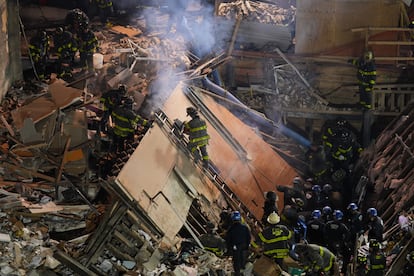
At 4.01 pm, the New York City Fire Department received the first emergency call. The building had collapsed. Neighbors say they only heard a roar, then a blinding cloud of dust and later the mountain of rubble on which firefighters worked for more than 24 continuous hours trying to save lives.
The day after the disaster, November 12, the DOB received an anonymous complaint asking it to investigate the excavation next to the collapsed building. “I am concerned that the subcontractor excavated too much soil along the adjacent foundation all at once,” the complaint said. It asked authorities to compare the city-approved plans with the work carried out on site. The plans contemplated excavating the soil at a 45-degree angle to a depth of approximately 4.5 meters.
“When you dig a deep hole, nearby buildings’ foundations can shift or become unstable. If the foundations become unstable, the whole building can collapse,” explains Anil K. Agrawal, professor and chair of the Department of Civil Engineering at The City College of New York.
Professor Agrawal says the impact of the excavation on the neighboring building should have been assessed, a common issue often overlooked because of insufficient attention to adjacent structures. When this type of excavation is carried out, he says, the soil around the foundations and the excavated area must be reinforced. “What we call shoring consists of creating an artificial wall to hold the ground in place. That way you ensure the soil does not shift and the foundations do not move. And that is something they did not do in this case.”
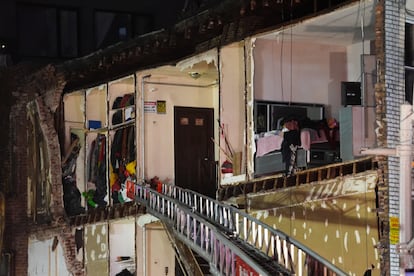
The engineer insists that any investigation must focus on the foundations. “They may show signs that the soil moved,” he says. He also believes that when soil samples are taken, they will be able to determine how sturdy it was and whether there was any risk of collapse, and even whether the project’s engineer or contractor had previously performed such borings and soil tests.
Meanwhile, all parties are waiting: families await answers though nothing will console them; displaced neighbors need a place to live. And many other residents have been left fearful about the condition of the buildings they live in. Since the day of the collapse, the DOB has received 149 complaints that, officials say, reported concerns about buildings shaking or vibrating, and some were related to new construction. Unless everything is made safe, New Yorkers will not sleep peacefully again amid the rumble of excavators or the sight of a cracked ceiling overhead.
Sign up for our weekly newsletter to get more English-language news coverage from EL PAÍS USA Edition