
ElPais
Behind The Scenes In Mexico’s Largest Stations Of The Cross Procession, An Intangible Cultural Heritage Of Humanity

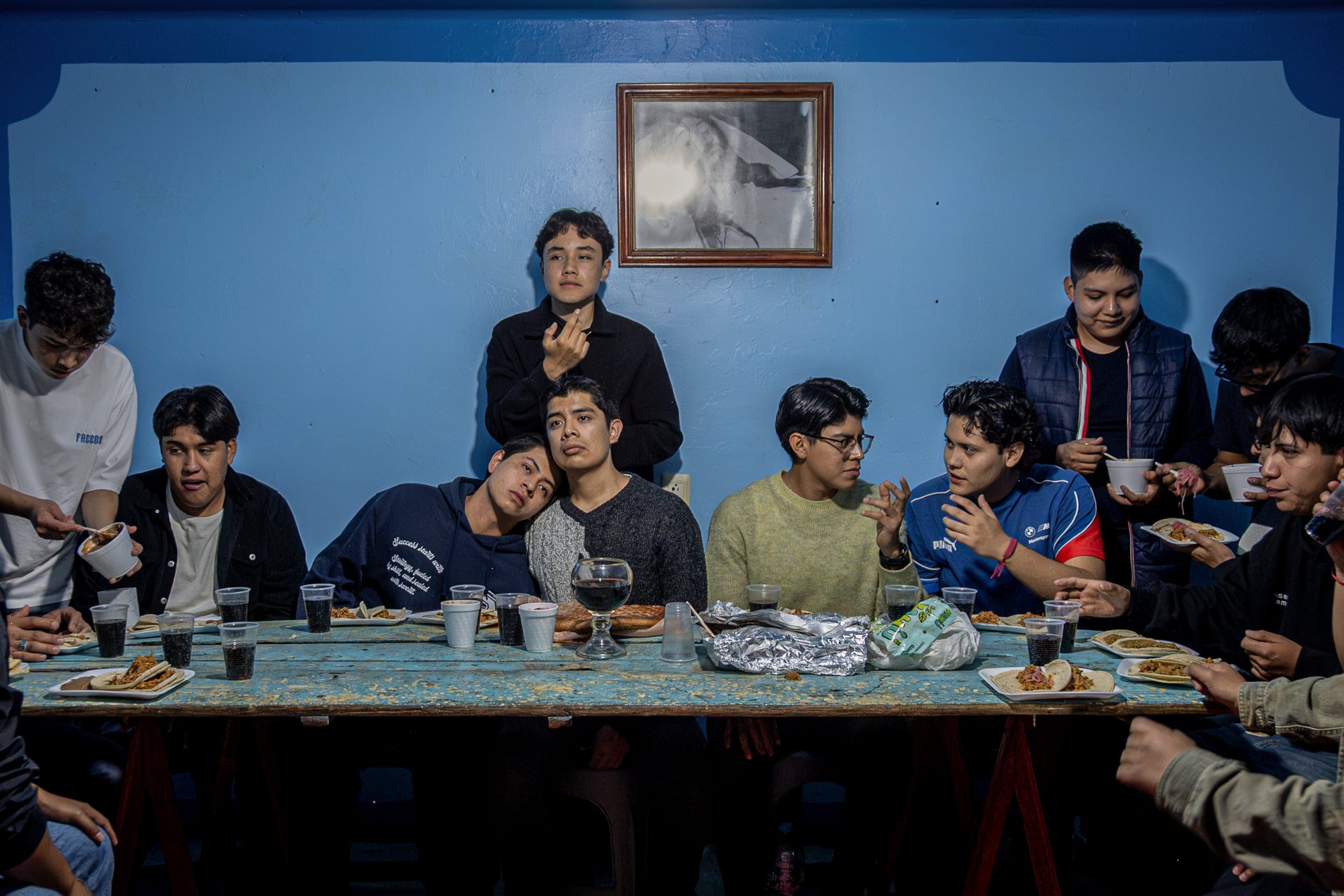
Amid the murmur and the trumpets, the noise is overwhelming. More than 300 people are awaiting the prayer that marks the start of the penultimate dress rehearsal for the Passion of Christ in Iztapalapa, the most populous borough in eastern Mexico City. A woman opens her mouth and speaks, but she can’t be heard; she wants to say a few words of thanks. After several attempts, a man furiously shouts: “Quiet!” The crowd falls silent.
“I wish you much peace,” the woman finally says. “This celebration has grown… and we love it very much.” All those present recite the Lord’s Prayer and the Hail Mary. The sound is overwhelming again, but this time, it’s in unison. At the end of the prayer, several people approach and kiss a huge wooden cross, which lies on the site. It will be carried by Arnulfo Eduardo Morales Galicia, who plays the Christ of 2026. He’s the 183rd to participate in the capital’s Stations of the Cross procession. On Friday, April 3, the nearly 200-year-old tradition will be held again, this time also as an Intangible Cultural Heritage of Humanity after being recognized as such by UNESCO in December 2025.
Throughout Holy Week, there are reenactments. However, the most folkloric day is Good Friday. The annual procession – which lasts between four and six hours – begins in the Macroplaza of the San Lucas neighborhood and travels through the eight neighborhoods of the borough, before culminating with the Crucifixion at Cerro de la Estrella (“the Hill of the Star”). But from the first rays of dawn, people pass by the courtyard of the Rehearsal House to see Jesus, who waits impassively in a cell for the performance to begin.
On Friday, April 3, the streets of Iztapalapa will be impassable, with crowds of people gathering to follow in Christ’s footsteps. They will weep, shout, push the police and the people dressed as Roman soldiers guarding the scene and reenacting the mocking of the Christ; they want to defend the Son of God, to prevent what is to come.

According to local lore, the tradition began as an expression of gratitude for a miracle. In 1687, an image of Jesus Christ was sent from Villa de Etla – a small town north of Oaxaca City, in central Mexico – to the capital, so that it could be restored. Along the way, those transporting it stopped to spend the night in a cave on the slopes of Cerro de la Estrella, the hill in Iztapalapa. It’s said that, at dawn, the figure of Jesus had grown in both weight and size, meaning that the transporters could no longer carry it or continue their journey.
The locals interpreted this as Christ liking the place and wanting to stay there. And so, they built a small shrine for him. Over time, the figure became known as “El Cristo de la cuevita” (translated as “The Christ of the Little Cave”). Years after this event, the town of Iztapalapa was struck by a cholera epidemic. The locals approached the figure of Christ as a last hope, praying for an end to the disease. Miracle or coincidence, the epidemic ceased. It was then that a chapel was built in his honor, while the Holy Week processions and the reenactment of the Stations of the Cross began. And now that the tradition has been declared an Intangible Cultural Heritage of Humanity, there’s even more pressure during rehearsals to ensure that everything goes smoothly.

At Rehearsal House, on the patio, actors reenact the Temptation of Christ. Visitors watch attentively, in silence. The Devil – with great fervor, speaking almost at the top of his lungs – offers him all the kingdoms of the world if he chooses to worship him. But Jesus, very calmly, rejects him. Some spectators sigh. Others smile and bow their heads. A few cross themselves. “Sometimes, people cry when they rehearse the scourging scene,” says Joaquín Rueda, vice president of the Holy Week Organizing Committee in Iztapalapa (COSSIAC).
In the 1940s, a property on Asunción Street – a tiny alley nestled among narrow streets north of Cerro de la Estrella – opened its doors so that those preparing the Stations of the Cross and the reenactment of Christ would have a place to rehearse. That spot became the legendary Rehearsal House. The Cano Reyes sisters inherited the house that belonged to their grandparents. They don’t act in the event, nor have they ever, but they say they’re happy and proud that the pre-Holy Week activities are being held here.

The house is painted lime green. Around the central courtyard – arranged clockwise – are the bedrooms, living room and kitchen. To the right, a cement staircase leads up to a large terrace, where more rooms are located.
During the rehearsal, actors and spectators mingle in the hallways and rooms. Only those performing in the courtyard use headset microphones. When the scene ends, the band – with its trumpets – commands attention. The sound is so loud (there are more than six trumpet players) that it seeps into every corner o the space.
“Take a bite; otherwise, it doesn’t count,” about 20 people affirm. They’ve gathered in the kitchen, somewhat secretly from the others (but without fear of being seen). They sing Las Mañanitas (a traditional Mexican birthday song) loudly, although not as loudly as the trumpet players. “We’re a family,” Rueda notes, as he devours a slice of cake. Luis Alberto Guzmán de la Rosa – secretary of the Organizing Committee – adds: “We try to foster a spirit of brotherhood, because that’s the message we convey to the public.” Among those taking a moment to celebrate their birthdays are Arnulfo Morales, this year’s Jesus; Rueda, who played the role in 2001; and Jair Cruz Peralta, who never has (and never will, he says).

Peralta, 34, has been involved in the Passion Play of Iztapalapa for 16 years. Today, he’s an associate on the Culture Committee, which was responsible for following up on the process to obtain recognition as an Intangible Cultural Heritage of Humanity. Some of the characters Peralta has played include Herod’s brother-in-law, the apostle John, and a Roman soldier. He was also part of the set design team. But what he enjoyed most is administering the whippings.
“It’s a tough role. They say it brings bad luck, because he’s one of [the men] who beat Jesus. Yes, it’s tough… but it’s also fun, because nobody wants to do it. You get a lot of insults in the street; people yell at you: ‘Don’t hit him so hard!’ ‘Hey, what’s wrong with you?’ A year ago, for example, I slapped [Jesus]. It was obviously planned with the actor: I grabbed his jaw with my hand, lifted him up and slapped him,” he says, laughing, a little mischievously.
There are several requirements to portray Christ: being a native of one of the borough’s eight neighborhoods, being at least 18 years old, being Catholic, having received First Communion, standing at least five foot eight, being single, unattached and childless, having good conduct and morals, being in excellent health and physical condition, not having tattoos or piercings, as well as previously having been an apostle or having held another supporting role. This last requirement was added a few years ago, Rueda explains, because people were striving to attain the iconic role and didn’t know what they were getting into.
Friday also marked the debut of two announcers, who will narrate the live broadcast on social media, in order to help the audience understand what they are seeing. When she realized that she would be the first woman to narrate and fill in the gaps between scenes, Miriam Sandoval García said: “I have mixed feelings; above all, excitement.”
Sandoval, 45, became interested in the Passion of Christ as a child. “Like most people in Iztapalapa,” she notes. She grew up watching the procession, the costumes and the characters. However, before taking on the role of narrator, she hadn’t participated in 23 years: once she got married, her priorities in life shifted. Some of the characters she played in the past include Claudia Procula, Pontius Pilate’s wife; the Samaritan woman who gives Jesus water; and, back in 1995, Mary Salome.

That same year, 49-year-old Gerardo Granados Juárez played Jesus. And, on April 3, Granados will accompany Sandoval as a narrator. He, too, returns to the play after a long absence – 12 years – but doesn’t go into details. “I had personal problems,” he shrugs. He lists some of the positions he held in the past: president of the Holy Week Organizing Committee, vice president, secretary, member… “I did every role,” he says with a laugh. “Now, I’m part of the Honor and Justice Commission. God put me there. And, well… it is what it is. [We all] have to do our part.”
The team that handles the social media strategy is the youngest one: 25-year-old Luis Zavala López and 17-year-old Dannia Jabnel Guillén Reyes feel honored to be the ones working behind the scenes. Guillén joined because of a family tradition. “My grandfather played Christ in 1933,” she says soberly. What she loves is photography. And, by promoting the procession, she found a space to practice and develop her skills.

Zavala is the first in his family to participate in the Passion of Christ. “My parents are Catholic. They also enjoy watching the performance, but they’re simply spectators. I like being [part of this],” he says.
They all share the same goal: that the tradition continues to be seen every year and that the custom remains alive, reaching across borders… especially now, since the tradition has been recognized as an Intangible Cultural Heritage of Humanity. Participants and spectators alike proudly display this distinction at all times.
Sign up for our weekly newsletter to get more English-language news coverage from EL PAÍS USA Edition








ElPais
Only 13% Of Emails Are Written By People, And More Than Half End Up In The Spam Folder: ‘This Isn’t A Technical Detail; It’s A Structural Change’





El Real Madrid Cumple Su Objetivo En La Euroliga Ante Luka Doncic

El Braga Reina En El Gigantesco Colapso Del Betis

Armed Robbers Take 25 Hostages At Naples Bank Then Vanish Underground


-

 New Developments2 weeks ago
Luxury Villas For Sale, Estepona – ProjectL1
-

 New Developments4 weeks ago
How To Get A Tourist Rental Licence In Andalusia (Spain) – Step-By-Step Guide 2025
-

 New Developments2 weeks ago
Stylish 3-Bedroom Apartment With Panoramic Sea Views – Benalmádena
-

 Uncategorized4 weeks ago
Max Verstappen left laughing after Nurburgring triumph
-

 %2 weeks ago
Poland Disconnects Utilities At Russian Consulate That Moscow Refuses To Hand Over
-

 Uncategorized3 weeks ago
Lewis Hamilton goes from Karate Kid to Samurai Warrior with Kill Bill guru
-

 Uncategorized4 weeks ago
Max Verstappen team-mate sheds light on Nurburgring mistake
-

 Foreign demand4 weeks ago
Non-Resident Foreign Buyers Retreat Sharply In 2025