
benissa
Benissa transformed: €2.45m tourism plan delivers major changes across the town

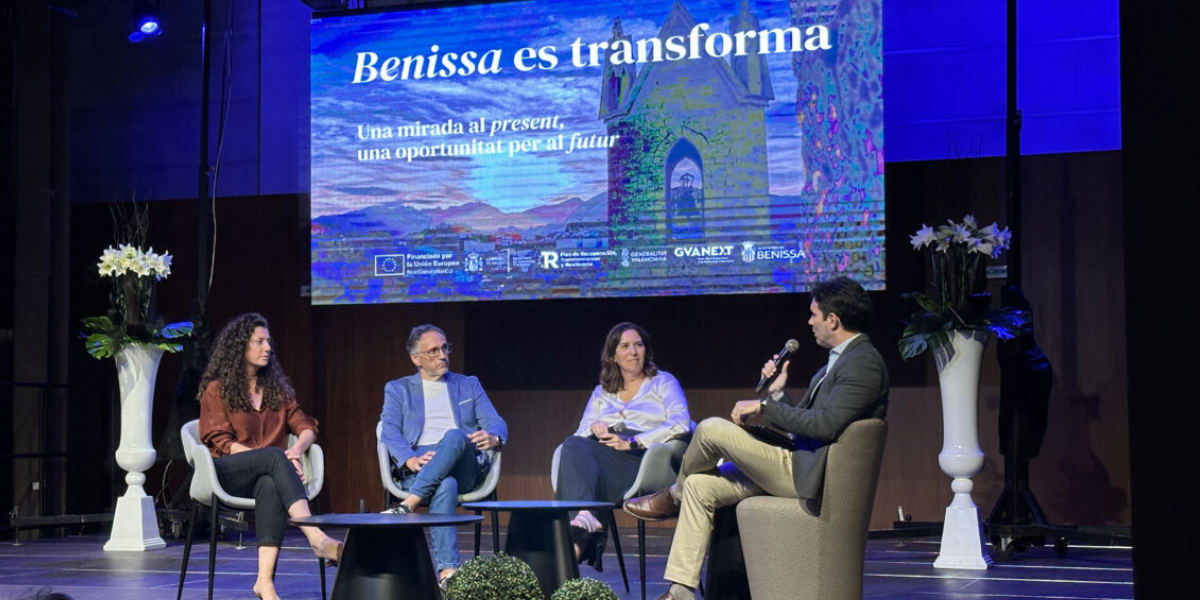
Benissa has completed a four-year transformation programme backed by €2.45 million in European funding, delivering 23 projects designed to make the Marina Alta municipality more sustainable, accessible, digital and attractive to visitors.
The completion of the Plan de Sostenibilidad Turística en Destino (PSTD) was marked by the ‘Benissa es Transforma’ event, bringing together local officials, tourism professionals, businesses, associations and residents to look at what has been achieved and how the projects could shape the town’s future.
From European funding to local projects
Benissa received the PSTD funding in 2022 through the European Union’s Next Generation programme. The scheme was organised around sustainability, energy efficiency, digitalisation and competitiveness, with projects extending beyond traditional tourism promotion.
The municipality has now completed all of the planned work, with the latest figures putting the total investment at €2.45 million. More than 20 municipal professionals and 31 companies were involved in delivering the different projects.
The programme has affected several aspects of everyday life in Benissa, including public spaces, water management, accessibility, environmental monitoring, tourism infrastructure and outdoor activities.
Streets transformed for pedestrians
One of the most visible changes has been the pedestrianisation of Sant Josep and Pare Zacarías streets.
The project, which represented an investment of around €500,000, was designed to reclaim urban space for pedestrians and improve the town centre. Other accessibility improvements included wider pavements and upgraded junctions.
The aim was not simply to improve the experience for visitors but also to create public spaces that can be used and enjoyed by residents throughout the year.
Smarter water and fire protection
Technology has also played an important role in the transformation.
More than €300,000 was allocated to the remote management of water meters, allowing consumption to be monitored and analysed more efficiently. The project is particularly significant in an area where water management is an important environmental and infrastructure challenge.
The PSTD also introduced forest fire detection systems and environmental sensors, alongside measures to monitor air quality and improve understanding of the local environment.
Other projects focused on cycling and outdoor recreation, including route signage, geolocation and sensor technology.
A new approach to tourism
Another major legacy of the programme is the introduction of more sophisticated tourism data.
Benissa has developed a Smart Office and tools designed to provide information about visitor movements, overnight stays and accommodation capacity. The municipality has also worked on targeted promotional campaigns and a collaborative tourism intelligence system.
The changes reflect a move away from simply promoting Benissa as a destination towards using data to understand how tourism affects the municipality.
Local tourism officials have highlighted the importance of having better information available when making decisions about the future of the sector.
Sport, nature and year-round tourism
The programme has also strengthened Benissa’s position as an outdoor and sporting destination.
Projects have included new and improved sporting routes and work linked to a rural sports tourism product. The municipality’s combination of coastline and mountains offers opportunities for activities throughout the year, including routes such as the Perimetral de Benissa and the Entre Cales crossing.
An area recreation and mountain sports base at La Solana was also included within the original PSTD programme.
The wider objective is to encourage visitors to discover more of Benissa beyond its beaches, while supporting activities outside the busiest summer period.
What comes next for Benissa?
The completion of the PSTD does not necessarily mark the end of the town’s transformation.
During the closing event, the municipality outlined plans to continue developing its tourism strategy and potentially seek further European funding.
There are also plans to revive the local Tourism Council, bringing together residents, businesses and other tourism stakeholders to have a greater role in shaping the destination.
The emphasis is increasingly on creating a tourism model that works for people who live in Benissa as well as those who visit.
After four years and 23 projects, the €2.45 million European investment has therefore left Benissa with new infrastructure, technology and tourism tools, while providing a platform for the municipality’s next phase of development.




UK could rejoin the EU just 10 years after Brexit as major reversal is proposed

La Cala Lions’ Fourth Memory Day

La Policía Británica Libera Bajo Fianza A Los Cinco Detenidos Por El Presunto Intento De Atentado Contra Una Base Militar

Maduro Ally Alex Saab Pleads Guilty In US Money-Laundering Case

How To Get A Tourist Rental Licence In Andalusia (Spain) – Step-By-Step Guide 2025

Detenido Un Hombre Por La Muerte De Una Mujer De 47 Años En El Distrito De Arganzuela De Madrid


-
 Alex Saab2 weeks ago
Maduro Ally Alex Saab Pleads Guilty In US Money-Laundering Case
-
 New Developments2 weeks ago
How To Get A Tourist Rental Licence In Andalusia (Spain) – Step-By-Step Guide 2025
-
 Arganzuela1 week ago
Detenido Un Hombre Por La Muerte De Una Mujer De 47 Años En El Distrito De Arganzuela De Madrid
-

 Coaching2 weeks ago
Svend Brinkmann, Psychologist: ‘If You Place Conditions On Forgiveness, Love Or Freedom, You Have Already Destroyed Them’
-
Best airlines1 week ago
Spanish airline Vueling named Europe’s best low-cost carrier for 2026
-
Latest2 weeks ago
Italy And Spain Extend Tit-For-Tat Border Checks In Wake Of Migrant Rush
-

 %1 week ago
Mallorca Property Overrun By Wild Goats
-
2026 wildfires2 weeks ago
Spain’s wildfire toll revealed as almost 300,000 hectares go up in flames