
%
Summer Dip In The Rhine Fines










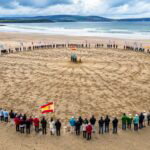
Crowds gather at Streedagh Beach in County Sligo to remember the Spanish Armada sailors shipwrecked off the Irish coast. Credit: Spanish Armada Ireland.
More than four centuries after three Spanish Armada ships were wrecked off the Irish coast, Spain is returning to the same corner of Ireland this September for a remarkable four day festival. Spanish Navy sailors, musicians and visitors will gather in County Sligo from September 17 to 20 for Remembering the Armada 2026, with concerts, Spanish food, historical events and a ceremony on the beach where around 1,100 Armada men lost their lives in 1588.
It is a piece of shared Spanish and Irish history that is surprisingly little known outside the area.
And what happened at Streedagh Beach was considerably more dramatic than the rather neat version of the Spanish Armada story many of us probably remember from school.
Three Spanish ships and a disastrous night off Ireland
The Armada had set out in 1588 as part of Philip II of Spain’s attempt to invade England. When that failed, the fleet was forced north around Scotland and down Ireland’s Atlantic coast on the long journey home.
For three ships, La Lavia, Santa María de Visón and La Juliana, that journey ended at Streedagh in County Sligo.
A huge storm struck the coast on September 21, 1588. All three ships were driven onto the shore and wrecked, with around 1,100 soldiers and sailors believed to have died. The wrecks are still there.
In fact, Streedagh is the only known beach where three Spanish Armada wrecks lie together. Archaeological work has recovered an extraordinary collection of material from beneath the sea, including cannon from La Juliana, gun carriage wheels, cannonballs, smaller guns and pieces of the ships themselves. Twelve Armada cannon recovered in 2015 were taken away for conservation. But one of the men who somehow made it off the beach alive left behind something even more valuable: his story.
The Spanish captain who survived and wrote it all down
Captain Francisco de Cuéllar survived the wreck and then found himself stranded in a country he knew virtually nothing about, with English forces looking for Spanish survivors.
What followed was an extraordinary journey through Ireland.
Some Irish people helped him, others robbed or threatened him, and local chieftains offered shelter despite the danger of being punished by English authorities for assisting the Spanish.
De Cuéllar eventually left Ireland and lived to write an account of what happened.
His letter disappeared for centuries before turning up in a Spanish archive in 1895. It has since become one of the most important contemporary accounts of the Armada survivors in Ireland and of life in the country during the late 16th century.
That story is still very much part of the landscape around Sligo today, where visitors can follow the De Cuéllar Trail through places connected with his escape.
During September’s festival, his words will return to the story once again.
A live reading of Lost Sailor of the Armada, based on de Cuéllar’s writings, takes place in Grange on Saturday, September 19.
By then, however, the Spanish presence in Sligo will already be difficult to miss.
Spanish Navy returns for the 2026 Armada festival
The festival begins on Thursday, September 17, with an official opening in Killybegs.
A coach will leave Grange at 9.30am, taking visitors to Killybegs for a tour of the Spanish Navy vessel OPV Centinela, followed by lunch and a visit to Donegal Castle.
Later that evening the history books are put aside for a while.
Spanish and Irish musicians will take over Connolly’s Bar in Sligo for a traditional music session from 9pm.
Friday gets considerably more serious in the morning, with an Armada conference at the National Surf Centre in Strandhill bringing together experts for lectures and discussions about the events of 1588.
There is then a heritage walk through Sligo in the afternoon, including a musical event at Sligo Abbey.
By 8pm attention moves back to Grange, where the Spanish Navy Band joins the Atlantic Ensemble for the festival’s gala concert at the Church of Mary Immaculate.
And anyone who does not fancy going straight home afterwards can head to Moran’s Bar for the Armada Club and a pint.
It is that mixture of proper historical commemoration and a fairly relaxed Spanish and Irish gathering that makes the programme a little different from the usual heritage festival.
Streedagh Beach becomes the centre of the story again
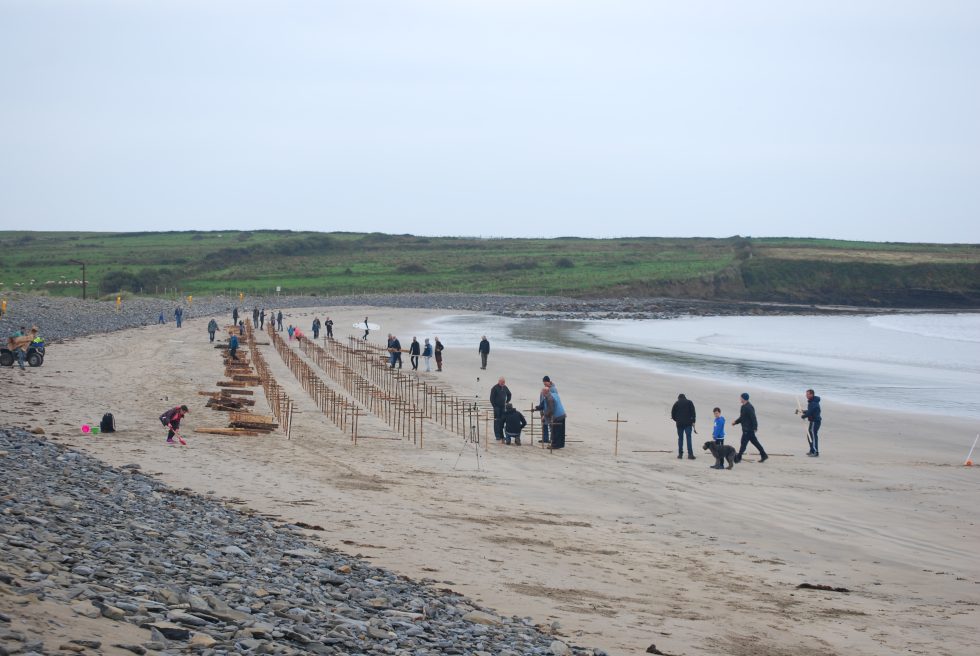
Saturday is when the festival moves closest to the events it is actually remembering.
There will be a historical display of 16th century life in Ireland from 11am, followed by the de Cuéllar reading at midday. At 1pm, a new Armada monument supported by the Spanish Navy and Spanish Embassy in Ireland will be unveiled at the Spanish Armada Visitor Centre in Grange. Then at 3pm people will gather at Streedagh Beach.
It is here, looking out towards the places where the three wrecks still lie beneath the water, that the annual commemoration remembers the approximately 1,100 men who died.
The location makes the story rather difficult to treat as distant history.
Those sailors had left Spain expecting to fight a war in England. Instead, hundreds ended their lives on a beach in the west of Ireland, while the handful who survived suddenly depended on local people they had never expected to meet.
The connection that grew from that disaster is what the festival now celebrates.
Saturday evening finishes with a Mass and Ceremony of Friendship in Grange, accompanied by Spanish and Irish music, before another Armada Club evening at Lang’s Bar.
You can actually walk above the Spanish Armada wrecks
Sunday morning offers perhaps the most unusual event of the weekend.
After a 9am yoga session and optional Atlantic swim, visitors can join the Armada Shipwrecks Walk and Talk at Streedagh Beach at 10am.
Guides will identify the wreck sites offshore and explain how they were discovered and investigated.
For anyone accustomed to seeing Armada artefacts behind museum glass, standing on the beach with the ships themselves still beneath the water is a rather different experience.
At midday, the festival closes at Streedagh with a salute to the OPV Carnota and its crew, accompanied by a flotilla of boats in the bay.
There is one final Spanish touch later in Sligo, with Latin music and tapas beside the Garavogue river from 6pm.
An Armada themed art and photography exhibition will also run throughout the four days in Grange Hall, including photographs of local discoveries made in 1985 and 2015.
Many of the events are free, although the Killybegs trip, conference, gala concert and some evening events require tickets. The organisers have published the full Remembering the Armada 2026 programme and booking information through Spanish Armada Ireland.
For anyone travelling from Spain, it is certainly not the most obvious Irish weekend away.
But 438 years after three Spanish ships disappeared beneath the Atlantic at Streedagh, there are not many places in Ireland where the connection with Spain runs quite as deep.


Spain’s Forgotten Link With Ireland Comes Alive This September In A Four Day Festival

Ryanair Changes Safety Briefing

How Kimi Antonelli saved Red Bull as Max Verstappen signs blockbuster F1 deal


-

 Uncategorized2 weeks ago
Racing star was destined for F1, now he
-
Latest2 weeks ago
EU Tells Meta, TikTok To Boost Monitoring, Fact-Checking
-
Altea2 weeks ago
Fireworks disaster at Costa Blanca spectacular leaves 27 injured in Altea
-

 Bogotá1 week ago
Última Hora Del Terremoto En Colombia, En Directo | Al Menos 132 Muertos Y 570 Heridos Por El Seísmo De Magnitud 7,4
-

 800 metros lisos1 week ago
Attaoui Saca Un Bronce En 800m De La Casi Nada
-
 Andalucia2 weeks ago
Courageous Costa Del Sol Father Seeking To Raise Funds For Specialised Treatment In Germany As He Battles Brain Cancer
-
art2 weeks ago
Sóller’s new art night will transform the town square into an open-air gallery
-

 New Developments2 weeks ago
Stylish 3-Bedroom Apartment With Panoramic Sea Views – Benalmádena