Connect with us

%

Quirónsalud Da Vinci Robotic Surgery

Published

on

quironsalud-da-vinci-robotic-surgery

Quirónsalud Torrevieja Da Vinci Robotic Surgery. Credit: Quirónsalud.

On the occasion of World Prostate Cancer Day, specialists at Hospital Quirónsalud Torrevieja are highlighting radical prostatectomy as one of the most effective treatments for localised prostate cancer. This procedure involves the complete removal of the prostate gland and, in most cases, the seminal vesicles, with the aim of eliminating the tumour before it spreads to other parts of the body.

In recent years, the introduction of the Da Vinci robotic surgical system has represented a genuine breakthrough in this field, enabling surgeons to perform procedures with exceptional precision while achieving improved functional outcomes for patients.

“Radical prostatectomy is a curative treatment and is particularly indicated for patients with localised prostate cancer, when the disease remains confined to the prostate gland,” explains Dr Sven Petry, Consultant Urologist and specialist in Robotic Surgery at Hospital Quirónsalud Torrevieja.

The evolution towards minimally invasive surgery

Traditionally, this procedure was performed through open surgery, requiring a large incision and a longer recovery period. The introduction of laparoscopic surgery marked a significant advance, but it is robotic surgery that has taken surgical precision to a new level.

The Da Vinci system enables the surgeon to control a series of robotic arms from a console, reproducing their hand movements in real time while eliminating natural hand tremor and providing a high-definition three-dimensional view of the surgical field.

“Thanks to this technology, we are able to perform far more precise movements and achieve better preservation of the anatomical structures surrounding the prostate,” says Dr Petry.

Improved preservation of urinary continence and sexual function

One of the main concerns for patients undergoing radical prostatectomy is the potential impact on urinary continence and erectile function. The precision offered by the Da Vinci system facilitates the identification and preservation of the nerves and structures responsible for these functions, helping to improve functional recovery following surgery.

“One of the greatest benefits of robotic surgery is that it allows us to work with extraordinary precision in extremely delicate areas, promoting better functional preservation whenever the characteristics of the tumour make this possible,” highlights the urology specialist.

Reduced blood loss and faster recovery

Among the principal advantages of robot-assisted radical prostatectomy is the reduction in surgical trauma achieved through the use of small incisions. This translates into less post-operative pain, a lower risk of complications and a faster recovery.

In addition, reduced blood loss during surgery and shorter hospital stays enable many patients to regain their independence more quickly and return to their normal daily activities sooner.

“Patients often notice the difference within the first few days after surgery. Recovery is faster and the physical impact of the procedure is considerably lower than with traditional surgical techniques,” says Dr Petry.

Quirónsalud: Technology that makes a difference in patient care

Quirónsalud’s commitment to technological innovation is based on a healthcare model that places patient wellbeing above all else. By recognising technology as one of the healthcare professional’s greatest allies, the Group continually invests in the most advanced equipment to support early diagnosis and minimally invasive treatments.

This ongoing commitment to innovation helps consolidate a precision medicine approach that enhances patient safety, shortens recovery times and provides effective solutions to the challenges facing modern healthcare.

Robotic urological surgery video

https://www.youtube.com/watch?v=gtmFkgORIZ0

%

Summer 2026 Begins This Weekend

Published

on

summer-2026-begins-this-weekend

The summer solstice marks the longest day of the year and the official start of astronomical summer. Credit : Chinnapong, Shutterstock

The longest day of the year arrives this Sunday as astronomical summer officially begins in Spain at 9.24am. But this year’s season is about far more than late sunsets and beach weather. A solar eclipse visible from parts of Spain, the return of the Perseid meteor shower and three full moons are all set to light up the skies over the coming months.

For many people, summer starts when the schools close, the suitcases come out and the first trip to the beach appears on the calendar.

Astronomically speaking, it starts on Sunday morning. At exactly 9.24am Spanish mainland time on June 21, the summer solstice will take place, marking the official start of the season in the Northern Hemisphere.

Most of us won’t notice the precise moment it happens. What we will notice is the amount of daylight.

Sunday brings the longest day of the year, the point when the Sun spends more time above the horizon than on any other date on the calendar.

In Madrid, there will be just over 15 hours of daylight. Compare that with the depths of winter, when daylight drops below ten hours, and it becomes easy to understand why summer evenings in Spain seem to last forever.

The season itself will continue until September 23, giving Spain more than three months of late sunsets, warm nights and plenty of opportunities to spend time outdoors.

And if you enjoy looking at the sky, this summer has a little more to offer than usual.

A solar eclipse will be visible from parts of Spain

The event attracting the most attention is undoubtedly the solar eclipse scheduled for August 12. Eclipses always generate excitement because they remain one of the few astronomical events that people actively plan to watch.

On that afternoon, the Moon will pass between Earth and the Sun.

The path of totality will cross parts of Greenland, Iceland, the Arctic and the North Atlantic.

Spain won’t experience a total eclipse, but parts of the country are expected to see the phenomenon shortly before sunset.

For many people, it may be the first solar eclipse they have ever witnessed.

Astronomers are already encouraging skywatchers to prepare well in advance and to use proper eye protection when observing the Sun.

The timing is likely to make the event even more attractive, with the eclipse occurring as the Sun sits low in the sky.

The Perseids are back

If eclipses require planning, meteor showers are often much simpler.

Find a dark spot, look up and wait. That is largely why the Perseids remain one of the most popular astronomical events every year.

Around August 13, the meteor shower is expected to reach its peak. Under favourable conditions, observers may see dozens of shooting stars each hour.

For many families holidaying in rural Spain, the Perseids have become a summer tradition.

People head to beaches, mountains or countryside viewpoints after dark and simply watch the sky.

The Delta Aquariids will arrive first, reaching peak activity around July 31.

They may not receive the same attention as the Perseids, but they can still produce impressive displays for those lucky enough to be away from city lights.

Three full moons and some of the clearest skies of the year

Summer also happens to be one of the easiest times of year to enjoy stargazing.

Warm nights encourage people to stay outdoors longer and holidaymakers often find themselves far away from the bright lights of large cities.

This year will feature full moons on June 29, July 29 and August 28.

Meanwhile, keen observers will be able to spot some of the best known sights in the night sky.

The Summer Triangle, formed by the stars Vega, Deneb and Altair, will dominate many evenings.

The constellations Scorpius and Sagittarius will also be visible, pointing roughly towards the centre of our galaxy.

In locations with very little light pollution, the Milky Way can often be seen stretching across the sky as a pale band of light.

There is also an interesting astronomical curiosity arriving on July 6. That is when Earth reaches aphelion, the point in its orbit furthest from the Sun.

At that moment, our planet will be more than 152 million kilometres away from it.

The fact often surprises people because it happens during summer rather than winter. The seasons are controlled by the tilt of Earth’s axis, not how close we are to the Sun.

For most people, however, the science is probably not the main attraction.

What matters is that the season beginning this weekend comes with longer days, warmer nights and a sky that will have plenty to offer for anyone willing to take a moment to look up.

Continue Reading

%

Puzzle Solutions Edition 2137

Published

on

puzzle-solutions-edition-2137

WORD SPIRAL

1 Echo; 2 Omit; 3 Tory; 4 Yolk; 5 Kiln; 6 Need; 7 Data; 8 Asia; 9 Aria; 10 Ajar; 11 Rich; 12 Halt; 13 Tact; 14 Trug; 15 Gait; 16 Tutu. ACTUARY

QUICK QUIZ

1 Raiders of the Lost Ark; 2 Richard Beckinsale; 3 Matthew; 4 Edmund Spenser; 5 Chewing; 6 Dave Stewart; 7 William Shakespeare; 8 Books; 9 Juneau; 10 John McEnroe.

CRYPTIC

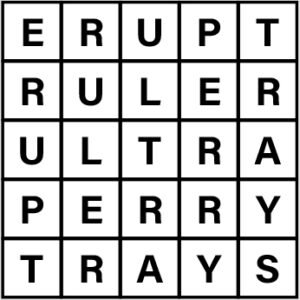
Across: 1 Muff; 3 Epidemic; 8 Stem; 9 Confetti; 11 Light sleeper; 13 Cutter; 14 Settle; 17 Stamp machine; 20 Creditor; 21 Star; 22 Respects; 23 Heed.
Down: 1 Misplace; 2 Freight; 4 Poodle; 5 Difference; 6 Mitre; 7 Chin; 10 Streamline; 12 Deferred; 15 Thistle; 16 Import; 18 Tiers; 19 Scar.

QUICK

Across: 5 Push; 7 Portuguese; 8 Girl; 10 Tray; 12 Vie; 13 Meadow; 16 Magma; 18 Nor; 20 Rapt; 21 Maze; 22 Lob; 24 Often; 25 Repair; 26 Gun; 27 Name; 29 Rota; 33 Dilly-dally; 34 Stud.
Down: 1 Cot; 2 Stir; 3 Ugly; 4 Keg; 5 Peg; 6 Straw; 9 Avert; 10 Temple; 11 Dan; 13 Major; 14 Dome; 15 Orange; 17 Atop; 19 Penny; 23 Bad; 25 Roost; 27 Nays; 28 Meal; 30 Add; 31 Alb; 32 Sly.

ENGLISH/SPANISH

Across: 1 Bigotes, 5 Voter, 8 Ruido, 9 Ocaso, 10 Oriente, 11 Bud, 12 Swiss, 14 Peine, 19 Oir, 20 Prosper, 22 Hurts, 23 Canal, 24 Happy, 25 Stomach.
Down: 1 Barber, 2 Grifo, 3 Teorias, 4 Spoons, 5 Viaje, 6 Trombon, 7 Rosado, 13 Worship, 15 Espacio, 16 Fourth, 17 Houses, 18 Health, 20 Party, 21 Renta.

NONAGRAM

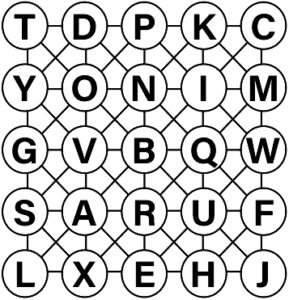
amyl, elmy, inly, limy, many, myna, tiny, yeti, ylem, amity, inlay, laity, limey, linty, malty, manly, matey, mealy, meany, meaty, minty, natty, netty, nitty, yamen, enmity, entity, laymen, lenity, litany, mainly, matily, meanly, myelin, namely, neatly, tamely, tetany, timely, amenity, anytime, nattily, MENTALITY.

SUDOKU

EASY

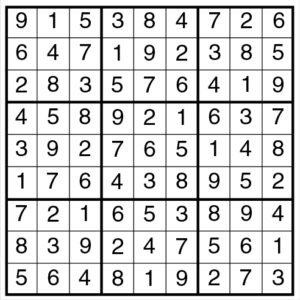
easy sudoku 2136

HARD

hard sudoku 2136

GOGEN

gogen 2136

ALPHAMUDDLE

alphamuddle 2136

Continue Reading

%

Mallorca Newspaper 18 – 24 Jun 2026

Published

on

mallorca-newspaper-18-–-24-jun-2026

By Helena EWN • Published: 18 Jun 2026 • 10:00 • 1 minute read

Euro Weekly News delivers the latest news and events for Palma de Mallorca, Palma Nova, Poniente, Santa Ponsa and Alcudia all in one place in English.

Google News

Follow Euro Weekly News on Google News

Get breaking news from Spain, travel updates, and expat stories directly on your Google News feed.

Follow on Google News

Sign up for personalised news

Subscribe to our Euro Weekly News alerts to get the latest stories into your inbox!

By signing up, you will create a Euro Weekly News account if you don’t already have one. Review our Privacy Policy for more information about our privacy practices.

Continue Reading

Trending

Copyright © 2017 Spanish Property & News