
America
Juneteenth: History, Celebrations And More About The Federal Holiday

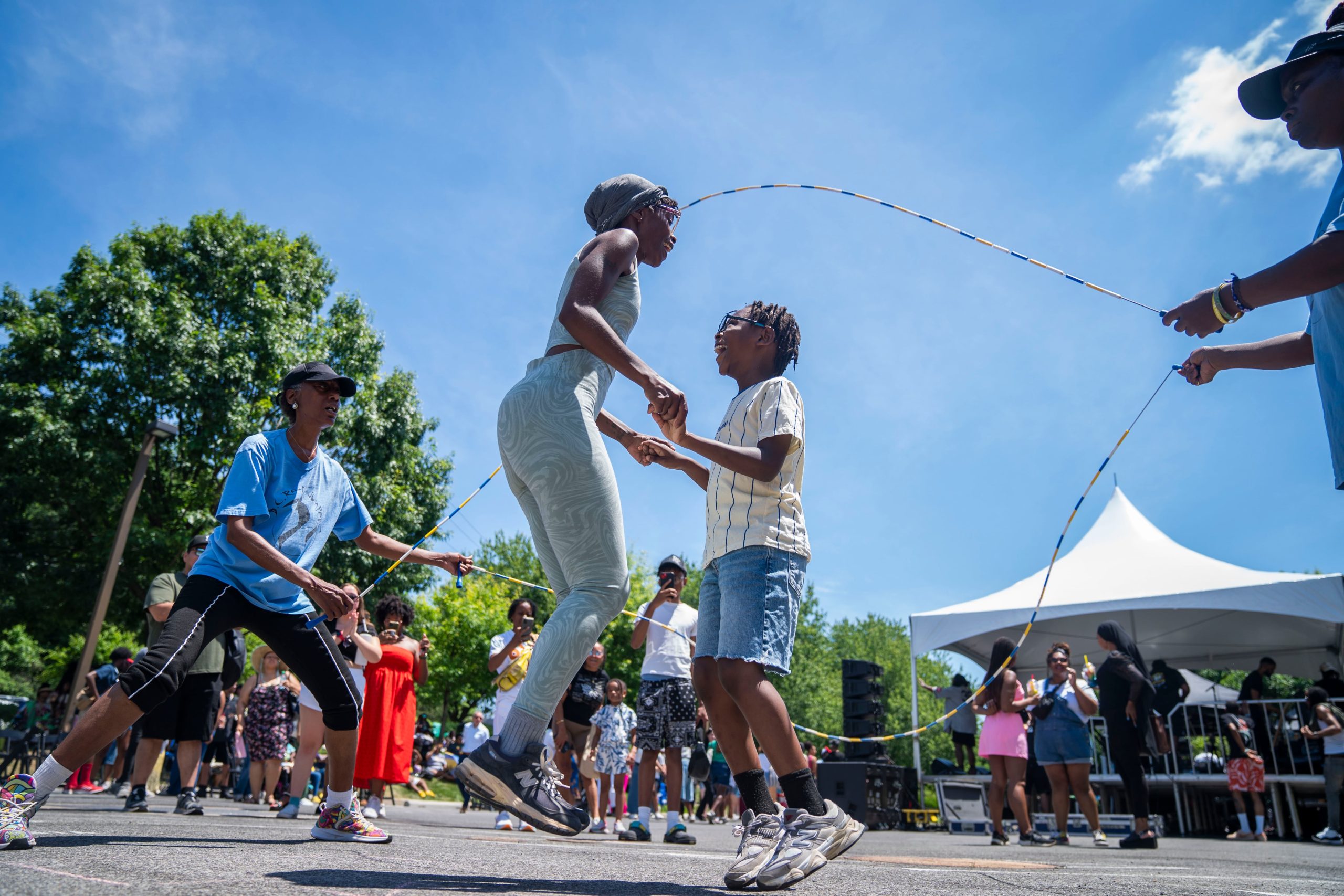
Juneteenth was first recognized as a federal holiday in 2021 when former president Joe Biden signed the Juneteenth National Independence Day Act into law. This historic event marked the first new federal holiday since the adoption of Martin Luther King Jr. Day in 1983. Juneteenth commemorates the emancipation of enslaved African Americans, specifically on June 19, 1865, when Major General Gordon Granger issued an order proclaiming freedom for slaves in Texas. Initially, Juneteenth was recognized only by certain communities, but it has since grown to become one of the most significant dates for Black Americans.
End of slavery
During the American Civil War, on September 22, 1862, President Abraham Lincoln issued the preliminary Emancipation Proclamation, a presidential proclamation and executive order that declared enslaved African Americans in Confederate states had to be freed. The final Proclamation was issued on January 1, 1863. It stated: “I do order and declare that all persons held as slaves within said designated States [in rebellion against the U.S.], and parts of States, are, and henceforward shall be free…” The proclamation affected South Carolina, Mississippi, Florida, Alabama, Georgia, Louisiana, Texas, Virginia, Arkansas, and North Carolina.
The Proclamation declared that the executive branch, including the Army and Navy, “will recognize and maintain the freedom of said persons.” It applied to more than 3.5 million enslaved people in the country. Approximately 25,000 to 75,000 individuals were immediately emancipated in regions of the Confederacy where the U.S. Army was present.
However, the enforcement of the Proclamation was not immediate everywhere. Texas, the most remote state of the former Confederacy, had 250,000 slaves. Many planters and slaveholders had migrated to Texas to avoid the war and had brought their slaves with them. News of the Proclamation reached Texas after its issuance, and while many slaves knew about Lincoln’s order emancipating them, they were not freed since the Union army had not yet reached Texas to enforce the Proclamation.
On April 9, 1865, Confederate General-in-Chief Robert E. Lee surrendered, followed by the surrender of the western Confederate Army of the Trans-Mississippi on June 2. On June 19, 1865, Union Major General Gordon Granger arrived at the island of Galveston to enforce the Emancipation Proclamation with General Order No. 3, which freed all remaining slaves. He also oversaw Reconstruction after the war, nullifying all laws passed within the state during the war by Confederate lawmakers.
While it is widely believed that Granger or his troops proclaimed the ordinance by reading it aloud, historians suggest that copies of the Ordinance were more likely posted in public places, including the church attended by Black Americans. The Order read: “The people of Texas are informed that, in accordance with a proclamation from the Executive of the United States, all slaves are free. This involves an absolute equality of personal rights and rights of property between former masters and slaves, and the connection heretofore existing between them becomes that between employer and hired labor. The freedmen are advised to remain quietly at their present homes and work for wages. They are informed that they will not be allowed to collect at military posts and that they will not be supported in idleness either there or elsewhere.”

The event has come to be celebrated as the end of slavery. However, emancipation for the remaining enslaved individuals in the Union border states of Delaware and Kentucky did not occur until December 18, 1865, with the ratification of the Thirteenth Amendment, which abolished slavery and involuntary servitude.
Juneteenth as a holiday
In Galveston, Texas, on June 19, 1866, one year after General Granger’s arrival, the first annual commemoration known as “Jubilee Day” was organized. Other observances took place on January 1 (the day the Emancipation Declaration was issued) or January 4. Some of these early celebrations served as political rallies to provide freed African Americans with instructions for voting.
In 1867, Black leaders in Austin, Texas, raised funds to purchase 10 acres of land, now known as Houston’s Emancipation Park, to celebrate the holiday. In subsequent years, the event drew thousands of attendees.
During the early 1890s, the Black community began using the word Juneteenth instead of Jubilee Day. The word derives its name from combining June and nineteenth. One of the earliest records of its use dates back to 1909 when The Current Issue, a Texas periodical, employed the term.

Although most early celebrations occurred in Texas, Black Americans who had left the state continued to commemorate Juneteenth wherever they relocated. By the second half of the 20th century, most states had established Juneteenth celebrations. Texas was the first state to declare Juneteenth a state holiday in 1980. By the end of the century, only three states officially observed the day. Over the next two decades, it gained recognition as an official observance in all states, except South Dakota, until it became a federal holiday under the Biden administration.
Texan Opal Lee and other Black Americans campaigned for decades to establish Juneteenth as a federal holiday. Each year, Lee led 2.5-mile walks, symbolizing the 2.5 years it took for news of the Emancipation Proclamation to reach Texas (although the news had arrived, slaves weren’t freed until the Union took control of the state). During the bill signing ceremony that designated Juneteenth as a federal holiday, she was an honored guest and President Joe Biden knelt down on one knee to greet her.
Thanks to the holiday, federal government employees now have the day off every year on June 19. If the date falls on a Saturday or Sunday, they have the closest Friday or Monday off, respectively.
Juneteenth celebrations in 2026
Americans across the country celebrate Juneteenth over the weekend with festivals, parades, outdoor meals, and gatherings with friends and family. With each passing year, this relatively new holiday has gained greater recognition in diverse communities.
Last year, several cities scaled back or canceled some Juneteenth celebrations due to declining support for diversity, equity, and inclusion (DEI) initiatives under the current administration. Despite cuts in corporate funding and some institutional support, many communities kept their events going thanks to community efforts, and this year celebrations continue across the country, with an emphasis on cultural resilience and unity.
One of the largest and most established events is the Milwaukee parade and festival, which will celebrate its 55th edition in 2026. The Jubilee Parade begins on Friday, June 19, at 9 a.m. and is followed by a party in Rose Park, featuring music, food, and activities; there is also an evening program associated with the Summerfest festival.
In San Marcos, California, the celebration continues to gain momentum with events like The Freedom Table, a culinary and storytelling experience on June 19 organized by a local couple that combines food, music, and art. What began as a pioneering initiative has become an emerging tradition in the area.
Austin, Texas, hosts its vibrant Central Texas Juneteenth Parade on June 19 along East MLK Blvd., followed by an all-day festival at Rosewood Park featuring entertainment, food, and family-friendly activities. Other cities such as Pensacola (Florida), New York, Los Angeles, and Chicago also host special events focused on African American culture and history, along with major festivals in Atlanta, Houston, Las Vegas, and other major cities.
Sign up for our weekly newsletter to get more English-language news coverage from EL PAÍS USA Edition










America
El Escándalo Del Banco Master En Brasil Golpea A Un Líder Del Partido De Los Trabajadores Cercano A Lula

Accidentes deportivos
Brasil Acusa De Homicidio Y Encarcela A Los Operarios Que Lanzaron A Una Mujer Sin Sujeción Desde Un Puente

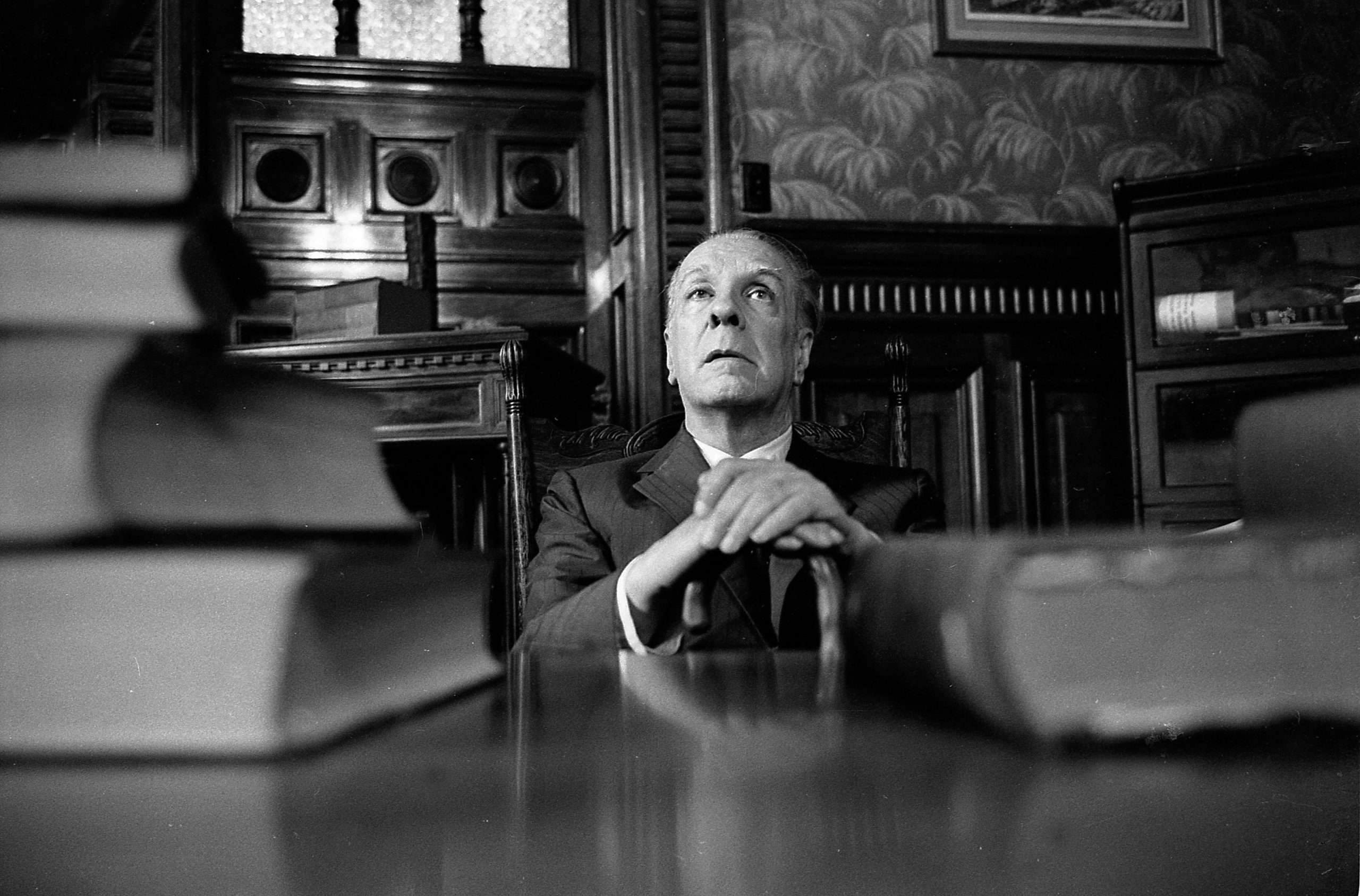
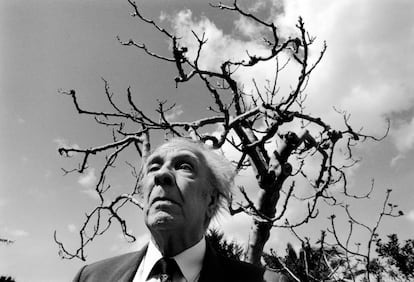
“The renown Borges enjoyed during his lifetime, documented by a slew of monographs and controversies, still astonishes us today. We know that he himself was astonished, and that he always feared being declared an impostor or a bungler or a peculiar mixture of both.” Thus reads the entry devoted to Jorge Luis Borges in an Enciclopedia Sudamericana dated 2074. With irony, typographical errors and anachronism, it was written, of course, by Borges himself, a century before its hypothetical publication. Forty years after the death of the author of Ficciones and El Aleph, which occurred on June 14, 1986, that fear — if it ever existed, if it was not pure imposture or shy modesty or a blend of both — could be declared abolished. The passage of time has raised his stature even higher and enriched both his figure and his work: Borges has long been ranked among the greatest authors of world literature, and undisputedly occupies the throne of Argentina’s greatest writer.
It was not always so, at least in his own country. In fact, until his death, when he was 86 and living in Geneva, a significant number of his fellow Argentines, especially within the cultural community, resisted accepting the place already occupied by his stories, poems and essays — largely because they rejected his conservative, “foreign‑looking” imaginary universe and the public persona Borges constructed in interviews and other appearances.
“While alive, Borges was an enemy to debate with, an adversary to refute. After his death, Borges becomes a writer to be won over,” and an ally courted across the political and cultural spectrum, summarizes the literary scholar Lucas Adur at one of the many tributes being held in Argentina, in this case organized by the Argentine Association of Hispanists (AAH). For Adur, that shift in Borges’s reception was completed in 1999, on the centennial of his birth, when “a kind of ecumenical consecration” took place.
The four decades since his death have illuminated different facets of Borges, complicating the image of the blind, wise and venerable old man who seemed to have read every existing book. As Adur, author of a Borges biography, explains, a series of shifts broadened the public view of the writer. These included restoration of the contemporary political context of his activity, a context obscured by Borges himself, and the ideological positions he took (his brief enthusiasm for the Russian Revolution or for nationalism, his antifascist activism, his fervent anti‑Peronism).
Other factors were the emergence of manuscripts, letters and documents, and even the books he read, underlined and annotated while he ran the National Library, which provide a material basis for Borges studies. Also revealing were intimate disclosures in the diaries of his friend Adolfo Bioy Casares, where everything from jokes and gibes to concerns about literary politics emerge. And there was the transformation of a writer and a body of work once seen as elitist into a pop figure through adaptations and appropriations in books, comics, films and even memes.
In a similar way, Borges’ work itself transformed. During the author’s lifetime he often introduced changes with each new edition. Even after his death new material kept cropping up. In the 1990s early books he had disowned were republished, as were the essays from Inquiries, El tamaño de mi esperanza (or The size of my hope) and El idioma de los argentinos (or The language of Argentines). Later, numerous articles, reviews and profiles he had written for magazines such as Sur and El hogar — which he had never collected — were assembled. And during this century another central strand of his production began to be investigated and recovered.
“Not everyone has read Borges. Everyone, however, has heard him. Everyone knows how he spoke; everyone would recognize his voice,” observed Alan Pauls in his book The Borges Factor. “By a curious paradox,” he added, “the most ‘bookish’ writer in Argentine literature, the one most wedded to the protocols of the written word, is also the writer who best exploited the possibilities of the spoken record — the most oral, most spoken writer in Argentine literature.”
The research, part archaeological dig and part detective work, conducted by scholars has made it possible to locate and publish the literature classes that Borges taught at different universities, as well as the lectures that took him around Argentina and to other countries. At the same time, it has revealed another side of the writer: the man who, after losing his job as a librarian amid Peronism’s rise in the mid‑1940s, was forced to work as a public lecturer to support himself. “He prepared his classes and lectures obsessively, with huge amounts of research and reading,” noted Dr. Mariela Blanco, compiler of the 2025 El habla de Borges. Access to Borges’s notebooks, she added, shows “how he moved from writing to orality and from orality to writing.” For example, his lectures on Franz Kafka contain the seed of a key essay for the renewal of literary criticism, Kafka y sus precursores.
An author of the future
The 40th anniversary of Borges’s death has been commemorated in Argentina over the past weeks with a range of cultural activities: tributes, courses, debates, performances and exhibitions that will continue through the end of the month. In Buenos Aires, the program titled Borges. Echoes of a Name is being hosted by the Centro Cultural Recoleta, co‑organized with the Jorge Luis Borges International Foundation, where manuscripts, personal items, first editions of his books, photographs, a hologram reproducing his phrasing and a recreation of the austere room in which he lived for most of his life are on display. At the Mariano Moreno National Library there will be a series of talks and readings dedicated to the author of El hacedor (or The maker) in the coming days, as well as programming this weekend at the Casa del Bicentenario, among many other options.
One recurring theme in the commemorative events is the particular resonance of Borges’s work with the 21st century — its capacity to address an era so different from his own, a present shaped by information technologies and artificial intelligences. Perhaps because of the fragmentary character of many of his texts, perhaps because of the unsettling interplay of reality and fiction his stories and essays propose.
The tension between national literature and world literature in Borges also crops up repeatedly in debates. “One of Borges’s distinguishing traits is that he places Argentine literature on a world stage. His ambition is to build a mythology of the pampas and the suburbs that stands alongside the Iliad, the Odyssey or the Icelandic or Anglo‑Saxon sagas he so admired. And he succeeded,” writer Carlos Gamerro said at an event organized by the Centro Cultural Borges under the title Borges, author of the future.
What Borges did with the Spanish language,” Gamerro added, “was something totally new and foundational,” and with that tool he built “a place of literary centrality.” He even allowed himself to dispense with the major genre of his time, the novel. “If you think of world literature as a building,” he added, “Borges is one of the pillars and, if you remove Borges, world literature collapses. Nothing like this can be said of any other Argentine author, and I don’t know about Latin American authors either.”
Sign up for our weekly newsletter to get more English-language news coverage from EL PAÍS USA Edition

Summer 2026 Begins This Weekend

Juneteenth: History, Celebrations And More About The Federal Holiday

The San Roque Club – Townhouses For Sale

Peru’s Roberto Sánchez And Keiko Fujimori Urge Caution As Vote Count Continues In Very Tight Presidential Election

Spain, A Country Of 50 Million People With Infrastructure For 40 Million: ‘The Cracks Are Starting To Show’
A Journey Through The Ages Of Soccer In The United States


-
 Alberto Fujimori2 weeks ago
Peru’s Roberto Sánchez And Keiko Fujimori Urge Caution As Vote Count Continues In Very Tight Presidential Election
-
 Barcelona2 weeks ago
Spain, A Country Of 50 Million People With Infrastructure For 40 Million: ‘The Cracks Are Starting To Show’
-
David Beckham2 weeks ago
A Journey Through The Ages Of Soccer In The United States
-
Latest2 weeks ago
Today In Spain: A Roundup Of The Latest News On Friday
-
Costa del Sol2 weeks ago
Marbella releases full beach rules for Noche de San Juan bonfires in 2026
-

 Arthur Miller2 weeks ago
The Enduring Fascination With Marilyn Monroe: The Actress’s Lipsticks, Bras And Frying Pans Fetch $2 Million At Auction
-
Latest2 weeks ago
Inside Spain: How Drinking Is Becoming An Old Man’s Game
-

 America2 weeks ago
Trump Planta E Insulta A Una Entrevistadora En Televisión Por Llevarle La Contraria