Adamuz
Deadly crash and landslide chaos wiped out 800,000 Málaga-Madrid journeys


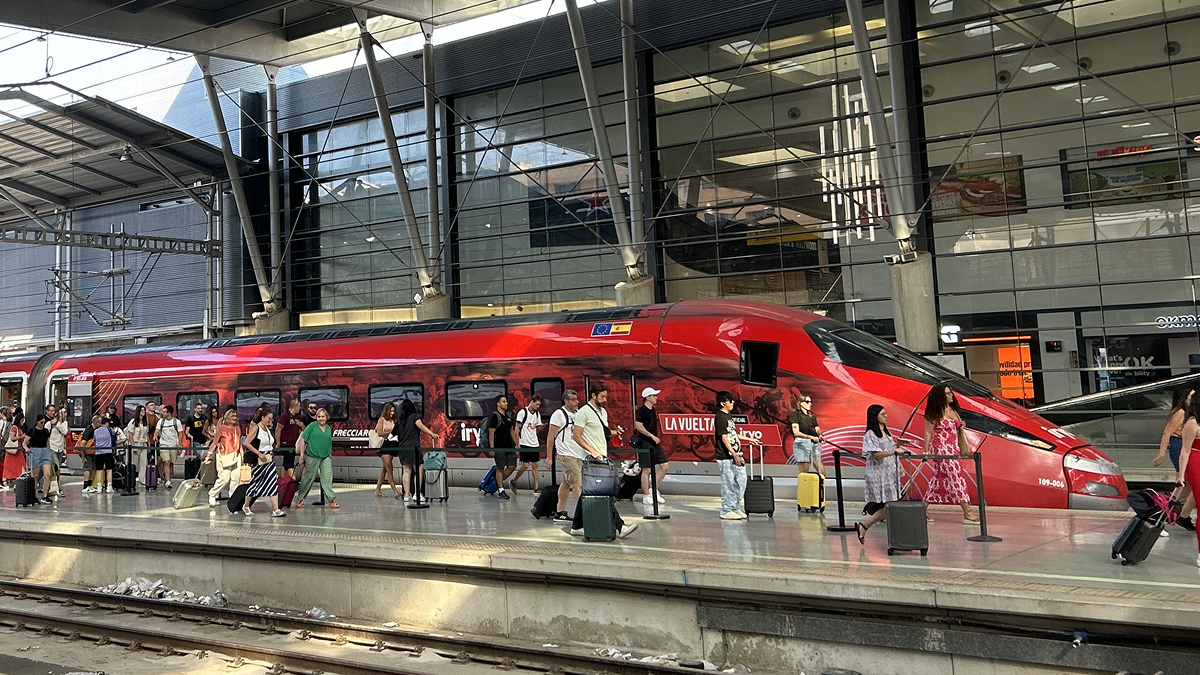
Rail travel between Málaga and Madrid has had a difficult year. Credit: Colinmthompson / Shutterstock
“Who guarantees it won’t happen again?” a survivor of January’s Adamuz crash asked months later, and plenty of former passengers clearly felt the same way. More than 800,000 journeys between Málaga and Madrid never happened in the first half of 2026, new figures show.
More than 800,000 journeys never happened
Just 635,000 passengers travelled between Málaga and Madrid between April and June 2026, 313,000 fewer than the same three months the year before. The large dip in passengers comes on top of an even steeper collapse in the first quarter, when the route was shut for most of the period. Put together, more than 800,000 journeys between the two cities didn’t happen in the first half of the year.
On the wider Málaga and Granada corridor to Madrid, 1.049 million passengers travelled between April and June, down 30 per cent year on year. Even Renfe’s grip on the route slipped slightly, though it still carried 72 per cent of passengers despite newer rivals Iryo, Avlo and Ouigo all competing for the same seats.
Why the closed tracks explain more than just lost confidence
The line was completely closed until April 30 and then, once it reopened, ran on a single track through the repaired stretch near Álora until July 17. That meant fewer trains and fewer seats for months, not just fewer people willing to book them.
Occupancy on the trains that did run stayed strong at 78.9 per cent, almost identical to the year before. So capacity, not confidence, looks like the biggest main reason for the fall. Average fares also dipped slightly to €39.90 before IVA (VAT), down three per cent on 2025.
The fear that also lays behind the figures
Even so, capacity alone does not explain everything. The closure followed one of Spain’s worst rail disasters in decades. An Iryo train derailed near Adamuz in Córdoba on January 18 after a rail break, and a Renfe train travelling on the parallel track struck it roughly 20 seconds later. Forty-six people died and 292 were injured.
In the days afterwards, passengers who regularly used the Madrid-Andalucía route spoke openly about how hard it would be to get back on. “The first time I get on, I won’t stop turning it over in my head,” said Isa Molina at the time. Marta P. said she expected to feel “sad and worried” the first few times she travelled again, and Jessica Flores admitted “it’s going to be hard for me to make the decision to travel.”
Months later, some of that fear naturally remained in those affected . One survivor, speaking in a video released in May by the Asociación Víctimas Descarrilamiento Adamuz (the crash victims’ association), asked who could guarantee it won’t happen again.
When the direct service finally returned on April 30, passengers boarded with a sense of respect and slight trepidation, with memories of the January accident still fresh. Not everyone felt the same way. Some described relief and total confidence in the AVE drivers, alongside others who admitted the day brought lots of nerves and uncertainty.
More trains are coming
Adif restored the second track on July 17, since then Renfe has laid on extra high-speed services to rebuild frequency on the route. Iryo has gone further than that, confirming plans to expand its Málaga-Madrid timetable significantly from 2027.