
DGT
Driving with a coat in Spain? You could face a €200 fine – here’s why

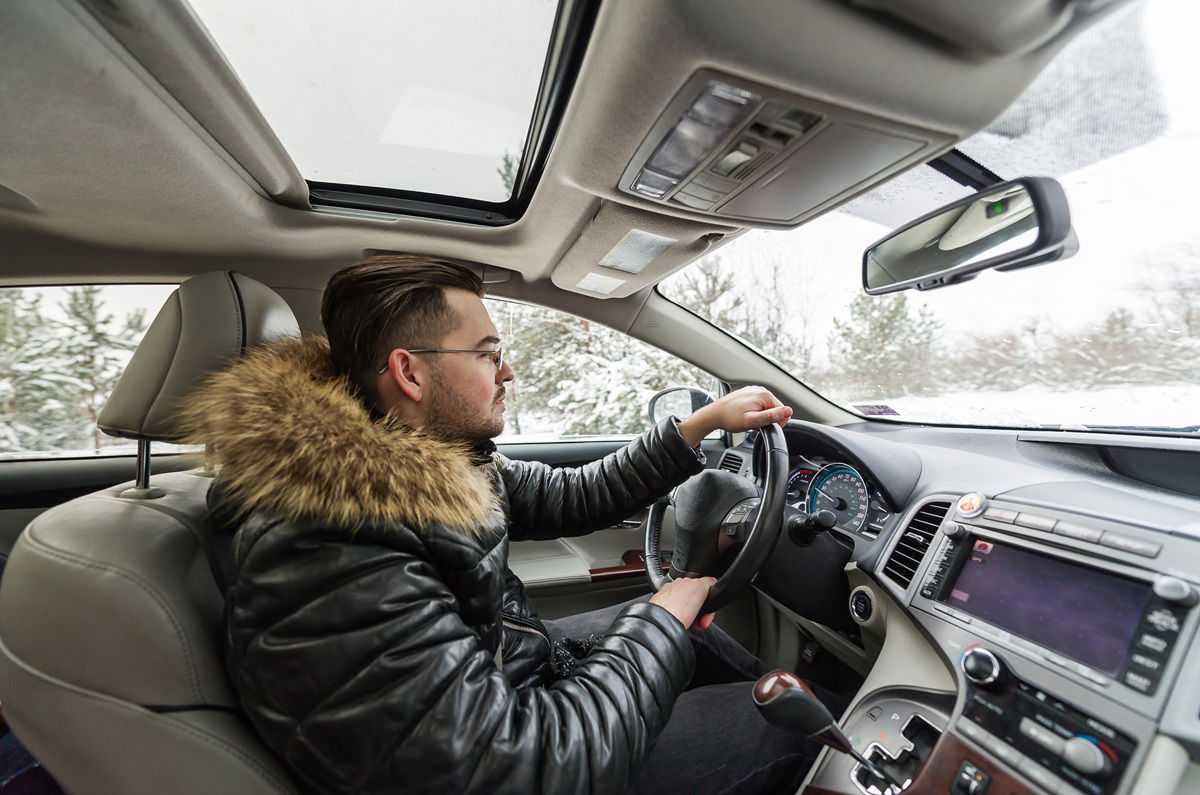
Wearing a bulky coat while driving in Spain could lead to a fine of up to €200
Credit : KAZLOVA IRYNA, Shutterstock
It might feel like common sense to keep your coat on in winter – but in Spain, doing so behind the wheel could actually land you a fine of up to €200. And it’s not about the coat itself, but how it affects your driving.
As temperatures drop, many drivers instinctively get into the car still wrapped up in thick jackets or padded coats. But Spain’s traffic authority, the DGT, is warning that this everyday habit can become a problem – especially if it limits your movement or affects how your seatbelt works.
Spain driving rules: why wearing a coat can get you fined
There’s no specific law that says “you can’t drive with a coat on” – and that’s where many people get confused.
What the law actually says is broader. Under Spain’s General Traffic Regulations, drivers must always maintain full control of the vehicle, have complete freedom of movement, and keep a clear field of vision.
In other words, anything that interferes with those basics can become an issue – including what you’re wearing.
A bulky winter coat, for example, can restrict how easily you turn the steering wheel, shift gears or check your surroundings. Even something as simple as turning your head quickly can become harder if your jacket is too stiff or tight around the neck.
And that’s where the risk of a fine comes in.
Seatbelt warning: the detail many drivers overlook
One of the biggest concerns raised by the DGT isn’t just movement – it’s safety.
Thick coats can prevent your seatbelt from sitting properly against your body. Instead of being snug, the belt sits over layers of padding, creating extra slack. In the event of an accident, that gap can reduce the effectiveness of the seatbelt and increase the risk of injury.
It’s a small detail, but an important one – and one that traffic officers are increasingly paying attention to.
When you could actually be fined – and how much it costs
Because there’s no explicit ban, enforcement largely depends on the judgement of traffic police or Guardia Civil officers.
If they believe your clothing is affecting your ability to drive safely – whether that’s limiting your movement, reducing visibility or compromising the seatbelt – you could be fined.
In most cases, penalties range between €80 and €200, depending on how serious the situation is considered. The good news is that it typically doesn’t involve penalty points on your licence.
Situations that are more likely to lead to a fine include:
- very bulky or padded jackets that make steering or manoeuvring difficult
- high collars or hoods that restrict neck movement or side visibility
- seatbelts that don’t sit properly because of thick clothing
Simple advice to stay warm – and avoid problems
The solution is straightforward.
Before setting off, take a moment to warm up the car and check that you can move freely. If your coat feels restrictive, it’s worth taking it off – even if just for the journey.
The DGT’s advice is clear: your seatbelt should sit close to your body, and your movements should feel natural and unrestricted at all times.
For expats in Spain – especially those not used to local driving rules – this is one of those small but important differences that can catch you off guard.
Because sometimes, it’s not the obvious things that lead to fines.
It’s the habits you don’t think twice about.


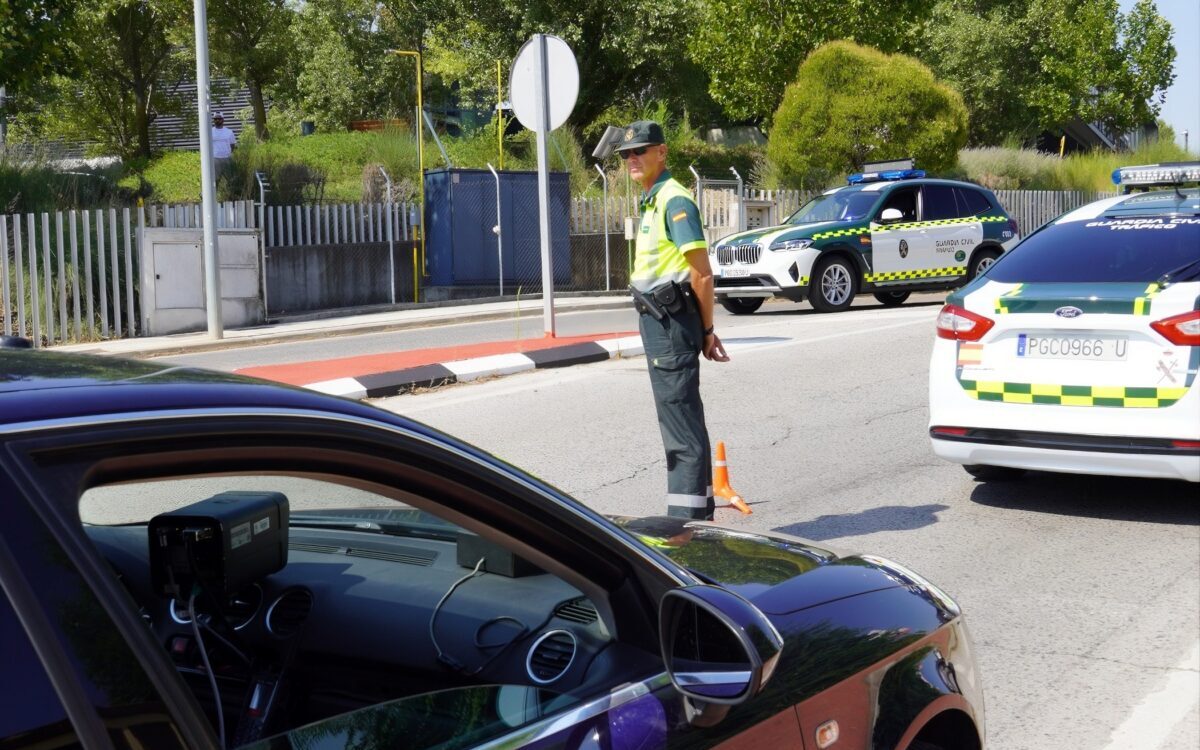
Drivers on Spanish roads this week face intensified speed checks as authorities target one of the leading causes of fatal crashes. Expect a lot more roadside mobile speed cameras, hidden Guardia Civil cars, as well as local police speed traps in some of the least expected places.
Heightened vigilance across all road types
Spanish traffic officials began a special seven-day operation on Monday, April 13, running until Sunday, April 19. Guardia Civil traffic officers are working with regional police and participating local forces to monitor vehicle speeds on motorways, conventional roads and urban stretches.
Speed remains a deadly factor in crashes
Inappropriate or excessive speed ranks as the third most common contributing element in road incidents, particularly those ending in deaths. Figures for Spain show this factor appeared in 291 fatal accidents in 2023 before rising to 307 cases in 2024. Overall, traffic experts link roughly 30 per cent of deadly collisions to drivers exceeding limits or failing to adjust for conditions.
Higher impact speeds release greater energy during collisions. That extra force transfers directly to vehicle occupants and vulnerable road users, worsening injuries even when crashes occur.
Previous operation exposed widespread non-compliance
Data from a similar August 2025 project in Spain revealed the scale of the issue. Officers checked 275,340 vehicles and issued fines to 30,175 drivers, representing 10.9 per cent of those stopped.
Breakdown by road category showed clear patterns: 63 per cent of offences took place on motorways and dual carriageways, while almost 37 per cent occurred on conventional roads and just 0.18 per cent in built-up areas.
Call for greater caution behind the wheel
The DGT, the national authority that governs traffic in Spain, stresses that maintaining proper speeds gives motorists more time to react to unexpected hazards. Appropriate speed also limits damage when incidents prove unavoidable. The DGT also encourages everyone to respect limits and adapt driving to weather, traffic density and road layout for safer journeys throughout the region.
Do any police in Spain get paid extra to dish out speeding fines?
No, not since pre-2010 have Guardia Civil officers received performance related pay regarding this type of traffic control campaign, and neither do local police officers. The type of police in Spain who are likely to stop a car for traffic offences are the following:
- Local police: These operate within the urban areas of a municipality or town under the jurisdiction of a local council. With this kind of national or regional campaign, they work in coordinated cooperation with the DGT. In smaller villages that do not have a specific budget for a local police squad, the Guardia Civil is likely to take this responsibility.
- National Police (dark blue uniforms): Generally, they do not participate in traffic campaigns, or hand out speeding fines. However, if the situation is deemed “conducción temeraria” (dangerous driving) and an immediate threat to the safety of others, do not be surprised to see them pounce into action. In this case, the offender will almost certainly end up in a police cell.
- Guardia Civil (green uniforms): These work directly with the DGT on motorways, national routes, in the countryside, and in coordination with local police sometimes. Often equipped with specialist traffic policing gear, this is the force which works most closely with the DGT on traffic issues, or motorways, country roads, and generally outside built up areas.
This focused crackdown forms part of wider European efforts to cut speed-related harm during a busy spring period on Spanish highways. So, keep an eye out for extra olive cars and more traffic cameras while the campaign continues, and be careful with that accelerator pedal.

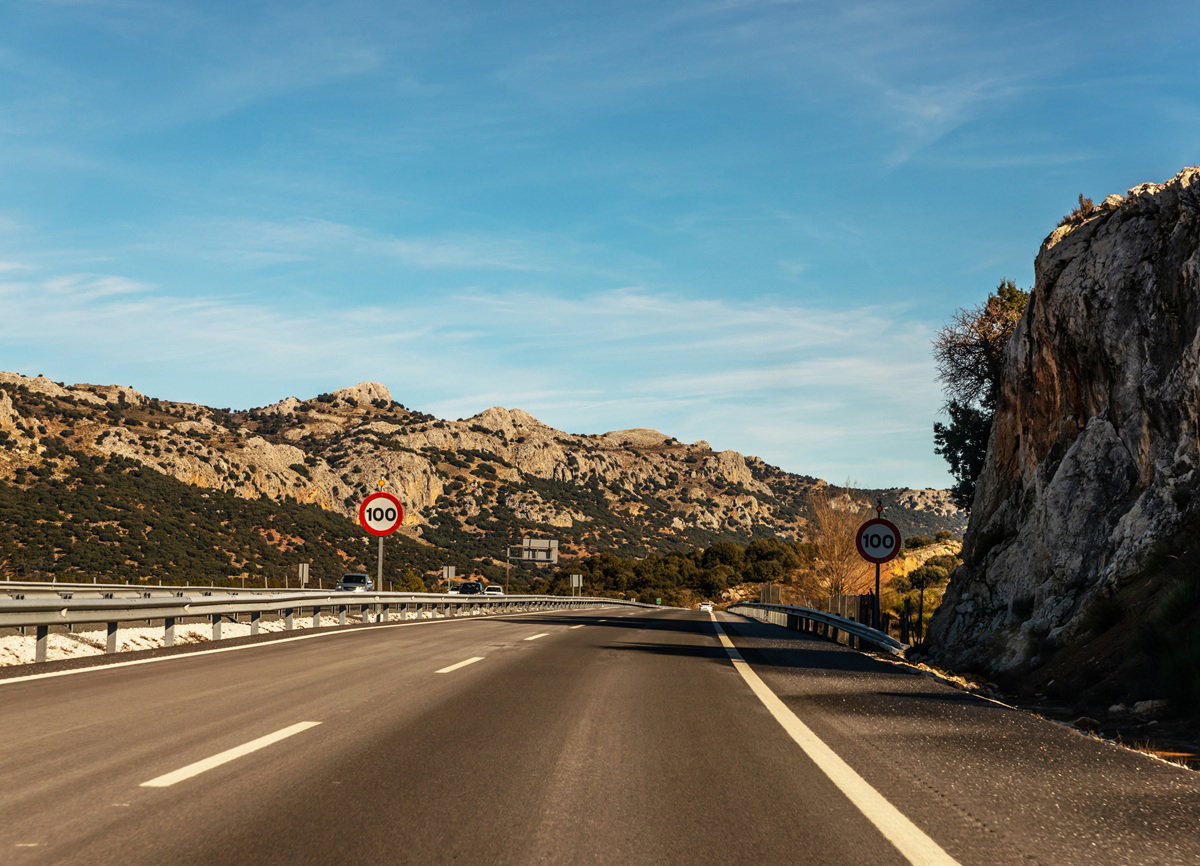
New 100 kmh limit introduced on selected high risk roads in Spain
Credit : Q77photo, Shutterstock
Drivers across Spain are starting to notice a change on some of the country’s main roads. In several high risk stretches, the maximum speed limit has been reduced to 100 kmh, as part of a wider push by the DGT to bring down accident rates. The measure is already in place on key routes, and more areas could follow.
The idea is simple. Lower speeds in dangerous sections mean fewer serious accidents. But for many drivers, the change comes as a surprise, especially on roads where higher limits were once the norm.
Why Spain is lowering speed limits on major roads
Road safety remains a major concern in Spain, with speed still one of the most common factors in serious accidents. Despite clear signage, many drivers continue to exceed limits, particularly on motorways and dual carriageways.
To tackle this, the DGT has begun introducing targeted reductions rather than blanket changes, focusing on sections where accidents are more likely. These include areas with poor visibility, steep gradients or complex traffic conditions.
The move is not unique to Spain. Similar measures have already been introduced in countries like France, Italy and Germany, often following international recommendations aimed at improving road safety.
One of those recommendations comes from the United Nations, which has highlighted 100 kmh as a safer maximum speed in certain high risk road environments.
Spain is now gradually applying that approach, but only in selected areas rather than across the entire network.
The roads already affected by the 100 kmh limit
Some of the changes are already in place. One of the most notable examples is on the AP 7 in Catalonia, where a 140 kilometre stretch between El Vendrell and Maçanet de la Selva is now managed using variable speed limits.
Here, the maximum speed can change in real time depending on traffic conditions, weather or incidents on the road. The system uses digital panels to display updated limits to drivers as they travel.
In the Basque Country, several sections of the AP 8 in Guipúzcoa have also been reduced to 100 kmh. Meanwhile in Galicia, parts of the AG 55 between A Coruña and Carballo are now permanently limited to the same speed.
These are not random decisions. Each section has been identified as a higher risk area, where reducing speed could make a measurable difference.
In many cases, the changes are also backed up by average speed cameras, designed to ensure that drivers stick to the new limits over longer distances rather than slowing down briefly.
What drivers need to know about variable speed limits
One of the biggest sources of confusion is the use of dynamic speed limits, particularly on roads like the AP 7.
Unlike traditional limits, these are not fixed. They change depending on what is happening on the road at that moment.
If traffic becomes heavy, the limit may be reduced to prevent sudden braking and collisions. If weather conditions worsen, such as rain or fog, speeds are lowered to improve safety. Roadworks or incidents can also trigger temporary changes.
All of this information is displayed on electronic signs above or alongside the road. Drivers are expected to follow the limit shown at that time, even if it differs from the usual maximum for that type of road.
The aim is to make driving conditions more predictable and reduce the likelihood of accidents caused by sudden changes in speed.
A shift that could expand to more roads in Spain
For now, the 100 kmh limit is limited to specific sections, but it may not stop there. If the results show a clear reduction in accidents, similar measures could be extended to other parts of the country.
For drivers, that means paying closer attention to signage, especially on major routes where conditions can change quickly.
While some may see the lower limits as restrictive, the authorities argue that the goal is straightforward. Fewer accidents, fewer serious injuries, and safer roads overall.
Whether that balance is accepted by drivers will likely depend on how noticeable the impact becomes over time. For now, one thing is certain. On some of Spain’s busiest roads, slowing down is no longer optional.

El Real Madrid Cumple Su Objetivo En La Euroliga Ante Luka Doncic

El Braga Reina En El Gigantesco Colapso Del Betis

Armed Robbers Take 25 Hostages At Naples Bank Then Vanish Underground


-

 New Developments2 weeks ago
Luxury Villas For Sale, Estepona – ProjectL1
-

 New Developments4 weeks ago
How To Get A Tourist Rental Licence In Andalusia (Spain) – Step-By-Step Guide 2025
-

 New Developments2 weeks ago
Stylish 3-Bedroom Apartment With Panoramic Sea Views – Benalmádena
-

 Uncategorized4 weeks ago
Max Verstappen left laughing after Nurburgring triumph
-

 %2 weeks ago
Poland Disconnects Utilities At Russian Consulate That Moscow Refuses To Hand Over
-

 Uncategorized4 weeks ago
Max Verstappen team-mate sheds light on Nurburgring mistake
-

 Uncategorized3 weeks ago
Lewis Hamilton goes from Karate Kid to Samurai Warrior with Kill Bill guru
-

 Foreign demand4 weeks ago
Non-Resident Foreign Buyers Retreat Sharply In 2025