Connect with us

%

El Corte Inglés Cuts Prices On 1,300 Essentials Amid Cost Crisis

Published

on

el-corte-ingles-cuts-prices-on-1,300-essentials-amid-cost-crisis

El Corte Inglés lowers prices to counter inflation and supply disruption. Photo Credit: El Corte Inglés

Spanish department store chain El Corte Inglés has lowered the prices of some 1,300 essential food items and other products, aiming to compete with other supermarkets and ease the strain of an increasing cost of living and supply bottlenecks caused by the US-Israel-Iran conflict. This initiative follows another campaign by the chain, which maintained fixed prices on 300 basic food products for 90 days; however, according to El Corte Inglés, these new reductions are permanent, not a one-time deal.

‘Regularly consumed’ products will be permanently discounted

This price reduction affects everyday consumer products and will have a direct impact on the price of the average person’s grocery basket. In a press release, El Corte Inglés stated that all of the affected products are those that have a “high turnover” and that are “regularly consumed.”

According to the company, these are among the items being reduced in price:

  • Deli meats
  • Beverages
  • Household cleaning products
  • Personal hygiene items
  • Perfumes
  • Oils
  • Milk
  • Sausages
  • Canned fish
  • Vegetables and legumes
  • Prepared salads
  • Baby food
  • Chocolates
  • Coffee
  • Soft drinks
  • Wines
  • Pet food

This measure is part of an ongoing effort by the department store chain, which is reviewed weekly, to maintain a constant balance with the most competitive prices on the market in each area where they are located.

A supermarket discount war sparked by the Strait of Hormuz conflict

It is notable that these deals and discounts, sparked by the supply bottleneck of the Strait of Hormuz caused by the US-Israel-Iran conflict, have sparked a price war in supermarkets. With rising transport costs and some scarcity caused by the bottleneck, one reliable way to retain customers and gain traction in the market is to offer competitive promotions and discounts. Some of the items and products that have been affected by the supply bottleneck include jet fuel, fruits, bottled water, and even condoms.

This also guarantees shoppers a certain standard of quality, reliability, and stability during a period of spiking costs and uncertainty.

%

Summer Coding Camp For Kids

Published

on

summer-coding-camp-for-kids

More details on English Edition 16.05.26. Credit: Nicole King

I welcomed Sabi Borsos of Logiscool to English Edition to talk about their summer camps for 6 to 14 year olds.  I definitely want to sign up my 7 year old granddaughter.

Located in Elviria and San Pedro, Logiscool is offering children the chance to combine coding, creativity, sport and outdoor fun through its exciting digital summer sessions.

The 3-to-5-day non-residential camps feature more than 35 digital topics designed to introduce children to the world of technology in a playful and engaging way. Led by young trainers who connect easily with kids and teens, the camps blend indoor tech learning with outdoor activities and teamwork.

Children can explore Roblox Camps, where they become game designers instead of just players, Programming Camps that introduce coding and logical thinking through interactive challenges and Minecraft Camps, where kids learn programming basics while building and creating inside the game. It’s important for children’s safety that they understand not just how to use technology, but how technology actually works.

We live in an increasing AI-driven world but whilst AI tools can generate answers and code, they cannot always judge whether information is correct, secure, appropriate or reliable.  Learning coding teaches them to question technology rather than simply consume it whilst developing problem-solving, logical thinking, creativity and computational skills that are valuable across many future careers.

Experts believe the future will belong to people who can work alongside AI, direct it and understand its limitations. Children who understand these concepts are far less likely to be manipulated by technology and will be capable of actually using it to further their own ideas and creativity.

Sabi kindly offers my readers and viewers a 10% discount on the weekly camp with promo code NICOLEKING26 during registration.

Continue Reading

%

Competa Hiking Heroes Give Wheelchair-Bound Woman Chance To Return To Peak

Published

on

competa-hiking-heroes-give-wheelchair-bound-woman-chance-to-return-to-peak

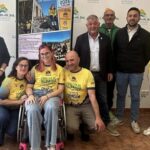
Xiomara and Los Locos de la Colina. Credit: Ayuntamiento de Competa

Locals in Competa will gather art the end of the month to help 23-year-old Xiomara Santisteban Domínguez reach Cerro Lucero peak once again. The young woman from the town suffered a serious accident that left her with a spinal injury and complex regional pain syndrome. Before that, she often hiked to the 1,774-metre peak with her family, sometimes at night to watch the sunrise. On Sunday, May 31, the expedition hopes to restore that cherished experience through teamwork and determination.

Club builds on record of charity hikes

Los Locos de la Colina has organised similar inclusive challenges in recent years. In one notable case, the club dedicated the Trail Canillas de Albaida – Reto Higinio to young Alba, who has Mowat-Wilson syndrome. Volunteers carried her in a Joëlette chair during the event, creating joyful memories for her family while raising funds. Such efforts reflect the group’s commitment to adaptive mountain sports across the Axarquia region.

Details of the upcoming ascent

Hikers from the club will transport Xiomara in a Joëlette all-terrain chair. The main support team starts from Plaza Almijara in Competa at 7am. Other participants drive to Puerto Blanquillo for an 8am start on a shorter route. Porters plan frequent relays to maintain pace on the demanding trail, which includes technical sections near the top. Organisers expect the full climb from Competa to take seven to eight hours.

Preparation and safety measures

Fitness levels matter because of the steep ascent. Participants receive two refreshment stops, though hikers must bring extra water for the upper sections. Insurance or a federative licence counts as essential. Those without one can arrange a one-day policy for five euros by emailing a copy of their identity document to the club. Registration through the Los Locos de la Colina website or the town hall helps track numbers for safety.

Local backing and emotional impact

Town officials and the Mancomunidad de la Axarquia have endorsed the project. The mayor of Competa and other representatives joined the presentation alongside Xiomara and her parents. After the descent, everyone meets for a snack at the town hall. Club members stress responsibility on this challenging route while focusing on Xiomara’s goal. Her words show deep gratitude for the chance to stand on the summit again.

Broader meaning for accessibility in mountains

Initiatives like this one continue a growing movement in Andalucia. Delivery of Joëlette chairs to clubs has enabled more people with reduced mobility to join trail events. In Competa, the climb represents resilience and community spirit in the Sierras Tejeda, Almijara and Alhama Natural Park. Many view it as proof that barriers in outdoor activities can diminish through collective action.

Continue Reading

%

This Rural Village In Spain Is Betting On Low-Cost Land To Revive Its Community

Published

on

this-rural-village-in-spain-is-betting-on-low-cost-land-to-revive-its-community

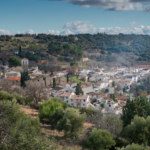
The initiative is particularly aimed at individuals and families who can work remotely or who are willing to relocate for lifestyle reasons. Photo credit: Israel Hervas Bengochea/Shutterstock

A small municipality in central Spain is offering low-cost building plots in an effort to attract new residents and reverse long-term population decline. Olmeda de la Cuesta, in the province of Cuenca, has introduced an initiative allowing buyers to acquire land at reduced prices as part of a wider strategy to encourage settlement in the area. The village forms part of Spain’s broader “España vaciada” movement, which refers to rural regions affected by decades of depopulation as younger generations move towards urban centres.

Local authorities have turned to land sales and settlement incentives in response to shrinking populations and limited economic activity. The initiative has drawn attention beyond Spain, with reports highlighting the unusually low price of available plots and the municipality’s attempt to reposition itself as a viable option for remote workers and families seeking a quieter lifestyle.

What the scheme involves

The scheme in Olmeda de la Cuesta involves the sale of municipal land at significantly reduced prices compared with urban property markets. The aim is to make homebuilding more accessible and to encourage long-term residency rather than short-term tourism. According to reports, the council has made building plots available through a structured allocation process, with conditions attached to ensure that land is used for residential development.

The measures are designed to prevent speculative purchasing and to prioritise individuals or families willing to relocate permanently. Local officials have framed the initiative as part of a long-term strategy to maintain essential services and avoid further population loss. As with many rural areas in Spain, the village faces challenges linked to ageing populations, limited employment opportunities and the gradual closure of local infrastructure.

What life is like in Olmeda de la Cuesta

Olmeda de la Cuesta is a small municipality in Castilla-La Mancha, located in a mountainous rural area. While population figures vary depending on classification, it is widely described in reporting as a sparsely populated village with a strong focus on agriculture and land management. The settlement has undergone previous efforts to modernise infrastructure and attract new residents, including improvements to housing stock and public spaces.

Despite this, population numbers remain low, highlighting a wider issue across inland Spain where rural communities continue to decline in size. The latest land offer is intended to address this directly by making relocation financially feasible for people who may otherwise be priced out of home ownership in cities or larger towns.

Targeting remote workers and new settlers

The initiative is particularly aimed at individuals and families who can work remotely or who are willing to relocate for lifestyle reasons. Spanish rural councils have increasingly looked towards remote workers as a potential solution to depopulation, especially following the rise in flexible working arrangements.

In addition to attracting private buyers, the scheme also seeks to encourage small-scale business activity in the area. Local authorities have suggested that new residents could contribute to maintaining services and supporting the local economy through everyday spending and community participation.

Part of a wider local efforts across rural Spain 

The situation in Olmeda de la Cuesta reflects a much wider national issue in Spain, where rural depopulation has affected large parts of the interior. Many villages face similar pressures, including reduced access to healthcare, fewer schools and limited transport links.

In response, various municipalities have introduced incentives ranging from cheap housing to tax reductions and job offers. These initiatives aim to stabilise or reverse population decline, although results have been mixed depending on location and economic conditions. Olmeda de la Cuesta’s land offer sits within this wider pattern of local-level interventions rather than a central government programme, with each municipality tailoring its approach based on available resources.

Outlook for rural repopulation efforts

While such schemes generate interest, long-term success depends on sustained migration and economic viability. Rural councils continue to face the challenge of balancing affordability with the need to create lasting employment opportunities and infrastructure improvements.

For Olmeda de la Cuesta, the land initiative represents a continuation of efforts to maintain community viability in an area where population density remains extremely low. Whether the offer results in permanent settlement will depend on demand from individuals willing to relocate and build homes in a remote rural setting.

Continue Reading

Trending

Copyright © 2017 Spanish Property & News