


Connect with us

America

E

Published

on

e
Continue Reading
Click to comment

Leave a Reply

Your email address will not be published.

America

Venezuela: The Risk Of Changing So Everything Stays The Same

Published

on

venezuela:-the-risk-of-changing-so-everything-stays-the-same

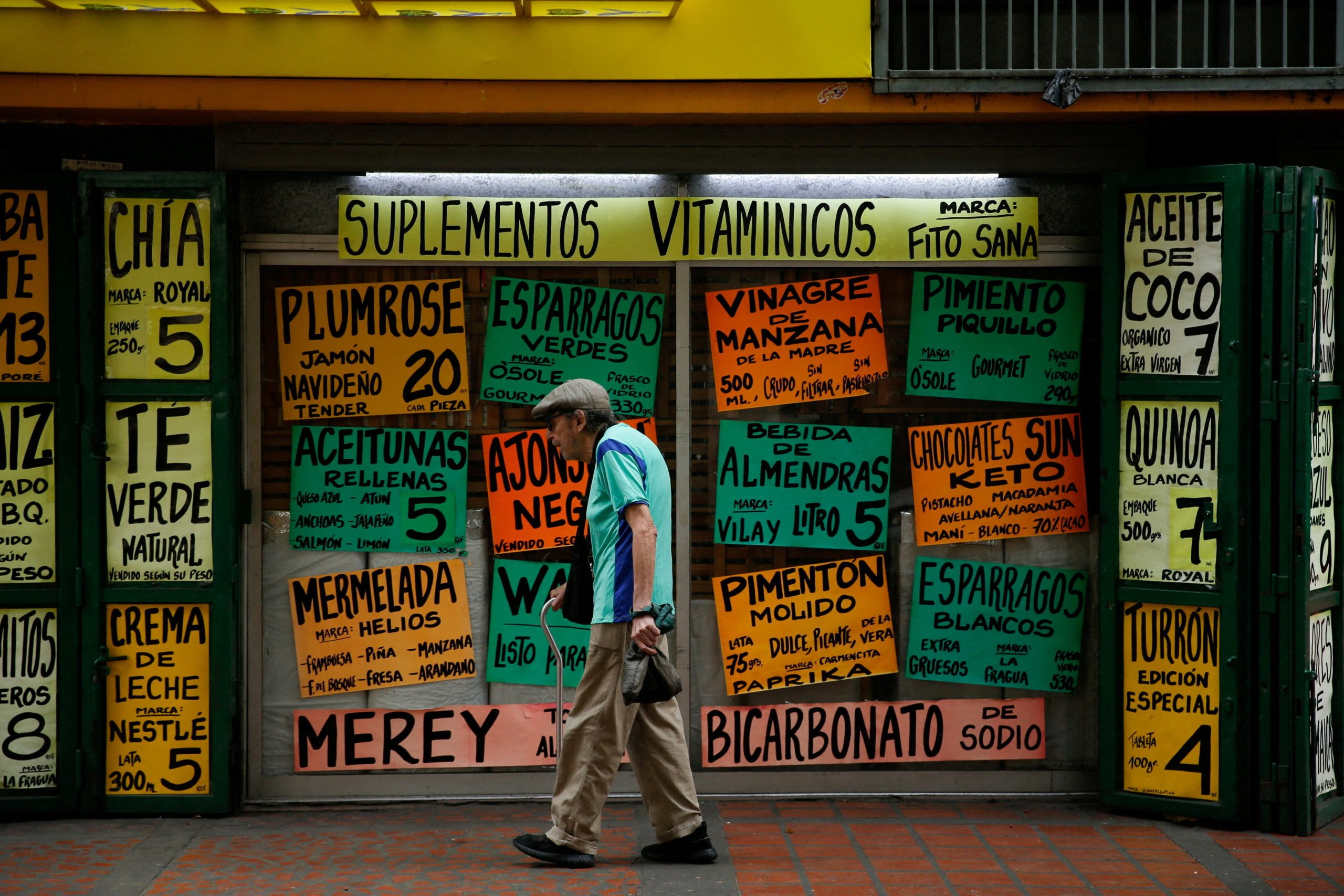
The reinstitutionalization of Venezuela — which has been so widely discussed in recent weeks — remains to be seen. Fears are growing about a superficial change, where everything changes so that nothing actually changes. The official commitment to holding presidential elections remains vague. The country is still waiting for economic improvements. The early political overtures don’t seem – for the moment – to be sufficient. Opposition politicians don’t trust President Delcy Rodríguez’s intentions, while reluctance persists in some sectors of the ruling United Socialist Party of Venezuela (PSUV). New scandals are emerging: more political prisoners have died in official custody, in a murky context that has generated widespread shock.

For weeks, Venezuela has been trapped in a debate that affects everything. What needs to change before elections can be held? Since U.S. special forces captured Nicolás Maduro on January 3, the country has been experiencing what some would call an opening. Others, more cautiously, observe a mere reshuffling of the regime. There’s been no dismantling of the repressive apparatus, nor any reinstitutionalization of key bodies, such as the National Electoral Council (CNE).

Meanwhile, pressure is mounting from all sides. The opposition is demanding a “comprehensive reinstitutionalization,” which includes the renewal of the CNE, the full restoration of political rights, as well as an end to persecution. Civil society organizations are moving in the same direction: they affirm that rebuilding the state’s capacity to organize and arbitrate elections has become an essential task for any transition to take place.

The regime, for its part, hasn’t set any dates or timelines. And, amid this uncertainty, the question arises again: are the changes taking place the beginning of something real, or simply a tactic to remain in power?

With the United States present in Caracas, a process of political reform has begun in Venezuela, giving many people hope that there will be a return to democracy. Media controls have been relaxed and the security police have withdrawn from the streets. Key figures in civil society have also been replaced, such as the attorney general and the ombudsman. And, while the new appointees aren’t exactly opposition members, they’re replacing highly-recognizable figures from Maduro’s repressive era (2013-2026). A reform of the Supreme Court — co-opted by loyalists of the former presidential couple — has been underway since January. Changes have also been made to the composition of the Central Bank of Venezuela.

Interim President Delcy Rodríguez has relied on her party’s parliamentary majority to adapt the Bolivarian Revolution — which began in 1999, when Hugo Chávez began his presidential administration (1999-2013) — to new realities, while attempting to diminish the influence of Maduro’s regime. Her personal style is less intrusive. In all parts of her administration, priority has been given to hiring professionals with technical credentials (preferably those within the revolutionary movement). The United States, meanwhile, is promising investments: temporary licences are being issued for oil exploration. The interest in the country’s natural resources isn’t being concealed.

Secretary of State Marco Rubio, speaking from Washington, has outlined three phases for Venezuela in 2026: stabilization, recovery and transition. Diplomatic personnel stationed in Caracas have suggested that the country might be nearing the end of the first phase, but that’s all. There are no timelines for elections; no dates are being discussed openly. Not even by the United States.

According to experts, the path to free elections must inevitably lead to a reform of the National Electoral Council (CNE), as well as changes to the law that governs its operation. In Venezuela, this institution holds the status of an autonomous public power, and it’s the only one that hasn’t been touched by the regime in this process of opening up. This is an area of the state where Jorge Rodríguez — head of the National Assembly and brother of the acting president — has wielded enormous power for years. The current director of the CNE, Elvis Amoroso, is also very close to former First Lady Cilia Flores, both personally and politically.

“For me, what needs to happen is a political agreement, in which this parliament appoints a provisional CNE, with five directors elected according to the constitutional requirements,” says lawyer Delsa Solórzano. She’s the founder of a political party, Encuentro Ciudadano (“Citizens’ Meeting”), and one of the leaders of the Plataforma Unitaria (“Unitary Platform”), an alliance that supports María Corina Machado.

“That CNE must organize the pending electoral processes,” Solórzano affirms. From where she stands, without this, progress will be impossible. “Political parties don’t have electoral [registrations]; they were all taken from us. Several parties within the Unitary Platform are under judicial review. Almost half of the opposition politicians are barred from holding office. It’s necessary to purge the Electoral Registry, provide security for poll workers — who were harshly repressed by the regime during the last presidential elections — and create provisions to [include] citizens from the diaspora [on the voting rolls],” she lists.

The Unitary Platform, a coalition that brings together the largest Venezuelan opposition parties, has presented its roadmap for restoring constitutional order in the country. In addition to institutional reform and the return of the opposition’s political rights, the Platform deems credible international observation of elections to be necessary. The coalition also wants guarantees for all political sectors, as well as a negotiated transition with a phased timeline.

“The vacant presidency is now an undeniable truth,” says Juan Carlos Apitz, the dean of the Law School at the Central University of Venezuela. “With a presidential vacancy, it’s imperative to call for elections now.” According to Apitz, “the regime is attempting to make cosmetic changes in order to buy time.” However, he cautions, “the truth is that, so long as the repressive apparatus remains intact, everything will stay the same. The core ideology of [the Chavista regime] is intact.”

The date of presidential or general elections in Venezuela remains a mystery. Delcy Rodríguez says that they’ll take place “someday.” Minister of Interior Diosdado Cabello has stated that they’ll be held “when they have to be held.” Politicians from minority parties that collaborate with the ruling PSUV – such as Bernabé Gutiérrez – have stated that elections should be held in 2030. The opposition sectors whose presence is tolerated in parliament are betting on 2028. Meanwhile, the Unitary Platform argues that they shouldn’t be held later than 2027, under any circumstances. Vente Venezuela, María Corina Machado’s party, is actively working on forming its campaign team, with an eye toward elections in the near future.

On the other hand, the institutional framework of Hugo Chávez’s Bolivarian Revolution prefers staggered elections, with presidential elections held separately from parliamentary elections. The ruling party also wants gubernatorial and mayoral elections to be held separately, with the aim of maintaining significant territorial power. A new president in Venezuela would currently find that the National Assembly, along with 23 of the 24 state governorships, are controlled by the PSUV.

For Apitz, the institutional outcome in Venezuela has a political component, more than a legal one: “We’re [living] in a dictatorship overseen by the United States. Everything here will be an imposition, and we’ll have to make things happen. I think that a presidential election in which the opposition sweeps the vote — which is what should happen — could have a very strong effect on the entire political landscape, finally weakening the regime.”

“Neither the Rodríguez siblings nor the Americans want elections soon, that’s obvious,” says Juan Rafalli, a constitutional lawyer and postgraduate professor at the Andrés Bello Catholic University. “What I think is that prolonging the current situation is unsustainable, especially for the United States, because it has costs. A full economic recovery in the country is impossible without political change. The [ongoing] modifications to the Supreme Court will try to give the impression of openness, by increasing the number of justices. [But while there] are quotas for the opposition, the regime will maintain a majority.”

“The institutional renewal process being carried out by the regime is happening behind the people’s backs. That’s regrettable,” says Enrique Márquez, a leader of the moderate opposition and a former political prisoner. Márquez advocates for a gradual process, forged within the regime itself, in which opportunities can be opened through pressure, persuasion and commitment. “I consider myself a supporter of the plan proposed by Marco Rubio. It’s a design that has a process within it… one that requires patience and hard work.”

“Elections this year are unfeasible, for technical and political reasons,” argues Vicente Díaz, a sociologist and former rector of the National Electoral Council (CNE), who believes that urgent changes to the Organic Law of Electoral Processes (LOPRE) are necessary to hold them. “If the CNE doesn’t change, we can’t think about anything yet.”

Díaz has a positive view about the events that have taken place in recent weeks. He prefers to wait. “Political changes have occurred that were unthinkable four months ago. There’s been progress, although not everything has been achieved. Institutional changes such as the appointment of the ombudsman [by the National Assembly] have been important,” he argues.

The vast majority of the population wants change. And María Corina Machado, the most influential leader within the anti-Chavista movement, is the only politician who has explicitly stated the need to expedite an electoral timetable. But it’s not even known when she’ll be able to return to the country.

Machado also supports promoting and approving a new Constitution to definitively leave behind the influence of the Chavista ideology. However, experts view this proposal with reservations. Apitz believes that “if there’s one thing that has united democratic forces in recent years, it’s the defense of the current constitutional framework.” Constitutional expert Rafalli believes that reforming it would be “a mistake.”

“This Constitution is democratic enough to work with,” he argues. “It needs reforms. [And] there can be agreements on that: reducing the bias [in favor of the executive branch], bringing back the Senate, approving a two-round electoral system… but we must be careful not to repeat [Hugo] Chávez’s mistake and impose a worldview on others.”

Sign up for our weekly newsletter to get more English-language news coverage from EL PAÍS USA Edition

Continue Reading

America

Reyna Grande, Author: ‘Trying To Find The Joy Is An Act Of Resistance’

Published

on

reyna-grande,-author:-‘trying-to-find-the-joy-is-an-act-of-resistance’

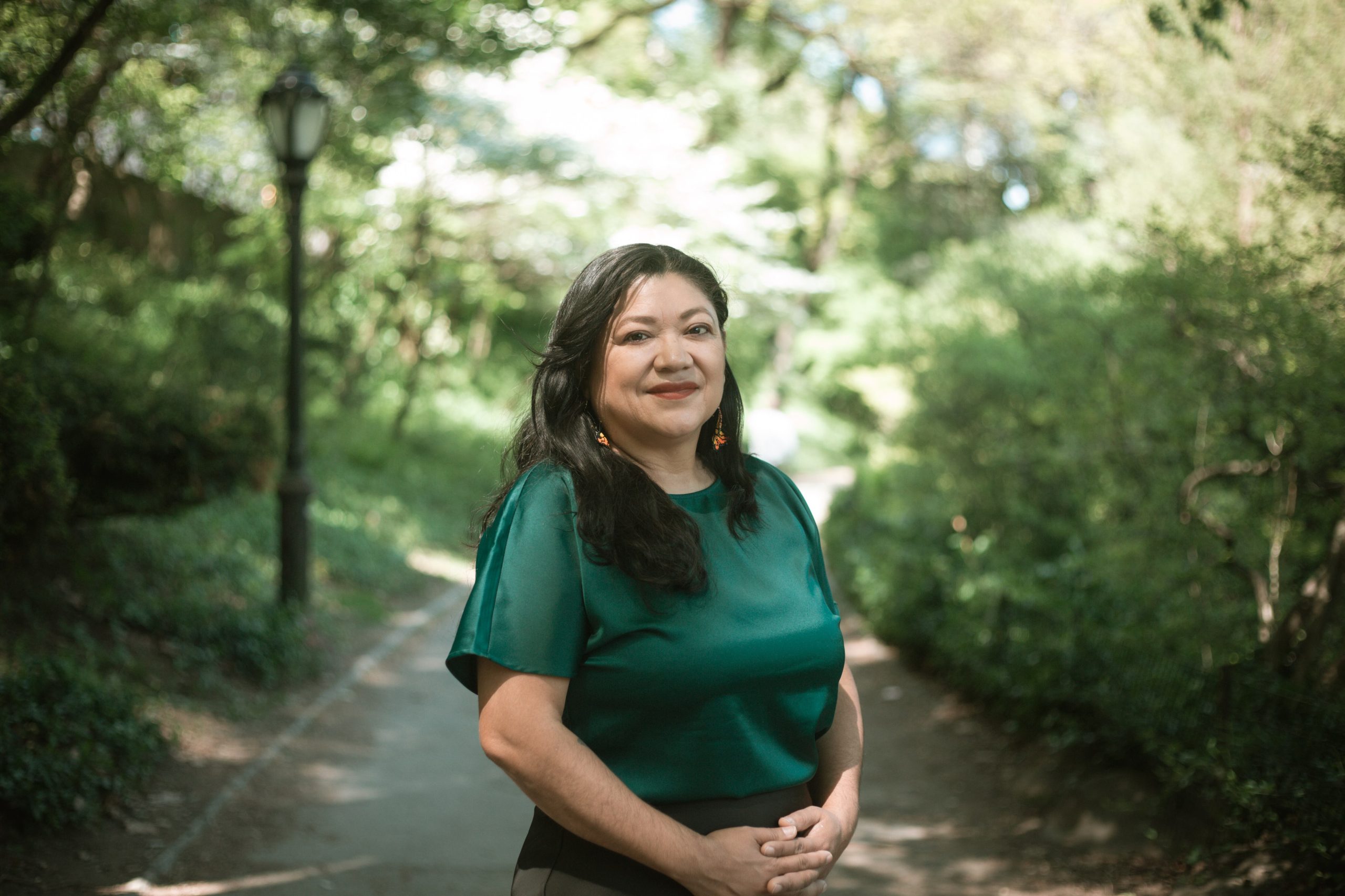
The literary career of author Reyna Grande has been defined by her trauma. At 50 years old and two decades after her first publication, every new book, whether fiction or non-fiction, has been permeated by her experiences as a Mexican immigrant who, at nine years old, left behind poverty in Iguala, Guerrero, for a difficult adolescence of assimilation in California. There, she reintegrated into a broken family marked by her father’s alcoholism and abuse. From “poking at the wound” so much, Grande began to fear that she had developed a fixation and, at the same time, commodified her trauma.

“I had to ask, how have I wrapped my whole identity around my trauma? Have I tied my creativity to my trauma? In that every time I write, that’s all that comes out of me. … I really wanted to interrogate where my fixation with my trauma comes from and how it has impacted me on a personal level but also professionally,” Grande explains, in an attempt to describe Migrant Heart (2026, Atria Books), her latest book published this week simultaneously in Spanish (Penguin Random House) and English.

At once a continuation of her work and a break from it, the book is a collection of 18 personal essays, where she again looks at her most intimate experiences, but now shares measured reflections alongside the narration of events. Furthermore, she does so in a format she is exploring for the first time, innovating creatively with texts that take the form of a play, a dictionary, or an almanac.

It is the product of a psychological endeavour. “I wanted to see what I could do to start to walk back from that… How can I retrain my mind so that it’s not just constantly replaying the trauma in my head, but where I can now start looking at my experiences and focusing more on the positive things of those experiences, on the joy of those experiences? And so I was doing it for my mental health and also professionally. I want to start writing differently,” explains the author.

Despite her hardships, she became the first in her family to attend university. Over time, she has become a recognized voice in American literature with her novels — Across a Hundred Mountains, Dancing with Butterflies, and the historical epic A Ballad of Love and Glory — and memoirs — The Distance Between Us and A Dream Called Home — which rawly portray the immigrant experience, border identity, and her own life.

Reyna Grande

In Migrant Heart, Grande “pokes at the wound” again, sharing for the first time sexual abuse by a stepbrother and continuing to explore the dehumanization of the immigrant community, which is impossible to ignore in the current U.S. political climate.

But the book strikes a different tone from her previous ones: there is an explicit search for healing. “I think that’s why trying to find the joy is an act of resistance, because the world is constantly retraumatizing us with the things that are happening right now in the country. The acts of violence being inflicted upon our communities can trigger collective depression,” she notes.

In this way, despite focusing once again on some of her traumatic life experiences, the book is full of small moments of humanity and happiness: from a new memory of her marriage to the joy she finds in small activities like tending her garden, painting, or sewing, and the enormous satisfaction she gets from her daughter’s natural bilingualism — something denied to Grande, who was forced to almost forget Spanish to feel she could integrate into U.S. society.

The trauma of language is the theme of one of the essays and is also a part of the book itself, which is published in both languages at once. Grande writes in English, the language in which she is most educated — she says that her Spanish remained at a sixth-grade level, the level of her mother’s education, once she migrated to the United States — but she supervised the translation and opted to rewrite sections of the Spanish version to recover her own voice. She wanted the reader to feel like they were having a conversation with her.

Regarding how her work inevitably relates to the political situation, the drama of deportations, open racism, and attacks on the migrant community, Grande doesn’t shy away from the term “activism”: it’s something she actively participates in. “I think writing is an act of activism. Obviously, I didn’t see that when I was a younger writer. I wasn’t writing to be an activist. It was more of a process of me discovering how writing could be used as a powerful tool for social justice and to create social change,” she says in a video call from Santa Cruz, California, where she has begun a months-long tour across the country to promote the book.

Reyna Grande

The power resides in controlling the narrative. “When we’re writing our own stories, we’re pushing back against what society says about us. And so, it can also be empowering to do that. Every book I have written has been an act of rebellion against the powers that be. And it has also been an act of celebration for my immigrant community. It has helped me to transform a lot of the shame that society made me feel about my immigrant identity into something else, where I say, ‘No, these experiences should be part of American literature because the immigrant story is the American story,” she says.

Even so, Grande moves between the visibility and vulnerability that comes with opening herself through her writing, and the seeming safety, yet quiet erasure, that accompanies the de facto invisibility of being an immigrant in the United States. “As people of color, we’re constantly having to navigate those two, where sometimes it’s safer to be invisible, not to draw attention to ourselves, like right now. But when we remain in the shadows, it also means our voices are not heard. I don’t have an answer, but it’s what I’m trying to write about, what we must navigate as people of color, as immigrants,” she reflects.

That may be the reflection, but in practice, this writer isn’t hiding. Today, perhaps more than ever, Reyna Grande is an open book — one in which she hopes many will recognize themselves, so that healing and resistance can be shared rather than borne alone.

Sign up for our weekly newsletter to get more English-language news coverage from EL PAÍS USA Edition

Continue Reading

America

Renuncia El Jefe De La Patrulla Fronteriza De Estados Unidos, Michael Banks

Published

on

renuncia-el-jefe-de-la-patrulla-fronteriza-de-estados-unidos,-michael-banks

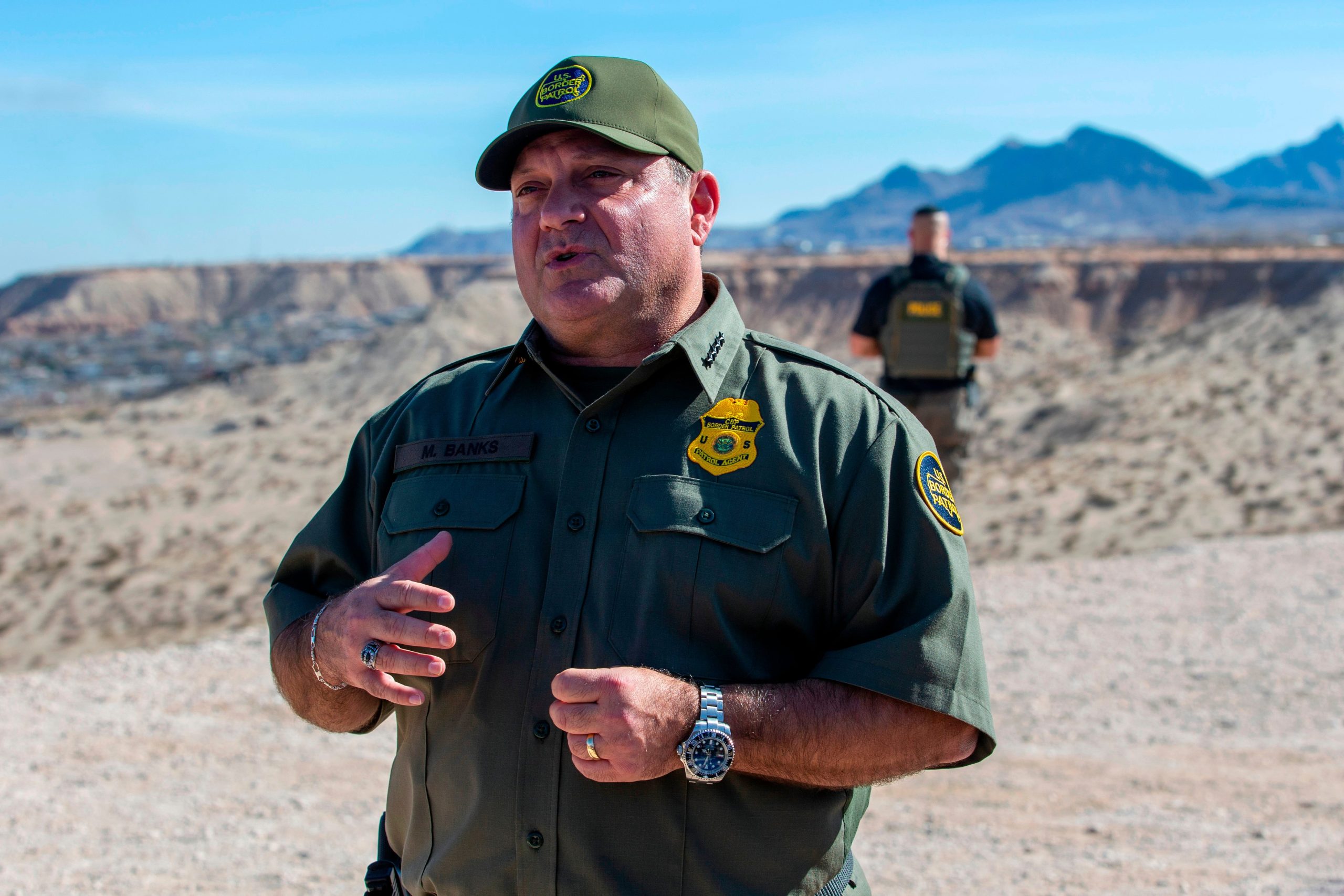
El jefe de la Patrulla Fronteriza de Estados Unidos, Michael Banks, presentó este jueves su renuncia, efectiva de inmediato. “Simplemente ha llegado el momento”, dijo el funcionario a la cadena Fox News. La marcha de Banks se produce en un momento en el que el Departamento de Seguridad Nacional pretende cambiar la imagen de las agencias migratorias encargadas de implementar la política del presidente Donald Trump.

El nuevo secretario de Seguridad Nacional, Markwayne Mullin, llegó al cargo a finales de marzo con la intención de rebajar el desprestigio del Servicio de Inmigración y Control de Aduanas (ICE, por las siglas en inglés) y la Patrulla Fronteriza tras el año de Kristi Noem al frente del departamento. Mullin ha disminuido las operaciones más dramáticas que caracterizaron el mandato de Noem y que fueron ampliamente criticadas por la ciudadanía, pero mantiene el objetivo de deportaciones masivas de Trump.

“Siento que he vuelto a poner el barco en el rumbo correcto: de ser la frontera más insegura, desastrosa y caótica, a ser la frontera más segura que este país haya visto jamás”, afirmó Banks a la cadena Fox. “Es hora de ceder las riendas; 37 años… Es hora de disfrutar de la familia y de la vida”.

Antes de que Trump lo pusiera al frente de la Patrulla Fronteriza, Banks ocupó el puesto de zar de la frontera en Texas bajo el mandato del gobernador Greg Abbott. Su nombramiento generó interrogantes debido a su falta de experiencia ejecutiva de alto nivel, pero había destacado por su liderazgo en la Operación Lone Star (Estrella Solitaria) de Texas, una iniciativa de seguridad fronteriza en el Estado.

Bajo la dirección de Banks, la Patrulla Fronteriza ha cambiado de funciones como parte de la ofensiva contra los migrantes emprendida por la Administración Trump. Nada más regresar a la Casa Blanca, en enero de 2025, una de las primeras medidas que adoptó el republicano fue cerrar la frontera sur con México. Las entradas de migrantes se redujeron drásticamente, lo que disminuyó la labor de los agentes fronterizos. En cambio, los funcionarios del ICE no daban abasto para cumplir con los objetivos de detenciones y deportaciones de Trump. La Patrulla Fronteriza pasó entonces a participar en las operaciones en el interior del país.

La agresividad de los agentes fronterizos, menos entrenados para la tarea, superó a la utilizada por los propios funcionarios del ICE. Las actuaciones más alarmantes ocurrieron durante la Operación Metro Surge, en Minneapolis en enero, que estuvieron dirigidas por el controvertido Gregory Bovino. Banks vio su autoridad diezmada porque Bovino respondía directamente a la entonces secretaria Noem, saltando a su superior de la agencia. Animados por Bovino, los agentes de la Patrulla Fronteriza utilizaron gases lacrimógenos y bolas de pimienta contra los manifestantes que protestaban por sus métodos.

El caso más grave fue la muerte a tiros del ciudadano Alex Pretti a manos de agentes de la Patrulla Fronteriza durante una de las manifestaciones. Su fallecimiento, después de que también en Minneapolis la ciudadana estadounidense Renée Good muriera por disparos lanzados por agentes del ICE, llevó la indignación de la población a su punto álgido, lo que propició que Bovino fuera relegado.

La renuncia de Banks se produce semanas después de que The Washington Examiner publicara un artículo en el que varios compañeros del alto funcionario declararon que Banks realizaba viajes a Colombia y Tailandia con regularidad para ir con prostitutas, de lo que se jactaba. Según el medio, la Oficina de Aduanas y Protección Fronteriza investigó la conducta poco ética de Banks y cerró el caso años atrás.

Continue Reading

Trending

Copyright © 2017 Spanish Property & News