
Donald Trump
Europe Scrambles To Fill The Gap Left By The United States In NATO Defense

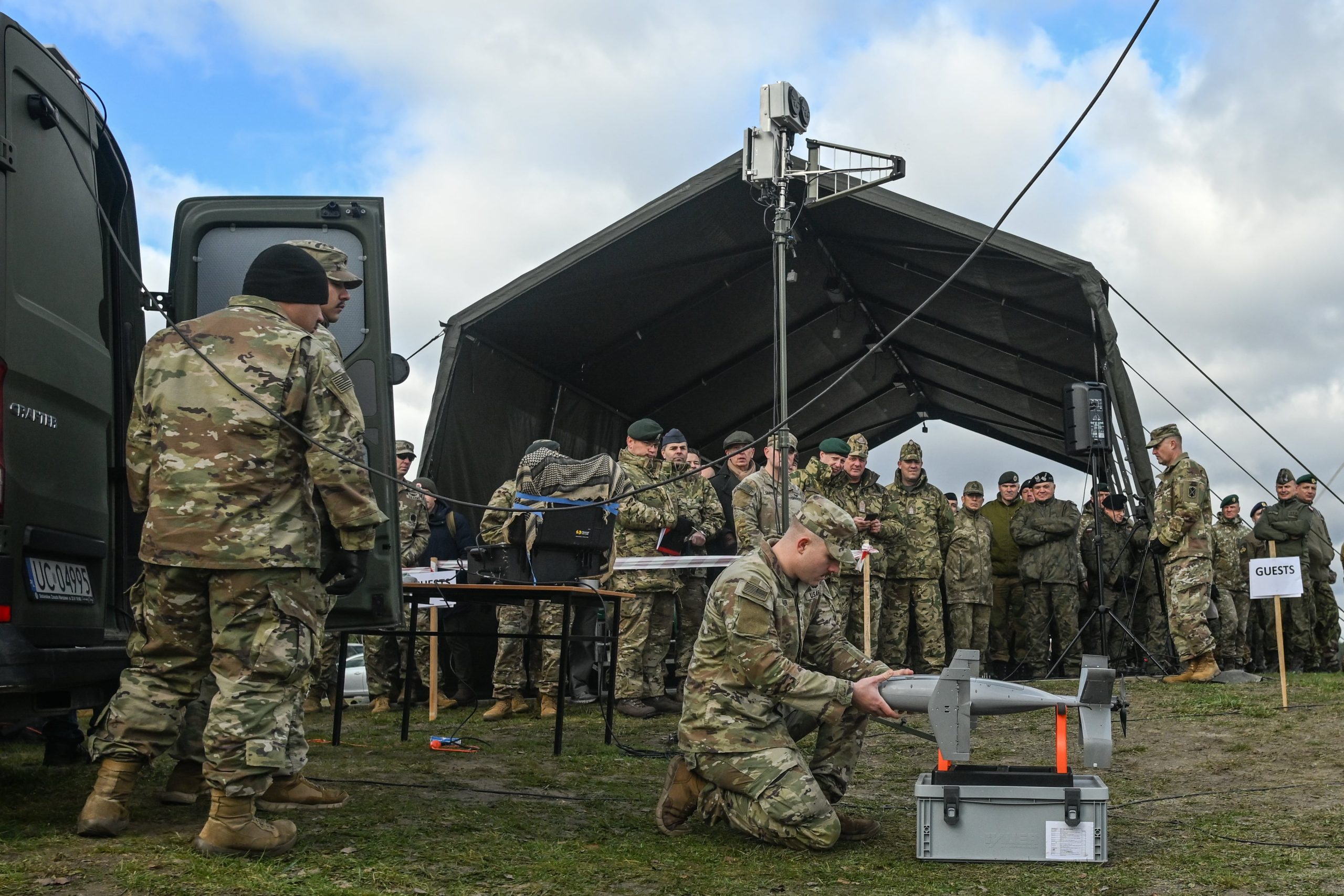
NATO’s European allies are scrambling to fill the new gap in the security umbrella that the United States is set to leave over the continent. After Washington announced last month that it will no longer make available to the Alliance a significant quantity of forces and assets —from fighters and tanker aircraft to ships, aircraft carriers and submarines— that are stationed at U.S. bases but assigned and ready to deploy to Europe in a crisis, European countries and Canada are negotiating how to make up for it.
The timeline for Washington’s readjustment is unclear, but allied sources say it will be carried out in phases. The United States no longer wants a sharing of the burden; it wants a transfer of the burden: for Europe to spend more on defense, provide more forces and assume greater responsibility for defending the continent.
After receiving confirmation of the cuts, allies are digesting the fact that this transfer of the burden is no longer a political or theoretical matter but a reality. As a result, a considerable number of the 32 allies —including Spain— have reviewed their contributions to the Alliance and put forward offers to cooperate in the new force model, the system that determines which military assets can be rapidly deployed in an emergency. They are also considering how to increase participation in rotations and missions in eastern Europe in response to the Russian threat, allied sources say.
The White House is adding this new cut to planned withdrawals of forces stationed in Europe (such as the 5,000 troops that will leave Germany) and to the freezing of key programs for the defense of the Old Continent, such as the planned deployment of Tomahawk missiles to be based in Germany. Washington wants to focus on the Indo-Pacific area. And its position is forcing a reassessment of some of the fundamental assumptions that have underpinned European collective defense for decades.
The U.S. cut poses a fresh challenge for NATO’s European allies, says Luis Simón, director of the Brussels office of the Elcano Royal Institute. The United States’ contributions to NATO’s force model are complete combat packages: highly integrated and prepared to deploy together. So when they say that they will stop making available to the Alliance in Europe around 50 fighters or eight tanker aircraft, it means they will stop providing a whole military ecosystem.
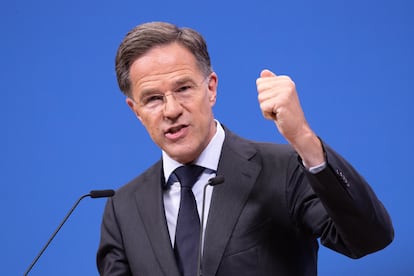
NATO secretary general Mark Rutte on Wednesday acknowledged that some European allies have taken a “step forward” to “contribute more to the Alliance.” Mostly capacities they already possess or expect to have in the near future. Part of the hole left by the U.S. will be patched by those contributions, which are still under negotiation.
But the gap has not yet been fully closed, and European allies are accelerating efforts to get a clearer picture of the planned timeline and the plans to replace Washington’s readjustment ahead of the NATO summit in July in Ankara, Turkey. The meeting comes at a sensitive moment, with the Alliance under unprecedented pressure and some European countries fearful that Donald Trump will follow through on his repeated threats to further distance the U.S. or even withdraw.
“Most of [what the U.S. will stop making available] is covered, a significant part is practically resolved and some aspects still require more debate and discussion,” Rutte admitted on Wednesday at a press conference in Brussels. “It’s a bit odd that we still need so much help from a country eight hours away by plane,” the Dutchman added on the eve of a key meeting with NATO defense ministers. The U.S. participant expected is Pete Hegseth, one of the Alliance’s most vocal critics, who believes Europe is not carrying its fair share of the burden.
The meeting with Hegseth in the EU capital will be NATO’s first high-level gathering after Washington envoy Alex Vélez-Green communicated the readjustment to allied representatives. At that meeting, as EL PAÍS reported, concrete figures were put on the U.S. cuts, which foresee ending the provision to Europe of about 50 fighters, tanker aircraft, maritime reconnaissance planes, a ballistic-missile submarine, an aircraft carrier, warships and several bombers.
Last Friday, a Pentagon document cited by The New York Times provided further details of the numbers involved and indicated that the readjustment would be much quicker and more abrupt than anticipated.
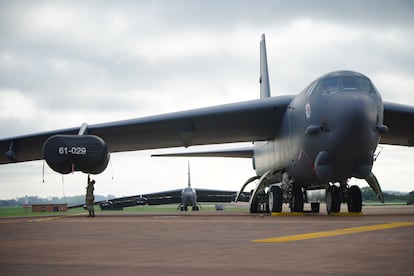
Allied sources deny, however, that a hole will open in Europe’s defense, noting that the continent still hosts significant permanent deployments of U.S. troops and weapons in several countries. Spain is among them, although most U.S. forces are in Germany, a logistics and operations hub.
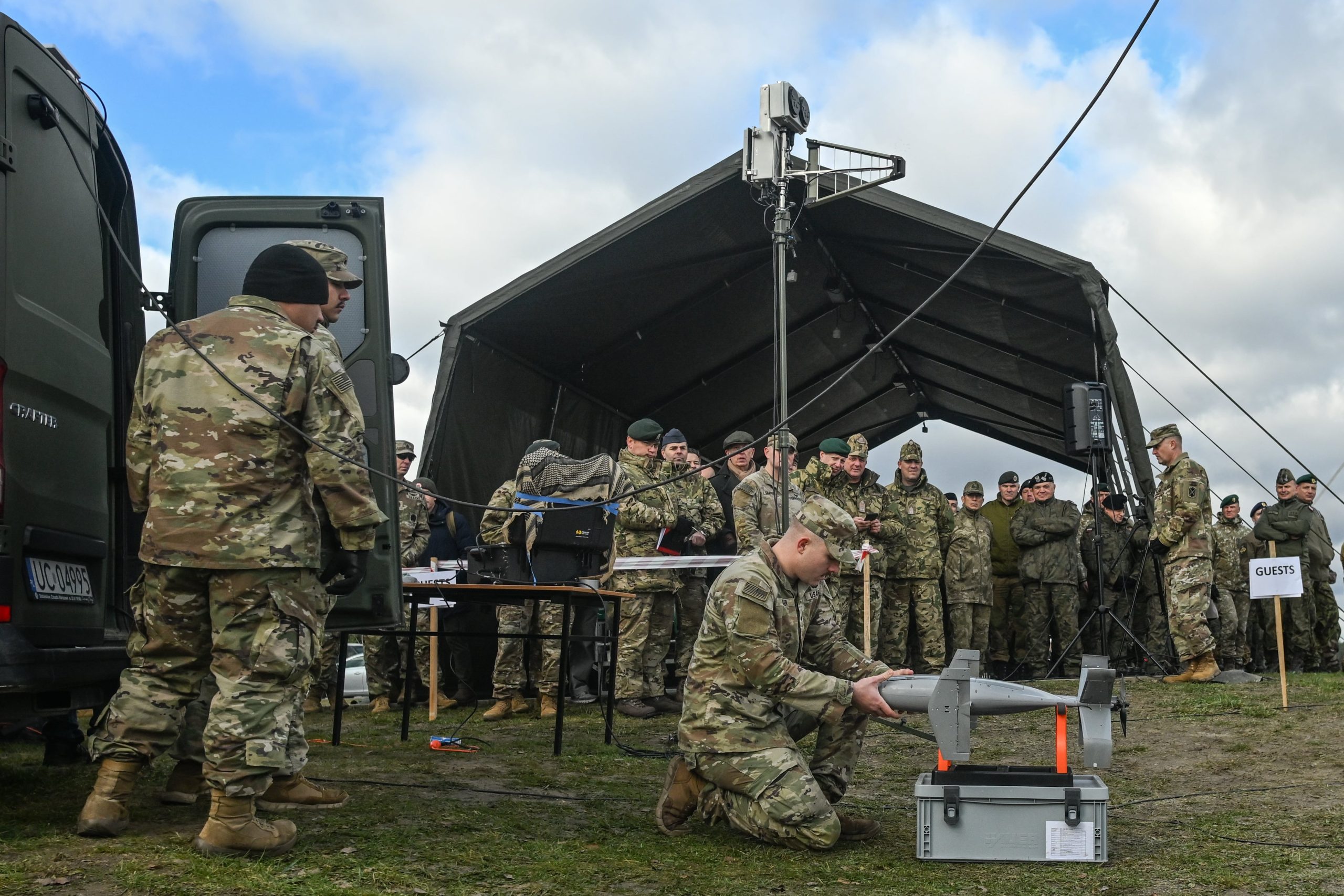
For rapid response and an Article 5 collective-defense activation, however, European troops are still not as organized or integrated. Nor are they as trained or prepared to deploy together at the level Washington maintains. “European force structures still depend on so-called key enablers and on the United States’ operational depth,” Simón says.
One key issue is Europe’s dependence on those key enablers —the capabilities that allow other forces to fight effectively: tanker aircraft; strategic transportation; intelligence, surveillance and reconnaissance elements; airborne early warning; command and control; and electronic and space warfare capabilities.
Some can be substituted. Replacing others, such as ISR (intelligence, surveillance and reconnaissance) capabilities, airborne early warning or strategic transportation, is an enormous challenge. Moreover, the task will not only be to find which countries will replace the capabilities the United States withdraws. Simón argues that NATO’s defense plans will also have to be reviewed; for years they were designed assuming the participation of certain U.S. forces.
Sign up for our weekly newsletter to get more English-language news coverage from EL PAÍS USA Edition










Ataques militares
Europa Se Prepara Para Tapar El Agujero Que Deja Estados Unidos En La Defensa De La OTAN

Alexandre de Moraes
El Supremo De Brasil Condena A Eduardo Bolsonaro Por Buscar Ayuda De Trump Para Boicotear El Juicio A Su Padre

Stockholm’s culinary genius launches Beach Club Astoria on Marbella’s shore
Patients left waiting in pain as Andalucía doctors’ strike cancels 60,000 medical procedures a day
Norwegian World Cup football chefs’ thoughts on seafood and nutrition

Peru’s Roberto Sánchez And Keiko Fujimori Urge Caution As Vote Count Continues In Very Tight Presidential Election

Spain, A Country Of 50 Million People With Infrastructure For 40 Million: ‘The Cracks Are Starting To Show’
A Journey Through The Ages Of Soccer In The United States


-
 Alberto Fujimori2 weeks ago
Peru’s Roberto Sánchez And Keiko Fujimori Urge Caution As Vote Count Continues In Very Tight Presidential Election
-
 Barcelona2 weeks ago
Spain, A Country Of 50 Million People With Infrastructure For 40 Million: ‘The Cracks Are Starting To Show’
-
David Beckham2 weeks ago
A Journey Through The Ages Of Soccer In The United States
-
Costa del Sol2 weeks ago
Marbella releases full beach rules for Noche de San Juan bonfires in 2026
-
Latest2 weeks ago
Inside Spain: How Drinking Is Becoming An Old Man’s Game
-
America1 week ago
El Pentágono, Evacuado Por Una Falsa Alarma Ante La Sospecha De Un “incidente Con Materiales Peligrosos”
-

 America2 weeks ago
Trump Planta E Insulta A Una Entrevistadora En Televisión Por Llevarle La Contraria
-
Coastal erosion1 week ago
Mallorca launches new plan to save its beaches as coastal erosion threatens popular resorts