%
Fake Bank And Delivery Scam Texts Will Keep Hitting Phones In Spain This Summer
A familiar-looking text can be all it takes for fraudsters to trick phone users into clicking. Credit: Tete_escape / Shutterstock
Fake bank and delivery scam texts will continue hitting phones across Spain this summer after the government delayed new anti fraud protections until September.
Millions of people in Spain receive suspicious text messages every year, often pretending to come from banks, parcel companies, tax offices or public services. Some are obvious scams. Others are convincing enough to catch people off guard during everyday situations like waiting for a delivery or checking a bank account.

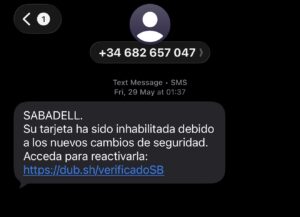
Credit: Harry Dennis
The delayed system was supposed to block fraudulent messages using fake sender names pretending to come from trusted companies, banks and public bodies, making it harder for scammers to impersonate trusted organisations.
Why Spain delayed the new scam text protections until September
However, the start of the blocking obligation, which had been due to take effect on Sunday June 7, has now been delayed until Tuesday September 15, 2026, following changes published in the Boletin Oficial del Estado (BOE), Spain’s official state gazette.
That means scam messages using false or misleading sender names could remain a risk throughout the summer, at a time when people are regularly receiving texts about banking, parcel deliveries, medical appointments, travel bookings and official paperwork.
How Spain plans to stop fake bank and parcel scam texts
The rules focus on what Spain calls message “aliases”. These are the sender names that appear on a text message instead of a normal phone number, including names that may look like a bank, courier firm, public administration or private company.
Under the system, companies and public bodies using aliases must register them with tSpain’s National Commission on Markets and Competition (CNMC). Once the blocking rules take effect, operators involved in transmitting these messages will be required to block messages using aliases that are not in the official register, or that are sent through providers not authorised for that registered alias.
In simple terms, the system is designed to make it harder for fraudsters to send texts that appear to come from a trusted source.
Why Spain could remain exposed to scam tests all summer
The delay does not mean the anti-fraud plan has been scrapped. Instead, the official documents point to practical problems in getting the system ready.
The CNMC said more than 75,000 alias registration requests had been submitted in the first two months of the system, including both individual requests and bulk uploads from providers handling large volumes of sender names.
Operators also reported difficulties linked to digital certificates, especially for some companies or organisations outside the European Union that do not have an establishment or economic activity in Spain.
There were also concerns about the complexity of bulk registrations, the time needed to validate large volumes of aliases, and the risk that legitimate messages could be blocked if registration was not completed in time.
How to protect yourself from scam texts while the new system is delayed.
The change affects operators, messaging providers, companies and public administrations that send messages using aliases. Ordinary phone users do not need to change anything on their devices.
However, until the new blocks are in place, people should continue treating unexpected messages with caution, especially texts asking for payments, bank details, passwords, delivery fees, tax information or urgent identity checks.
Messages that appear to come from a known organisation should still be checked through official apps, secure websites or customer service numbers listed on the company’s own website, rather than through links included in the message.
Why a familiar sender name still cannot be trusted.
The delay gives operators and providers more time to adapt their systems, register aliases and test access to the official database before the blocking obligation starts, ensuring its functionality, efficiency and accuracy.
If the timetable holds, the new blocking system should begin on Tuesday September 15, 2026. Until then, the safest approach for consumers remains: do not trust a text message just because the sender name looks familiar.