Connect with us

%

Fiesta Time In San Javier

Published

on

fiesta-time-in-san-javier

San Javier’s annual Fiestas Patronales are gaining momentum in honour of patron saint San Francisco Javier.

Born in 1506 in northern Spain, San Francisco Javier, known in English as Saint Francis Xavier, was a pioneering Catholic missionary and co-founder of the Jesuit order who travelled across Asia in the 16th century.

Beyond lending his name to the municipality of San Javier in Murcia, he serves as the town’s official patron saint, giving his name to its main parish church and inspiring its biggest annual celebration. Each year, his December 3 feast day anchors weeks of local festivities, bringing together traditional religious processions, live music, parades, and community events across the town centre.

A weekend of fun and frivolity in San Javea

The town is preparing for one of its most loved cultural nights, taking place Friday, November 27.

At 8.30pm, the Teatro de Invierno will host the traditional Sailor, Pirate and Peasant Gala.  This traditional event is deeply rooted in the coastal history of the Mar Menor. It celebrates a time when local fishermen and farmers would band together to defend the shoreline against Barbary pirate raids.  Today, the awards recognise outstanding contributions to maritime culture, agriculture, and community leadership.

Music is a big part of the San Javier’s annual Fiestas Patronales

The evening ceremony will also feature live traditional music and dance performed by the Cuadro Flamenco Almorzaria. Following the formal awards, the municipal fairgrounds (Recinto Ferial) will officially open at 10pm. Crowds are expected to gather and celebrate late into the night.  In recognition of this, a lively double-bill concert is planned, headlined by Aparatus Band and Paloma Sin Basilio.

The celebrations continue through Saturday, November 28, which is branded as the ‘big day of music and leisure’. Highlights include the 16th annual Pasabares bar crawl through the town led by peña ‘Y… mañana, qué?’, and the brass band Huapango. The evening brings 90s and noughties dance nostalgia with Absolom, Miguel Serna, Chumi DJ, and other regional DJs.

The festivities will continue until December 7, and further programme details are available at juventudsanjavier.es

%

New 400km Underwater Electricity Link

Published

on

new-400km-underwater-electricity-link

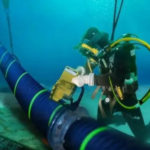
A 400km connection beneath the Mediterranean Credit: Pinterest/NetworkEncyclopedia

Hundreds of kilometres beneath the Mediterranean, a new electricity connection is set to reshape how Mallorca powers its homes, businesses and tourism industry, marking a significant milestone in the Balearic Islands’ transition towards cleaner energy.

Spain’s Council of Ministers approved its Electricity Transmission Grid Plan for 2030 on Friday, November 20, paving the way for a second electricity connection between Mallorca and mainland Spain, alongside major improvements to the islands’ existing infrastructure.

The developments form part of a record €17.143 billion national investment programme designed to strengthen electricity supplies, accommodate growing demand and increase the use of renewable energy.

A 400km connection beneath the Mediterranean

One of the most ambitious projects affecting the Balearics is a new electricity link connecting Castellón, on Spain’s eastern coastline, with a new converter station at Sant Martí in Mallorca.

Stretching approximately 400 kilometres, the connection will run beneath the Mediterranean for around 390 kilometres, with a combined transmission capacity of 400 megawatts.

According to Spanish electricity transmission operator Red Eléctrica, the new infrastructure, working alongside the existing mainland connection, will be capable of meeting 65 per cent of the Balearic Islands’ electricity demand.

The environmental benefits are also expected to be considerable, with the project forecast to prevent more than 900,000 tonnes of carbon dioxide emissions annually.

For an archipelago traditionally reliant on local power generation, strengthening its connection with mainland Spain represents an important step towards a more interconnected energy system.

What does it mean for Mallorca’s residents?

From air conditioning during the height of summer to the growing number of electric vehicles on Mallorca’s roads, the island’s electricity infrastructure must accommodate evolving demands from residents, businesses and visitors.

The approved plan includes improvements to the distribution network to support growing residential and industrial electricity requirements.

Inca has been identified as an area for infrastructure development, while new substations are planned in locations including Cala d’Or, Carnatge, Labritja and Figueral across the Balearics.

For homeowners and businesses, the wider objective is to create a more resilient electricity network capable of accommodating future demand while improving security of supply.

However, the announcement does not include any immediate reductions in household electricity bills, and the projected savings for Spain’s electricity system should not be interpreted as guaranteed savings for individual consumers.

Palma and Alcudia ports prepare for a greener future

The transformation will extend beyond homes and businesses, with the electrification of the Balearic Islands’ ports forming another important element of the investment programme.

Palma is set to benefit from a new electricity substation and a high-voltage connection between Santa Ponsa and the Port of Palma, alongside three additional power lines linking existing substations.

Infrastructure improvements are also planned to support the electrification of Alcudia’s port, as well as ports in Ibiza and Menorca.

Port electrification can enable vessels to connect to land-based electricity supplies while berthed, reducing the need to keep onboard engines running and potentially helping to improve air quality in surrounding areas.

This could be particularly significant for communities living close to Mallorca’s busy maritime gateways.

Mallorca and Menorca to become better connected

The mainland connection is not the only major underwater infrastructure project included in the approved plan.

A third electricity link between Mallorca and Menorca will connect Alcudia with Ciutadella, covering a total distance of 82 kilometres.

Approximately 64.5 kilometres of the connection will be submerged, reaching depths of up to 146 metres.

Red Eléctrica expects the project to improve the reliability of Menorca’s electricity supply, reduce its reliance on the Maó thermal power station and prevent approximately 154,000 tonnes of carbon dioxide emissions annually.

Spain’s biggest electricity grid investment

The nationwide programme represents the largest investment ever allocated to Spain’s electricity transmission network.

Plans include more than 6,700 kilometres of new power lines, 193 substation complexes and improvements to thousands of existing substations.

The government expects the measures to generate annual savings exceeding €3.5 billion across the electricity system, while enabling greater integration of renewable energy and accommodating future increases in consumption.

For Mallorca, where the demands of a thriving tourism industry must be balanced with the everyday needs of residents, the investment represents a significant development in the island’s long-term energy strategy.

While much of the infrastructure will remain invisible beneath the Mediterranean, its intended benefits could be felt across the islands for decades to come.

Continue Reading

%

Spain’s New Loan Cap Could Cut The Cost Of A €300 Quick Loan By €70

Published

on

spain’s-new-loan-cap-could-cut-the-cost-of-a-e300-quick-loan-by-e70

A woman speaks on her phone while holding a payment card at home. Credit: fizkes/Shutterstock.

A €300 quick loan could cost up to €33 in charges under Spain’s new rules, compared with €103 in the Government’s example of a typical loan today. The limits do not start until 25 February 2027.

That example comes from the Government. The exact cost will depend on the loan and when it is repaid. The new rules are relevant to anyone borrowing from a lender in Spain, including foreign residents who use quick loan providers or revolving credit cards.

What changes for quick loans

From 25 February, the total annualised cost of most consumer credit will be capped at 22 per cent. This figure, known in Spain as the TAE, includes interest and other borrowing costs.

High cost loans will also have to offer repayment over at least three monthly instalments. Interest will be limited to 6 per cent a month, and the opening and assessment fee will generally be capped at €15. The rules give borrowers more time to consider an offer too, with lenders required to provide key information at least 24 hours before a high cost loan is agreed.

What happens to revolving card balances

People already carrying a balance on a revolving credit card will also be covered by a 22 per cent limit on the nominal interest rate.

There is a catch. A lender can close the credit line when the cap takes effect. If it does, the customer will still owe the balance, and will repay it under the terms that applied before the closure.

If your debt is sold

The decree also protects borrowers whose overdue debt is sold to another company. The sale cannot change the loan terms or take away the borrower’s existing rights. The company managing the debt will need Bank of Spain authorisation and supervision, and the borrower must be told who now owns and manages the debt.

The new rules were published in the Official State Gazette on 25 November. The general decree takes effect after two months, but the main limits on loan costs begin after three months, on 25 February 2027. Until then, borrowers should check the total amount they will repay and the fees in their loan agreement.

Continue Reading

%

Munch And Picasso Together In Artistic First

Published

on

munch-and-picasso-together-in-artistic-first

Picasso and Munch side by side. Credit MPFB

Art enthusiasts can explore more than 100 works by two modern masters at the Costa del Sol museum until February 2027.

Malaga is welcoming an unusual meeting of two artistic giants, with a new exhibition bringing together the work of Norwegian painter Edvard Munch and the city’s own Pablo Picasso in an expressionism extravaganza.

Munch-Picasso opened at the Museo Picasso Malaga on October 30 and runs until February 28, 2027. Around 100 paintings, drawings and prints allow visitors to compare two artists who helped transform modern art. Although the pair never met, their work shares a fascination with human emotion, experimentation and the boundaries of traditional painting.

What makes the exhibition special?

Curated by art historian Paloma Alarcó, the exhibition explores how Munch and Picasso used art to express complex feelings and experiences. Munch is known for works such as The Scream, with its haunting portrayal of anxiety. Picasso, born in Malaga in 1881, became famous for his radical approach to form and perspective, particularly through Cubism.

Rather than suggesting one directly influenced the other, the exhibition presents an imaginary encounter between two artists who challenged convention in their own ways.

Their shared subjects include love, death, loneliness, desire and modern life. Visitors can see how Munch used intense colour and expressive lines, while Picasso experimented with fragmented forms and multiple viewpoints.

A journey through modern art

The exhibition is arranged across two floors of the museum, with themed sections examining the artists’ lives, creative processes and recurring interests.

Sections explore self-portraits, the impact of illness and loss, and the cafes and bohemian settings that shaped their work. The display also examines how both artists transformed the human figure, using distortion and fragmentation to communicate feelings that conventional representation could not easily express.

Organisers say the exhibition offers new perspectives on two of the most important figures in twentieth-century art.

How to visit Munch-Picasso

The Museo Picasso Malaga is housed in the Palacio de Buenavista on Calle San Agustín, in the city’s historic centre. The museum has previously received support to preserve and display Picasso’s work in his home city, as reported in this EWN article about funding for the Picasso Museum.

General admission costs €13 and includes access to the museum’s other current exhibitions. Visitors can check official museum tickets and opening times before travelling. The exhibition has been made possible with the collaboration of the Munch Museum in Oslo and the Fundación Almine y Bernard Ruiz-Picasso.

For readers planning a cultural day out, the show offers a chance to see how two very different artists explored many of the same questions about what it means to be human.

For more background on Malaga’s art scene, EWN has also covered a modernist exhibition at the Carmen Thyssen Museum.

Continue Reading

Trending

Copyright © 2017 Spanish Property & News