Connect with us

%

Filming A Drunk Stranger At Málaga’s Feria Could Leave You With A €10,000 Fine

Published

on

filming-a-drunk-stranger-at-malaga’s-feria-could-leave-you-with-a-e10,000-fine

Málaga’s Feria gets under way in the city centre this week. Credit: Roberto Sorin / Shutterstock

To some, it might look like harmless fun to film a stranger who’s clearly had one too many and post it for laughs. But as Málaga’s Feria gets under way this week, Andalucía’s media watchdog says the same ‘papagorda’ clips have already cost one person €10,000, and triggered a criminal investigation in Sevilla.

Why Málaga’s Feria is now in the watchdog’s sights

Málaga’s Feria de Agosto runs from Saturday August 15 to Saturday August 22, drawing crowds estimated at up to 1 million people across its eight days of daytime festivities in the city centre and all-night dancing at the Cortijo de Torres fairground. As the celebrations begin, the Consejo Audiovisual de Andalucía (CAA), the region’s independent media watchdog, has repeated a warning it first issued around Sevilla’s Feria de Abril earlier this year: filming and sharing clips of visibly drunk strangers under the hashtag #papagorda is not a harmless joke, and can carry serious legal consequences.

The €10,000 fine that set the precedent

In 2022, Spain’s data protection agency, the Agencia Española de Protección de Datos (AEPD), fined a member of the public €10,000 over a single clip. The one-and-a-half minute video, filmed from a passing car by someone the victim had never met, showed a clearly identifiable person leaning on a litter bin in the early ours of the morning to stay upright. It was then shared across WhatsApp, Facebook, Instagram, Twitter and YouTube. 

The joke hashtag is now facing a criminal investigation

The hashtag itself dates back to Sevilla’s 2019 Feria de Abril, when it began on Twitter, now X, as a way of grouping together clips of drunk fairgoers. According to the CAA’s 2024 analysis of the trend, #papagorda content racked up more than 74 million views on TikTok in Spain in a single year.

This year, however, the joke has escalated into something much more serious. Spain’s Fiscalía de Criminalidad Informática, the cybercrime prosecutor’s office, opened an investigation in April into papagorda videos filmed at Sevilla’s fair, after the city’s Policía Local passed on a report listing the profiles and links involved. Investigators are examining whether some of the posts amount to crimes against moral integrity, with the case now in the hands of the Judicial Police’s technology crimes unit.

Why being in a public place doesn’t just waive your rights

The CAA’s central point is that, just because a person can be filming someone in a public street or at a public event, this doesn’t strip them of their rights. Spanish law still protects a person’s honour, privacy and image, especially once footage becomes identifiable and is shared widely without their consent.

The issue, the watchdog says, is extremely relevant at large-scale events such as the Málaga fair. One can clearly imagine that in a place like a Spanish Feria, there could be a smorgasbord of opportunities for people looking to catch someone out who has maybe had one too many and living la vida loca.

The trend hasn’t completely disappeared yet

Spanish media reports suggest the crackdown is already affecting general behaviour, but not completely getting rid of it. Open posting under the hashtag reportedly fell during this year’s Sevilla fair, with much of the content instead moving to anonymous accounts or being passed around in private WhatsApp and Telegram groups, out of reach of the platforms’ usual moderation.

Anyone who can be identified in a clip, or who believes their image has been used to cause them harm or to laugh at their expense, can still pursue a complaint, whether the video was posted publicly or shared privately among friends.

%

Spain Wildfire Horror As 28-Year-Old Arrested While Thousands Flee Raging Flames

Published

on

spain-wildfire-horror-as-28-year-old-arrested-while-thousands-flee-raging-flames

Firefighters are also trying to prevent the flames from reaching further protected territory. Photo credit: Rawpixel.com/Shutterstock

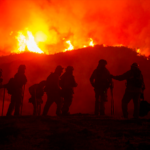
Thousands of hectares have been burned, villages have been evacuated and hundreds of people have been forced from their homes as a huge wildfire continues to spread through Huesca. Now, a 28-year-old man has been arrested over the blaze in Las Peñas de Riglos. The fire, which began on Monday, has already affected around 6,000 hectares, with a perimeter stretching for approximately 58 kilometres.

Around 1,000 people have been affected by evacuations and other restrictions as firefighters battle to prevent the flames from advancing further.  The man was arrested by the Guardia Civil’s environmental protection unit, Seprona, on suspicion of involvement in the fire. The investigation is continuing and his arrest does not mean that responsibility for the blaze has been established. 

Investigation focuses on where the fire began

Investigators are examining what was happening close to the point where the flames first broke out. A storage area containing construction materials was located near the A-132 road, where roadworks were taking place. Authorities are investigating whether those materials could have played a role in the fire starting.

At this stage, however, the discovery is part of the investigation rather than proof that the materials caused the blaze.  The fire began on Monday and has remained active despite a major response involving ground crews and aircraft. Its rapid spread has made containment difficult, with high temperatures and strong winds adding to the challenge for those working on the front lines. 

Hundreds forced to leave their homes

The scale of the fire has already had a direct effect on nearby communities. Several villages have been evacuated, while other areas have been confined because of the danger posed by the flames and smoke. Eight populations had been evacuated by Wednesday, with 477 people affected at that stage.

A further 100 people were evacuated from a nearby campsite as the fire continued to threaten the area.  The N-240 has also been cut, adding further disruption for people travelling through the area. Other roads remain closed as emergency crews work around the fire and authorities try to keep residents away from dangerous areas. 

Firefighters face difficult conditions

The latest situation remains serious, with the blaze still classified as Operational Situation 2, Level 2 under Aragón’s emergency arrangements. More than 500 ground personnel and around 30 aircraft are involved in the response, with crews working to strengthen defensive lines and stop the fire from reaching areas that would be even more difficult to protect.  

The right-hand front of the fire has been particularly difficult, with officials warning that its advance could threaten the protected surroundings of San Juan de la Peña, an area of major environmental and cultural importance. 

San Juan de la Peña under threat

The concern is not simply the amount of land already lost, firefighters are also trying to prevent the flames from reaching further protected areas and damaging landscapes that attract visitors to the area. Some sectors have shown a more favourable evolution, but others remain difficult to control.

Temperatures above 38C and southerly winds have helped the flames spread, creating conditions that can change rapidly.  The latest reports describe the situation as particularly difficult following a complicated night for crews. Authorities are concentrating their efforts on stopping the fire’s expansion rather than allowing new fronts to develop. 

The fire continues

The arrest adds a major development to an emergency that is still unfolding. Investigators are now trying to establish exactly how the fire started and what role, if any, the materials found near the A-132 played in its origin. The 28-year-old has been arrested in connection with the investigation, but the case remains open. Further evidence will be needed before responsibility for the fire can be determined.  Meanwhile, the immediate priority remains the same: keeping the flames away from more communities and protecting the people still living close to the affected area.

For those who have already been evacuated, there is no simple return home yet. With thousands of hectares affected and the fire still active, crews face another difficult period before authorities can consider the danger under control. The arrest may provide investigators with an important lead into how the Las Peñas de Riglos fire began, but the immediate crisis is still burning across Huesca, with hundreds of firefighters and aircraft continuing the fight to stop it spreading further

Continue Reading

%

British Tourist Arrested For Assaulting Police Officer After Magaluf Confrontation

Published

on

british-tourist-arrested-for-assaulting-police-officer-after-magaluf-confrontation

The man reportedly refused to identify himself and attempted to leave. Photo credit: Carlos Calvo Torregrosa/Shutterstock

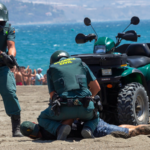
A night out in Magaluf ended with a British holidaymaker in court after a confrontation with police allegedly escalated into an assault on an officer. A 27-year-old was arrested after a group of six or seven people reportedly shouted abuse at police, with one officer later needing to defend himself with his baton.

The incident happened in Magaluf on Saturday as police officers encountered the group. According to reports, members of the group were insulting the officers and shouting “f*** the police”, an insult that Gen X made popular back in 1988 but Gen Z feel cool enough to use.

An officer then approached them and asked them to stop, before requesting identification from one of the men. The situation quickly escalated when one of the men reportedly refused to identify himself and attempted to run (amateur, Gen X would not have done that). Another member of the group then allegedly lunged towards the officer and slapped him hard across the right cheek, causing him to stagger backwards.

Police officer confronted by group in Magaluf

The officer reportedly drew his baton after members of the group began threatening him. The man who had allegedly struck him then approached the officer again in an aggressive manner.

The officer used the baton against him before the man ran away from the scene. Police subsequently caught up with him, leading to a struggle as officers attempted to restrain him. One of the group members was arrested following the confrontation.

Unfortunately the incident has once again placed the behaviour of some holidaymakers in Magaluf under scrutiny, particularly during the busy summer season when police are dealing with large numbers of visitors in the resort.

British tourist appears before Palma court

The arrested tourist appeared before a court in Palma on Saturday. He was subsequently released, although the report does not state that he has been convicted or sentenced for the incident, however, the initial report describes another person as the man who initially slapped the officer.

The 27-year-old who was arrested is described as having been one of the group members that approached the officer aggressively before being struck with the baton and detained. No conviction has been reported, and the allegations remain allegations unless established by a court.

Magaluf police facing summer crowds

Magaluf is one of Mallorca’s busiest holiday resorts, attracting large numbers of British visitors during the summer months. Its nightlife has also made the resort a regular focus of police operations aimed at tackling disorder and keeping busy entertainment areas under control.

Visitors should always remember that behaviour that might be seen as drunken fun among mates can sometimes have much more serious consequences when it develops into confrontation with police. Shouting abuse at officers is one thing; an alleged physical attack can turn a holiday night into an arrest, a court appearance and potentially a criminal case.

Alcohol infused nights out 

The unfortunate event is a perfect example how quickly a confrontation involving several people can escalate, especially when alcohol is involved. What began with a group insulting officers ended with one officer reportedly being struck, a baton being drawn and a British tourist being taken into custody.

For the 27-year-old, the night out in Magaluf therefore ended very differently from how it began: instead of heading back to his hotel room with a hangover, he found himself appearing before a judge in Palma with a hangover, remember to choose your battles wisely.

Continue Reading

%

Claim Rejection Weight-Loss Jabs Insurance

Published

on

claim-rejection-weight-loss-jabs-insurance

People travelling to and from Spain could see travel insurance claims refused after using popular weight-loss injections without declaring them properly. A tightening of insurer rules on GLP‑1 medicines such as Ozempic, Wegovy and Mounjaro means anyone on these treatments must record them when buying cover, or face the prospect of large medical bills and rejected claims while abroad.

What are the rules for travelling with the medicines

Weight loss injections have exploded across many parts of the world and are now a hugely popular choice for many people, but insurers now treat GLP‑1 injections as prescription medicines that form part of your medical history. A 2026 review of 48 UK providers found 26 explicitly require disclosure of weight‑loss jabs, while others expect you to declare the underlying condition such as obesity or type 2 diabetes. The Association of British Insurers (ABI) reiterates that any prescribed medication or treatment must be shared at the point of purchase.

Non‑disclosure can breach policy terms. Several major brands, including Aviva, AXA and Admiral, warn that failing to declare the condition for which the jab was prescribed may lead to rejected claims or reduced payouts, even if the incident appears unrelated. Staysure and other specialist underwriters will consider cover, but only if the medication is prescribed by a GP or registered pharmacy, recorded in medical notes, and part of a supervised programme.

What this means for anyone travelling to and from Spain

Those taking out insurance for their travels must ensure their policy reflects current health circumstances. A claim for severe dehydration, pancreatitis, or an accident complicated by side effects could be scrutinised if the jab was not declared. Airport clinics and private hospitals in coastal areas will expect proof of insurance before non‑emergency treatment. Without valid cover, bills can quickly reach thousands of euros, especially if repatriation is required. Declaring the jab upfront avoids that risk and keeps options open for assistance lines and cashless networks.

What you should do now if getting travel insurance

Declare the medication and the condition. Enter Ozempic, Wegovy, Mounjaro or the generic name during medical screening, and list obesity, diabetes or weight management as the reason.

Expect a premium adjustment. Which? found average quotes rose around 15% after disclosure in a recent sample, though prices vary by age, destination and trip length.

Carry proof of prescription. Keep a GP letter or pharmacy receipt, plus original packaging, in hand luggage. This helps at borders and with overseas clinicians.

Check storage rules. Most GLP‑1 pens need refrigeration before first use. Use a cool bag and confirm airline and destination guidance on carrying injectables.

Use reputable sources. Private or off‑label use without medical oversight can invalidate cover. Be honest on the application form.

Real experiences: what travellers are saying

Online discussions among people using tirzepatide (Mounjaro), semaglutide (Ozempic, Wegovy) and other GLP‑1 jabs show confusion around declaration boxes and online forms. Two comments from a travels forum capture the issue clearly for readers. One traveller, who has tried twice with different insurers, says “there is no channel to report tirzepatide during the application. The form asks to tick conditions, they select obesity, then the questionnaire jumps to unrelated questions such as whether they use breathing apparatus for sleep. Height and weight are requested, yet there is no field to add weight‑loss treatment details”. This gap leaves people unsure whether they have done enough to comply.

Another user, travelling with a spouse, lists all required conditions but finds no space to record medication linked to obesity. Both are near a BMI of 30 after weight loss and are willing to declare tirzepatide, yet the process offers no obvious place to do so. Their advice: call the insurer if in any doubt, and check policy wording for keywords such as declaration, exclusion and pre‑existing.

A third voice warns that injections do not invalidate insurance – failing to tell the insurer does. A separate commenter shares a cautionary tale about a woman who did not declare HRT, suffered an unrelated stroke in Spain, and faced a €40,000 hospital bill after the claim was declined. The lesson for GLP‑1 users is the same: declare early, keep records, and do not rely on assumptions.

If your online form has no field for weight‑loss jabs, pick the relevant condition (obesity or diabetes), then phone the underwriter to add the medication to your file and request written confirmation. Keep that email or note with your policy documents. This simple step can prevent a stressful dispute while you are away or back in the UK.

Common questions

Do I need to declare the jab if I feel fine and have no other conditions?
Yes. Insurers view GLP‑1s as prescription medicines. Which? and ABI guidance both state that non‑disclosure can void a policy, even for unrelated claims. Declaring the drug and the reason keeps cover intact.

What if my jab was prescribed privately, not on the NHS?
You still must declare it. Several underwriters will consider cover if the prescription comes from a registered clinician and appears in your medical records, but hiding private use risks claim refusal.

I’m already abroad in Spain. Can I add the jab to my policy now?
Contact your insurer immediately. Some providers allow mid‑term amendments for medical changes, while others may require a new policy. Do not wait until you need treatment, as delays can affect eligibility.

Don’t risk it for the sake of a click in a box or a quick phonecall.

Continue Reading

Trending

Copyright © 2017 Spanish Property & News