Julie and Mark are siblings. They are traveling together across France during their college summer holiday. One night they are alone in a cabin near the beach. They decide it would be interesting and fun to make love — a new experience. Julie is on birth control pills and Mark also uses a condom, for safety. Both enjoy making love, but they decide not to do it again. They keep that night as a special secret, which makes them feel even closer to each other. How does that make you feel? Was it right for them to make love?
Psychologist Jonathan Haidt posed this scenario as part of an experiment to show that moral judgment is not always rational. Although the story had no negative consequences such as disease or emotional harm, most survey respondents judged the action to be wrong. When asked for their reasons, many could not offer logical arguments and simply expressed disgust.
Sex between siblings provokes near-universal rejection, but would it be different if Julie and Mark were cousins? Suddenly the issue becomes much less clear. Cousin relationships have been interpreted very differently across cultures and eras. In some places — such as China, South Korea or the United States — marriage between cousins is banned or even criminalized. However, in regions like the Middle East, Central Asia and North Africa, these unions are common and represent between 20% and 68% of marriages, depending on the country.
Throughout European history, such marriages were very common, especially among the elite, because they strengthened family and patrimonial alliances. It was not until the second half of the 19th century that opposition to cousin unions began to solidify, when debates emerged within the scientific and medical communities about their possible genetic risks.
Charles Darwin, for example, was one of the first to raise the issue, because it touched him personally. He married his first cousin, Emma Wedgwood, and they had 10 children, of whom only seven survived past the age of 10. In particular, the death of his daughter Annie at age 10 from tuberculosis was a devastating blow that intensified his concerns about the negative impact of reproduction between close relatives.
In an effort to better understand the phenomenon, Darwin conducted experiments with plants in his greenhouse at Down, England. He found that cross-fertilization was more beneficial for the health and abundance of plant species than self-fertilization. From these experiments he developed the concept of inbreeding depression, which explains how consanguineous unions increase the likelihood of transmitting hereditary diseases to offspring.
Today we know that the risk that children of first cousins will have serious genetic disorders is relatively low — between 4% and 6%, compared with 2% or 3% for unrelated couples. This risk is comparable to that faced by children of mothers over 34 years old. However, dangers rise significantly when consanguineous unions are repeated over several generations, as occurred in the Darwin and Wedgwood families.
It is curious that, if cousin pairings carry certain risks, they were nonetheless so widely practiced. Something similar happens in nature. Animals rarely mate with siblings, but they do not show the same aversion to cousins. A 2021 meta-analysis published in Nature Ecology & Evolution revealed that many animal species do not systematically avoid inbreeding.
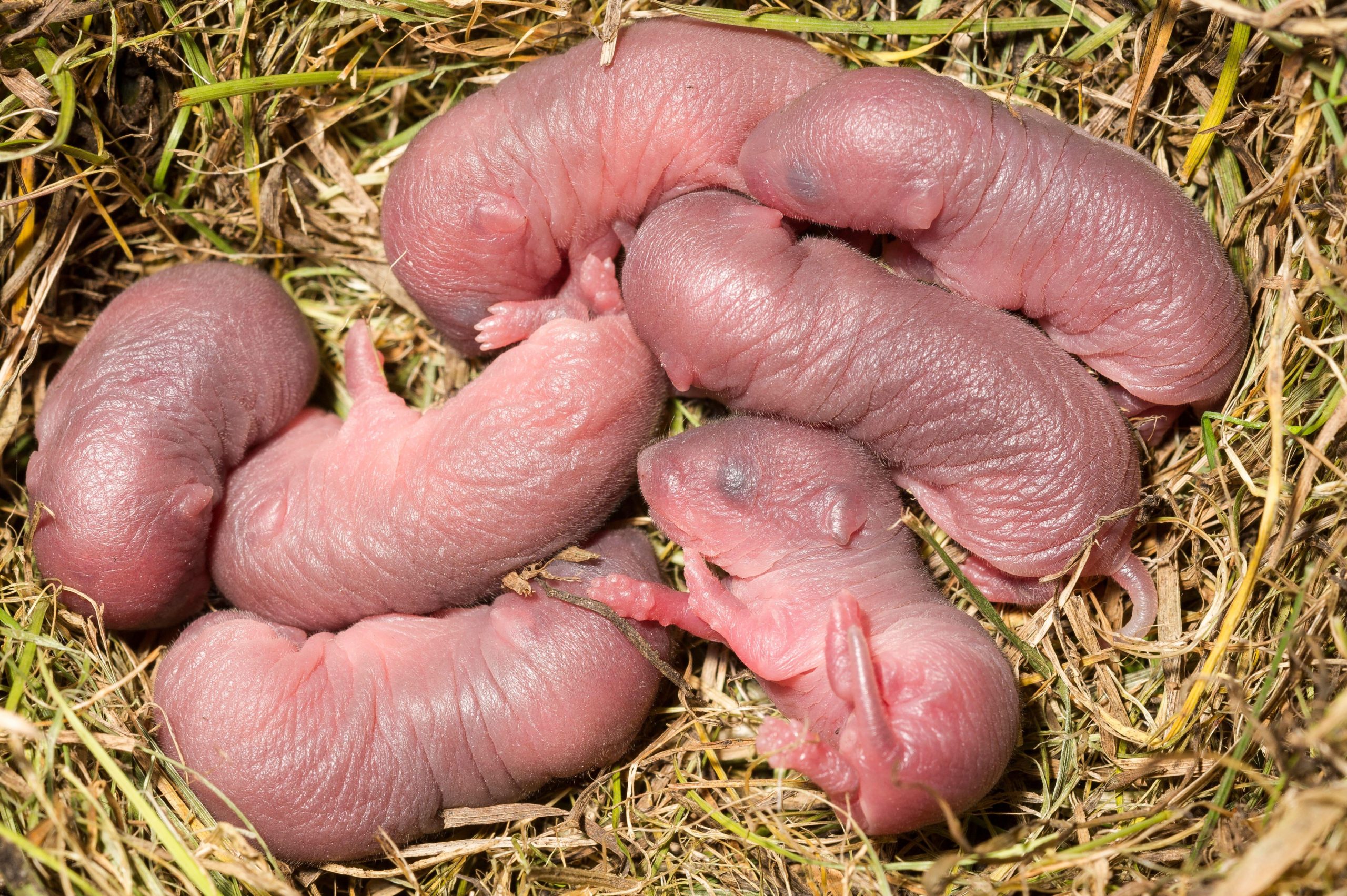
A curious example is the prairie vole (Microtus ochrogaster), which shows a clear preference for pairing with close kin. In one experiment, females were given the option to interact with males of varying degrees of relatedness: fathers, brothers, cousins and unrelated males. Results showed that females spent more time with their first cousins and chose them more often for mating. Moreover, copulations between cousins were more intense, as if there were greater chemistry between them.
In many species, mate choice is influenced by the environment in which individuals are raised, since most animals avoid reproducing with those with whom they shared childhood. In the vole experiment, all females were separated from males at birth, so their choices were based solely on genetic similarities.
Rodents and other animals produce pheromones derived from genes known as the major histocompatibility complex (MHC). This highly variable group of genes produces proteins unique to each individual, creating an ‘olfactory signature’ that allows them to distinguish one another. The closer the relative, the more similar their MHC — and therefore their scent. This helps animals identify kinship degree and, in the case of the voles, to prefer their cousins.
This behavior may seem contradictory. Shouldn’t animals always avoid inbreeding? The answer is not so simple, because extreme outbreeding can also be harmful. A classic example is the Tatra chamois in Central Europe. Decades ago, to try to save a local population well adapted to the cold, specimens of a subspecies from the Sinai, in the warm Middle East, were introduced. The groups mated successfully, but the result was an ecological disaster: the hybrids inherited the reproductive clock of their southern relatives. Instead of giving birth in spring, females began birthing in February. The young, unable to withstand Europe’s harsh winter freezes, froze to death, ultimately causing the extinction of the entire population.
Genes evolve in a specific environment, enabling individuals to survive and reproduce effectively in their habitats. When populations from different environments interbreed, offspring can lose these genetic advantages, becoming less fit for either original environment. That is why nature often favors a middle ground.
This also applies to humans. A study in Iceland that analyzed data from more than 160,000 couples born between 1800 and 1965 found that third- and fourth-cousin pairs had more children than unrelated couples. Theoretical models suggest that this level of kinship offers an optimal balance between the risks of inbreeding and the benefits of genetic proximity.
Nonetheless, this article does not aim to advocate for or against cousin relationships, or any other romantic choice. In humans, partner choice cannot be reduced to the genetic viability of offspring. It is simply interesting to observe how human culture and morals often have non-arbitrary foundations. It is estimated that, over history, roughly 80% of human unions occurred between people with some degree of consanguinity. We now understand that this pattern is not exclusive to our species, but is shared with many others in the animal kingdom.
Sign up for our weekly newsletter to get more English-language news coverage from EL PAÍS USA Edition





















 Uncategorized1 week ago
 Andalucia2 weeks ago
 Uncategorized2 weeks ago