Connect with us

America

Gas Prices In The United States: What’s Happening And How High They Might Go

Published

on

gas-prices-in-the-united-states:-what’s-happening-and-how-high-they-might-go

The global impact of the war in Iran has caused the average price of gasoline in the United States to rise above $4 per gallon for the first time since 2022. Since late February, when the conflict began, prices have risen by more than 30%, reflecting an energy shock that is already affecting not only drivers but the entire economy.

The main trigger has been the disruption in the global oil supply, particularly due to tensions in the Strait of Hormuz, a key route through which nearly 20% of the world’s crude oil normally flows. The drop in maritime traffic, attacks on extraction and storage infrastructure, and uncertainty about the conflict’s duration have pushed oil prices above $100 per barrel, rapidly passing that increase on to gas stations that sell refined fuel derived from oil.

Against this backdrop, several key questions arise.

Why are gas prices rising?

The increase is mainly due to global factors. Although the United States produces more oil than it consumes, domestic prices continue to depend on the international market.

When global supply shrinks or becomes uncertain — as is the case due to the war in Iran — crude oil prices rise, and with them, gas prices. In addition, there is a lag: prices at the pump typically react days after changes in oil prices, suggesting that there could still be further increases.

Seasonal demand, such as spring travel, also plays a role, as does the rising cost of diesel, which has already surpassed $5 per gallon and is affecting freight transport.

If the US produces oil, why is it vulnerable to global crises?

Although the U.S. is a net exporter of oil, it is not entirely self-sufficient in terms of refining.

Much of the oil it produces is light, while many refineries are designed to process heavy crude, which is imported mainly from Canada and Mexico. Adapting the infrastructure to use only domestic oil would cost billions of dollars and take decades.

For this reason, even without directly depending on oil passing through the Strait of Hormuz, the U.S. market remains vulnerable to any global disruption.

How high could prices go?

Forecasts suggest that prices could continue to rise if the conflict drags on.

Analysts estimate that for every $10 increase in the price per barrel, gasoline could rise by 10 to 40 cents per gallon. In more extreme scenarios, if the war intensifies or supply remains restricted, oil could reach $200 per barrel, which would push gasoline prices up to $7 per gallon. Even in more moderate scenarios, there are already warnings that prices could approach or exceed $5 in the short term.

Why do prices vary so much from state to state?

Not all drivers pay the same for gasoline. In states like California, the price is around $5.80 per gallon, while in other regions it remains below $3.50.

These differences are due to several factors: state taxes, transportation costs, access to refineries, environmental regulations, and local market conditions. For example, California uses a special, more expensive blend of gasoline and has higher taxes, which significantly raises the final price.

What impact does diesel have on the economy?

Diesel plays a key role because it powers trucks, trains, and farm machinery. Its price increase — more than 40% since the start of the war — could be passed on to the prices of food, shipping, and goods in general.

Economists warn that this ripple effect could drive inflation in the coming months, making everything from basic goods to services more expensive.

Does lowering gas taxes help?

In response to rising prices, some states have considered temporarily suspending fuel taxes. However, evidence suggests that the impact on consumers could be limited.

This is because the final price depends on multiple factors, such as the cost of oil and distribution margins. Furthermore, eliminating these taxes means less revenue for infrastructure, such as roads and bridges. For this reason, some governments consider the measure to be ineffective in addressing a global problem.

What might happen in the coming months?

The future of prices depends almost entirely on how the conflict unfolds. If the flow of oil through the Strait of Hormuz is restored, prices could stabilize or even fall toward the end of the year.

However, if the war drags on or intensifies, the energy market will remain under pressure. In that scenario, consumers could face not only higher gas prices but also a general increase in the cost of living.

Sign up for our weekly newsletter to get more English-language news coverage from EL PAÍS USA Edition

America

E

Published

on

By

e

Please enable JS and disable any ad blocker

Continue Reading

America

Minnesota Is Investigating ICE Agents For The Possible Kidnapping Of A US Citizen During A Raid

Published

on

minnesota-is-investigating-ice-agents-for-the-possible-kidnapping-of-a-us-citizen-during-a-raid

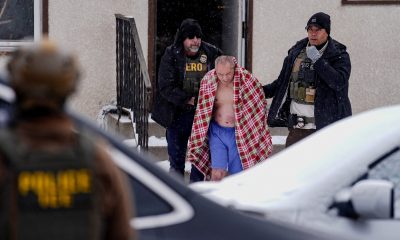
An image of a man in his underwear, wrapped in a blanket as he was being arrested by federal agents, went viral during the massive immigration raid launched by the White House in Minnesota earlier this year, sparking outrage across the country. Now, the arrest of that man, a U.S. citizen, has triggered a criminal investigation into possible kidnapping, unlawful entry, and unlawful detention, and has opened a new front of conflict between local authorities and the federal government.

The events took place on January 18, when agents from U.S. Immigration and Customs Enforcement (ICE) raided the home of ChongLy “Scott” Thao, a naturalized U.S. citizen of Hmong descent, in the city of St. Paul, the capital of Minnesota. According to prosecutors and Ramsey County authorities, the agents broke down the door of the residence and dragged him out in handcuffs, dressed only in underwear, Crocs, and a blanket, despite sub-freezing temperatures.

County District Attorney John Choi stated that the events could constitute serious crimes. “We believe there was no legitimate legal reason for the federal agents to enter that home; it was not supported by probable cause,” he said at a press conference on Monday.

According to the preliminary investigation, Thao was “forcibly removed from his home” and detained for over an hour, during which time he was transported in a vehicle and subjected to questioning before being returned to his home. Local authorities maintain that there is no evidence that the agents had a warrant to enter the residence.

Thao himself recounted that he was detained at gunpoint and released without explanation. “I was praying. I was like, ‘God, please help me, I didn’t do anything wrong.’ Why do they do this to me? Without my clothes on,” he said in an interview with Reuters from his home following the incident.

County Sheriff Bob Fletcher questioned the legality of the procedure: “There’s no dispute that he was taken out of his house, forcibly taken out of his home and driven around,” he told the media. He added: “Is that good law enforcement, to take an American citizen out of their home and drive them around aimlessly, trying to determine what they can tell them?”

Footage of the arrest, which was widely shared on social media, shows Theo barely covered by a blanket as he is escorted by armed agents. The incident sparked outrage among neighbors, some of whom filmed the scene and protested at the scene.

The Department of Homeland Security (DHS), which oversees ICE, has defended its agents’ actions. In a statement, it asserted that they were executing a warrant and were searching for two convicted sex offenders with alleged ties to the residence. It also stated that Thao “refused to be fingerprinted or facially ID’d” and that it is “standard protocol to hold all individuals in a house of an operation for safety of the public and law enforcement.”

However, Thao has denied knowing these individuals, and state authorities have indicated that at least one of the suspects was in prison at the time. His family, for its part, has rejected the official account and called the arrest “unlawful.”

The investigation faces significant obstacles. Local authorities have criticized the federal government’s lack of cooperation, as it has so far failed to provide key information, such as the identities of the agents involved or access to evidence. Prosecutor Choi has formally requested this documentation and has not ruled out taking the matter to court.

The case was part of Operation Metro Surge, a large-scale operation carried out in Minnesota involving thousands of federal agents, which has been criticized for its use of force and alleged irregularities. Local authorities are investigating other incidents related to the same operation, including clashes with protesters and questionable police conduct.

While the federal government maintains that state authorities lack jurisdiction to investigate its agents, local prosecutors and officials assert their authority to investigate potential crimes committed within their jurisdiction.

Legal experts have warned the press that any attempt to criminally prosecute federal agents could face significant obstacles due to the protections afforded to them under U.S. law. Even so, Thao’s case has become a symbol of the limits and controversies surrounding current immigration policy.

For now, the investigation continues with the aim of determining whether the U.S. citizen’s fundamental rights were violated.

Sign up for our weekly newsletter to get more English-language news coverage from EL PAÍS USA Edition

Continue Reading

America

El Exdiputado Bolsonarista Alexandre Ramagem, Detenido Por El ICE En Estados Unidos

Published

on

el-exdiputado-bolsonarista-alexandre-ramagem,-detenido-por-el-ice-en-estados-unidos

El exdiputado brasileño Alexandre Ramagem, uno de los hombres más cercanos al expresidente Jair Bolsonaro, fue arrestado este lunes por los agentes del Servicio de Inmigración y Control de Aduanas (ICE, por sus siglas en inglés) de Estados Unidos. El arresto se produjo en Orlando (Florida), donde vivía desde el año pasado, tras fugarse de Brasil para evitar entrar en prisión. Ramagem, que con Bolsonaro en el poder dirigió la agencia de inteligencia de Brasil, había sido condenado a 16 años de cárcel por formar parte del núcleo duro de la trama golpista que intentó mantener al líder ultraderechista en el poder, pese a la derrota en las urnas frente a Luiz Inácio Lula da Silva en las elecciones de 2022.

La detención fue confirmada por el director de la Policía Federal brasileña, Andrei Rodrigues, que a la prensa local aseguró que es fruto “de la cooperación Brasil-Estados Unidos en el combate al crimen organizado”. Recordó que Ramagem es un “forajido de la Justicia brasileña” y que, según las autoridades de Estados Unidos, su situación migratoria es irregular.

Personas de su entorno del exdiputado, en cambio, restaron importancia al arresto diciendo que se trata de una cuestión meramente migratoria sin relación con la condena por golpismo, que Ramagem se encuentra en el país legalmente y que estaba pendiente de la confirmación de una petición de asilo.

El excongresista se instaló en Florida en septiembre del año pasado, después de una rocambolesca huida de Brasil. Mientras los magistrados del Tribunal Supremo Federal deliberaban sobre la conducta de Bolsonaro y su círculo más cercano en la intentona golpista, Ramagem desapareció súbitamente de los pasillos del Congreso Nacional. Cruzó la frontera terrestre hasta Guyana, y desde allí voló a Estados Unidos.

Desde Florida siguió votando en las sesiones como diputado remotamente durante semanas, usando la excusa de una baja médica. Su esposa, Rebeca Ramagem, llegó a decir en sus redes sociales que se instalaron en Florida por la “persecución política inhumana” que vivían en Brasil. Según la prensa local, en su nueva vida en Orlando disfrutaban de una casa de 300 metros cuadrados con vistas a un lago y valorada en casi un millón de dólares.

En noviembre del año pasado, una vez se agotaron los recursos y llegó la hora de entrar en prisión, las autoridades brasileñas le consideraron oficialmente prófugo e incluyeron su nombre en la lista de la Interpol. El Gobierno de Lula da Silva pidió su extradición y la Cámara de Diputados anuló su mandato y su pasaporte diplomático.

Ramagem, que durante dos décadas fue un discreto agente de la Policía Federal, llegó a la esfera pública de la mano de Bolsonaro. Se hizo famoso por hacerse cargo de su seguridad tras la puñalada que el ultraderechista sufrió en la campaña electoral de 2018. Al llegar al poder, Bolsonaro premió su fidelidad dándole la dirección de la Agencia Brasileña de Inteligencia. Su gestión estuvo marcada por el escándalo de la Abin paralela. Según investigaciones, había usado la maquinaria del Estado para espiar ilegalmente a decenas de opositores, activistas, periodistas y otros miembros de la sociedad civil considerados incómodos por el bolsonarismo.

Bolsonaro también intentó colocarlo al frente de la Policía Federal para blindar a su familia de diversas investigaciones, pero la Justicia bloqueó el nombramiento por entender que había demasiado vínculo entre ellos y que la imparcialidad de la corporación estaría en riesgo. Tras dejar la agencia de inteligencia, ya convertido en una cara conocida entre los simpatizantes de la extrema derecha, fue fácil convertirse en diputado. Poco después, intentó ser alcalde de Río de Janeiro, pero fue derrotado en la primera vuelta.

Continue Reading

Trending

Copyright © 2017 Spanish Property & News