Connect with us

%

Good Start To The Summer On Marbella Beaches

Published

on

good-start-to-the-summer-on-marbella-beaches

Marbella lifeguard on patrol. Credit: Ayuntamiento de Marbella.

Marbella beaches wrapped up the month of June safely after lifeguard teams completed almost 1,500 operations all along the coastline, compared to the 2,600 reported in the same time the year before. Most actions taken focused on prevention and giving out warnings to beachgoers, information sharing and minor help for visitors, according to official figures released by the local council.

Excellent safety outcomes

Lifeguard services reported zero serious water rescues throughout the entire month. Teams handled only nine minor rescues plus one moderate case, showing there were calm sea conditions that supported enjoyable beach visits for thousands of residents and holidaymakers.

Favourable flag respect data

Beach conditions proved suitable for swimming on most days. Lifeguards flew green flags during 468 out of 570 monitored sessions, representing roughly 82 per cent of the total. This high percentage points to consistently good sea states and well-managed shores, ideal for safe recreation.

Rescue team activities

Salvage and watch crews carried out 488 interventions during the period. Of these, 261 involved direct advice to swimmers, 132 responded to yellow flag warnings, and 62 featured boat-based prevention work.

Support services in action

Medical teams delivered 388 health assists, mostly for common issues such as jellyfish stings, cuts and basic wound care. Separately, staff managed 602 bylaw rule enforcements linked to local coexistence standards. These covered matters like taking dogs on the beach, swimmers entering boat zones and reports of litter.

Preparation for peak season

Local government views the June results as evidence of reliable, closely supervised beaches ready for busier summer weeks ahead. Emphasis remains on proactive measures and smooth teamwork among rescue personnel to maintain orderly, high-quality coastal areas that attract visitors year after year.

Marbella continues to implement beach management strategies that put visitor wellbeing first. Regular patrols, real-time updates and quick response protocols contribute to positive experiences on these popular Mediterranean shores. Families, couples and solo travellers can plan trips with greater peace of mind knowing comprehensive safety systems operate daily. This successful month sets a positive tone for the rest of the high season, with authorities committed to sustaining these standards through ongoing training and resource allocation.

%

Bystanders And Paramedics Save 77-Year-Old Swimmer After Cardiac Arrest On Murcia Beach

Published

on

bystanders-and-paramedics-save-77-year-old-swimmer-after-cardiac-arrest-on-murcia-beach

Bystanders and emergency services resuscitate a 77-year-old on Murcia beach. Photo Credit: Aguilas Department of Tourism

Murcia emergency services once again helped save the day for a beachgoer, this time in the shining municipality of Aguilas. A 77-year-old bather on the beach of La Cola, next to Calabardina, was successfully resuscitated after suffering a cardiorespiratory arrest, giving bystanders and loved ones a scare.

Heroic rescue on the shore: Bystanders help to save a swimmer’s life

The incident occurred on Friday, July 10 at approximately 1:53pm, when the 1-1-2 Emergency Coordination Centre of the Region of Murcia received several calls alerting them to the incident. The man had been swimming in the water, but several heroic bystanders on the beach noticed he was unconscious. They pulled him to shore and immediately began resuscitation efforts before official emergency services arrived and took over the operation.

Emergency services rush to the scene

Local police officers from Aguilas, Civil Protection volunteers and an ambulance from the 061 Emergency and Health Services Management were dispatched to the scene. Medical staff, once they arrived, continued with resuscitation efforts and managed to recover the patient from cardiorespiratory arrest. The beachgoer was then transferred via ambulance to the nearby Rafael Méndez Hospital in Lorca for further treatment and medical examination.

The crucial role of bystander intervention on a beach with no lifeguards

The Emergency Coordination Centre of the Region of Murcia has highlighted that the beach where the incident happened does not have a lifeguard station, meaning that the quick thinking and intervention of the model bystanders until the emergency teams arrived was imperative for the rescue of the man.

Essential summer beach safety tips for swimmers

This dramatic rescue serves as a reminder of the vital role public awareness and quick action play in beach safety, especially on beaches that don’t have immediate lifeguard services available. Aguilas is one of Spain’s most popular destinations for beachgoing, but as the summer season peaks, emergency services continue to urge beachgoers to remain vigilant, swim in designated areas whenever possible, and never hesitate to call 1-1-2 at the first sign of trouble.

It is also important to stay well hydrated during peak summer months, make sure you are not getting into the water under dangerous conditions (including during high tide and stormy weather), avoid swimming alone, and always make sure a loved one or close friend knows your whereabouts.

Continue Reading

%

Michael Douglas Back In Mallorca

Published

on

michael-douglas-back-in-mallorca

Michael Douglas shares a message with fans while enjoying Mallorca Credit: Instagram/MichaelDouglas

Hollywood legend Michael Douglas is once again enjoying time in Mallorca, giving fans another glimpse into his enduring love affair with the island he has called a second home for decades.

The Oscar-winning actor, 81, shared a video on Instagram from his latest stay in Mallorca, encouraging his millions of followers to visit the Sa Bassa Blanca Museum near Alcúdia. In the clip, Douglas describes the attraction as an “incredible and fabulous” place, helping shine an international spotlight on one of the island’s lesser-known cultural treasures.

Back on his beloved island

Few international stars have a relationship with Mallorca quite like Douglas. His connection stretches back to the late 1980s, when he purchased the spectacular S’Estaca estate on the dramatic coastline between Valldemossa and Deià. Nestled within the UNESCO-listed Serra de Tramuntana, the historic property has become one of the island’s most famous celebrity homes.

Over the years, Douglas has frequently spoken about how much peace he finds in Mallorca, regularly spending long summer holidays there with family and friends. The actor has also been credited with helping raise the island’s profile internationally, with many visitors drawn by his long-standing affection for the island.

A family retreat

Douglas shares two children, Dylan and Carys, with actress Catherine Zeta-Jones. Although the couple have homes elsewhere, Mallorca has remained an important family retreat throughout their marriage, with the pair often spotted enjoying local restaurants, villages and the island’s coastline during the summer months.

The actor’s ties to Mallorca extend beyond his own home, with longstanding friendships across the island and regular appearances at cultural events during his visits.

Spotlight on Sa Bassa Blanca

The Sa Bassa Blanca Museum was founded by artists Ben Jakober and Yannick Vu, longtime friends of Douglas. Set within beautiful landscaped grounds overlooking the Bay of Alcúdia, it combines contemporary art, sculpture gardens and permanent collections with a strong focus on education and cultural exchange.

Douglas’s latest Instagram post is proof he is one of Mallorca’s most devoted ambassadors, whose decades-long connection continues to put the island in front of a global audience each summer.

Continue Reading

%

Spain Heatwave Linked To 463 Deaths

Published

on

spain-heatwave-linked-to-463-deaths

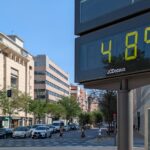
Extreme temperatures topped 40°C in parts of Spain during the latest heatwave. Credit : Carlos Koblischek, Shutterstock

Spain may have officially come out of its second heatwave of the summer, but health experts say the risk from extreme temperatures is far from over. Preliminary estimates suggest the six day heatwave that ended on Thursday 9 July was linked to 463 deaths, making it deadlier than the country’s first heatwave in late June.

While temperatures are expected to ease slightly over the weekend, much of Spain will continue to experience unusually hot weather. Authorities are urging people, especially older adults and those with existing health conditions, to remain cautious even though the heatwave has technically come to an end.

Spain’s second heatwave becomes the deadliest of the summer so far

According to Spain’s Daily Mortality Monitoring System (MoMo), 463 deaths are currently estimated to be linked to the second heatwave, which lasted from Sunday 5 July until Thursday 9 July.

The figure is already significantly higher than the 333 heat related deaths recorded during the first official heatwave between 21 and 25 June.

The sharpest rise came during the final two days of the latest heatwave. An estimated 261 people died on 8 and 9 July alone, with Thursday proving the most severe day.

MoMo estimates that 138 deaths were associated with extreme temperatures on 9 July, while 123 were recorded the previous day, reflecting the impact of soaring temperatures across much of the country.

These numbers remain preliminary and are expected to be refined over the coming week as more data becomes available.

It is also important to understand what these figures represent. MoMo does not record confirmed heat related deaths individually. Instead, it uses a recognised statistical model that compares expected mortality with the number of deaths actually recorded, while taking daily temperature data into account. The difference, known as excess mortality, provides an estimate of the number of deaths that may be associated with extreme heat.

Who is most at risk during periods of extreme heat?

Health authorities have repeatedly stressed that extreme heat does not affect everyone equally.

Older people, those with chronic heart or respiratory conditions and individuals with other underlying illnesses remain the most vulnerable. High temperatures can place additional strain on the body, worsening existing medical conditions and increasing the risk of serious complications.

During the final day of the heatwave, thermometers climbed above 42C in several parts of Spain, while almost the entire country was placed under weather alerts.

Only Cantabria and Asturias escaped heat warnings, with around 10 regions placed on orange alert, indicating a significant risk to health from exceptionally high temperatures.

Although many people associate heat related illness with dehydration or heatstroke, prolonged periods of very high temperatures can also place significant stress on the cardiovascular and respiratory systems, particularly among vulnerable groups.

The heatwave may be over but Spain is still facing very high temperatures

From Friday onwards, meteorologists say Spain will no longer meet the strict criteria used to classify a heatwave. However, that does not mean temperatures will suddenly return to normal.

According to Aemet spokesperson Rubén del Campo, much of the country will continue to experience very high temperatures over the coming days, despite the official end of the heatwave.

For anyone spending time outdoors, the advice remains largely unchanged. Staying hydrated, avoiding strenuous activity during the hottest part of the day and checking on elderly relatives or neighbours continue to be among the most effective ways to reduce the health risks associated with prolonged hot weather.

The latest figures also highlight the broader impact of this summer’s extreme temperatures.

According to MoMo, 621 estimated heat related deaths were recorded during the first nine days of July alone.

Looking at the wider picture, June ended with an estimated 939 deaths linked to extreme temperatures.

Since 15 May, when Spain’s Ministry of Health activated its annual summer heat plan, an estimated 1,667 deaths have been associated with excess temperatures across the country.

Those figures underline a growing reality for Spain. Even when an official heatwave comes to an end, the health risks often continue for days afterwards, particularly during prolonged periods of exceptionally hot weather. With much of the country still facing temperatures well above seasonal averages, health officials continue to encourage residents and visitors alike not to let their guard down simply because the heatwave has officially ended.

Continue Reading
Advertisement
Advertisement

Spanish Real Estate Agents

Tags

Trending

Copyright © 2017 Spanish Property & News