Connect with us

%

Granada Tremor Reaches As Far As Malaga

Published

on

granada-tremor-reaches-as-far-as-malaga

Fallen tree in Granada after earthquake. Credit: Bomberos

Saturday’s earthquake was felt across two provinces as experts explain why seismic waves can travel so far

Residents across Malaga province felt an earthquake centred in Granada Province on Saturday, November 28, with the tremor reaching towns along the coast and across Axarquia.

The earthquake registered a magnitude of 3.8 and struck at 12.45pm, according to Spain’s National Geographic Institute (IGN). Its epicentre was located near Moraleda de Zafayona, at a depth of 11 kilometres, according to the official earthquake record.

Despite being centred inland, the movement was felt in Malaga city, Velez-Malaga, Competa, Algarrobo-Costa and La Cala del Moral, in Rincon de la Victoria. No injuries or damage had been reported by the emergency services at the time of the initial reports.

Why was the earthquake felt so widely?

Earthquakes release energy that travels through the ground in the form of seismic waves. These waves can move over considerable distances, meaning that people may feel an earthquake even when they are many kilometres from its epicentre.

Saturday’s tremor was relatively shallow, with its source located just 11 kilometres beneath the surface. This meant that the seismic waves had less distance to travel through the Earth’s crust before reaching the surface. However, the distance from the epicentre is not the only factor that determines how an earthquake is felt.

Tras ser revisado, el #terremoto se queda con una magnitud de 3’8 y una profundidad de 11km

Se ha podido sentir en las provincias de #Málaga, #Córdoba y sobre todo #Granada con intensidad máxima de IV (aunque no haya registros en el IGN, en otras aplicaciones si hay) https://t.co/jqinrnpWcv

— MeteoFans (@MeteoFans) November 28, 2026

The type of ground beneath a town can affect how seismic waves travel. Some geological materials can amplify ground movement, while others may reduce it. Buildings can also influence what people experience. A tremor that is barely noticeable outdoors may be more apparent inside a building, where windows, crockery and furniture can vibrate.

The US Geological Survey explains how earthquake shaking changes with distance, including why the movement experienced at one location may differ from that felt elsewhere. This helps explain why an earthquake of moderate magnitude can be noticed across a wide area, even when it does not cause widespread damage.

Where was the shaking strongest?

The IGN recorded the highest intensity of the earthquake at level IV on the European macroseismic scale. In Malaga province, Competa and Velez-Malaga recorded intensity III, while Malaga city experienced shaking between levels II and III. Algarrobo-Costa and La Cala del Moral recorded intensity II.

These figures describe how the earthquake was experienced in different locations, rather than its overall magnitude. Magnitude measures the energy released at the earthquake’s source. Intensity describes the effects felt at a particular location, which can vary according to distance, local ground conditions and buildings.

Saturday’s earthquake was initially reported as magnitude 3.6 before the IGN revised its calculation to 3.8 and updated the epicentre. The tremor was also felt in Granada city and numerous other towns across the province.

Residents who felt the earthquake can report their experience through the IGN’s official earthquake questionnaire, helping scientists improve their understanding of seismic activity in southern Spain. The tremor follows other earthquakes felt across Malaga province, including a magnitude 3.8 earthquake in February.

For more background, readers can also see EWN’s coverage of Granada’s earthquake sequence in August and its guide to earthquake risk in southern Spain.

%

Could Your Car Survive Crossing French Bumps?

Published

on

could-your-car-survive-crossing-french-bumps?

Arrêt! Dukes of Hazzard-style jump ahead. Credit: PUMSD FB

Hundreds of thousands of road humps in France are reportedly illegal, leaving drivers to watch their bumpers as they creep across sleeping policemen heading to the UK from Spain.

British drivers heading through France could find that the biggest obstacle on their journey is not a motorway toll or an A63 motorways traffic jam, but a speed bump.

Around 400,000 of France’s estimated 450,000 road humps are said to fail to meet legal standards, according to motoring campaigners. Despite a court ruling confirming the problem, many are still in place, and new ones are reportedly being built.

For drivers travelling between Spain and the UK, the warning is worth noting. That innocent-looking hump in the road could prove rather less innocent when it meets the underside of your car.

France’s speed bumps under scrutiny

French regulations dating back to 1994 set strict conditions for speed bumps, including a maximum height of 10 centimetres. They must also be installed on roads with a speed limit of 30km/h, in built-up areas and on roads carrying fewer than 3,000 vehicles a day. Campaigners say many installations fail to meet these requirements, whether because they are too high, badly designed or in the wrong location.

The problem is not confined to conventional concrete humps. Rubber speed cushions can become slippery in wet weather, creating a particular hazard for motorcyclists and cyclists. Loose fixing bolts have also been blamed for vehicle damage.

Why are they still there?

France’s highest administrative court confirmed in 2025 that many speed bumps did not comply with the rules. However, it did not order their wholesale removal. Local authorities often face pressure from local residents to slow traffic down, while speed bumps are a relatively cheap and visible way of doing so.

There is also no systematic inspection of every installation, allowing some questionable examples to escape scrutiny. In other words, the hump may be illegal, but getting rid of it is not as simple as taking a sledgehammer to the road.

Can drivers claim for damage?

Drivers whose vehicles are damaged by a non-compliant speed bump may be able to seek compensation from the relevant local authority. A court in Toulon ruled in 2020 that a driver whose car was damaged by an unmarked 13cm-high speed bump should receive the full cost of repairs. The council was also ordered to bring the installation into compliance with regulations.

Drivers should keep photographs of the bump, evidence of any damage and repair bills if they believe an unlawful installation has damaged their vehicle. The advice for anyone driving through France is simple: slow right down for the bumps, keep an eye on the road and hope your suspension is feeling resilient. And make sure you keep your seatbelt well fastened and in the correct position, and kitchen implements put away, if you’re travelling bt motorhome.

After all, a French road trip should not require a second mortgage for the garage.

Continue Reading

%

Christmas Giant Arrives In Marbella’s Don Carlos

Published

on

christmas-giant-arrives-in-marbella’s-don-carlos

Christmas at Don Carlos. Credit: EWN

Don Carlos lights up Costa del Sol’s tallest Christmas tree after week-long journey from Poland.

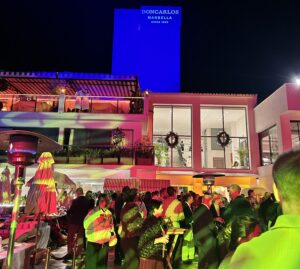
Marbella’s newly reopened Don Carlos hotel has welcomed a spectacular Christmas tree after a week-long road journey from Poland, with general manager Jorge Manzur personally overseeing its transportation. The tree, described as the tallest Christmas tree on the Costa del Sol, was the centrepiece of a festive ceremony and party on Friday, November 27, attended by local press, hotel staff, suppliers and guests.

Manzur has brought his distinctive style of Christmas celebrations to the Don Carlos following his time at the prestigious Villa Padierna hotel, where he became known for creating memorable festive occasions. Read more about Jorge Manzur’s appointment as general manager of Don Carlos Marbella.

The tree’s arrival was a particularly special moment for the hotel, which has recently reopened its doors following a major renovation. The reopening of Don Carlos Marbella attracted more than 600 guests in May.

Christmas celebrations at Don Carlos

The lighting ceremony was followed by a party featuring an exceptional selection of festive food, including traditional Spanish turron, Christmas cakes and some of the finest jamon. Guests enjoyed an evening of seasonal hospitality as the hotel officially began its Christmas celebrations.

ham and turron

The tree forms the centrepiece of an elaborate Christmas display, with decorations extending throughout the hotel. Manzur’s involvement in bringing the tree from Poland reflects the attention to detail behind the hotel’s festive preparations.

The celebrations also brought together people from across the Costa del Sol’s hospitality industry, including suppliers and members of the local press, together with hotel staff and guests.

Festive season in Marbella
party people

The Don Carlos is one of Marbella’s best-known hotels, and its Christmas celebrations add to the festive atmosphere across the resort as the Christmas season gets under way. With its impressive centrepiece now in place, the hotel is ready to welcome guests for the festive period.

For Manzur, the event marks the continuation of a Christmas tradition that he has helped establish at leading hotels on the Costa del Sol. The celebration at Don Carlos offered a first glimpse of the hotel’s festive season, with the towering tree providing a striking backdrop for the evening’s festivities.

Readers can find details of the hotel’s Christmas and New Year’s Eve programme, including its festive dinners and family activities.


Christmas tree

Continue Reading

%

Wrecked Diesel Tanker Towed To Murcia To Deal With

Published

on

wrecked-diesel-tanker-towed-to-murcia-to-deal-with

Salvamento Maritimo attempt towing wreck. Credit: SM X

Regional president demands alternative as overturned Med Emre heads for port carrying 7,000 tonnes of fuel, as Murcia local demand to know ‘Why not Mallorca?’

Cartagena faces diesel ship controversy

Cartagena is facing a growing political row over the arrival of the overturned Med Emre, with Murcia’s regional president and the city’s mayor demanding that the Spanish Government find another destination for the damaged vessel.

Fernando López Miras and Noelia Arroyo have rejected the decision to tow the ship into Cartagena, warning that the operation could threaten the region’s coastline, marine wildlife and industrial infrastructure.

Their opposition comes as the Malta-flagged vessel is being towed towards the port, following its capsizing off Ibiza on Wednesday, November 25. The ship was carrying around 7,000 tonnes of diesel as cargo, plus approximately 160 tonnes of fuel for its own engines. One crew member died following the accident, while the other 16 people aboard survived.

Rechazo absoluto del Gobierno @regiondemurcia a la decisión adoptada por el Gobierno de España de remolcar el buque turco naufragado en Ibiza al Puerto de Cartagena.

Reunido de urgencia con la alcaldesa de Cartagena, @NoeliaArroyoHer, para evaluar la situación ante esta decisión unilateral.

— Fernando López Miras (@LopezMirasF) November 27, 2026

Murcia demands alternative port

López Miras described the decision as unilateral and said the regional government would not accept the risk of a potential environmental catastrophe. He and Arroyo called on the Spanish Government to find another port, arguing that authorities cannot guarantee the operation will be completed without danger.

Their concerns include the possibility of diesel escaping into the sea and affecting protected marine areas around Cartagena. Arroyo also warned that the operation could threaten the Valle de Escombreras industrial complex, which plays an important role in Spain’s fuel supply. The mayor raised further concerns about the proximity of Cartagena’s naval base and military arsenal.

Both leaders made their objections following an emergency meeting in Cartagena on Friday, November 27, after the Spanish Government confirmed that the city would receive the vessel.

Why Cartagena was selected

Spain’s maritime authorities insist that Cartagena is the only port in the area with the technical facilities needed to handle the ship safely. The vessel is being towed upside down to the Escombreras dock, where the fuel will be removed before efforts begin to right and refloat it.

Authorities say carrying out the operation in open water would be too dangerous, particularly with winter weather approaching. The ship’s structure and ability to stay afloat have been checked, with officials confirming that its condition has not deteriorated. Maritime authorities have also ruled out keeping the vessel at an exposed anchorage while the work is carried out.

Fuel removal could take weeks

The operation is expected to last several weeks, with specialist equipment needed to extract the diesel and prepare the ship for its eventual removal. Authorities plan to install pollution containment barriers around the vessel before fuel extraction begins. A small oily slick was previously detected near the wreck, although officials said it was not confirmed to have come from the ship’s cargo tanks. The arrival of the Med Emre is expected on Monday, November 30, weather permitting.

For Murcia’s regional government and Cartagena’s mayor, the immediate demand remains clear: find another solution before the damaged vessel reaches the port.

Continue Reading

Trending

Copyright © 2017 Spanish Property & News