Connect with us

%

Guardia Civil Raid Secret Fuel Depot In Alhaurin El Grande

Published

on

guardia-civil-raid-secret-fuel-depot-in-alhaurin-el-grande

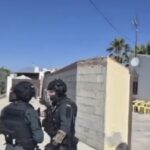
Guardia Civil officers raid Alhaurin home. Credit: GC

Guardia Civil officers carried out a targeted operation on Friday, June 5, that led to the arrest of two men and the seizure of thousands of litres of fuel intended for drug smuggling boats. Officers focused the raid on a property in Alhaurin el Grande that functioned as a storage site for a criminal network supplying narcolanchas, high-speed motorboats for transporting drugs across the Atlantic operating off the Andalucian coast. Investigators believe the site formed part of the logistical chain that keeps fast smuggling vessels running during illicit crossings.

Gossip had been rife around the town for several days after occasions when Guardia Civil cars were seen careering around the town clearly in search for someone important. Rumours of a secret stash of explosives, or something equally dangerous, filled the terraces, while Anthony Bermudez, mayor of Alhaurin, recorded a video on Friday, June 6, to set residents’ minds at rest. The Guardia Civil had clearly told the mayor they were looking for someone illegally breeding animals, as that was what he passed on to the public. But the public had guessed it had been something more serious than that.

Raid targets inland property

Agents from several Guardia Civil units descended on the dwelling after intelligence indicated its use as a fuel depot for maritime drug operations. The property’s location inland away from the coast allowed the group to stockpile supplies without immediate suspicion or detection from maritime patrols. Entry and search followed judicial authorisation, leading to the immediate detention of the two occupants.

Materials recovered by investigators

Investigators recovered €10,570 in cash and a notebook containing numerous annotations. Those records hold value in tracing wider connections within the criminal organisation according to Guardia Civil sources. Officers also found 229 full jerry cans each holding 25 litres of fuel and 483 empty containers prepared for refilling. The practice known as ‘petaqueo’ in police circles involves transferring fuel from land stores to narcolanchas at sea so the vessels can complete high-speed runs without refuelling at regular ports.

Charges filed against detainees

Police have charged two detainees with criminal group membership and offences against collective security. The second charge relates to the serious hazards created by storing thousands of litres of highly flammable liquid in an ordinary home without proper safety precautions. Such storage increases the chance of a fire or explosion that could affect neighbouring properties and residents. Multiple units took part in the coordinated action, including personnel from the main post in Alhaurin el Grande, the judicial police unit based in Algeciras, the post in Guadiaro, the fiscal company in Malaga and additional teams from the Algeciras and Malaga commands.

%

Scottish Tourist Had Message For Rescuers

Published

on

scottish-tourist-had-message-for-rescuers

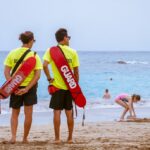
Scottish holidaymaker Aileen wrote an emotional letter to Benalmadena lifeguards after they came to her aid when she lost consciousness on the beach.

The handwritten note was sent by 62-year-old Aileen days after lifeguards responded when she became unwell on the beach on May 29. Addressed to lifeguard Melanie Waller and the SOS team, the message thanked them for their “care and assistance” during the incident.

“Thank you very much to everyone for your help and attention. Knowing they were there, I was able to enjoy the rest of my vacation. Thank you from the bottom of my heart,” Aileen wrote.

Lifeguards responded after woman became dizzy and lost consciousness

According to reports, the incident occurred at around 5.30pm on May 29 when staff working from a hammock station in front of the Gloria Bendita beach bar alerted Benalmadena’s lifeguard service that a woman was suffering from dizziness and required urgent assistance.

First responders Melanie Waller and Rodrigo Escobar were dispatched to the scene, where they found Aileen sitting on the ground displaying symptoms of dizziness.

During their initial assessment, the woman was not responding normally and shortly afterwards lost consciousness again. Lifeguards reported that she appeared pale, had bluish lips and was experiencing breathing difficulties.

Given her condition, emergency protocols were activated and medical assistance was requested, with the situation initially assessed as a possible Priority 1 emergency.

Emergency response praised after tourist recovers

After several minutes receiving assistance, Aileen regained consciousness, allowing responders to reassess the incident as a Priority 2 case.

During the intervention, she complained of thirst and was given sugar water under the supervision of the lifeguard team. Once her condition stabilised, responders identified her as a Scottish tourist visiting Benalmadena on holiday.

Local reports praised the quick actions of both the hammock attendant who raised the alarm and the lifeguard team that responded immediately, enabling medical resources to be activated without delay.

The incident ended on a positive note when Aileen later contacted the service to express her gratitude. Her letter has since been highlighted as recognition of the work carried out daily by Benalmadena’s beach rescue teams in supporting residents and visitors along the increasingly busy coastline.

Strengthened beach safety operation across Benalmadena

Benalmadena has recently announced the increase in coastal safety in the area with the launch of its summer vigilance and rescue operation, running from 15 May to 15 October. The plan brings in 45 lifeguards, rescue watercraft, a staffed ambulance and rapid‑response equipment across nine points of the coastline, to assist beach services during the areas busiest months.

Continue Reading

%

Oasis Bonehead In Marbella And Malaga

Published

on

oasis-bonehead-in-marbella-and-malaga

The former Oasis guitarist has been sharing snapshots from Marbella, Malaga and Ronda while enjoying a sunny break on the Costa del Sol.

No, he’s not playing a surprise gig in Malaga. Paul Arthurs, better known to Oasis fans as Bonehead, is simply enjoying a holiday and lucky for fans he is sharing plenty of it on social media.

An original member of the band

Anyone familiar with Oasis knows that Noel and Liam Gallagher were not the only iconic figures in the band. Bonehead, the rhythm guitarist from the group’s original classic line-up, became one of the most famous characters of Britpop’s biggest success story.

More than 30 years ago, Noel Gallagher wrote a song about him, Bonehead’s Bank Holiday, a tongue-in-cheek ode to a trip to Spain in search of sun and fun, originally intended to be sung by Bonehead himself. Now, it seems the guitarist has taken that inspiration himself.

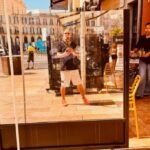
Over the past few weeks, Arthurs has been documenting his stay in Malaga and surrounding areas on Instagram. His posts include selfies in Malaga city centre, photos of street flamenco guitarists, beach scenes in Marbella, traditional almond stalls and the obligatory view of Ronda’s famous Puente Nuevo. There have even been snapshots from shopping trips to Aldi and MediaMarkt, prompting one caption that reads, “It’s not all rock and roll.”

At 60 years old, Bonehead appears happy to blend in with the thousands of British visitors enjoying the Costa del Sol sunshine. However, he is far from an ordinary tourist.

Why Bonehead is one of the most important figures in Oasis

The guitarist famously left Oasis in 1999 during the troubled recording of the band’s fourth album, following a row that saw him pack his bags and fly back to Manchester. At the time, the official statement claimed he had quit to spend more time with his family. Noel Gallagher’s public response was characteristically cutting, “It’s hardly McCartney leaving The Beatles.”

A close friend of Liam Gallagher, Arthurs later filled in for injured Beady Eye guitarist Gem Archer in 2013 and 2014, and went on to become a major part of Liam’s solo backing band throughout his post-Oasis career.

When Oasis announced their much-anticipated reunion after years of family and artistic tensions, Bonehead was once again brought back into the fold. Fans welcomed the news enthusiastically. He remains the only musician who played on the band’s first three albums, Definitely Maybe, (What’s the Story) Morning Glory? and Be Here Now, who is still actively involved with the group.

At a reunion show, Noel Gallagher has previously been quoted as saying “On guitar, if it wasn’t for him, none of this would have happened,” a comment fans have interpreted as recognition of Bonehead’s role in helping keep the famously volatile Gallagher brothers on speaking terms.

Bonehead’s cancer recovery and return to the sun

Sadly recent years have not been without challenges. In 2022, Arthurs revealed he had been diagnosed with tonsil cancer, which he thankfully successfully overcame. Then, in 2025, he stepped back from being part of Oasis’s hugely successful reunion tour to undergo treatment for prostate cancer.

Now happily recovered and enjoying life under the Andalucian sun, Bonehead appears to be making the most of an extended Spanish getaway.

So if you happen to spot a bald Brit in shorts wandering around Malaga or Marbella, take a second look. You may have just crossed paths with one of British rock’s most recognisable figures.

Continue Reading

%

Experts Warn Of Spain Drug Shortages As A Common Everyday Medicine Runs Out

Published

on

experts-warn-of-spain-drug-shortages-as-a-common-everyday-medicine-runs-out

Spain faces widespread drug shortages, with aspirin now affected nationwide. Photo Credit: Maksym Pozniak-Haraburda / Unsplash

Spain is currently in the midst of a serious drug supply problem; in recent weeks, nearly 12,000 supply shortages have been recorded, affecting more than 1,500 different medications…including a common, everyday-use painkiller.

Aspirin running out in Spain: More than 11,700 shortages across nearly 4,000 pharmacies

The shortage was alerted by LUDA Partners, a network that connects more than 3,700 pharmacies in Spain. According to the network, 1,538 different medications are being affected by 11,785 supply shortages, with the latest addition to the figures being acetylsalicylic acid, the active ingredient in aspirin. As a result, aspirin is one of the five medications with the most reported shortages in Spain and accounts for 4 per cent of reported shortages on a national scale, an unprecedented figure.

This shortage is reported to affect 75 milligram in 30 unit-packs and 100 milligrams in 500 unit-packs of the drug, as well as Aspirin Plus, a particular brand of the drug, in its 500 milligram and 50 milligram formats.

This shortage could spell trouble for patients who regularly use aspirin to treat chronic pain, or those who need a quick, safe, and over-the-counter painkiller for unexpected aches and ailments. Additionally, acetylsalicylic acid is also a main ingredient in Lenzetto, a hormonal therapy for women in menopause.

The Canary Islands facing supply strain, particularly for epilepsy medication

The LUDA Partners report also points specifically to the Canary Islands, listing some other medicines that are difficult to obtain in the autonomous community. Among the medicines mentioned were Gabapentin, used to treat epilepsy and neuropathic pain; Hibor, an anticoagulant used to prevent thrombosis; Amchafibrin, a medication indicated for the control and prevention of bleeding; Depakine, used to treat different types of epilepsy; and Furantoin, a common antibiotic in the treatment of urinary tract infections.

More than half of people over 15 in Spain suffer from a chronic condition

LUDA Partners has alerted to the severity of the problem, stating that 54.3 per cent of the population over the age of 15 suffers from at least one chronic disease (including any long-term conditions). This number gets even more stark in those over 65 years of age, as 40 per cent of men and 44 per cent of women have two or more chronic pathologies, 2025-2028 Development Document of the Strategy for Addressing Chronicity of the Ministry of Health.

Not just aspirin: Spain faces drug supply shortages across the board

More common drugs facing shortages in the country include Fixaprost, intended for patients with glaucoma; Amchafibrin, which prevents hemorrhages; and Kreon, which is prescribed in cases of pancreatic insufficiency. These medicines are all among those with the most reported shortages.

What is causing the supply shortage?

The shortage is being caused by multiple factors, including temporary and seasonal increases of demand, spiking production costs, and ongoing tensions that affect international supply chains.

Certain medications also present a low profitability, hindering the production and distribution of some treatments and causing wider structural issues.

Spain has been under “pressure” due to this pharmaceutical supply shortage for years, but, though very noticeable in Spain, this drug supply shortage is not exclusive to the country

Continue Reading

Trending

Copyright © 2017 Spanish Property & News