
Delcy Rodríguez
How To Rebuild Venezuela In The Face Of Horror

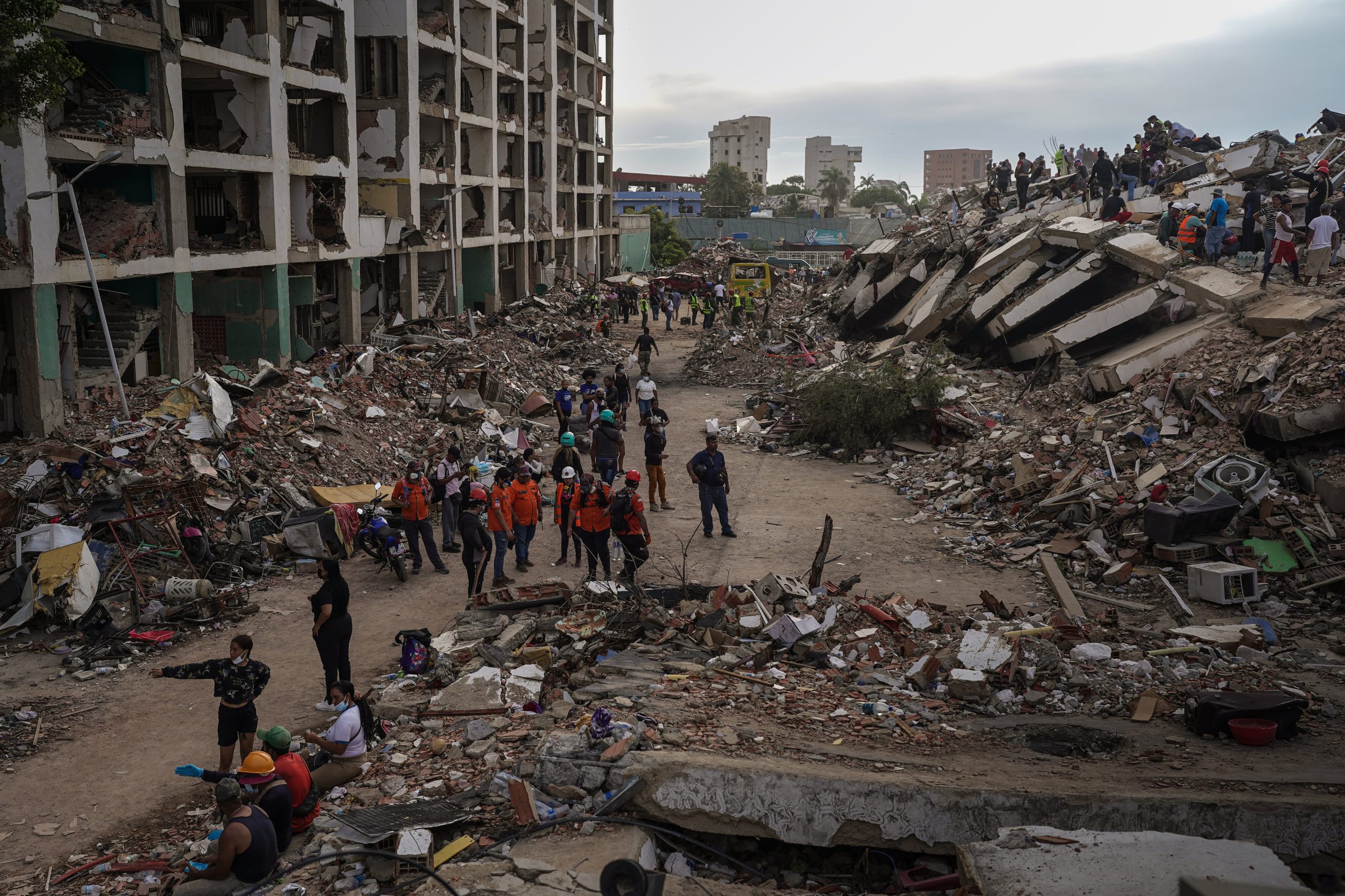
Metaphors abound to describe what the twin earthquakes that struck Venezuela’s coastal north mean, both materially and symbolically. Two weeks on, official figures report thousands of deaths. But stories from the ground reveal a grief layered on top of another grief: the Venezuelan state’s failure in La Guaira, two governments and a single massive disaster. Faced with the horror, an unavoidable question arises: how to rebuild the country?
As days pass, new layers of the tragedy have emerged. One is inequality. Although no social class was shielded from the disaster, differences between those with resources and those without became apparent from the very first hours. In the zero zone of the central coastline, heartbreaking scenes sit side by side: private cranes and backhoes working in front of collapsed residential buildings while, just yards away, other families keep digging through rubble with sledgehammers to find their loved ones.
However, the gap does not seem to respond solely to economic status. In Caracas, a wealthy municipality run by opposition official Gustavo Duque responded differently. There, emergency protocols, evacuations and early care were activated.
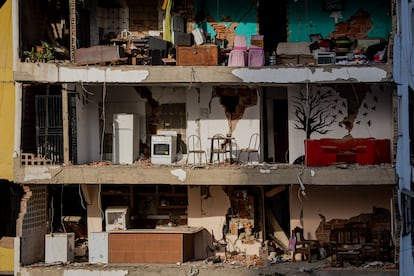
The first 48 hours exposed the paralysis of Venezuela’s Chavista state. While bodies lay on sidewalks, desperate calls to rescue survivors flooded social networks and the airwaves of independent media.
Then came a second wave of appeals. With wounds still fresh, many residents began pleading for excavators to remove tons of concrete and steel “without charging me a fortune” — at least $500 a day — so they could recover the bodies decomposing beneath the rubble while family members watched helplessly. In temperatures exceeding 86°F (30°C), the smell of death hangs over a landscape that will need far more than rebuilt infrastructure. It will require a public policy of mourning, comfort and recovery.
The two earthquakes also exposed more clearly the complex web of real power in Venezuela. This is where the drama of the de facto protectorate that the country has become since January 3 comes into focus.
International delegations arriving to assist with emergency operations were reportedly given a warning: two governments are operating in Venezuela — the one formally headed by Delcy Rodríguez and the one exercising effective oversight from the United States.
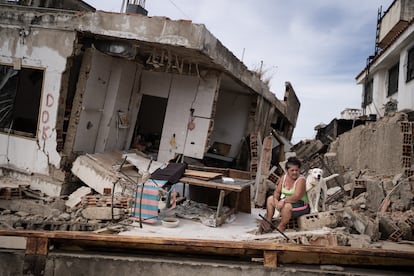
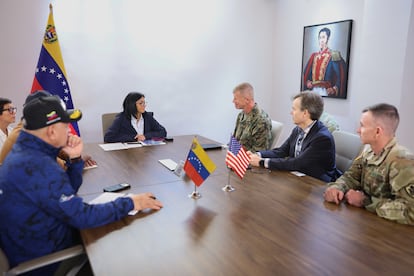
U.S. officials, including chargé d’affaires John Barrett and General Francis Donovan, head of U.S. Southern Command, have publicly provided updates on international aid efforts. Nearly 2,000 U.S. troops remain in Venezuelan territory and have also assumed responsibility for air-traffic control operations at Maiquetía, the country’s main airport, which was disabled by the earthquakes.
Various photographs have shown Barrett and U.S. military officers interacting cordially with Interior Minister Diosdado Cabello, the most prominent face of Venezuela’s repressive apparatus and a man for whose arrest the United States has long offered a $25 million reward. Until recently, the two sides appeared irreconcilable enemies.
The earthquakes once again confirmed the deeply pragmatic nature of Venezuelan authoritarianism. Just as it adapted to international sanctions, it now appears capable of adapting to a condition of external tutelage. While Delcy Rodríguez continues to insist she holds authority, her brother Jorge has come to oversee much of the visible apparatus of government. The ruling troika — Cabello being the third pillar — is internally recalibrating.
By contrast, María Corina Machado — the political leader behind the opposition’s victory on July 28, 2024 — remains stranded in Panama after a failed attempt to travel to Venezuela. She told journalist César Batiz on July 7 that the conditions for her safe return to the country are still being developed.
In moments like this, political action is often viewed with distrust. Yet perhaps it has never been more necessary: to denounce negligence, protect human rights, monitor the use of public resources, give structure to citizen protest and defend a republic facing one of its most vulnerable moments.
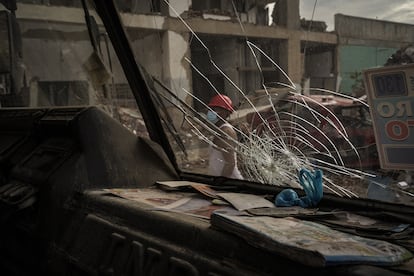
The technical scale of the disaster is also immense. The United Nations Development Programme preliminarily estimated direct physical damages at $6.7 billion, equivalent to 6% of gross domestic product. Engineer José María De Viana blames the massive collapse of buildings on the combination of the seismic fault and decades of development on sedimentary soils without adequate controls. Anthropologist Rogelio Altez points to another structural factor: the sustained loss of the state’s technical and scientific capacity.
The tragedy is also taking a political toll. An Atlas Intel poll shows a sustained rise in disapproval of Delcy Rodríguez’s administration, from 44% in January to 63.3% in June. At the same time, U.S. President Donald Trump said he sees no conditions for holding elections in Venezuela. As Venezuelans might put it: things were already bad, and then they got worse.
In this context, how can a political transition be organized amid the rubble?
Faced with institutional collapse, historian Margarita López Maya and political scientist Magdalena López have proposed creating an Emergency Governing Board. Their proposal rests on a logical diagnosis: if the problem is the absence of a functioning state, the solution can hardly be to wait for those responsible for that void to fix it on their own.
The proposal envisions forming a collegiate body of Venezuelan society professionals — engineers, seismologists, doctors, risk managers, economists and social scientists — with the technical capacity, public legitimacy and sufficient autonomy to coordinate the reconstruction effort. In addition, “this board would have a dual simultaneous task: attend to the immediate emergency (rubble removal, victim identification, housing, among others) and, at the same time, work together with Delcy Rodríguez’s government and representatives of the country’s majority democratic opposition to lay the political and institutional foundations for a democratic transition that can no longer be postponed.”
A similar technical proposal comes from Kenneth Ramirez, president of the Venezuelan Council on International Relations. He proposes forming a government that includes credible figures both inside and outside of Venezuela. He argues that, since the current government lacks legitimacy and capacity, this team could manage the reconstruction effort, seek fresh funding and restore Venezuela’s place in the inter-American system.
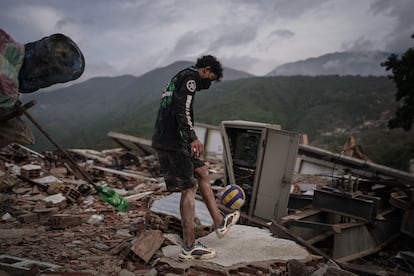
Much of Venezuelan territory sits atop seismic fault lines. Despite that reality, the country never developed a consistent disaster-prevention policy. The same could be said of its institutions. Venezuela has spent years perched atop a vast political and institutional fault line. If the accumulated energy of discontent continues without a democratic outlet, further upheavals seem inevitable.
Although civic solidarity has been admirable, it is far from becoming a system capable of sustaining devastated communities for months or years. The wave of solidarity is likely to fade with time, leaving exposed once again what millions of Venezuelans have been saying for years: the country needs profound change, both in leadership and in its governing model. Those who dismantled it must leave.
Since 2022, the social base supporting the governing movement has begun to fracture. That rupture became visible during the opposition primaries of 2023 and reached its clearest expression on July 28, 2024, when millions of Venezuelans voted for Edmundo González Urrutia. Even now, amid grief and destruction, the dominant feeling remains the same: abandonment in the face of a government that appears willing to appropriate even hope itself.
Reconstruction will require labor, machinery, scientific expertise and financial resources. But it will also require a new political architecture. An Emergency Board alone will not solve all of Venezuela’s problems. It could, however, provide the minimum framework on which to begin building a possible future.
It will not be enough to clear the rubble. Venezuela must also repair its institutional fabric and address the pain of a society that has been asked for far too long to remain resilient when, in reality, it has been on the verge of breaking for years.
Sign up for our weekly newsletter to get more English-language news coverage from EL PAÍS USA Edition







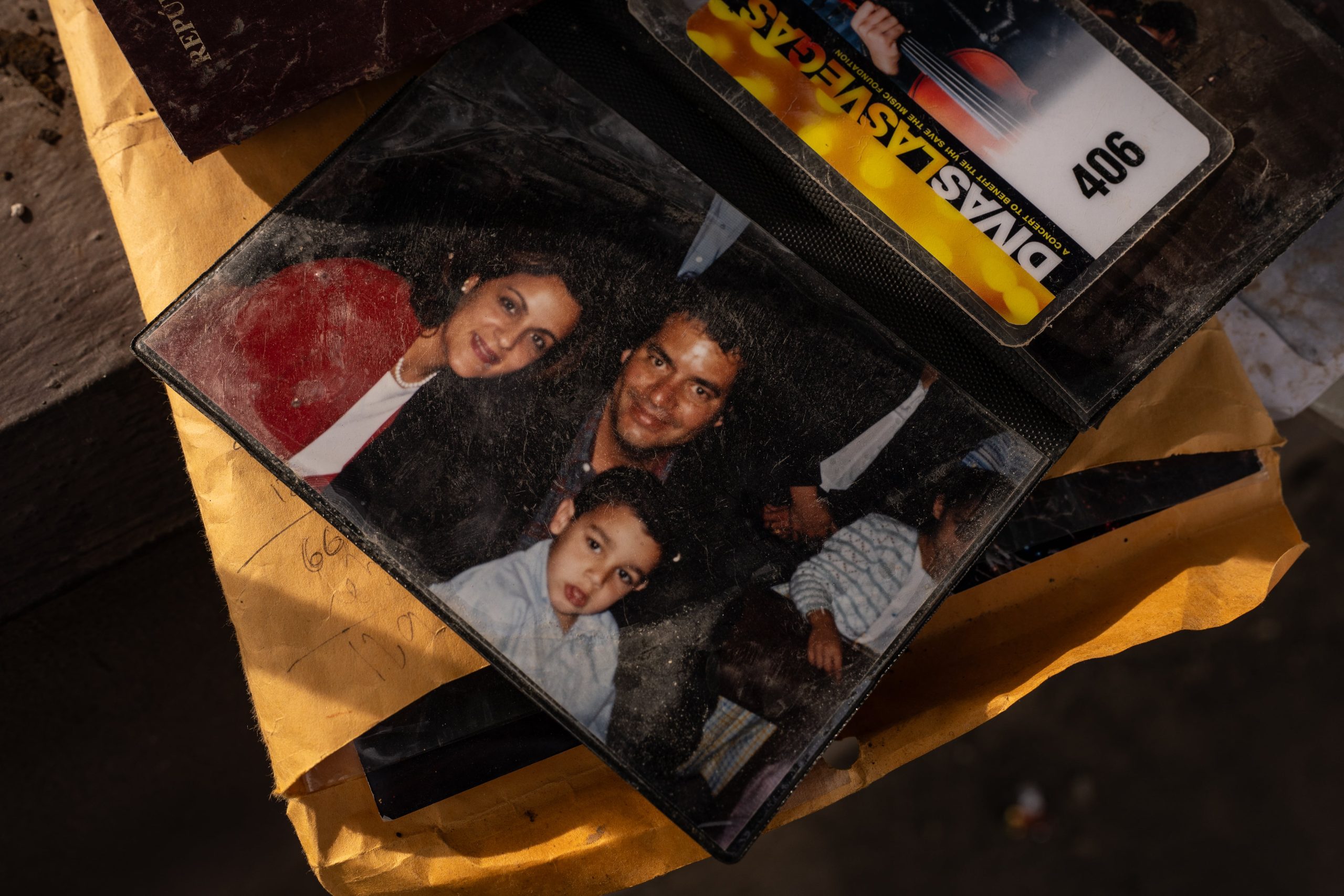
A tiny, frightened Yorkshire terrier was pulled alive from the debris 10 days after an apartment block came down in Venezuela’s earthquake disaster, and footage of the rescue spread across social media throughout the country.
Behind the rescue effort is Eliezer Alfonzo, a national baseball star who has set up his own rescue camp in a parking lot in La Guaira, the area hardest hit by the twin earthquakes of June 24. Alfonzo has miners, food supplies, five pieces of heavy machinery and 50 men under his command. Faced with the state’s shortcomings, he has assembled his own logistics operation.
The mission was to find his wife, Patricia, and his 16-year-old daughter, Eliana — alive or dead.
On Saturday there was still hope: if the dog survived 10 days beneath the debris, perhaps they had too. But on Sunday that hope vanished. Their bodies were found in the rubble.
Money buys speed and time. Alfonzo was able to bring in machinery from Puerto La Cruz, a five-hour drive away, hire workers from the gold mines of Tumeremo, men used to working underground, and keep his private army fed and supplied with vitamin-infused serum, including the machinery operators, who work from 6 a.m. until 2 a.m.
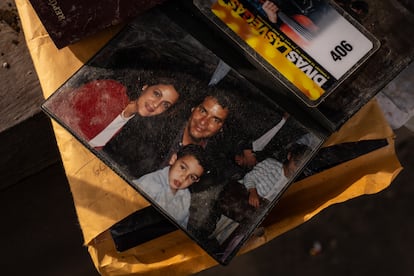
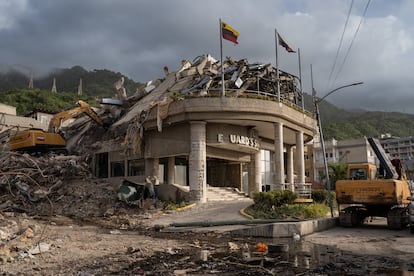
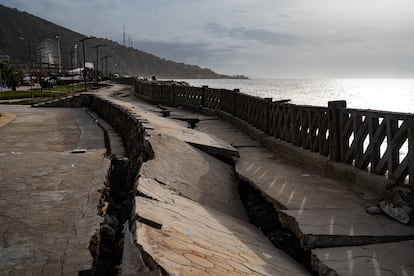
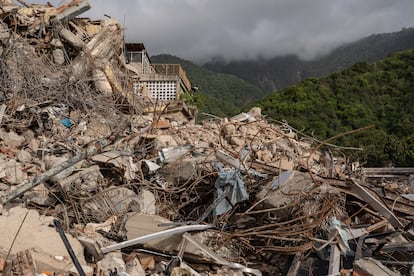
A crane, a hydraulic hammer, a wheel loader, a debris-clearing blade and lighting equipment that made it possible to keep digging through the night. About $1,200 a day per machine.
Alfonzo is one of the Venezuelans who have been spending whatever they can these days to search for their loved ones because the wait is simply too long. Yet even with all those resources — with the contacts his fame has brought him and the money to keep the operation going — he was still searching 10 days later.
Alfonzo was a Major League star with the San Francisco Giants, and in Venezuela he is known as “El Matatán,” the king of home runs. He is now manager of Los Delfines de La Guaira. For the past three months, he had been staying with the team at the Eduard’s Suites Hotel, whose ruins he has spent days combing through.
His fame and resources have not spared him the anguish shared by so many others searching for loved ones. “I am devastated,” he told EL PAÍS on Saturday. “I feel powerless for not seeing the results of so much effort.”
On the first day after the twin earthquakes, no help arrived. “The human resources were us,” recalled the player’s sister, Hensily Alfonzo.
They dug with their bare hands until, on the second day, the machinery that Alfonzo had personally arranged and paid for began to arrive. The family themselves ended up directing the excavators because the operators had no experience dealing with a collapsed building.
“We ended up directing traffic ourselves, by instinct,” she said.
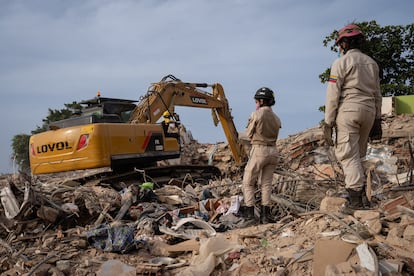
Most of those affected cannot afford that kind of money in Venezuela. “Many people said: when Eliezer gets whatever he needs, we’ll leave, because we have no one,” Hensily says of the neighbors who were counting on her brother’s machinery to help search nearby buildings. “We’ve been here 10 days and found nothing. Imagine without machines.”
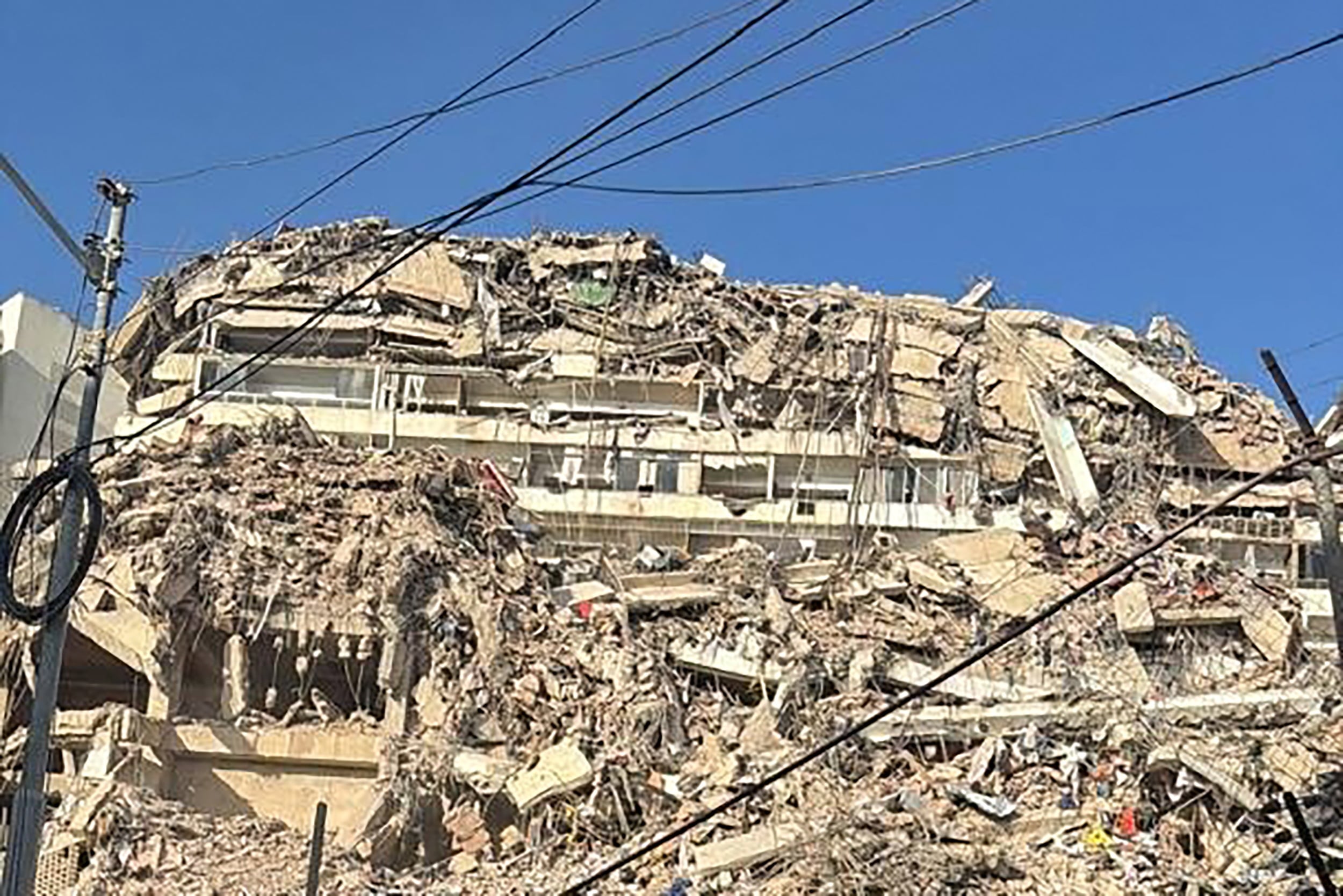
The official death toll from the disaster, updated on Sunday, rose to 3,342, with 16,740 people injured. Another 6,462 people have been rescued alive, while 17,345 lost their homes. La Guaira, where Alfonzo was searching, was the hardest-hit: eight out of every 10 buildings that collapsed completely in the earthquakes were located there.
On Saturday, after finding the little dog Sandina, rescuers began to find some of the family’s belongings: the daughter’s phone, the wife’s phone, a suitcase, a watch, a wallet… Eliezer moved around the camp dejected.
“I can’t say I’ve been abandoned, because I did what I had to do,” he said. “But I think the search effort would have been much larger if there had been more support.”
Sign up for our weekly newsletter to get more English-language news coverage from EL PAÍS USA Edition

The U.S. State Department was unequivocal in its statement last week regarding the Venezuelan government’s response to the earthquakes that have claimed more than 2,300 lives. “The interim authorities have fully complied to accelerate this massive humanitarian response,” the statement said, despite sharp criticism from citizens over obstacles and delays in rescue operations and the entry of humanitarian aid.
Six months after the military operation that captured Nicolás Maduro in January and installed his former vice president, Delcy Rodríguez, as Venezuela’s leader, U.S. President Donald Trump faces an apparent paradox. He regards the intervention in the South American country as the crowning achievement of his foreign policy and a possible model for future actions, including in Cuba. Yet in shoring up that supposed success, he has increasingly aligned himself with the very Chavista regime he had targeted since his first term, as cracks in his relationship with María Corina Machado — the opposition leader who, according to Washington, won the 2024 election — are growing more evident.
Gone are the early days of the intervention, when Trump warned Rodríguez that if she did not follow Washington’s orders to the letter, she would face a “worse” fate than Maduro, who is now awaiting trial in a New York jail.
Over the past six months, the Republican administration and Trump himself have become convinced that the regime is willing to bend to their wishes to remain in power and accept Venezuela’s status as a supervised state. Such an outcome would have seemed impossible during Operation Southern Lance, when the United States targeted Venezuela with airstrikes against alleged drug-trafficking boats and urged Maduro to step down and go into exile.
Now, Venezuela has been turned into a “de facto protectorate,” says Francesca Emanuele of the think tank Center for Economic and Policy Research (CEPR).
The country’s oil sector, the engine of its economy, is now under Washington’s control. Oil exports are managed through an account at a U.S. bank in New York. Trump, who boasts that “people are dancing in the streets” in the parts of the country unaffected by the earthquake, has publicly claimed that the share of the proceeds received by the United States has already repaid the cost of the January 3 operation several times over.
Meanwhile, official Venezuelan figures show that oil revenues in the first quarter of the year amounted to roughly $5.5 billion — slightly more than in Maduro’s final years in power, but still below the levels reached before the sanctions era.
In addition, Caracas is preparing to restructure its enormous sovereign debt — around $240 billion, the largest debt restructuring since Greece’s in 2012 at the height of the financial crisis. The move is seen as essential to returning Venezuela to international capital markets.
But the debt sustainability analysis is not being carried out by experts from the International Monetary Fund (IMF), as would normally be the case. Although the IMF says it remains in technical contact with Caracas, the assessment is being prepared by a U.S. consulting firm, Centerview Partners, which has been hired as adviser. That has fueled concerns among members of the Venezuelan opposition that the process could leave the country more vulnerable to its creditors.
Emanuele also points to the military operation on Venezuelan soil that killed the leader of the Tren de Aragua gang, known as “Niño Guerrero,” which Trump himself said had been carried out on his orders.
“That highlights the degree of subordination that exists in Venezuela,” says Emanuele.
Even in Trump’s own view, Venezuela has become the most extreme example of the so-called “Donroe Doctrine” embraced by the United States — a reference to the Monroe Doctrine, which was historically used to justify U.S. interventionism in its “backyard.”
Under the Trumpian interpretation, the doctrine treats the Americas as “their” continent and makes the region the central priority of U.S. foreign policy. Friendly leaders and governments are rewarded, while regimes regarded as hostile are threatened with the possible use of military force.
“Trump’s alignment with the new dictator follows the logic of his America First philosophy, which leaves little room for democratic values,” says Benjamin Gedan, director for Latin America at the Stimson Center and former head of South America affairs at Barack Obama’s National Security Council. “After all, what matters to Trump in Venezuela is not the freeing of political prisoners or a democratic transition, but an obedient government that facilitates oil and mining projects controlled by U.S. companies. In other words, a fusion of the Chamber of Commerce and Southern Command.”
As a showcase for that policy, the United States has sought to throw its full weight behind Venezuela following the two earthquakes of June 24. The Republican administration has delivered aid quickly and on a large scale. It has pledged $300 million in humanitarian assistance. The Pentagon deployment involves around 2,000 personnel, focused on rescue operations and the distribution of essential supplies. According to the head of U.S. Southern Command, General Francis Donovan, the operation is likely larger than the one mounted after Hurricane Melissa struck Jamaica last November, though smaller than the response to Haiti’s 2010 earthquake.
At the same time as it deploys — and publicly promotes — its aid effort, Washington has backed the performance of Rodríguez’s government in Caracas.
“I saw before the earthquake a willingness by the interim government to cooperate with us. That has not changed after the earthquake,” defended the chargé d’affaires heading the U.S. Embassy in Venezuela, John Barrett, in a televised interview. Barrett also said Washington had “a great deal of confidence” in the Venezuelan authorities, which he said had shown “great transparency.”
Meanwhile, General Donovan has excused shortcomings in Caracas’s response on the grounds that the current government is contending with “decades of underinvestment.”
The U.S. administration has been as effusive in its praise of Rodríguez’s government as it has been critical of Machado’s attempts to return to Venezuela at this time. The opposition leader, who has been living in exile since secretly leaving the country last December to collect her Nobel Peace Prize in Oslo, has made two attempts to return since the earthquakes.
Machado and her team insist that she does not intend to campaign, but rather to help coordinate relief efforts. The Trump administration, however, opposes her return for now.
“Adding politically sensitive matters to this situation at this time is counterproductive to our response efforts after this tragedy,” a State Department spokesperson said last week.
“Trump is delighted to deal with an authoritarian government that accedes to every demand and has no interest in changing that for the unpredictability of a political transition that would likely lead to a more independent Venezuela,” says Phil Gunson, Crisis Group’s chief analyst for the Andean region.
But Gunson, who is based in Venezuela, adds that “Washington’s refusal to approve Machado’s return at this time, even if motivated by self-interest, is not necessarily a bad thing. The immediate focus now should be rescue work, and Machado’s interests are primarily political.”
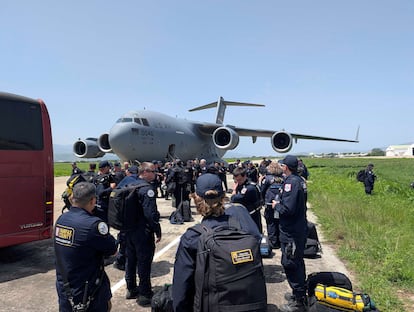
The United States says its plan for Venezuela consists of three phases: stabilization, economic recovery and transition. Free elections will be held only in the final phase.
According to Barrett, the plan continues despite the earthquakes. “It looks a bit different now, of course, given the destructive quakes, but economic recovery had already begun,” he said at a conference call press briefing this past Wednesday. “Right now I am focused on saving lives, but we will return to phase 2 and to Venezuela’s economic recovery.”
“There is no doubt that Trump has been generous in his earthquake response. But everything indicates his primary goal is to preserve a supposed foreign policy victory, measured in barrels of oil per day and new investments,” Gedan says. “For Trump, María Corina Machado’s return would jeopardize all of that, by introducing the possibility of political violence or at least the uncertainty inherent in any truly democratic process. Under these circumstances, Trump prefers the stability of strongman rule, despite the repression, corruption, incompetence and Delcy [Rodríguez]’s very low popular support — his ‘new friend and partner.’”
For the time being, Gunson notes, public opinion in Venezuela remains favorable toward the United States. Trump and his secretary of state, Marco Rubio, are far more popular there than Rodríguez.
“For now, the general perception of the United States and its relief work appears positive, in stark contrast to how people view the government’s lack of response. Machado, meanwhile, has lost some support, though she remains by far the most popular politician,” the analyst says. “How things will develop as we return to a more normal situation remains to be seen. But if the United States is perceived as propping up Delcy Rodríguez in power indefinitely, those opinions could change.”
Sign up for our weekly newsletter to get more English-language news coverage from EL PAÍS USA Edition
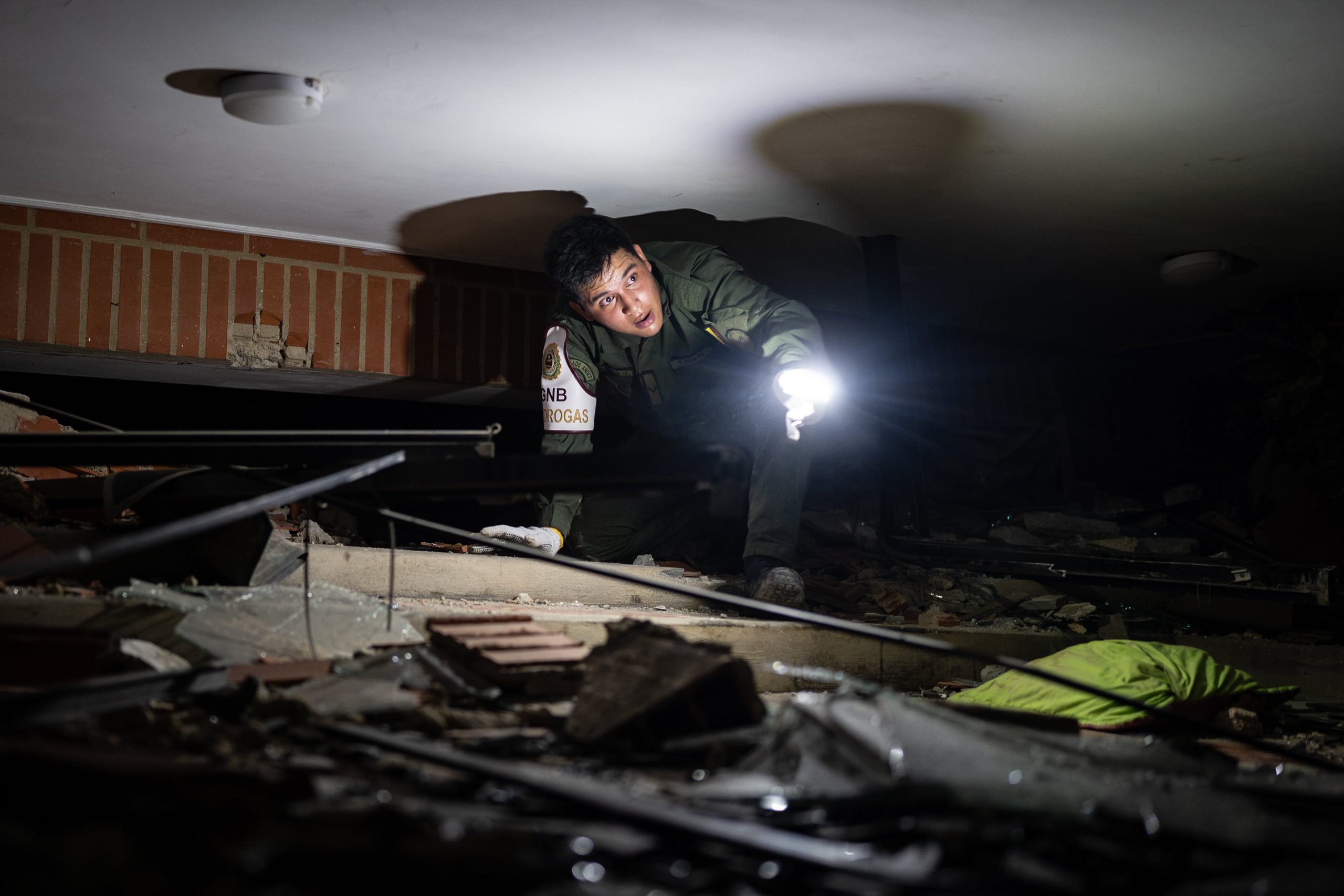
Francisco Pérez, wearing a hard hat and carrying a flashlight, has spent the past week outside the parking garage of a building that no longer exists. Somewhere beneath the rubble, several meters underground, is the car belonging to the woman he treats as his mother — his boss, Nancy Rojas, 67. He believes she is still inside.
Francisco says he managed to determine roughly where the vehicle might be and shouted questions down to her. According to him, she answered by knocking twice on the roof of the car for “yes” and three times for “no.” Others tried to convince him it could have been any noise. He refused to believe it. One knock, he said, could be a falling stone; three had to be Nancy calling for help.
Day after day, he returned to speak to Nancy, who used to call him “son,” but he has not heard her again. Given the condition of the building, rescuing her now seems impossible. The structure is so unstable that moving a single slab could bring the rest crashing down. Until Monday, he still had hope.
Francisco’s story is one among thousands.
A week after the twin earthquakes plunged Venezuela into yet another unimaginable crisis, Delcy Rodríguez’s government has declared a week of national mourning, with the official death toll standing at 2,295 and the number of injured at 11,267. On Tuesday, however, National Assembly President Jorge Rodríguez suggested that the number of fatalities could be as high as 10,000. More body bags are on the way.
Meanwhile, a platform run by supporters of opposition leader María Corina Machado — an unofficial channel that often duplicates cases already reported elsewhere — says 40,668 people are “out of contact” with relatives. Authorities report damage to 855 buildings, 189 of which have totally collapsed. They are just numbers in a country that will spend months counting and burying its dead.
Francisco has felt so powerless that for days he told anyone willing to listen that the woman trapped beneath the rubble was his mother, even though she was not.
“It was the only way to get anyone to pay attention,” he confesses. “People, when I said she was my mom and they saw how desperate I was, came to help… That’s why the lie went so far.”
Seven days after the earthquakes, Francisco no longer talks about rescuing his boss. He talks about recovering her body. And burying it with dignity.
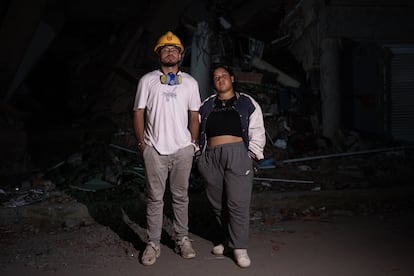
The vigil kept by the 28-year-old and his friend Scarly Rojas, Nancy’s only daughter, has become part of a ritual repeated day and night across La Guaira.
In the early hours of the morning, when there is less traffic and machinery noise, dozens of damaged buildings fall silent while rescuers — sometimes professionals, sometimes simply neighbors — call for quiet in hopes of hearing voices or knocks from beneath the debris. It is the same code Francisco used, repeated across an entire city.
Makeshift camps dot the area. Mattresses line the entrances of shattered residential complexes. People sleep there every night despite the overwhelming stench of decomposing bodies that now hangs over much of the municipality. And as long as that routine continues — as long as every night still carries even the faintest possibility of hearing something — it is difficult for an entire city to accept whatever comes next after the catastrophe.
On Tuesday, Scarly approached someone wearing a shirt emblazoned with the word “psychologist.” “I spoke to him because I also happen to be a psychiatric patient,” she explains. “I suffer from anxiety, and throughout all of this I’m still in shock. I haven’t really been able to process it or cry.”
Francisco remains stunned as well. He barely reacts and shows little emotion, but he is beginning to come to terms with reality. “Right now what’s left for me is to recover the body, give it a burial and go on with my life,” he says.
Outside another collapsed building, he stands with two young men whose girlfriends — sisters — remain buried beneath the rubble. Together they describe the wall preventing them from moving forward: they simply want to bury their dead.
“The hardest thing is that two days ago I had to do grocery shopping and it hit me hard,” Francisco tells them. “I kept thinking: ‘Damn, I’m doing something from ordinary life while my mom [referring to Nancy] is down there.’ And I can’t.”
Andrés Piñero, whose Spanish girlfriend Franchesca is one of the women still trapped inside, nods. “That’s what we want. To bury her, at least.”
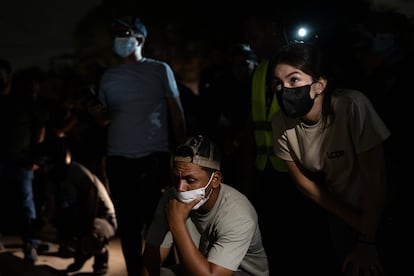
Even for families who have already recovered a loved one’s body, grief is obstructed by countless hurdles: moving from one morgue to another — some of them improvised in open-air spaces — trying to find the deceased, identify them, fill out paperwork, and arrange cremation.
Hundreds of bodies have spent days exposed to the Caribbean heat — in parking lots, vacant lots and at the port.
“Some are already unrecognizable,” says a member of Delcy Rodríguez’s government in the disaster zone.
When possible, identification is carried out through personal belongings, tattoos or dental records. When it is not, families find themselves trapped in a different kind of limbo than Francisco’s: they have a body, but no certainty that it belongs to their loved one. Given the scale of the death toll, cremations cannot wait.
The desperation to reach relatives has driven some people to bypass the authorities, who are slow to arrive. José Mesa’s daughter and her grandparents remain trapped beneath the rubble of a building that leans a little farther each day. This week he climbed onto the roof himself, hoping to pull them out with his bare hands.
“It was a bit difficult because we didn’t have the materials. We need someone to climb up and help us,” he says.
But seven days after the earthquake, rescue teams remain focused on a different priority: the living, not the dead. Like Francisco, Mesa is waiting his turn.
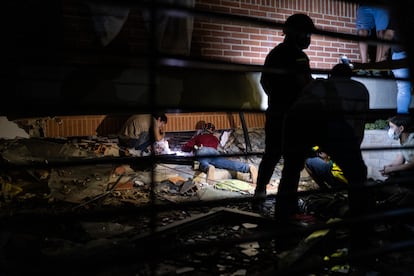
Members of international rescue teams deployed to Venezuela say that sense of helplessness has produced a phenomenon increasingly visible on social media: survivors crawling into rubble and filming themselves pretending to be trapped, hoping the videos will go viral and draw rescuers to the exact building where their loved ones remain buried. They lie so that someone will come to help.
In Venezuela — a country where even in ordinary times many people live day to day — almost nobody is talking about the future yet.
“Maybe one day you recover,” Francisco says, “but for months afterward you’ll walk into a hardware store, see a pickaxe or a shovel, and it’ll all come back to you.”
For now, neither he nor anyone else can afford to think that far ahead. There is still searching to do.
Sign up for our weekly newsletter to get more English-language news coverage from EL PAÍS USA Edition

Sin Courtois, Bélgica Se Descompone: “Sentía Que No Me Harían Un Segundo Gol”
Sunset Symphony: Vera hosts weekly concerts beneath the summer sky

Tracy-Ann Oberman Refused Spain Flight


-

 Uncategorized2 weeks ago
F1 Qualifying Results: 2026 Austrian Grand Prix times and grid positions
-

 %2 weeks ago
Terminal Patients In Poland Ask For The Right To Say Goodbye To Their Pets
-
Latest2 weeks ago
EU Worries Jet Fuel Supply Situation To Worsen
-
 America2 weeks ago
Última Hora Del Terremoto En Venezuela, En Directo | Exteriores Eleva A 9 La Cifra De Españoles Fallecidos En El Doble Terremoto De Venezuela
-
airport liquids2 weeks ago
Malaga Airport to end liquids and electronics removal at security
-
 America2 weeks ago
Última Hora Del Terremoto En Venezuela, En Directo | Venezuela Eleva A 920 La Cifra De Muertos Y Suma Más De 3.000 Heridos
-
car hire2 weeks ago
Spain tourists renting cars this summer warned over deposits, damage and hidden fees
-

 Uncategorized2 weeks ago
When is the next F1 race? British Grand Prix schedule and details for 2026