Ceuta crisis
King Felipe VI ‘wants to visit’ Ceuta as Feijóo pressures Sánchez to approve it


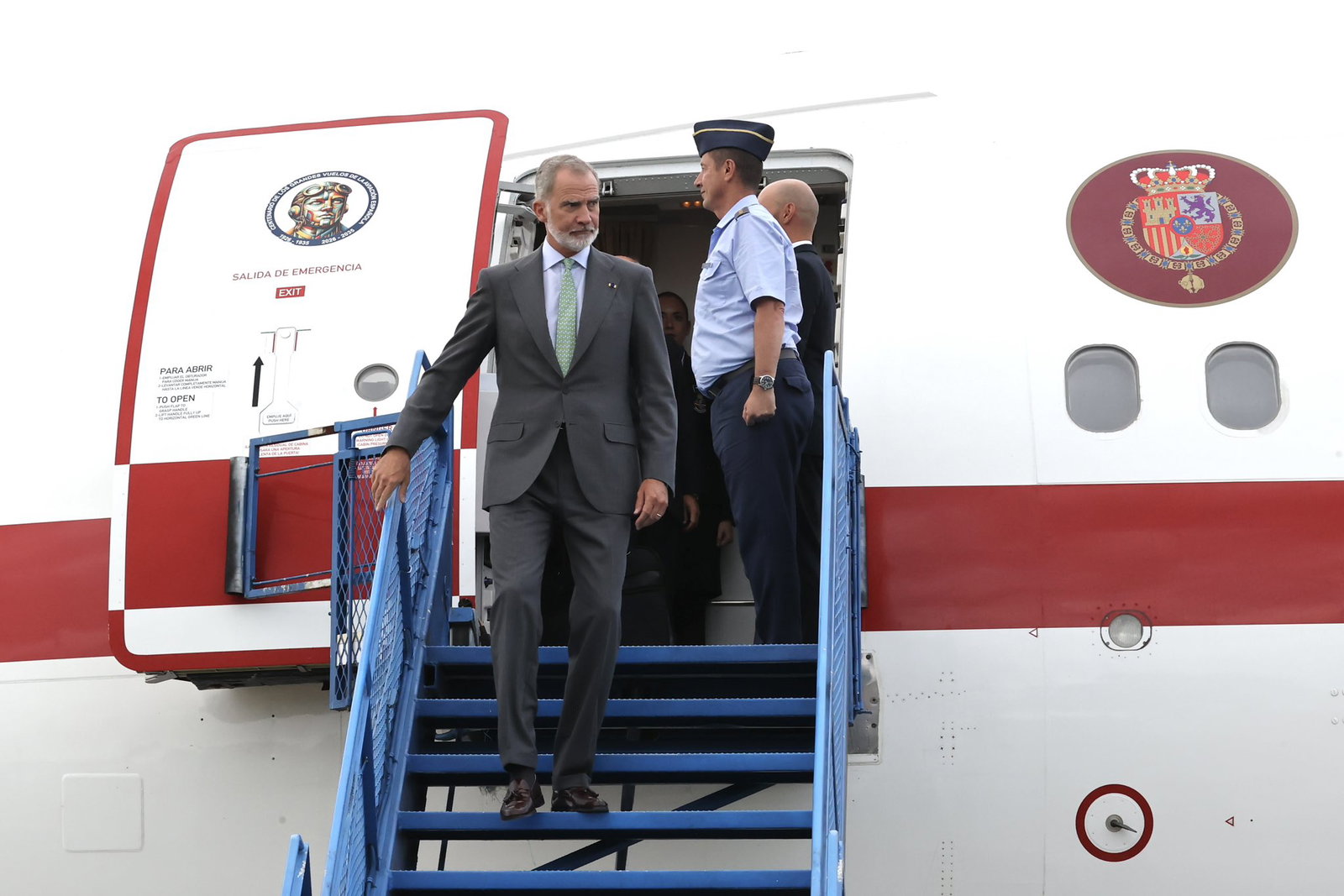
A visit by Felipe VI would carry significance beyond a symbolic appearance. Photo credit: Casa de S.M el Rey on X
The people of Ceuta are still dealing with the aftermath of one of Spain’s worst border crises in decades, and now the King could visit the city, if the Government agrees to let him go. More than 70,000 migrants attempted to enter the Spanish territory from Morocco at the end of July, with dozens of people dying during the mass crossings. The crisis has left Ceuta facing pressure on accommodation, public services and security, while the first unidentified victims have now begun to be buried in the city.
Against that backdrop, PP leader Alberto Núñez Feijóo says King Felipe VI wants to travel to Ceuta and believes the Government should authorise the visit. The claim has raised a bigger question: why has the King not already gone to a Spanish territory facing such an extraordinary crisis?
Feijóo says the King should be there
Feijóo said he is convinced Felipe VI wants to visit Ceuta because it is appropriate for the head of state to be there during what he described as a humanitarian, public health and public order crisis. He said the King should be present because his constitutional role includes guaranteeing Spain’s sovereignty and territorial integrity. The PP leader stopped short of giving a date for the proposed trip.
He acknowledged that, as opposition leader, he does not have access to all the information available to the Government and said he would need more details before deciding when such a visit should take place. But he argued that the Government should make clear that Felipe VI will go to Ceuta. Feijóo said that if he were Prime Minister, he would announce the King’s visit himself.
Ceuta is still dealing with the aftermath
The scale of the July crisis has left the city facing consequences that have continued weeks after the mass crossings. Around 72,000 people attempted to enter Ceuta from Morocco on July 30 and 31, according to European and UK parliamentary reporting. The incident triggered concerns about the security of the EU’s external border and the integrity of the Schengen area. The human cost has also become clearer, Spain has reported at least 82 deaths on its side of the border, with another 14 deaths reported by Morocco.
Many of those who died have remained unidentified, leaving families waiting for information about missing relatives. Burials began in Ceuta this week for some of those who died during the crossing attempt. Only a small number of the dead had been identified when the burials began, with authorities using fingerprints and DNA to establish identities. Difficulties obtaining DNA samples from relatives in Morocco have slowed that process.
Why the King’s presence matters
A visit by Felipe VI would carry significance beyond a symbolic appearance, Ceuta is Spanish territory but sits on the North African coast, directly beside Morocco. The city has long been politically sensitive because Morocco disputes Spanish sovereignty over Ceuta and Melilla. The King’s presence would therefore send a clear message about Spain’s territorial integrity at a moment when border security has become an international issue, also it would send a message of support to the locals who according to them feel ”abandoned and forgotten” by the Spanish Government
Feijóo has also accused Morocco of either tolerating or encouraging the mass arrival, claims that form part of his wider criticism of Sánchez’s handling of the crisis. The Spanish Government has rejected the opposition’s accusations and defended its handling of the emergency.
Government and Palace remain key to any visit
Feijóo’s comments do not amount to confirmation from the Royal Household that Felipe VI has formally requested permission to visit Ceuta. According to Feijóo, the King would travel when the Government authorised the journey. He pointed to a meeting earlier this month between Felipe VI and Ceuta’s president, Juan Jesús Vivas, at the Marivent Palace in Palma. Vivas had indicated that the monarch wanted to visit but would do so when the Government considered the timing appropriate.
The distinction matters: the reported desire for a visit is being stated by Feijóo and interpreted from comments by Vivas, rather than announced by the Palace as a confirmed royal trip. Meanwhile, the Government is preparing its own response to the continuing crisis. First Vice-President and Economy Minister Carlos Cuerpo is due to travel to Ceuta next week to meet local authorities, businesses and social organisations and assess measures covering the humanitarian, security and economic consequences of the crisis.
A decision with political and diplomatic weight
For Ceuta’s residents, a royal visit could offer a highly visible show of support after weeks of disruption and uncertainty.For Madrid, however, the decision involves more than arranging a royal engagement. Felipe VI’s arrival would place Spain’s head of state at the centre of an extremely sensitive border crisis involving Morocco, migration, deaths and questions over Spanish sovereignty.
That is why Feijóo’s demand has turned a possible visit into another political confrontation between the PP and Sánchez’s Government. For now, there is no confirmed date for Felipe VI to travel to Ceuta, But with the city still dealing with the consequences of the July crossings, pressure is growing for Spain’s head of state to be there in person.