Connect with us

%

KTM Free Motorcycle Test Rides In Marbella

Published

on

ktm-free-motorcycle-test-rides-in-marbella

If you fancy taking a brand-new motorcycle out for a spin on the open road, clear your diary for this Friday, June 19.

The official KTM Test Tour 2026 is stopping on the Costa del Sol, offering local riders a chance to try out the brand’s latest street line-up completely free of charge. Hosted by Motos Siebla Marbella, the event lets you swap showroom brochures for actual road time.

Instead of a quick lap around a car park, you will head out on a 30-minute guided road route led by KTM specialists. The test routes are designed to show you how the bikes handle real-world conditions, including cornering, traffic pace, and how the different electronic rider modes feel.

The bikes you can try

KTM is bringing a national tour fleet of 11 core models, meaning there is something available for every licence type. For newer riders or those looking for a lightweight commuter, they have the agile 125 SMC R. If you prefer mid-range street bikes and nakeds, you can test out the nimble 790 Duke L, the punchy 990 Duke, or the brand’s new track-inspired 990 RC R. For riders aiming to cross continents or handle rougher terrain, the fleet includes the highly capable 390 Adventure R, the versatile 790 and 890 Adventure models, and the massive 160-horsepower flagship tourers, the 1390 Super Adventure S and the tech-heavy S EVO.

What you need to know before you go

The test rides are entirely free, but there are a few strict rules you need to follow to participate

You must book in advance – You cannot just turn up on the day. Slots are limited and fill up fast, especially for the larger engine flagships.
Bring your riding gear – KTM specialists can deny your ride if you do not have the right kit. Make sure to bring your own full-face helmet, gloves, protective jacket, and sturdy boots.
Bring your licence – You will need a valid motorcycle licence matching the power tier of the bike you want to test.

How to secure your test ride.

Selecting your model and booking a time slot can be done directly on the official events page on the KTM website.

%

66,000 Counterfeit Football Shirts Seized Across Spain In Nationwide World Cup Crackdown

Published

on

66,000-counterfeit-football-shirts-seized-across-spain-in-nationwide-world-cup-crackdown

Raids took place in several cities including Madrid, Barcelona, Málaga, Elche and Dénia. Photo credit: Hans Elmo/Shutterstock

I’m sure no one is entirely innocent when it comes to buying clothing or items from street vendors in Spain, I know I’ve picked up the odd bracelet or pair of sunglasses myself, but what may seem like an innocent purchase has now been brought into focus after police seized more than 66,000 fake football shirts in what has been described as one of the biggest crackdowns on illegal merchandise across the country.

The shirts, intended for distribution during the World Cup, were intercepted in a nationwide operation aimed at protecting buyers and tourists from scam sales, resulting in the arrest of 95 individuals. The operation was carried out by the Policía Nacional with support from Europol and Interpol. Officers targeted an organised network suspected of producing and distributing fake sports merchandise across Spain on a large scale.

Buyers protection concerns

Raids took place in several cities across Spain including Madrid, Barcelona, Málaga, Elche and Dénia. Warehouses and distribution points linked to the network were searched, with large volumes of counterfeit goods seized.  The confiscated items consisted mainly of imitation national team shirts and branded football kits designed to be sold as official tournament merchandise. 

Police highlighted that counterfeit goods are not subject to the same safety, quality or authenticity checks as official products. Materials used in fake sportswear may not comply with European standards, may contain illegal dyes or sourced materials, meaning consumers risk buying items that are potentially dangerous, lower quality, or not as described

The seized merchandise was intended for online stores and street vendors, often used to target tourists and visitors looking for cheaper football shirts, where fake kits are sometimes sold as genuine. By removing large volumes of counterfeit stock before they reach the market, authorities reduce the number of scam listings online and limit the chances of visitors being misled during busy tourist and tournament periods.

Targeting supply chains ahead of major tournaments

This is not the first time police have intercepted ilegal sports merchandise in Spain, criminal networks exploit the demand when there are major sporting events by producing counterfeit goods at low cost and distributing them through informal street sellers, market stalls and online platforms, where they are often presented as genuine or authorised products. Officials said the operation was timed to disrupt supply ahead of the World Cup, when demand for football merchandise typically rises sharply.

Spanish authorities said the objective of the operation was not only to remove products already in circulation, but to dismantle the logistics and production structure behind the network.

Criminal organisation and arrests

Authorities confirmed that 95 people have been arrested in connection with the investigation. Those detained are being investigated for alleged industrial property offences, fraud and involvement in a criminal organisation. Police have not confirmed how many remain in custody pending further proceedings. Investigators believe the network operated across multiple stages of production and distribution. Materials were reportedly imported, assembled and processed within Spain before being circulated through informal street sellers, market stalls and online platforms. 

Economic impact on legitimate retailers

Authorities said the seizure protects legitimate businesses and licensed manufacturers who operate within regulated supply chains. Official kit producers invest in design, licensing agreements and authorised distribution systems. Counterfeit sales reduce revenue for these businesses and undermine contractual rights associated with sports branding. The removal of such a large volume of fake merchandise is expected to reduce unfair competition in the sports retail sector during a high-demand period.

International coordination

The investigation involved cooperation between Spanish police forces and international agencies including Europol and Interpol. Authorities said counterfeit distribution networks often operate across borders, sourcing materials in one country and distributing finished goods in several others. The involvement of international agencies reflects the scale and structure of the criminal networks targeted in the operation.

Ongoing investigation

Spanish authorities confirmed that investigations are continuing to identify additional suppliers, distributors and financial channels linked to the network. ata recovered from seized materials and electronic devices is being analysed. Further arrests have not been ruled out. Officials described the operation as part of an ongoing effort to combat intellectual property crime and protect both consumers and legitimate industry operators during major global sporting events.

Continue Reading

%

Designer Dinosaur Handbag Up For Auction

Published

on

designer-dinosaur-handbag-up-for-auction

Bag made from dinosaur skin up for auction Credit: Shutterstock, Wirestock Creators

Running experiments with dinosaur DNA is the plot of an iconic franchise which has now become a twenty-first century reality. Learning from the films, real-life scientists did not try to bring dinosaurs back from extinction (not yet, anyways). Instead, they paired cutting-edge biotechnology with luxury fashion to create a leather bag made from T-Rex skin.

Twenty-five years, a T-Rex femur was discovered in the state of Montana in the United States. Using advanced technology, scientists harnessed the traces of collagen remaining on the bone to create a replica of T-Rex skin, which scientists claim to be an accurate replica of what would have existed over 67 million years ago. The project has been widely promoted as the world’s first T-Rex leather handbag, blending palaeontology, genetic engineering and sustainable fashion.

How scientists created the T-Rex leather

To create the dinosaur leather handbag, what is possibly the most luxurious accessory to exit, scientists analysed preserved collagen fragments from the Montana fossil and used modern tissue-engineering techniques to reconstruct a collagen blueprint.

The resulting material was grown in a laboratory before being processed into leather. The finished handbag was designed by avant-garde fashion label Enfin Levé and first unveiled in Amsterdam earlier this year.

Is it really T-Rex leather?

Not everyone is convinced by the branding. Some experts have questioned whether the material can truly be described as T-Rex leather, noting that scientists only had access to fragments of ancient collagen rather than complete dinosaur DNA or preserved skin. Critics argue the material is inspired by T-Rex biology rather than being a direct recreation of dinosaur hide.

Nevertheless, those behind the project maintain that the science is sound and that the collagen-based material is derived from genuine fossil evidence.

Luxury dinosaur handbag up for sale

In what is a first for fashion, the T-Rex skin handbag was recently listed for auction. Representatives of the Parisian auction house Giquello admitted there was no established market value for such an unusual item, forcing them to estimate a price based on the cost of development and the bag’s rarity. As such, auctioneers set the reserve price at €300,000 and expected bids as high as €500,000.

Bidders, however, were reluctant to spend anywhere near half a million euros on the novelty accessory. The T-Rex bag peaked at €150,000 during June 13’s auction, and ultimately failed to sell.

Whether it is remembered as a failed auction or a glimpse into the future of sustainable luxury fashion, the world’s first T-Rex leather handbag has already secured its place in history as one of the most unusual products ever created.

Continue Reading

%

€24 Billion Reality: What British Tourists Are Really Worth To Spain

Published

on

e24-billion-reality:-what-british-tourists-are-really-worth-to-spain

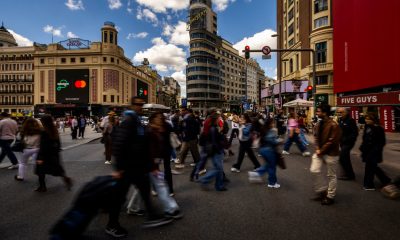
Tourism is one of Spain’s most important economic sectors. Photo credit: Charlesy/Shutterstock

Spain continues to reap the benefits of its popularity among British holidaymakers. New tourism figures reveal that visitors from the United Kingdom spent an estimated €24 billion across the country in 2025, making Britain’s most valuable international tourism market and highlighting the crucial role tourism plays in the national economy. The figure is based on official Spanish tourism data showing that UK visitors accounted for around 17 per cent of all international tourist spending in Spain.

According to Spain’s Ministry of Industry and Tourism, foreign visitors spent a record €134.7 billion in the country during 2025, meaning British travellers contributed close to one euro in every six spent by international tourists. The UK also remained Spain’s largest source of visitors. Around 19 million British tourists travelled to Spain during 2025, ahead of all other international markets. The spending figures highlight the continued importance of British holidaymakers to Spain’s tourism industry despite the UK’s departure from the European Union and increasing competition from other Mediterranean destinations.

Record tourism revenues for Spain

Spain’s tourism sector continued its strong post-pandemic growth throughout 2025, with both visitor numbers and spending reaching historic highs. According to government data, international tourist expenditure rose to €134.7 billion during the year, representing one of the highest totals ever recorded by the country.

British tourists were the biggest contributors to that revenue stream. Their estimated €24 billion in spending covered accommodation, restaurants, transport, leisure activities, retail purchases and other tourism-related services across Spain.

The Balearic Islands, Canary Islands, Andalucía, Valencia and Cataluña remained among the most popular destinations for UK visitors, with British tourists forming a substantial share of the visitor economy in many coastal areas. Tourism is one of Spain’s most important economic sectors, contributing significantly to employment and national income. The spending generated by foreign visitors supports hotels, bars, restaurants, airlines, tour operators, entertainment venues and thousands of small businesses.

How Britain compares with other European markets

Although Spain attracts visitors from across Europe and beyond, the UK remains comfortably ahead of other source markets when measured by spending.

Germany traditionally ranks among Spain’s most important tourism markets and continues to provide millions of visitors each year. German tourists are particularly important for destinations such as the Balearic Islands and Canary Islands. However, German visitor spending remains below that of British travellers due to lower overall visitor numbers and expenditure levels.

France also remains a major source market, benefiting from its geographical proximity to Spain and strong cross-border travel links. French tourists contribute substantial spending, particularly in northern regions and major cities, but again fall behind the UK in overall expenditure.

The Netherlands is another valuable market for Spain. Dutch visitors consistently rank among the country’s most frequent international travellers and contribute significantly to tourism revenues, particularly in coastal destinations and the islands. However, the Netherlands has a much smaller population than either the UK or Germany, limiting its overall contribution compared with Europe’s largest tourism markets.

While German, French and Dutch tourists remain crucial to Spain’s visitor economy, none currently match the scale of the British market in either visitor numbers or total spending.

Why British tourists spend so much in Spain

Several factors help explain the UK’s dominant position. Spain remains one of the most accessible overseas destinations for British travellers, with extensive flight connections linking airports across both countries throughout the year. The country’s climate, beaches, cultural attractions and established tourism infrastructure continue to attract repeat visitors. Many British tourists also stay for longer periods than visitors from some neighbouring countries, increasing overall expenditure.

In addition, Spain has a large community of British residents and second-home owners. Friends and relatives visiting these communities contribute further spending through accommodation, hospitality, transport and leisure activities. The strength of the British market has also been supported by year-round travel patterns. While summer remains the busiest season, winter tourism to destinations such as the Canary Islands generates significant additional revenue.

What €24 billion means for Spain

The scale of British spending represents a major economic benefit for Spain. An estimated €24 billion in tourism expenditure supports employment across multiple sectors, including hospitality, transport, retail, construction and leisure services. The revenue also generates tax income for national, regional and local administrations.

In many coastal municipalities, British tourism forms a substantial part of the local economy. Hotels, restaurants, bars, excursion companies, car rental businesses and shops often depend heavily on international visitors, particularly during peak holiday periods.

The spending also helps offset economic challenges in other sectors. Tourism remains one of Spain’s largest sources of foreign income, bringing billions of euros into the country each year from overseas visitors. Strong tourism revenues can contribute to economic growth, support business investment and help sustain employment in regions where tourism is a primary industry.

Spain’s tourism outlook remains strong

The latest figures suggest Spain remains one of the world’s most popular tourist destinations, with demand continuing to grow despite economic uncertainty across Europe. Government tourism data indicates that international visitors are not only travelling to Spain in greater numbers but are also spending more during their stays.

For Spain, the continued strength of the British market remains particularly important. With around 19 million visitors and an estimated €24 billion in spending during 2025, UK tourists continue to play a central role in the success of the country’s tourism industry. As Spain looks to maintain record tourism revenues, the contribution made by British holidaymakers is likely to remain one of the most significant drivers of the sector and a key source of income for businesses and communities across the country.

Continue Reading
Advertisement
Advertisement

Spanish Real Estate Agents

Tags

Trending

Copyright © 2017 Spanish Property & News