Connect with us

France

Spain Builds New High-Speed Lisbon-Madrid Train Route After France Shuns Plans To Expand Line To Paris


Published

on

spain-builds-new-high-speed-lisbon-madrid-train-route-after-france-shuns-plans-to-expand-line-to-paris

climate change

Jellyfish strike France’s biggest nuclear plant again and shut down three reactors

Published

on

By

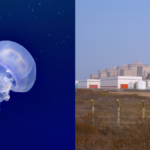
A swarm of jellyfish shut down reactors at Gravelines, the largest nuclear power plant in Western Europe, for the second August running.
Credit: CVancoillie / Igor Karpenko 64 / Shutterstock

A swarm of jellyfish has knocked out three reactors at Europe’s largest nuclear plant, and the strangest part is not that it happened but that it happened almost exactly a year to the day after the last time it did.

Three reactors down, one still running at full power

On Monday August 10, operator EDF said swarms of jellyfish had clogged the seawater filters that cool Gravelines, the plant near Dunkirk that draws its water from a canal linked to the North Sea. Three of the six 900-megawatt reactors shut down automatically, a fourth had its output halved, and a sixth was already offline for scheduled maintenance. Only one reactor kept running at full capacity.

“This situation has no impact on the safety of the facilities, the safety of personnel, or the environment,” EDF said in a statement. The company added that jellyfish have little ability to swim against a current, which is why so many were carried straight into the cooling system. 

The same plant, almost the same date, two years running

This is not the first time Gravelines has been beaten by jellyfish. Almost exactly a year earlier, on August 10 2025, a swarm forced every reactor at the plant offline, taking engineers more than a week to fully reconnect the site to the grid, according to French newspaper Le Monde.

EDF spent hundreds of thousands of euros after that shutdown on preventive measures, including boats that trawl the water around the plant around the clock and thermal cameras to track incoming blooms. This time, reports suggest the swarm grew too fast for those defences to keep up. 

Why jellyfish keep finding their way into a nuclear plant

Gravelines draws its cooling water from a canal connected to the North Sea, where jellyfish are a normal presence in summer. Warmer sea temperatures extend their breeding season and speed up the growth of jellyfish polyps, the dormant, bottom-dwelling stage that can suddenly bud into a swarm.

Marine biologists also point to overfishing, which has stripped the sea of natural predators including tuna and turtles, and to plastic pollution, both of which tip marine ecosystems further in jellyfish’s favour.

France’s nuclear fleet is already stretched by the heat

The Gravelines shutdown wiped out about 3.2 gigawatts of capacity at the height of a summer heatwave. It came a day after France recorded a nuclear shortfall of 15.6 per cent, the largest ever calculated from EDF’s own data, as other reactors were throttled back because nearby rivers ran too warm to safely cool them.

France normally exports more electricity than it imports, drawing more than 70 per cent of its own supply from nuclear power. This summer, extreme heat has repeatedly pushed the country the other way, forcing it to lean more heavily on gas and imported power to make up the shortfall. 

Gravelines is not the only plant jellyfish seem to have it in for

Jellyfish have disrupted nuclear cooling systems elsewhere before, including a three-day shutdown at Sweden’s Oskarshamn plant in 2013 and two separate incidents at Scotland’s Torness plant, in 2011 and 2021. Energy analysts increasingly regard the blooms as a recurring, underappreciated risk for coastal power stations as seas continue to warm.

EDF has not said how long it will take to bring Gravelines back to full output. Last year’s clean-up offers a clue though: the plant needed more than a week before every reactor was reconnected to the grid.

Continue Reading

%

Jellyfish Strike France’s Biggest Nuclear Plant Again And Shut Down Three Reactors

Published

on

jellyfish-strike-france’s-biggest-nuclear-plant-again-and-shut-down-three-reactors

A swarm of jellyfish shut down reactors at Gravelines, the largest nuclear power plant in Western Europe, for the second August running. Credit: CVancoillie / Igor Karpenko 64 / Shutterstock

A swarm of jellyfish has knocked out three reactors at Europe’s largest nuclear plant, and the strangest part is not that it happened but that it happened almost exactly a year to the day after the last time it did.

Three reactors down, one still running at full power

On Monday August 10, operator EDF said swarms of jellyfish had clogged the seawater filters that cool Gravelines, the plant near Dunkirk that draws its water from a canal linked to the North Sea. Three of the six 900-megawatt reactors shut down automatically, a fourth had its output halved, and a sixth was already offline for scheduled maintenance. Only one reactor kept running at full capacity.

“This situation has no impact on the safety of the facilities, the safety of personnel, or the environment,” EDF said in a statement. The company added that jellyfish have little ability to swim against a current, which is why so many were carried straight into the cooling system. 

The same plant, almost the same date, two years running

This is not the first time Gravelines has been beaten by jellyfish. Almost exactly a year earlier, on August 10 2025, a swarm forced every reactor at the plant offline, taking engineers more than a week to fully reconnect the site to the grid, according to French newspaper Le Monde.

EDF spent hundreds of thousands of euros after that shutdown on preventive measures, including boats that trawl the water around the plant around the clock and thermal cameras to track incoming blooms. This time, reports suggest the swarm grew too fast for those defences to keep up. 

Why jellyfish keep finding their way into a nuclear plant

Gravelines draws its cooling water from a canal connected to the North Sea, where jellyfish are a normal presence in summer. Warmer sea temperatures extend their breeding season and speed up the growth of jellyfish polyps, the dormant, bottom-dwelling stage that can suddenly bud into a swarm.

Marine biologists also point to overfishing, which has stripped the sea of natural predators including tuna and turtles, and to plastic pollution, both of which tip marine ecosystems further in jellyfish’s favour.

France’s nuclear fleet is already stretched by the heat

The Gravelines shutdown wiped out about 3.2 gigawatts of capacity at the height of a summer heatwave. It came a day after France recorded a nuclear shortfall of 15.6 per cent, the largest ever calculated from EDF’s own data, as other reactors were throttled back because nearby rivers ran too warm to safely cool them.

France normally exports more electricity than it imports, drawing more than 70 per cent of its own supply from nuclear power. This summer, extreme heat has repeatedly pushed the country the other way, forcing it to lean more heavily on gas and imported power to make up the shortfall. 

Gravelines is not the only plant jellyfish seem to have it in for

Jellyfish have disrupted nuclear cooling systems elsewhere before, including a three-day shutdown at Sweden’s Oskarshamn plant in 2013 and two separate incidents at Scotland’s Torness plant, in 2011 and 2021. Energy analysts increasingly regard the blooms as a recurring, underappreciated risk for coastal power stations as seas continue to warm.

EDF has not said how long it will take to bring Gravelines back to full output. Last year’s clean-up offers a clue though: the plant needed more than a week before every reactor was reconnected to the grid.

Continue Reading

%

What Revolut’s New French Licence Changes For Account Holders In Spain

Published

on

what-revolut’s-new-french-licence-changes-for-account-holders-in-spain

Revolut has been granted a full banking licence in France. Credit: Ascannio / Shutterstock

More than six million people in Spain now bank with Revolut, yet not one of their euros is protected by the Spanish deposit fund. A licence granted in Paris on Monday August 10 could change which country stands behind that money.

The €100,000 guarantee that comes from Lithuania 

Revolut has served Spanish customers since 2023 through Revolut Bank UAB, Sucursal en España. Their branch registration brought Spanish IBANs, direct debits for utility bills and Social Security, and access to Bizum.  What it didn’t bring was a Spanish guarantee. Revolut’s own deposit insurance information for Spain states that money held with Revolut Bank UAB is insured by the Lithuanian public institution Deposit and Investment Insurance, up to €100,000 for a single depositor.

That is the same figure the Spanish deposit guarantee fund covers, although the difference is whose fund would pay out, and which country’s process a saver in Almería or Málaga would have to follow to get the money back. 

France goes first while Spain is kept waiting

Revolut Bank S.A. received its full licence on Monday August 10 after a joint assessment by the French prudential regulator (ACPR), and the European Central Bank, with the decision adopted by the ECB Governing Council. The company said the new entity will “progressively begin serving customers across Europe, starting with France, with other European markets including Germany, Ireland, Italy, Portugal and Spain to follow in subsequent phases”.

No timetable has been published for any market beyond France. The Lithuanian entity remains, in Revolut’s words, a cornerstone of operations, and both banks are supervised by the ECB in what the company calls a dual-hub model. 

For customers in France, eligible deposits will come under the Fonds de garantie des dépôts et de résolution (FGDR), the French scheme, as accounts transfer across. If Spain follows the same route, Spanish balances would shift from Lithuanian cover to French cover. 

Mortgages are the prize Revolut wants in Spain

Revolut closed 2025 with 6.3 million customers in Spain, its third-largest market, and has said it wants eight million by the end of this year. It began installing its own cash machines in Madrid and Barcelona last year and plans 200 across Spain during 2026.

The obvious gap is lending. Revolut has said it intends to launch mortgages in Spain, the product that generates much of the profit at Santander, BBVA and CaixaBank, using the fully digital model it already runs in Lithuania. 

A full licence in a large euro-area market gives the group firmer regulatory footing to widen lending and savings products across the region. In France that includes the Livret A and other tax-free regulated savings accounts. Spain has no direct equivalent, so the practical benefit there is more likely to arrive as credit.

The ECB curbed Revolut’s product launches only last year

Any Spanish rollout depends on supervisors. In July 2025 the ECB told Revolut’s European board that its Lithuanian bank could not launch new products across the European Economic Area until it addressed deficiencies in governance, risk, compliance and legal controls, according to details first reported by the Financial Times in June 2026.

The regulator ordered an independent review of the product approval framework and required the board to assess the capital and liquidity impact of new launches. Revolut said it had strengthened its internal controls and was in “continuous and constructive dialogue” with its regulators.

The Bank of Lithuania separately fined Revolut Bank €3.5 million in April 2025 over shortcomings in monitoring transactions and business relationships. It said it found no confirmed cases of money laundering.

What account holders in Spain should watch for

Nothing changes for a Spanish account today. Balances, IBANs and card details stay as they are, and Revolut has said existing customers will be told directly about any changes. The signal to watch is the deposit information inside the app and in the terms sent by email. When the entity holding the money changes from Revolut Bank UAB to Revolut Bank S.A., the guarantee moves with it, and so does the office a saver would need to contact if anything went wrong.

Continue Reading
Advertisement
Advertisement

Spanish Real Estate Agents

Tags

Trending

Copyright © 2017 Spanish Property & News