Connect with us

%

Lorca Residents Warned Of Loud Sonic Booms In June

Published

on

lorca-residents-warned-of-loud-sonic-booms-in-june

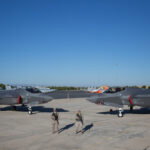
Military drills over Lorca to cause loud sonic booms. Photo Credit: Tactical Leadership Programme

The Lorca Town Hall has alerted the residents of the Murcia municipality that they can expect loud sonic booms until mid-June, as military aircraft carry out a series of training exercises over the area. The drills are being carried out by the Spanish Air and Space Force, and form part of the Tactical Leadership Programme, an advanced international training course that prepares pilots for complex missions.

Loud ‘explosion’-like sounds in the Lorca area until mid-June

These drills are being done at the Albacete Air Base and will be in effect until Friday, June 19. The training flights will take place between approximately 3:30pm and 5:30pm on weekdays, with no training scheduled for the weekends.

During the series of exercises, residents of the Lorca area can expect to hear sonic booms, even at ground level. They are described as sudden, short-lived, loud noises, and may be powerful enough to rattle doors or windows, or cause a brief vibration in the air. These loud and sudden sounds are produced when aircraft exceed the speed of sound. 

Both the volume and the sound of sonic booms are often mistaken for explosions or even earthquakes, but residents may rest assured that the cause of the sounds is standard aircraft drills. Authorities have issued this warning in order to prevent unnecessary alarm among Lorca residents.

Residents in Lorca and surrounding areas may also notice increased military movement throughout June, including deployment of support military vehicles.

The Albacete Air Base, an important structure for the whole of Spain

The Albacete Air Base, also known as Los Llanos Air Base, is an international air base of the Spanish Air Force and Space Force located 4 kilometres south of Albacete. It is one of the most important air installations in Spain.

While residents may be startled and alarmed by the unexpected sounds of the sonic booms, the loud sounds serve as a simple reminder that the military pilots are training, honing their skills, and strictly following the carefully-managed routine.

%

Spain Has 15 Million Pets — But Hundreds Of Thousands Are Still Being Abandoned Each Year

Published

on

spain-has-15-million-pets-—-but-hundreds-of-thousands-are-still-being-abandoned-each-year

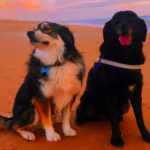
Dogs remain the most common domestic animal representing just over half of all pets. Photo credit: Molly Grace

According to new data published by the Ministry of Social Rights, Consumer Affairs and Agenda 2030, Spain has confirmed that more than 15 million domestic animals are currently living in households across the country. The figures form part of the first official national statistics on animal protection and provide the most detailed picture yet of pet ownership trends in Spain.

The data show that there are approximately 7.56 million dogs and 5.62 million cats registered nationwide. Together, they account for around 87% of all domestic animals. The remaining proportion includes rabbits, birds, reptiles and other small species, which collectively total just under two million animals.

The ministry report indicates that Spain’s pet population has increased by around 14% since 2021. It also highlights significant regional differences in distribution, with Andalucía recording the highest number of animals, followed by Cataluña, Madrid and the Valencian Community.

High pet ownership contrasts with abandonment figures

Alongside the growth in pet ownership, Spain continues to face a high level of animal abandonment. According to estimates from animal welfare organisations and the Fundación Affinity, around 292,000 dogs and cats were taken into shelters or collected by rescue services in 2024. This equates to roughly 800 animals per day, or around 33 every hour.

The figures are widely used as an indicator of abandonment and stray intake across the country. While not every animal collected has been deliberately abandoned, the data are considered one of the most consistent measures of pressure on shelters and rescue organisations.

Reports suggest that the number has remained broadly stable over recent years, but at a level that charities continue to describe as high. Seasonal peaks are also observed during the summer months, when travel and housing changes can increase the likelihood of animals being left behind or surrendered.

Spain compared with other EU countries on animal welfare

Despite the scale of pet ownership and a growing legal framework on animal protection, Spain is frequently cited by animal welfare organisations as one of the countries in the European Union facing persistent challenges in reducing abandonment rates. Animal protection groups have pointed to factors including regional variation in enforcement, limited public shelter capacity, and high reliance on private rescue organisations. However, comparative EU-wide statistics on abandonment are not standardised, making direct rankings complex.

Spain has introduced a national Animal Welfare Law, which came into force in 2023, aimed at strengthening identification requirements, improving breeding controls and increasing penalties for neglect. The legislation also introduced stricter obligations for pet owners, including mandatory identification and rules around care and supervision. Even so, welfare organisations argue that implementation varies between regions and that enforcement remains uneven, particularly in rural areas and in relation to stray animal management.

Abandonment patterns and seasonal pressure

Data from shelter organisations suggest that abandonment levels remain relatively consistent throughout the year, but increase during specific periods. Summer is traditionally the most pressured season for rescue centres, particularly in coastal and tourist-heavy regions.

Dawn, who runs a rescue shelter in Cádiz tells EWN about her first hand experience running a shelter and how the summer period places significant strain on facilities like hers.

“We dread every summer season, we have dogs pouring in at such a rate that we cannot house them all, we receive little help from the government and most of the expenses comes out of our own pockets,” she said. She adds, “I know most people get tired of hearing it, but please foster or adopt instead of buying.”

Estimates from welfare groups indicate that tens of thousands of animals may be surrendered or abandoned in the months leading up to the summer holiday period. In 2024, more than 290,000 animals were collected nationwide, and early indications from welfare bodies suggest that 2026 is expected to remain broadly in line with those figures if not more, based on historical intake levels.

Regional concentration of pets

The new government statistics also show that pet ownership is not evenly distributed across Spain. Andalucía accounts for the highest concentration of animals, with around 3.3 million registered pets. Cataluña follows with close to two million, while Madrid and the Valencian Community also record high numbers.

Dogs remain the most common domestic animal, representing just over half of all pets, while cats account for just over a third. Smaller exotic animals such as rabbits, ferrets, birds and reptiles make up the remaining share.

Officials say the data will be used to improve planning for animal welfare services and to support future policy development, including local-level coordination on shelter capacity and identification systems.

Ongoing policy debate

The publication of the figures has renewed debate over Spain’s approach to animal welfare. Supporters of recent reforms argue that legal changes represent significant progress in standardising care and reducing neglect. However, critics highlight that high abandonment levels continue to place pressure on shelters and local authorities.

Animal welfare organisations continue to call for stronger enforcement, improved public awareness campaigns and increased funding for rescue services. They also point to the importance of microchipping and owner accountability in reducing the number of animals entering the shelter system.

While Spain’s pet population continues to grow, the challenge remains how to ensure that welfare systems develop at a similar pace.

Continue Reading

%

Cars & Coffee Sotogrande At Trocadero.

Published

on

cars-&-coffee-sotogrande-at-trocadero.

The stunning Sotogrande beach venue will host its first casual community meet for drivers and automotive enthusiasts.

A new meet up for car lovers on the coast

Cars & Coffee Sotogrande is revving its engines to launch its first organiser‑led motoring social on Sunday, June 14. This debut meet will take place at the gorgeous Trocadero Sotogrande, giving car enthusiasts a chilled morning surrounded by impressive vehicles and other car superfans.

The event will run from 11am to 2pm. Organisers are hoping for a wide range of supercars, sports cars and classic vehicles, with additional models all welcomed by the Cars and Coffee team. Designed and advertised to be a laid‑back community meet rather than a formal show, the morning is looking to bring together owners, drivers and fans who all share an appreciation for automotive culture and the lifestyle that surrounds it.

Event entry and venue details

There is no fee to attend or to display a vehicle. Guests are encouraged to support Trocadero Sotogrande, whose hospitality has made the launch possible, by enjoying coffee, drinks or lunch at the venue during or after the meet.

Parking and display vehicle information

Spaces for display vehicles are limited, with entry operating on a first‑come, first‑served basis. Early arrival is recommended. Visitors attending without a display vehicle are asked to use the nearby parking along the main road outside the venue.

Building a respectful motoring community

As this is the first official Cars & Coffee Sotogrande event, the team hopes to start off on the right note by creating a welcoming and respectful gathering that can hopefully grow into a regular monthly meet. Attendees are asked to respect the venue, staff, guests and nearby residents throughout the day.

If you are a super, classic or sports car owner, or just have an interested in the motoring world then head down for a coffee and surround yourself with people who share your passion.

Cars & Coffee Sotogrande is 11am to 2pm Sunday, June 14 at Trocadero Sotogrande.

Continue Reading

%

Torrox Romeria San Antonio 2026

Published

on

torrox-romeria-san-antonio-2026

Traditional Torrox Romeria celebrations. Credit: Ayuntamiento de Torrox FB

Torrox residents are currently looking forward to the Romeria de San Antonio from June 12 to 14 packed with cultural, musical, equestrian and religious activities that celebrate local traditions.

Community leaders value local involvement

Mayor Oscar Medina values the role of neighbours and associations in making each Romeria edition possible. The town hall is providing logistics and lighting to support what ranks as one of the most special events in Malaga province. Medina is encouraging everyone to join in with activities such as hot chocolate serving, horseback ribbon race, rociera mass, popular paella and equestrian acts. Councillor Salvador Escudero says that this 49th edition, coming one year ahead of the 50th anniversary, makes this a special event everyone will want to be a part of. The festival is organised with neighbours and associations in a rewarding collaboration. Council is also praising the work to keep the romeria essence and is focusing on the Saturday family water party to involve more children and families.

Full programme for the Romeria

Friday, June 12 features L&L Academy performance at 9.30pm in San Antonio Square followed by Young Zone opening and guateque party with Miguel Botana. Saturday, June 13 offers family inflatables and water fun from 12am then afternoon hot chocolate by San Roque Women Association children’s show, choir performances by La Biznaga Musical Almedina and Las Nieves, humour by Los Quillos and music from Ascen Nunez and Rubenline.

Sunday, June 14 starts at 10.30am with San Antonio procession to Nuestra Senora de las Nieves neighbourhood for rociera mass at 11am. Bread blessing and popular paella follow the arrival. Afternoon brings ribbon race on horseback, dance acts, awards for floats and pilgrims and saint return to church. Mecamela performs at 9.30pm with firework display at 11pm. Contests for floats, pilgrims and ribbon race offer prizes up to €450 for top floats and trophies for other categories.

Continue Reading
Advertisement
Advertisement

Spanish Real Estate Agents

Tags

Trending

Copyright © 2017 Spanish Property & News