Connect with us

%

Luxury And Power For Jaecoo Latest Editions

Published

on

luxury-and-power-for-jaecoo-latest-editions

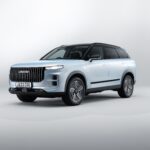
Luxury and the JAECOO 7 SHS-H will be available to order from May. Credit: JAECOO

Having made an impressive start to its first year of sales since launch Chinese car maker JAECOO has announced two new variations to its best-selling JAECOO 7 line-up: a new black edition and the brand’s first full-hybrid model, the JAECOO 7 SHS-H.

The new JAECOO 7 SHS-P Black Luxury introduces a visual upgrade to the plug-in hybrid SHS model, priced from €42,177/£36,500 and available exclusively in top-of-the-range Luxury specification. It features a blacked-out design treatment, including a black front grille, black logo suite across the vehicle, and a black “Luxury” C-pillar badge. Further full black detailing includes black mirrors, roof, wheels and roof rails, as well as interior elements such as a black headliner and sun visors.

Alongside the Black Luxury edition, the new JAECOO 7 SHS-H introduces a full-hybrid variant for the first time, offering a convenient route into electrified driving without the need to plug in. It is available in two trim levels – Pure and Deluxe – with prices starting from €33,736/£29,195 and €37,895/£32,795 respectively. Pure grade comes with tweed cloth upholstery, a 33cm/13-inch infotainment screen, wireless Apple CarPlay® and Android Auto, refrigerated centre-console, dual-zone climate control, and a 6-speaker sound system, plus front and rear parking sensors as standard. The Deluxe model builds on this, adding eco-leather upholstery, an 8-speaker sound system and a 35cm/14-inch infotainment screen, among other upgrades.

Power comes from a 1.5-litre turbo petrol engine paired with a self-charging hybrid system, delivering 224 PS, a 0-100kph/62 mph time of 8.3 seconds and a top speed of 180km/112 mph. As a powertrain dedicated to hybrid use, the 1.5-litre unit offers an extra-urban fuel economy of 4.43 litres per100km/53 mpg.

These new variants arrive as JAECOO in the UK builds on the momentum of an impressive debut year. With more than 35,000 new vehicle registrations here in the UK since launch and a rapidly expanding dealer network, electrification has played a central role in that growth.

All JAECOO 7 variants – including these two new additions – are supported by the brand’s 7-year/160,000km/100,000-mile warranty, with one year of complimentary RAC breakdown cover included as standard. The all-new JAECOO 7 SHS-P Black Luxury and the JAECOO 7 SHS-H will be available to order from May 2026.

%

OECD Warns Spain For Taxing Workers Too Much

Published

on

oecd-warns-spain-for-taxing-workers-too-much

Hard workers in Spain are facing a shrinking disposable income as the national tax burden continues to climb well above international averages. Recent data released by the OECD in the “Taxing Wages 2026” report confirms that a single worker without children now loses 41.4 per cent of their gross earnings to the government and social security.

The figures show Spain’s “tax wedge” (the difference between what an employer pays and what a worker actually receives) has reached its tenth highest level across the 38 nations of the Organisation for Economic Co-operation and Development (OECD). Spanish tax pressure grew by 0.31 percentage points over the last year, a rate more than double the OECD average increase of 0.15.

Salary increases failing to match Tax growth

Workers experienced a real-term loss in purchasing power throughout 2025 because tax hikes overtook wage growth. Average salaries rose by 1.2 per cent, while personal income tax jumped by 1.5 per cent, resulting in a 0.3 per cent drop in what people could actually afford to buy. Spain remains one of only seven OECD countries where this specific imbalance led to a direct reduction in household wealth.

Most of this growth came from personal income tax, which rose by 0.25 percentage points in Spain despite falling slightly across the rest of the developed world. This trend suggests that even when employees receive a pay rise, the state claims a larger portion of the increase, leaving families with less money for daily essentials. The pay rise essentially goes to more tax, potentially eliminating the impetus to work harder.

Spain’s burden of high social security costs

Business owners also face heavy pressure, with employer social security contributions accounting for a massive 23.4 per cent of total labour costs. This figure dwarfs the OECD average of 13.5 per cent and creates a major barrier for companies looking to hire new staff. Higher business costs make Spain a more expensive place to operate compared to many neighbouring economies.

Personal income tax (IRPF) accounts for another 13.1 per cent of the gross salary, while employee social security contributions add a further 5 per cent to the total deduction. While the average developed nation requires a 13.5 per cent contribution from employers, Spain demands nearly double that amount, making it almost impossible for small businesses to expand their teams.

Failure to adjust for inflation costs workers

Financial experts at the General Council of Economists point to a lack of inflation indexing as a primary cause for these rising costs. Tax brackets have stayed static even as nominal wages increased, meaning many low-to-middle-income earners are pushed into higher tax bands without experiencing a genuine improvement in their lifestyle.

Many warn that this “fiscal drag” effectively erases the benefits of hard-won pay rises before the money ever reaches a bank account. In some cases, a pay increase can almost entirely disappear once tax benefits and subsidies are reduced or cut off due to the higher gross figure.

The OECD cautioned the Spanish government that such a heavy focus on workers’ taxation discourages job creation. They recommend moving toward alternative revenue sources, such as environmental levies or VAT, to help strengthen employment incentives. Belgium currently leads the world with a massive 52.5 per cent tax wedge, while countries like Colombia and Chile maintain much lower burdens at 0 per cent and 7.5 per cent, respectively.

Continue Reading

%

This Airline Ends Free Hand Luggage

Published

on

this-airline-ends-free-hand-luggage

Passengers may soon pay extra for cabin bags on Brussels Airlines cheapest tickets Credit : www.brusselsairlines.com

Passengers booking the cheapest Brussels Airlines tickets on short and medium haul routes are about to see a major change. Free cabin bags will no longer be included on the lowest fare, meaning many travellers who want to bring a standard hand luggage case will have to pay more.

The move forms part of a wider shake up across the Lufthansa Group and is likely to affect people who have grown used to travelling with a trolley bag included in the cheapest ticket.

For budget conscious passengers, city breakers and expats making regular hops across Europe, it could make headline fares look cheaper while the final cost rises once luggage is added.

What is changing with Brussels Airlines fares

Until now, Brussels Airlines’ cheapest fare, known as Economy Light, included two items: one small personal item and one cabin bag. That meant travellers could normally bring a backpack or laptop bag, plus a small wheeled case that fitted airline cabin dimensions.

Under the new system, a fresh entry level fare called Economy Basic will only include a personal item, such as a handbag, laptop case or small backpack that fits under the seat.

Anyone wanting a larger overhead cabin bag will need to choose a higher fare or pay more.

In simple terms, the cheapest ticket becomes more restrictive. Airlines often present these changes as offering passengers more choice, but for many travellers it will feel like something once included now costs extra.

When the new baggage rules begin

Brussels Airlines says the new fare will be tested from 28 April, for journeys starting on 19 May, on selected routes. The long term aim is to roll it out across the airline’s continental network.

That means more routes across Europe are expected to adopt the new model once the trial period ends. Passengers booking in the coming weeks may want to check carefully which fare type appears during the booking process, especially if they assume cabin baggage is automatically included.

That assumption could become expensive.

Why airlines are doing this

Charging separately for baggage is hardly new in aviation. Low cost carriers have done it for years, and many passengers now compare ticket prices based on the headline fare first, then decide later whether to add luggage, seat selection or priority boarding.

Traditional airline groups have increasingly moved in the same direction. By separating services, airlines can advertise lower starting prices while earning extra revenue from optional add ons.

They also argue that some passengers travel light and should not pay for services they do not use. Brussels Airlines says the new fare gives day trippers and light travellers another low entry option.

That may be true for some. But for anyone carrying a normal cabin case, the total price may end up much closer to existing fares.

Who will notice the change most

Frequent travellers are often the quickest to spot these shifts. Many people travelling for work, short breaks or second home visits rely on cabin luggage to avoid check in queues and baggage reclaim.

For them, hand luggage is not a luxury. It is part of the basic trip. Expats travelling between Belgium, Spain, Italy, Portugal or other European destinations may also feel the impact, especially on regular weekend visits.

Families could notice it too. A cheap fare for several people can look attractive at first glance, but once bags are added the bill can change quickly. That is why comparing the full cost, not just the first price shown, matters more than ever.

Other airlines in the Lufthansa Group are following

This is not only about Brussels Airlines. The same basic fare model is also expected across other Lufthansa Group carriers, including Lufthansa, Swiss, Austrian Airlines, Discover Airlines, Lufthansa City Airlines and Air Dolomiti.

That gives the move wider significance across Europe. Millions of passengers fly with these brands every year, so the new baggage structure could become standard across a large part of the market. If successful, other airlines may study the results closely.

What travellers should check before booking

The key point is simple: read the fare conditions before paying. Look at what is included, the size of the personal item allowed and the cost of adding a cabin bag later.

In many cases, buying the next fare up from the start may work out better value than choosing the cheapest fare then adding extras one by one.

Travellers should also check return journeys carefully, as baggage terms can differ between airlines on connecting routes.

A cheaper ticket, or just a different price tag?

Airlines know customers love seeing a low fare on screen. What happens after that depends on what the passenger actually needs.

For someone travelling with only a laptop bag, the new system may suit perfectly. For everyone else, the cheapest fare may no longer be the cheapest journey.

That is the real change hidden behind the new Brussels Airlines pricing plan.

Continue Reading

%

Nube Floats Into Estepona

Published

on

nube-floats-into-estepona

Estepona is about to get a seriously stylish new addition. Nube, the new venue on Calle Playa del Cristo, is preparing for its soft opening on Friday, May 1, with Russian DJ Fedor Fomin delivering the tunes. 

Sitting perfectly close to Playa del Cristo, one of Estepona’s most popular beautiful stretches of sand, the location alone tells you everything you need to know about the vibe at the new beach club. It joins the long list of bars, restaurants and beach clubs that have popped up over time bringing more and more places to choose from for its ever growing community and visiting tourists. 

Nube paints the perfect picture of lazy lunches and sundowners

Nube has the serene look of all pale blues, cloud motifs and clean lines, it paints the picture in your mind of what to expect. A beach lounge that moves in a relaxed fashion from lazy lunches into sunset cocktails and on into a proper night out. It’s an all-day, all-evening venue that welcomes you in for hours of time to relax and enjoy. 

The restaurant offers fresh seafood and open fire cooking. The beach club with day beds and cocktails, the lounge terrace ideal for sundowners and then the evening comes alive with a night club and premium room for karaoke and private events. 

The soft opening hosts the sounds of Moscow-based DJ Fedor Fomin,whose parties are legendary across the Russian and European nightlife scene. He has been confirmed for the opening night bringing his mix of different musical genres from hip-hop to rock and pop, perfect for the launch of a brand new beach club for the season. If you fancy being first on the list to see the new place in town then head along on May 1. 

Nube is located at C. Playa del Cristo, 1V. For full details see the Nube Estepona website and for bookings call +34 610 133 121

Continue Reading
Advertisement
Advertisement

Spanish Real Estate Agents

Tags

Trending

Copyright © 2017 Spanish Property & News