airport liquids
Malaga Airport to end liquids and electronics removal at security


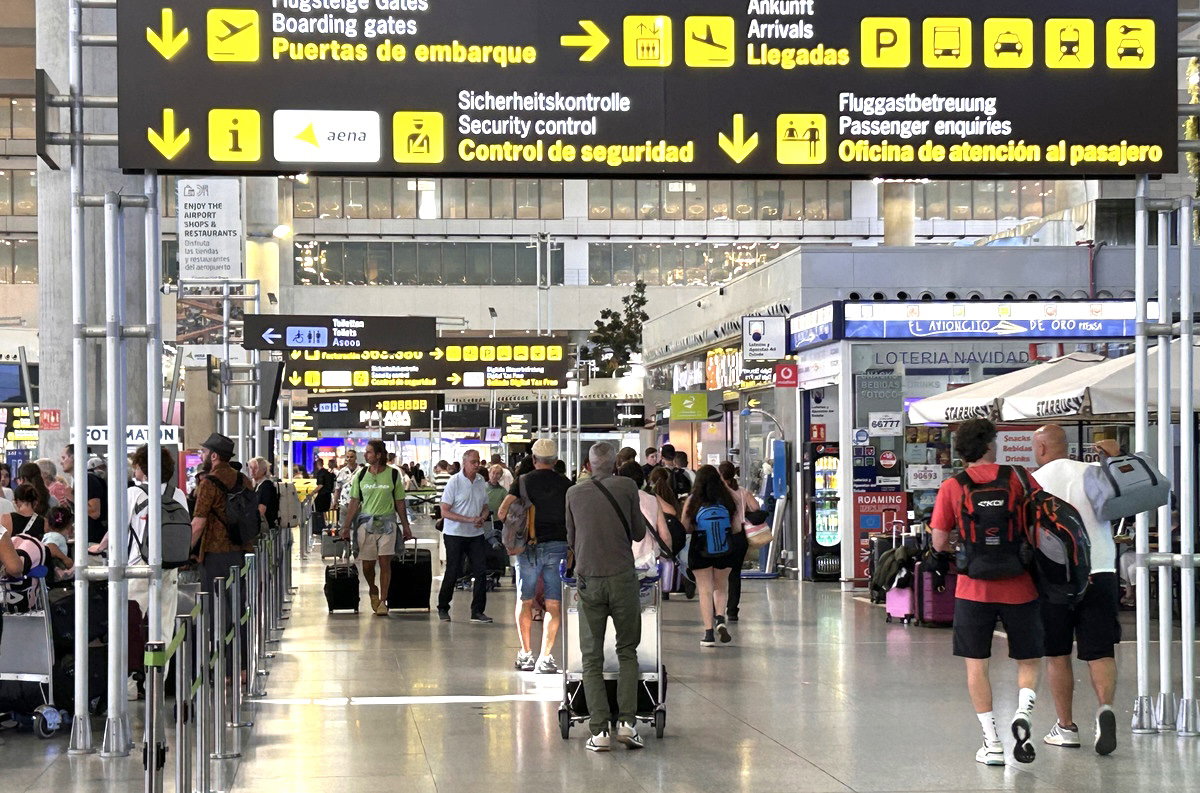
Passengers heading through Malaga Airport will soon enjoy smoother journeys thanks to advanced security scanners that will allow liquids and electronics to stay inside hand luggage.
The change removes a major inconvenience at controls, cutting queue times and letting travellers keep bottled water, toiletries and electronic devices packed away and out of sight.
Malaga Hoy first reported the story on June 27, confirming Malaga Costa del Sol Airport as the next major Spanish facility to install explosive detection systems for cabin baggage. Travellers should start seeing these benefits progressively once installation goes ahead under the new regulatory plan, with meaningful rollout expected in the years after approval. Some lines of security at Malaga Airport are already trialling the technology.
Reorganisation delayed local introduction
Earlier Aena investment schedules had planned for 2025 for this equipment to be installed at Malaga, Costa del Sol. However, European regulatory updates caused a change in priorities, concentrating initial work on Madrid, Barcelona and Palma de Mallorca. Those airports now run the systems successfully.
Malaga Costa del Sol missed that first phase due to necessary building preparations and infrastructure needs. Aena has said that many sites require civil engineering work before fitting the new scanners and automated lines.
Security upgrades feature in the next regulatory period
Discussions continue on the next regulatory document for Spanish airports covering 2027 to 2031. Approval is hoped for before September 30, 2026. The proposal includes security upgrades at Malaga Costa del Sol plus Alicante Elche Miguel Hernandez, Tenerife Sur, Valencia, Ibiza, Lanzarote Cesar Manrique, Tenerife Norte Ciudad de La Laguna, Bilbao and Menorca.
Automated features improve passenger flow
Aena plans automated tray return systems together with the detection equipment. These setups identify potential issues more efficiently and minimise passenger handling of trays. Remote inspection options let staff review items from separate rooms, speeding up even more the process.
Such improvements will ease congestion, especially during busy summer months when Malaga manages large numbers of international arrivals. Families, business travellers and holidaymakers gain from reduced unpacking and repacking.
Background to current rules
Security requirements to remove liquids arose after authorities in Britain uncovered a 2006 plot involving liquid explosives hidden in soft drink bottles for transatlantic flights. The plot ended before reaching airports but triggered worldwide limits on cabin liquids.
Richard Reid, known as the shoe bomber, carried out a separate attempt in 2001 with devices in his footwear on a Paris to Miami flight. Crew and passengers stopped him. The incident introduced broader shoe screening even though it involved solid materials.
Umar Farouk Abdulmutallab, the underwear bomber, tried another approach in 2009 on a US-bound flight from Amsterdam, leading to a small fire but no detonation. That event increased attention on hidden threats and ushered in full-body scanner use elsewhere. Spain has avoided routine full-body scanners for passengers at its airports.
Benefits set to arrive for local users
This plan will help Malaga Costa del Sol come up to speed with updated European standards while offering real advantages to millions of yearly passengers. Travellers will pass through controls faster and retain personal items without extra purchases after screening.
Full approval next year and integration with new terminal works will mean the changes will be seen at all security points from the late 2020s. Passengers can look forward to keeping water, perfumes and laptops inside bags as the new systems come online.