Connect with us

%

Málaga Airport Tops 10 Million As British Travellers Face A Busier Costa Del Sol Summer

Published

on

malaga-airport-tops-10-million-as-british-travellers-face-a-busier-costa-del-sol-summer

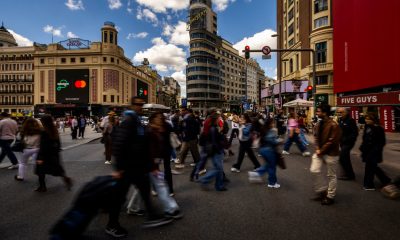
The Costa del Sol is already feeling the pressure of an early summer surge. Credit: Roberto Sorin / Shutterstock

Málaga-Costa del Sol Airport has already handled more than 10.4 million passengers this year, with British travellers leading the international market in May. The figures show UK demand for the Costa del Sol is running high before the busiest summer weeks have even begun.

How British passengers are still sustaining Málaga’s biggest international market

British travellers are once again leading the international rush through Málaga-Costa del Sol Airport, after the airport passed 10 million passengers before the main summer peak.

Spanish airport operator Aena said 10,455,108 passengers used the airport between January and May 2026, a rise of 7.1 per cent compared with the same period last year.

In May alone, the airport handled 2,748,494 passengers, up 6.3 per cent year-on-year. International travel made up the bulk of the movement, with 2,335,207 passengers flying on routes outside Spain.

The United Kingdom remained Málaga’s strongest international market in May, with 659,628 passengers. Germany followed with 213,641, ahead of the Netherlands, France and Italy.

These figures show summer demand is already running hot.

Why the Costa del Sol keeps pulling UK travellers

Málaga Airport is more than a holiday gateway. For many British readers, it is the main connection between home, family, work and life in southern Spain.

The airport serves the Costa del Sol, but also acts as a practical entry point for people heading to inland Andalucía, Gibraltar-border areas, second homes, golf resorts, coastal towns and family visits across Málaga province and beyond.

That makes the strength of the UK market especially significant. The passenger figures are not just about tourism numbers. They reflect how deeply UK-Spain travel is built into everyday life for many foreign residents and regular visitors.

The early-year growth also suggests that demand is spreading beyond the traditional July and August peak. May, for a few years now, has no longer been a mere shoulder-season month for quieter trips. For Málaga Airport, it is now part of a longer and busier travel season.

How the high demand could affect flights, car hire and accommodation

The practical impact for travellers may be felt before even reaching the airport.

When demand rises early, flights on popular UK-Málaga routes can become more competitive, especially around school holidays, weekends and bank-holiday travel periods. Families trying to coordinate visits may find that convenient flight times disappear first.

Car hire, private transfers and accommodation can also feel the pressure when passenger numbers rise ahead of peak summer. The issue is not only whether people can still travel, but whether they can do so at the time, price and comfort level they expected.

For British visitors planning trips to the Costa del Sol this summer, the figures are a reminder not to treat Málaga as a last-minute destination during peak weeks. Flights, hire cars and family-friendly accommodation are likely to be more sensitive to demand as July and August approach.

For residents expecting relatives from the UK, it may also mean planning airport collections, parking and onward transport more carefully, particularly on days with several UK arrivals close together.

Airport growth is becoming part of daily life on the Costa del Sol

The scale of flights that the airport is now handling on a regular basis matters for people living near the airport, commuting around Málaga, or depending on the wider travel network that connects the terminal with resorts and residential areas.

More passengers means more customers supporting local businesses, hotels, restaurants, taxis, car-hire firms and tourism jobs. But it can also make the Costa del Sol feel much busier earlier in the year, particularly in the areas already dealing with pressure on roads, housing, beaches and public services.

For many residents, the airport’s success is double-edged. It brings income, jobs and year-round connectivity, but it is also changing the feel of the Costa del Sol calendar. Months such as April, May and September, once seen as quieter periods with warm days and beach weather, are starting to feel more like an extension of peak season.

July and August will show how far UK demand can stretch

Málaga Airport is entering the busiest part of the year with record-level momentum already behind it.

Aena’s latest figures do not prove that every summer month will break records, but they do show that the UK remains the airport’s dominant foreign market and that international traffic is already carrying most of the growth.

For British travellers, the practical advice is to book key parts of summer trips early, compare flight times before prices rise, reserve hire cars and transfers in advance where needed, and allow extra flexibility when collecting family or friends from the airport.

Málaga’s summer season has not fully peaked yet, but the British rush has definitely already begun.

%

Benalmadena Cable Car Stages Nighttime Rescue Drill With Provincial Firefighters And Drones

Published

on

benalmadena-cable-car-stages-nighttime-rescue-drill-with-provincial-firefighters-and-drones

Crews run drill in the dead of night. Credit: Ayuntamiento de Benalmadena FB

Benalmadena organised its annual emergency exercise at the cable car last week, raising the level of challenge by involving firefighters from several towns across the province. But, this time, they decided to make the test even more difficult than previous years – by carrying it out in the pitch-black darkness of night.

Multiple services join forces in complex scenario

Firefighters were brought in from Benalmadena, Mijas, Fuengirola, Marbella and Malaga capital, and the provincial consortium worked together with national police, local officers, civil protection teams, Red Cross staff and the cable car’s own technicians.

Organisers recreated an incident that required the evacuation and rescue of around thirty people from cabins stranded on the line. The cable car is usually closed by nightfall, but on this occasion, they might have been thnking about the astronomy nights run during the summer or even the predicted eclipse in August of this year.

Fire crews carried out procedures for rescue work, operational coordination, victim care and resource management inside the distinctive cable car environment.

The activity allowed crews to assess joint response capacity during a demanding situation and to improve communication and other links between the different bodies involved.

Mayor observes drill with fire and police chiefs

Juan Antonio Lara, mayor of Benalmadena, attended the exercise accompanied by fire service heads of Malaga’s provincial fire brigade and the local police.

Both chiefs followed the work of the various teams at close range throughout the operation.

Drones with thermal cameras support night operations

Local police deployed their new drone unit during the evening phase of the drill. The little aircraft carried night vision equipment and thermal imaging cameras, enabling teams to obtain clear views inside the cable car cabins and to detect any passengers who, theoretically, might remain trapped inside.

Officers also used the drones to assist with search tasks, traffic control around the site and general support for the emergency response in low-light conditions.

Regular training builds readiness at popular attraction

The drill forms part of ongoing preparation designed to keep response standards high at one of the Costa del Sol’s well-known tourist sites during the busiest months of the year.

By bringing together a wide range of specialist teams and testing new technology in realistic nighttime settings, organisers noted down practical information on how modern tools can improve location and rescue times.

The exercise confirmed that the collaboration between local and provincial administrations as well as specialised organisations is excellent, supporting further progress in safety and prevention measures for the cable car ride.

Teams completed the full programme without complications and finished earlier than scheduled, providing clear evidence of effective planning and execution.

Continue Reading

%

Europe’s Most Stressful Roads Revealed

Published

on

europe’s-most-stressful-roads-revealed

A motorist drives along a motorway as Europe’s most stressful roads are ranked. Credit : guteksk7, Shutterstock

A new study has ranked the most stressful countries to drive in across Europe, and the results may come as bad news for anyone planning a summer road trip. Poland, the Czech Republic and Romania all feature near the top, while Spain is among the easiest places to get behind the wheel.

For many holidaymakers, hiring a car is one of the best ways to explore Europe. It offers freedom, flexibility and the chance to discover places that trains and planes simply cannot reach. But depending on where you are driving, that freedom can quickly turn into frustration.

A new study by Czechvignette.cz has ranked the most stressful road networks in Europe by analysing factors including traffic congestion, road quality, vehicle density and road safety. The result is a list that highlights where drivers are most likely to face long delays, poor road conditions and higher accident risks.

At the top of the ranking is Poland, which received an overall stress score of 99.43 out of 100.

According to the researchers, the country combines some of Europe’s worst traffic congestion with below average road quality and one of the highest road death rates in the study. The report found that Poland’s infrastructure is struggling to keep pace with the growing number of vehicles using its roads every day.

For drivers arriving from Germany, the difference can apparently be noticeable almost immediately.

Mattijs Wijnmalen, chief executive of Czechvignette.cz, said one section of the A18 motorway near the German border is a good example of the issue. He explained that drivers often notice a sudden change in road surface quality after crossing into Poland, creating a very different driving experience within a matter of kilometres.

Why eastern Europe dominates the list of Europe’s toughest roads

Poland is not alone. The Czech Republic came second with a stress score of 94.92. While the country sits at the heart of Europe and serves as a major transport hub, its roads face heavy pressure from both domestic and international traffic.

Researchers found that congestion levels remain high and road quality scores lag behind many western European countries. The Czech Republic also has one of the highest rates of vehicle ownership in the ranking, with more than 600 registered vehicles for every 1,000 residents.

The study also pointed to factors that are harder to measure in statistics but which drivers experience first hand. These include sudden fog on busy routes, confusing diversions around roadworks and temporary traffic systems that can leave motorists second guessing which lane they should be in.

Romania ranked third overall, followed by Greece and Bulgaria.

What pushed these countries towards the top of the list was not necessarily traffic volume. In fact, some roads are less congested than those found in western Europe. The bigger concern is safety.

All three countries recorded some of the highest road fatality rates in the study.

Romania was singled out as being particularly challenging for inexperienced drivers. Researchers said deteriorating road surfaces, abrupt speed limit changes and strict enforcement can make driving there especially demanding.

In some areas, speed limits can drop sharply within a short distance, requiring drivers to react quickly while also keeping an eye out for cameras and police controls.

Italy scores worse than France, Germany and Spain

Many people might assume Italy would rank among Europe’s easiest places to drive thanks to its extensive motorway network.

The study suggests otherwise. Italy finished sixth overall, largely because of its exceptionally high vehicle density. Researchers found that the sheer number of cars on Italian roads creates a more stressful environment than in countries such as Spain, France, Germany and the United Kingdom.

Busy city traffic, crowded motorways and constant competition for road space all contribute to the country’s higher score.

That finding may resonate with anyone who has tried navigating Rome’s ring road, Milan’s traffic or the busy roads leading to popular coastal destinations during peak holiday season.

Spain ranks among Europe’s least stressful countries to drive in

There was better news for Spain. The country appeared among the five least stressful places to drive in Europe, alongside Sweden, Denmark, Norway and the Netherlands.

Spain’s modern motorway network, generally good road conditions and comparatively lower stress indicators helped it stand out from many other countries included in the research.

For the millions of tourists who drive in Spain every year, that ranking may not come as a huge surprise. Long stretches of well maintained motorways, relatively predictable road layouts and lower congestion levels outside major cities often make journeys less demanding than elsewhere on the continent.

The study also found that some of the most stressful moments for drivers have little to do with overall road quality.

Instead, pressure often peaks during transitions. Crossing into a new country, encountering unfamiliar toll systems or suddenly finding yourself diverted through roadworks can be enough to unsettle even experienced motorists.

Researchers noted that in countries such as Bulgaria and Romania, automated speed enforcement often begins as soon as drivers enter motorways, leaving little room for adjustment.

The rankings were compiled using data from the TomTom Traffic Index, Eurostat, the European Transport Safety Council, the World Economic Forum and World Population Review.

For anyone planning to drive across Europe this summer, the findings suggest that choosing the route may be just as important as choosing the destination.

Continue Reading

%

The Mercadona Shopping Trap That Could Be Making Your Food Bill Higher Without You Realising

Published

on

The observation has attracted widespread attention. Photo credit: Veja/Shutterstock

Mercadona shoppers could be paying more than necessary for everyday groceries if they focus only on products placed directly at eye level, according to economist and financial content creator Gabriel García. The economist has drawn attention to what he describes as a common supermarket merchandising strategy.

He claims that “normally the middle shelves tend to be considerably more expensive” than those positioned higher or lower in the aisle. His comments, made while discussing shopping habits at Mercadona, have attracted widespread attention among consumers looking for ways to reduce household spending.

Economist claims Mercadona shoppers often overlook cheaper alternatives

García argues that many customers naturally focus on products positioned at eye level, where retailers frequently place items they most want shoppers to notice. As a result, consumers may miss cheaper alternatives located elsewhere on the shelf.

According to García, “normally the middle shelves tend to be considerably more expensive”, as retailers often place higher-margin products where they are easiest for shoppers to see and reach.

The observation has attracted widespread attention as food prices remain a concern for many households across Spain, prompting consumers to seek practical ways to reduce spending without significantly changing their shopping habits.

Why eye-level shelves attract shoppers

Retail experts have long recognised that product placement plays a major role in influencing consumer behaviour. Eye-level shelving is considered premium retail space because products displayed there are more likely to be noticed. As a result, manufacturers and retailers often position items they wish to promote most prominently, while lower-priced alternatives may be located on higher or lower shelves.

García explained that shoppers who only scan the middle section of supermarket aisles could be missing less expensive options located elsewhere. Rather than focusing immediately on products placed directly in front of them, he recommends taking a few extra seconds to examine the entire shelving unit before making a decision. The strategy does not guarantee that every cheaper product will be located away from eye level, but it can help consumers compare a wider range of options and potentially identify better value alternatives.

A simple change that could reduce grocery spending

The economist’s advice centres on changing shopping habits rather than eliminating products from a household budget. By comparing products positioned on different shelves, consumers may be able to find similar items at lower prices. This approach can be particularly useful when purchasing staple goods such as pasta, rice, cereals, cleaning products and household essentials, where multiple brands often occupy the same section.

García suggests that many shoppers make decisions quickly, selecting the first product they see rather than reviewing all available alternatives. While the price difference between individual products may appear small, these savings can accumulate over time when applied consistently across a weekly or monthly shop.

The recommendation relates to a wider concern among consumers seeking practical methods of managing household expenditure amid continuing concerns over the cost of living. The advice has resonated with some shoppers online. Ana Holford, who lives in Spain, said the economist’s comments had prompted her to reconsider her shopping habits. “I live in Spain and Mercadona is the only supermarket I use, but I’ve a feeling that’s about to change. Next time you go check the shelves,” she wrote.

Product placement is a well-established retail strategy

The economist’s comments are based on a merchandising practice that has been recognised within the retail industry for many years. Supermarkets carefully organise shelves to maximise visibility and encourage purchasing decisions. Premium brands and products generating higher profit margins are often given the most prominent positions, while cheaper alternatives may occupy less visible locations.

This does not mean that every item at eye level is the most expensive, nor that every lower shelf contains the cheapest option. However, retail specialists generally agree that shelf placement can significantly influence customer behaviour. For this reason, consumer experts frequently advise shoppers to compare unit prices and examine an entire section before making purchases. The same principle applies across many supermarkets and is not unique to Mercadona.

Mercadona remains Spain’s leading supermarket chain

The discussion has generated particular interest because it relates to Mercadona, Spain’s largest supermarket chain and one of the country’s most visited retailers. With thousands of stores across Spain and Portugal, the company serves millions of customers each week and plays a significant role in the country’s grocery market.

As a result, any advice relating to saving money while shopping at Mercadona often attracts considerable public attention.

However, it is important to note that García’s comments reflect his own assessment of retail merchandising practices rather than an official statement from the company. Mercadona has not publicly stated that products placed on middle shelves are more expensive. Instead, García’s remarks refer to a broader supermarket strategy commonly discussed by economists, retail specialists and consumer advisers.

Looking beyond the first product on the shelf

For consumers hoping to reduce grocery costs, García’s advice is straightforward: take a moment to look beyond the products positioned directly in front of you. Checking higher and lower shelves, comparing prices between similar products and reviewing the cost per kilogram or litre can help shoppers make more informed decisions.

While no single tactic will dramatically reduce a household’s food bill, small savings made consistently throughout a supermarket shop can add up over time. The economist’s recommendation serves as a reminder that the way products are displayed can be just as important as the products themselves when it comes to managing spending and finding value in the supermarket aisle.

Continue Reading

Trending

Copyright © 2017 Spanish Property & News