Connect with us

%

Munch And Picasso Together In Artistic First

Published

on

munch-and-picasso-together-in-artistic-first

Picasso and Munch side by side. Credit MPFB

Art enthusiasts can explore more than 100 works by two modern masters at the Costa del Sol museum until February 2027.

Malaga is welcoming an unusual meeting of two artistic giants, with a new exhibition bringing together the work of Norwegian painter Edvard Munch and the city’s own Pablo Picasso in an expressionism extravaganza.

Munch-Picasso opened at the Museo Picasso Malaga on October 30 and runs until February 28, 2027. Around 100 paintings, drawings and prints allow visitors to compare two artists who helped transform modern art. Although the pair never met, their work shares a fascination with human emotion, experimentation and the boundaries of traditional painting.

What makes the exhibition special?

Curated by art historian Paloma Alarcó, the exhibition explores how Munch and Picasso used art to express complex feelings and experiences. Munch is known for works such as The Scream, with its haunting portrayal of anxiety. Picasso, born in Malaga in 1881, became famous for his radical approach to form and perspective, particularly through Cubism.

Rather than suggesting one directly influenced the other, the exhibition presents an imaginary encounter between two artists who challenged convention in their own ways.

Their shared subjects include love, death, loneliness, desire and modern life. Visitors can see how Munch used intense colour and expressive lines, while Picasso experimented with fragmented forms and multiple viewpoints.

A journey through modern art

The exhibition is arranged across two floors of the museum, with themed sections examining the artists’ lives, creative processes and recurring interests.

Sections explore self-portraits, the impact of illness and loss, and the cafes and bohemian settings that shaped their work. The display also examines how both artists transformed the human figure, using distortion and fragmentation to communicate feelings that conventional representation could not easily express.

Organisers say the exhibition offers new perspectives on two of the most important figures in twentieth-century art.

How to visit Munch-Picasso

The Museo Picasso Malaga is housed in the Palacio de Buenavista on Calle San Agustín, in the city’s historic centre. The museum has previously received support to preserve and display Picasso’s work in his home city, as reported in this EWN article about funding for the Picasso Museum.

General admission costs €13 and includes access to the museum’s other current exhibitions. Visitors can check official museum tickets and opening times before travelling. The exhibition has been made possible with the collaboration of the Munch Museum in Oslo and the Fundación Almine y Bernard Ruiz-Picasso.

For readers planning a cultural day out, the show offers a chance to see how two very different artists explored many of the same questions about what it means to be human.

For more background on Malaga’s art scene, EWN has also covered a modernist exhibition at the Carmen Thyssen Museum.

%

Spain Issues Health Alert

Published

on

spain-issues-health-alert

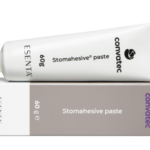
Patients should check their packaging for the specific batch numbers Credit: Convatec

Patients across Spain are being urged to check their medical supplies after health authorities announced the withdrawal of two batches of a skin protection product manufactured by a British company over potential contamination concerns.

The Spanish Agency for Medicines and Medical Devices (AEMPS), which operates under Spain’s Ministry of Health, issued the safety alert on Monday, November 23, after being notified of a potential manufacturing problem by UK-based Convatec Ltd.

The warning concerns Esenta Stomahesive paste, a specialist medical product used by people living with a stoma. The possible presence of foreign material has raised concerns about the product’s effectiveness and the risk of adverse reactions.

Anyone in possession of an affected tube is being advised to stop using it immediately and seek further guidance.

Why has the medical cream been recalled in Spain?

According to the AEMPS, the suspected contamination may have occurred at a third-party manufacturing facility used by Convatec.

Existing quality control procedures at the facility may not have been sufficient to prevent unwanted material from entering the product during manufacturing.

Health authorities have identified several potential complications associated with using the affected paste, including skin irritation, localised inflammation, mild infections, rashes, irritation of mucous membranes and allergic reactions.

However, the recall is precautionary, and the warning does not mean that every affected tube is contaminated or that everyone who has used one will experience complications.

Which batches are affected by Spain’s health alert?

The withdrawal concerns 60-gram tubes of Esenta S/Hesive Paste distributed in Spain through Convatec S.L. and Bidafarma.

Patients should check their packaging for the following batch numbers:

The warning specifically concerns these two batches in Spain, rather than the entire product range.

What is Esenta Stomahesive and who uses it?

Unlike everyday skincare creams, Esenta Stomahesive is specifically designed for patients who have undergone colostomy, ileostomy or urostomy surgery.

These procedures involve surgically creating an opening in the abdomen, known as a stoma, through which bodily waste can leave the body.

The paste helps protect the surrounding skin and fill uneven areas, creating a more suitable surface for fitting ostomy appliances.

For patients who rely on specialist products to manage their condition on a daily basis, identifying affected supplies is particularly important.

What should you do if you have the affected product?

The Spanish health authorities have issued clear instructions for patients who discover they have a tube from either of the affected batches.

They should:

  • Discontinue use immediately.

  • Speak to their pharmacist, healthcare provider, supplier or Convatec representative.

  • Keep the product and its batch details until further instructions are provided.

  • Seek medical advice if they experience any adverse symptoms after using the paste.

British residents receiving ongoing ostomy care in Spain can also contact Convatec’s Spanish customer service department on +34 936 023 737 or email customerserviceiberia@convatec.com.

Spanish pharmacies instructed to remove affected products

The safety notice extends beyond patients, with pharmacies and healthcare facilities instructed to isolate and dispose of affected stock, including tubes that have already been opened.

Distributors must also trace affected shipments and inform customers who have received the recalled products.

Convatec is contacting those involved in the supply chain, alongside healthcare professionals and patients, to communicate the necessary safety measures.

Anyone who experiences an incident involving a medical device in Spain can also report it through the AEMPS’s dedicated NotificaPS reporting portal.

Continue Reading

%

Spain Uncovered Europe’s Biggest Dinosaur

Published

on

spain-uncovered-europe’s-biggest-dinosaur

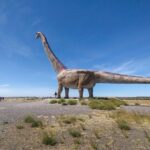
Life-size titanosaur sculpture in Argentina Credit: DFLC – Multmedia Designer / Shutterstock.com

A seven-metre-long dinosaur neck has been pulled from the ground in Catalonia, and scientists believe the prehistoric giant could be bigger than any titanosaur previously recovered in Europe.

Spain could be sitting on a prehistoric discovery of record-breaking proportions after paleontologists recovered the enormous remains of a titanosaur near Isona, in the province of Lleida.

The fossil was extracted from the Molí del Piteu archaeological site in Pallars Jussa, Catalonia, in an operation involving an extraordinary 18-tonne protective block. Inside are the remains of a dinosaur that lived approximately 70 million years ago, including a neck measuring around seven metres long.

Researchers believe the animal could have been larger than Abditosaurus, previously considered the largest titanosaur recovered in Europe. However, they are being cautious about declaring a new record until the bones have been examined properly.

Could this be Europe’s biggest dinosaur?

Titanosaurs were enormous, long-necked, plant-eating dinosaurs that lived during the Cretaceous period. Some species reached extraordinary lengths, making them among the largest land animals ever to walk the Earth.

The newly recovered specimen could surpass Abditosaurus, whose remains were discovered at nearby Orcau in 2014. That dinosaur was estimated to have measured between 15 and 18 metres from head to tail.

Palaeontological preparator Elena Nieto has pointed out that some of the newly recovered dinosaur’s ribs are longer than those of the earlier specimen, giving researchers reason to investigate whether the animal was even larger. The possibility of a new species hasn’t been ruled out.

An 18-tonne operation to bring the giant to light

Recovering the remains was a complicated engineering exercise as well as a scientific achievement. Paleontologists protected the fragile bones with acrylic resin before constructing a heavy casing from iron and polyurethane. Known informally as a ‘mummy’ among fossil specialists, this protective structure allowed the remains to be lifted and transported without exposing the bones to unnecessary damage.

A large excavator was required to turn the enormous block before it could be moved onto a trailer. The extraction operation took approximately four hours. The protective block contained around seven cubic metres of rock and weighed 18 tonnes. During loading, a fragment broke away from the front section, so the research team will need to establish whether any of the bones were affected.

More than just a dinosaur neck

One reason this discovery is particularly exciting is the variety of remains recovered. Scientists have identified parts of the chest, front limbs and skull region, in addition to the enormous neck. Some of the vertebrae may also remain connected in their original anatomical position.

Comparisons with Abditosaurus will be particularly important. Its neck took approximately six years to prepare, while researchers only confirmed its identity as a new species around a decade after its original extraction.

Visitors could follow the fossil’s restoration in Spain

The next stage will involve carefully removing the surrounding rock, cleaning the bones and examining each section.

Work will take place in Isona, initially outdoors before moving into a covered space. Researchers hope to organise public visits so that residents and visitors can follow the preparation process and learn how prehistoric fossils are recovered and studied.

The project involves specialists from the Museu de la Conca Della and the Catalan Institute of Palaeontology.

Catalonia has already attracted international attention for its prehistoric discoveries. Euro Weekly News previously reported on a Diplodocus discovery in Teruel that challenged what scientists knew about the dinosaur’s geographical distribution. 

Another remarkable find was the discovery of a near-complete Stegosaurus skull in Spain, adding to the country’s growing importance in dinosaur research.

For the people of Isona, the latest excavation brings another exciting chapter to their region’s natural history. Whether the newly recovered giant eventually claims the European record or proves to be a previously unknown species, scientists have plenty of work ahead.

Continue Reading

%

Almoradi San Andres Fiestas

Published

on

almoradi-san-andres-fiestas

Almoradi is preparing for four days of celebrations from Friday, November 27, to Monday, November 30, as the town honours its patron saint, San Andres. The programme includes a medieval market, Moors and Christians traditions, colourful parades, live music and the Christmas lights switch-on, with plenty of activities for residents and visitors.

November 27: Medieval Market and Christmas lights in Almoradi

Celebrations begin on Friday, November 27, at 6:00 PM, when the Medieval Market opens in Plaza de la Constitucion.

The market will feature craft stalls, street performers, a medieval camp, weapons displays and children’s activities, bringing a taste of medieval life to the town centre.

Almoradi’s Christmas lights will also be switched on at 6:00 PM, adding a festive atmosphere to the opening evening.

This year’s San Andres programme has been rearranged because of Spain’s general election on Sunday, November 29, with most festivities moved to Saturday.

November 28: Moors and Christians parade and live music

Saturday’s highlights begin at 11:00 AM with the traditional Embajada del Barril, a fun re-enactment of Moors and Christians disputing a barrel of wine, which is then shared with spectators.

At noon, the colourful Half-Year Parade will travel along Calle San Andres, Comunidad Valenciana and Tomas Capdepon, followed by a historical re-enactment at 1:00 PM.

The parade and re-enactments are among the main attractions of the weekend, celebrating Almoradi’s local traditions.

Live music takes over Plaza Ciudad de Servicios from 5:00 PM until 1:00 AM, featuring Blacknight, DJ Ferzone and Situacion Limite.

The entertainment gives residents and visitors the chance to continue enjoying the celebrations into Saturday night.

November 29 and 30: Medieval Market and San Andres procession

The Medieval Market continues on Sunday, November 29, from 11:00 AM to 2:00 PM and 5:00 PM to 10:00 PM.

Visitors can return to explore the craft stalls, entertainment and medieval attractions throughout the day.

Monday, November 30, is a local holiday in Almoradi, with a Mass at 11:00 AM followed by the traditional San Andres procession at noon.

Senior residents can also enjoy traditional games, hot chocolate and dancing at Centro Social San Andres.

The four-day programme combines religious celebrations, historical traditions and entertainment, bringing Almoradi’s community together to honour its patron saint.

Continue Reading

Trending

Copyright © 2017 Spanish Property & News