Connect with us

%

Mallorca Prepares For One Of Its Biggest Fairs

Published

on

mallorca-prepares-for-one-of-its-biggest-fairs

Forget the usual tourist attractions for a moment. If you’ve ever wanted to experience the Mallorca that exists beyond its beaches and holiday resorts, this is one event worth adding to your calendar.

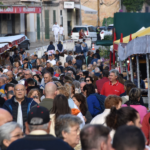
For one extraordinary day each November, the island’s famous leather-making town transforms into a bustling celebration of Mallorcan life, with streets filled with market stalls, agricultural displays, local produce and visitors from across the island.

And the celebrations don’t begin on the main fair day. The festivities get underway the evening before, when Dimecres Bo brings its own lively atmosphere to Inca.

Whether you’re a long-term resident, a newcomer to Mallorca or simply visiting in November, here’s what to know before heading along.

A celebration of Mallorca’s agricultural heritage

Dijous Bo, which translates roughly as “Good Thursday”, has its roots in Inca’s long history as a centre of farming, trade and commerce.

Traditionally, farmers and traders travelled to the town to sell livestock, exchange goods and meet customers from across Mallorca.

Today, the event retains much of that agricultural character while incorporating entertainment, shopping, music and activities for the whole family.

The official Dijous Bo website confirmed this year’s programme following a presentation by Inca mayor Virgilio Moreno on November 10.

Dimecres Bo: The party starts on Wednesday

Although Thursday is the main attraction, Wednesday, November 18, promises plenty of excitement.

Known as Dimecres Bo, the evening before the fair is traditionally one of Inca’s liveliest nights, with residents gathering for music, food and celebrations.

The traditional farmers’ market will operate from 10am until 10pm, while displays of agricultural machinery, historic farming equipment and traditional carts will offer visitors a glimpse into Mallorca’s rural past.

At 1pm, the Mallorcan black pig competition will take place in Plaça del Bestiar, celebrating one of the island’s best-known native livestock breeds.

The official opening ceremony begins at 5.30pm, accompanied by traditional Mallorcan musicians.

Horse-riding demonstrations will follow in Plaça de la Font Vella, while the evening’s celebrations include a proclamation and ceremonial rocket launch at 7.30pm in Carrer del Born.

For those who fancy a late night, music events at venues including Sa Lluna, Aqua Pub and Pub Nits are scheduled to continue into the early hours.

Thursday’s main fair: What can visitors expect?

On Thursday, November 19, Inca’s streets and squares will become a sprawling open-air fairground.

The traditional farmers’ market will run from 10am until 8pm, offering an opportunity to browse local products, crafts and regional specialities.

Agricultural displays will remain a major attraction, with livestock exhibitions taking place in Plaça del Bestiar from 9.30am until 5.30pm.

Visitors can expect displays featuring native livestock, poultry and birds of prey, alongside demonstrations celebrating the island’s farming traditions.

There will also be cultural performances and activities for younger visitors, including a dedicated children’s area on Avinguda dels Reis Catòlics.

The main festivities are scheduled to conclude at 8.30pm with a fire-themed procession and percussion performance.

A family-friendly day out with something for everyone

For families living in Mallorca, Dijous Bo offers an opportunity to introduce children to traditional island culture.

From seeing farm animals to watching horses and exploring market stalls, there is plenty to discover beyond the usual weekend activities.

The fairground attractions at General Luque are also scheduled to operate during the wider celebrations, with designated music-free periods intended to make the experience more accessible for visitors with sensory sensitivities.

And for anyone who enjoys discovering Mallorca through its food, the markets provide an opportunity to explore local produce and traditional specialities.

How to get to Dijous Bo 2026

The fair takes place throughout central Inca, approximately 30 kilometres northeast of Palma.

Organisers recommend travelling by train, as Inca’s railway station is within walking distance of the town centre.

Visitors driving from Palma can use the Ma-13 motorway, although heavy traffic, parking restrictions and crowded streets should be expected during the celebrations.

The main event is free to attend, although individual attractions, food and purchases may involve additional costs.

With Wednesday’s festivities continuing late into the night and Thursday offering a full day of traditional entertainment, visitors can choose between a lively evening out or a more relaxed family visit.

For British residents hoping to experience a different side of Mallorca, Dijous Bo offers something that no beach resort can replicate: a chance to celebrate the island’s traditions alongside the people who keep them alive.

%

Wrecked Diesel Tanker Towed To Murcia To Deal With

Published

on

wrecked-diesel-tanker-towed-to-murcia-to-deal-with

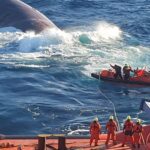
Salvamento Maritimo attempt towing wreck. Credit: SM X

Regional president demands alternative as overturned Med Emre heads for port carrying 7,000 tonnes of fuel, as Murcia local demand to know ‘Why not Mallorca?’

Cartagena faces diesel ship controversy

Cartagena is facing a growing political row over the arrival of the overturned Med Emre, with Murcia’s regional president and the city’s mayor demanding that the Spanish Government find another destination for the damaged vessel.

Fernando López Miras and Noelia Arroyo have rejected the decision to tow the ship into Cartagena, warning that the operation could threaten the region’s coastline, marine wildlife and industrial infrastructure.

Their opposition comes as the Malta-flagged vessel is being towed towards the port, following its capsizing off Ibiza on Wednesday, November 25. The ship was carrying around 7,000 tonnes of diesel as cargo, plus approximately 160 tonnes of fuel for its own engines. One crew member died following the accident, while the other 16 people aboard survived.

Rechazo absoluto del Gobierno @regiondemurcia a la decisión adoptada por el Gobierno de España de remolcar el buque turco naufragado en Ibiza al Puerto de Cartagena.

Reunido de urgencia con la alcaldesa de Cartagena, @NoeliaArroyoHer, para evaluar la situación ante esta decisión unilateral.

— Fernando López Miras (@LopezMirasF) November 27, 2026

Murcia demands alternative port

López Miras described the decision as unilateral and said the regional government would not accept the risk of a potential environmental catastrophe. He and Arroyo called on the Spanish Government to find another port, arguing that authorities cannot guarantee the operation will be completed without danger.

Their concerns include the possibility of diesel escaping into the sea and affecting protected marine areas around Cartagena. Arroyo also warned that the operation could threaten the Valle de Escombreras industrial complex, which plays an important role in Spain’s fuel supply. The mayor raised further concerns about the proximity of Cartagena’s naval base and military arsenal.

Both leaders made their objections following an emergency meeting in Cartagena on Friday, November 27, after the Spanish Government confirmed that the city would receive the vessel.

Why Cartagena was selected

Spain’s maritime authorities insist that Cartagena is the only port in the area with the technical facilities needed to handle the ship safely. The vessel is being towed upside down to the Escombreras dock, where the fuel will be removed before efforts begin to right and refloat it.

Authorities say carrying out the operation in open water would be too dangerous, particularly with winter weather approaching. The ship’s structure and ability to stay afloat have been checked, with officials confirming that its condition has not deteriorated. Maritime authorities have also ruled out keeping the vessel at an exposed anchorage while the work is carried out.

Fuel removal could take weeks

The operation is expected to last several weeks, with specialist equipment needed to extract the diesel and prepare the ship for its eventual removal. Authorities plan to install pollution containment barriers around the vessel before fuel extraction begins. A small oily slick was previously detected near the wreck, although officials said it was not confirmed to have come from the ship’s cargo tanks. The arrival of the Med Emre is expected on Monday, November 30, weather permitting.

For Murcia’s regional government and Cartagena’s mayor, the immediate demand remains clear: find another solution before the damaged vessel reaches the port.

Continue Reading

%

Eroski Expands Egg Recall Across Spain After Salmonella Found At Supplier

Published

on

eroski-expands-egg-recall-across-spain-after-salmonella-found-at-supplier

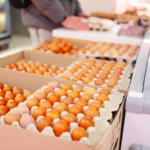
Eroski says all affected products have been removed from sale. Photo credit:Yanya/Shutterstock

Anyone who has bought Eroski eggs recently may want to check the codes on the shells before making breakfast. The supermarket chain has expanded a precautionary withdrawal to cover both barn eggs and caged eggs after salmonella was confirmed at the premises of its supplier, Larrabe Oilotegia S.L.

The warning now covers several batches of eggs sold under the Eroski and Larrabe brands. Customers who have affected products at home are being told not to eat them, but they can return them to an Eroski store for a full refund. 

Which eggs have been recalled?

The first withdrawal was made on November 17, when Eroski removed five product references of barn eggs supplied by Larrabe. The company said it acted before receiving the results of the health authorities’ analyses. On 25 November, the withdrawal was extended to include barn eggs with best-before dates up to December 13, as well as four references of Eroski caged eggs from the same supplier.

The presence of salmonella at the producer’s premises was confirmed on 26 November. The Spanish Agency for Food Safety and Nutrition (AESAN) updated its alert on November 27 to include the expanded withdrawal. It covers fresh eggs in sizes M, L and XL, sold in cartons of different quantities or loose.

Check the code on the shell

Customers who no longer have the packaging can identify the affected eggs by the code printed directly on the shell. Barn eggs carry the code 2ES4803810, with batch number L0222F. For Eroski-branded eggs, the affected best-before dates run from 27 November to 13 December 2026, inclusive.

Caged eggs carry the code 3ES4803810, with batch number L0233F. All units matching that batch identification are included in the withdrawal. The alert also covers eggs sold under the Larrabe brand. AESAN lists best-before dates from 22 November to 14 December for the wider supplier recall, with the Eroski barn-egg dates ending on December 13. Customers should compare the shell code and batch details with the official product information rather than relying on the date alone. 

What should customers do?

Eroski says all affected products have been removed from sale. Anyone who finds eggs matching the listed codes and dates should not consume them. They can take them to any Eroski store, where the purchase price will be refunded. The retailer says it has been sourcing eggs from a different supplier since November 5. Products with other dates are not included in the recall and can be consumed as normal. AESAN advises anyone who has eaten affected eggs and develops symptoms consistent with salmonellosis to seek medical advice. Symptoms can include diarrhoea or vomiting accompanied by fever and headache.

The alert was issued through Spain’s food-safety coordination system after health authorities in the Basque Country notified AESAN. The agency has passed the updated information to regional authorities so they can check that the products have been withdrawn from shops. Customers needing further information can contact Eroski’s customer service line on 944 943 444, open Monday to Saturday from 9am to 10pm. 

Continue Reading

%

EuroMillions Blunder: Thousands Of Players Wrongly Told They Had Won €46 Million Jackpot

Published

on

euromillions-blunder:-thousands-of-players-wrongly-told-they-had-won-e46-million-jackpot

Belgium’s National Lottery clarified that it had not sent individual messages telling players they had won the jackpot. Photo credit:Milosz Kubiak / Shutterstock

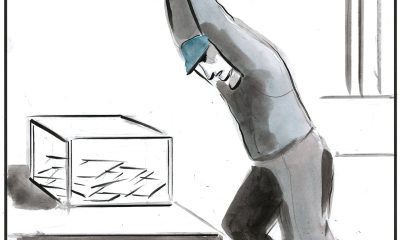
Thousands of EuroMillions players in Belgium were given some extraordinary news this week: they had apparently won a share of the €46 million jackpot. For anyone who had checked the results email, it looked as though a life-changing amount of money was suddenly within reach.

But the excitement was short-lived. The Belgian National Lottery had made a mistake in its prize breakdown, and the figures showing hundreds of thousands of jackpot winners were completely wrong. Not one ticket had matched the winning combination.

A mistake in the results email

The incorrect breakdown listed 356,906 supposed jackpot winners across Europe. Of those, 6,718 were in Belgium, with another 350,188 listed in other participating countries. Had the €46 million been shared equally between them, each would have received roughly €129. The mistake was not in the draw itself. The problem was how the prize distribution had been displayed in the general results email.

Belgium’s National Lottery clarified that it had not sent individual messages telling players they had won the jackpot. The incorrect figures appeared in its general results email. A spokesperson described the error as a “misunderstanding about the distribution of winnings”. The lottery said everyone affected would receive another email explaining what had happened. Its marketing department was working to correct the information, and the operator said the mistake had been identified quickly.

Nobody won Tuesday’s €46 million jackpot

To win the EuroMillions jackpot, a ticket must match all five main numbers and both Lucky Stars. The odds of doing so are approximately one in 139 million for a single line. No ticket matched the full combination in the 24 November draw, meaning the €46 million prize remained unclaimed.

The next draw was scheduled for Friday, November 27, with an estimated jackpot of €59 million. The Belgian National Lottery confirmed that the email error would not affect the scheduled draw. EuroMillions is played in 12 European countries, including Belgium, Spain, France, the United Kingdom and Portugal. Although the incorrect figures covered supposed winners across participating countries, the communication error occurred in the Belgian National Lottery’s general email.

The correction players were waiting for

The lottery also confirmed that personalised emails sent to online players contained the correct information. The error was limited to the general results newsletter, which displayed the wrong breakdown of jackpot winners.The winning numbers on Tuesday were 3, 5, 37, 44 and 49, with Lucky Stars 5 and 6.

These were correct, and players can check their tickets against the official results rather than relying on the mistaken email. For the thousands of Belgian players who saw their details included in the incorrect figures, there was no €46 million windfall waiting to be claimed. The jackpot had not been won, and the prize rolled over to Friday’s draw.

Continue Reading

Trending

Copyright © 2017 Spanish Property & News