Connect with us

%

Mallorca Town Turns Pink

Published

on

mallorca-town-turns-pink

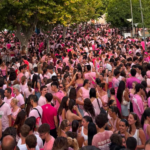
Hundreds of revellers dressed head-to-toe in pink took over the streets of Sineu on Monday, August 10, as the Mallorca town celebrated one of the island’s most colourful and wonderfully eccentric summer traditions.

The annual Mucada, officially associated with the Much de Reig festivities, transformed the normally peaceful town in the heart of Mallorca into a sea of pink, music, costumes and celebration.

From elaborate fancy dress to simple pink T-shirts, hats and accessories, visitors embraced the unofficial dress code as crowds poured into Sineu from across the island.

What is Mallorca’s Mucada?

Despite feeling like an established Mallorcan tradition, the Mucada is actually a relatively modern addition to the island’s fiesta calendar.

Born in the early 2000s, the celebration has grown dramatically over the past two decades and is now regarded as one of the most eagerly anticipated and distinctive parties of the Mallorcan summer.

At the centre of the festivities are the Much and Muca, the eccentric characters that have become symbols of the celebration.

The day combines playful rituals surrounding the pair with street processions, music, dancing and plenty of imaginative costumes, creating an atmosphere quite unlike Mallorca’s more traditional fiestas.

And there is one rule almost everybody follows: wear pink.

Sineu becomes a sea of pink

For the celebration, Sineu’s historic streets undergo an extraordinary transformation.

Crowds fill the centre from throughout the day, while bars and terraces become packed with festivalgoers taking a break from the festivities.

Pink wigs, dresses, tutus, shirts, sunglasses and increasingly inventive costumes can be spotted everywhere, turning the medieval streets into a giant open-air party.

The sheer popularity of the event means Mucada is no longer simply a celebration for Sineu residents. Thousands now travel from other parts of Mallorca to experience it, making the fiesta a major day for the town’s bars, restaurants and other businesses.

From local party to Mallorca favourite

Part of Mucada’s appeal is its unusual combination of Mallorcan identity and modern festival spirit.

In little more than two decades, a celebration that began on a comparatively small scale has become instantly recognisable thanks to its pink theme and eccentric traditions.

Its growth also shows how quickly new traditions can become part of Mallorca’s cultural calendar.

For the thousands who packed into Sineu this year, however, the attraction was much simpler: dressing in pink, joining the crowds and enjoying one of the most gloriously unusual days of the Mallorcan summer.

%

Shark Surprises Bathers On Galua Beach

Published

on

shark-surprises-bathers-on-galua-beach

Bathers at Galua beach on La Manga received an unexpected wildlife moment on Saturday morning when a shortfin mako shark, known locally as a “marrajo”, swam close to the shore near the Hotel Servigroup Galua in the Cartagena area.

Curiosity spread quickly among people already in the water and on the sand. Several pulled out phones to film the animal as it moved through the shallows just off the popular Mediterranean stretch of the strip.

Jet ski helps keep the area clear

Concern that the shark might come any closer into the busy swimming zone led to a quick response. Lifeguards used a jet ski to gently coax the animal further out, marking a path towards deeper, open water. Footage captured during the episode shows the shark swimming while the jet ski approaches and directs it away from the bathing area.

No injuries or close encounters with people were reported, and the whole episode stayed calm, leaving many watching from the shoreline as the shark gradually headed offshore. Sightings this near the coast are uncommon for the species and quickly became one of the talking points of the morning on La Manga’s beaches.

Why a Mako shark might appear so close in

Shortfin makos are fast, open-ocean hunters that also use Mediterranean waters. They spend most of their time well offshore, so a visit this near a busy beach is occasional rather than routine. Experts say such appearances do not automatically mean the animal is hunting people; the species mainly targets fish and other marine life.

Globally the shortfin mako is listed as Endangered by the IUCN (the International Union for Conservation of Nature), with even greater pressure recorded in the Mediterranean.

Stay calm if you spot one

Beach safety advice in these situations is straightforward: keep calm, leave the water without sudden movements, and alert lifeguards, emergency services or Protección Civil straight away. Avoid approaching the animal or trying to interact with it.

Galua Beach has seen its share of busy summer activity, including recent rescues linked to currents and flag warnings in the wider La Manga area. For context on local beach rules and earlier incidents, see Euro Weekly News coverage of Cartagena’s red-flag rescues at Galua and nearby beaches and an earlier offshore mako report from further along the coast at Almuñecar.

Saturday’s visitor left without drama, giving holidaymakers and locals a rare close look at one of the ocean’s quicker predators before it returned to deeper water.

Continue Reading

%

“It Broke My Heart”: British Couple Reveal What Ruined Their Málaga Holiday

Published

on

“it-broke-my-heart”:-british-couple-reveal-what-ruined-their-malaga-holiday

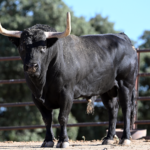
The fighting bulls are also bred specifically for the ring. Photo credit: Nenad Nedomacki/Shutterstock

A dream trip to Málaga quickly turned into a holiday memory two British tourists said they would rather forget after an unexpected encounter left them questioning one of Spain’s most controversial traditions.

They had travelled to the city during the week of the Feria de Málaga, but something they witnessed during their stay left them deeply upset and changed their experience of the celebrations. They had deliberately avoided the part of the festivities they knew they would not want to see. They did not expect to come face to face with its aftermath.

The sight they never wanted to see

David, 58, was in the city with his wife when they encountered the results of the bullfights at La Malagueta. The pair had no intention of attending a bullfight and normally avoid bullrings because they do not support the practice. Speaking to Euro Weekly News, David explained:

“We purposely avoid going to bullrings. It’s something that we do not support and do not wish to see, torturing an animal is barbaric.” The experience nevertheless brought them into contact with what happens after a corrida, when the dead bulls are removed from the arena.

That sight would stay with them for the rest of their visit, overshadowing what had otherwise been a holiday spent exploring Málaga and enjoying their time in the city. What should have been memories of sightseeing, discovering the area and experiencing Spanish culture were instead accompanied by an image they found deeply upsetting.

A tradition built into Málaga’s history

Bullfighting has been part of Spanish culture for centuries, particularly in Andalucía, where it remains closely linked to local traditions and celebrations. A traditional corrida follows a strict structure, with matadors, picadors and banderilleros carrying out different roles. Supporters regard the event as an art and cultural tradition with its own rules, techniques, costumes and rituals.

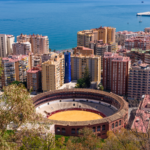
The fighting bulls are also bred specifically for the ring, with specialist ganaderías maintaining bloodlines developed over generations. In Málaga, that history is embodied by La Malagueta. The bullring opened in 1876 and celebrated its 150th anniversary this year. The 2026 Bullfighting Fair ran from August 8 to 22, forming part of the city’s Feria programme.

The anniversary included a special bullfight on August 20, broadcast live by Canal Sur, with Morante, Diego Urdiales and Fortes appearing at the historic venue. Bullfighting remains firmly connected to Málaga’s cultural calendar, despite the arguments surrounding it.

Why the tradition remains controversial

The central objection from animal welfare campaigners is what happens to the bull. During a traditional corrida, the animal is injured during the different stages of the fight before the matador kills it. Opponents argue that deliberately causing pain and killing an animal for entertainment cannot be justified by calling the practice a cultural tradition.

Supporters disagree. They argue that bullfighting is an important part of Spanish heritage and that removing it would mean losing a tradition that has been passed down through generations. The dispute has also entered Spanish politics. In 2024, the Culture Ministry abolished the country’s national bullfighting award, a decision that was welcomed by opponents but criticised by supporters.

The arguments have also extended to children, with campaigners questioning whether youngsters should be exposed to such an event involving the killing of an animal. That concern was echoed by David’s wife after what she saw in Málaga.

“Seeing it really shocked me, the fact that they drag them out for all to see, it’s not even covered by a tarp or blanket. Imagine if a child saw it!” Her objection was not to something she had watched inside the bullring. She had deliberately avoided doing that. Instead, it was the visibility of what happened afterwards that disturbed her.

Most Spaniards do not support bullfighting

Opposition to bullfighting is not limited to foreign tourists, a Fundación BBVA study published in 2025 found that 77 per cent of Spaniards disapproved of bullfighting. The research also found strong opposition to the use of animals in entertainment. Support remains stronger in areas where bullfighting has a long cultural history, and La Malagueta continues to attract spectators.

This year’s anniversary programme included several major events, including the return of Victorino Martín bulls to Málaga after 12 years. This years Feria also demonstrated that there is still a paying audience for the spectacle, despite the national figures showing that most Spaniards now disapprove of it. The disagreement is therefore not simply between people who understand Spanish culture and people who do not. It is a dispute within Spain itself.

“It broke my heart”

For David’s wife, seeing the animals being taken away made the reality of bullfighting impossible to ignore. She later described just how strongly she had reacted to the sight. “It broke my heart and made my tummy turn.”

The encounter left a lasting mark on their holiday. They had gone to Málaga to enjoy the city and everything it had to offer, but the sight at La Malagueta became an experience they could not simply put behind them and move on from. Instead, it became one of the memories they would take home from their trip, and not one they had expected or wanted to make.

Their experience also shows the difference between seeing bullfighting presented as a cultural tradition and seeing its consequences directly. For those who support it, the dead bulls are part of a centuries-old practice that remains legal and culturally significant. For David and his wife, seeing them removed from La Malagueta turned that tradition into something far more difficult to accept.

A holiday memory they won’t forget

The Feria continues to celebrate bullfighting alongside Málaga’s music, dancing, food and other traditions, while the figures show that most Spaniards no longer support the practice. For David and his wife, however, the issue is no longer something they had simply heard about or chosen to avoid.

They saw the aftermath themselves, and it became an upsetting part of a holiday that had otherwise been about discovering Málaga and enjoying their time in Spain. The bullring may be 150 years old, but the argument over whether bullfighting still belongs in modern Spain is far from settled.

Continue Reading

%

Tragic Twist After Spanish Farmer Survives Attack By His Own Bull

Published

on

tragic-twist-after-spanish-farmer-survives-attack-by-his-own-bull

His condition did not initially point towards the eventual outcome. Photo credit: alberto clemares exposito/Shutterstock

Owning a farm may have been a dream for many of us at some point, but life surrounded by livestock is not always as easy as it looks. A 58-year-old farmer in northern Spain has died after being gored by one of his own bulls, surviving the initial attack before his condition deteriorated in hospital and he developed a bacterial infection in intensive care.

The farmer, from Llerana in Saro, Cantabria, was attacked on August 6 while handling the animal on his family’s farm. He was badly injured but managed to secure the bull before he was found and taken to hospital. 

The attack happened while he was giving the bull water

The incident occurred at around 07.38pm on August 6, according to information from the 112 Cantabria emergency service. Municipal sources report that the farmer had released the bull so it could drink water when the animal attacked him. Despite suffering serious injuries, he managed to tie the bull up again.

He could not, however, get himself out of the area or call for assistance. His brother eventually found him after becoming concerned that he had not started the day’s milking. The family owns 80 head of cattle, and the farmer’s absence from that work was unusual enough for his brother, who is also a councillor in Saro, to go looking for him.

Cattle farmers are the backbone of rural Spain

Cattle farming is far more than a source of food for Spain. Across rural areas, livestock holdings support families, local businesses and entire communities, with farmers working every day to care for their animals regardless of the season or weather.

Spain has around 6.5 million cattle, with approximately 110,000 cattle-producing establishments across the country, according to the Ministry of Agriculture. The beef sector accounts for around 15 per cent of the value of Spain’s final livestock production, underlining its importance to the wider agricultural economy.

For families who depend on livestock, however, the work is intensely personal. Feeding, milking, checking animals and dealing with emergencies are responsibilities that cannot simply be put aside. When a farmer dies, the loss can therefore affect not only relatives but also the future of the farm, the livelihood and community built around it.

Emergency crews were sent to the farm

The 112 emergency coordination centre mobilised the 061 service after receiving the alert. An advanced life-support ambulance travelled to the property, where medical staff treated the injured farmer before taking him to Hospital Universitario Marqués de Valdecilla in Santander. 

The hospital is one of Cantabria’s main medical centres and was where the farmer remained under treatment for approximately two weeks. His condition initially improved, according to the reports. That improvement was followed by a serious complication while he was in intensive care.

A bacterial infection developed in the ICU

The man subsequently developed a bacterial infection during his stay in the intensive care unit. The available reports do not identify the bacterium involved or provide further medical details about the infection. They also do not establish that the bacteria came from the bull or that the infection was caused directly by the injuries sustained during the attack. 

His health deteriorated after the infection developed and he ultimately died following around two weeks of hospital treatment. The circumstances indicate that the initial injuries and the later infection form two separate parts of the reported medical history. The farmer survived the attack long enough to reach hospital and showed signs of improvement before the infection complicated his recovery.

Llerana mourns his loss

The man passed away this week, with the funeral taking place on Friday, August 21, at the parish church of San Lorenzo in Llerana. His death has left his family dealing with the loss of someone who was part of the local community and a much loved local.

For those closest to him, the circumstances changed considerably after his first few days in hospital. He had survived the attack, received emergency treatment and initially showed signs of improvement we lead to hopes that he would we be returning home. His later infection in intensive care brought a different outcome when heartbreakingly the 58-year-old never returned to his farm.

Continue Reading

Trending

Copyright © 2017 Spanish Property & News