Connect with us

%

Shark Surprises Bathers On Galua Beach

Published

on

shark-surprises-bathers-on-galua-beach

Bathers at Galua beach on La Manga received an unexpected wildlife moment on Saturday morning when a shortfin mako shark, known locally as a “marrajo”, swam close to the shore near the Hotel Servigroup Galua in the Cartagena area.

Curiosity spread quickly among people already in the water and on the sand. Several pulled out phones to film the animal as it moved through the shallows just off the popular Mediterranean stretch of the strip.

Jet ski helps keep the area clear

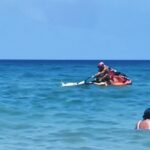
Concern that the shark might come any closer into the busy swimming zone led to a quick response. Lifeguards used a jet ski to gently coax the animal further out, marking a path towards deeper, open water. Footage captured during the episode shows the shark swimming while the jet ski approaches and directs it away from the bathing area.

No injuries or close encounters with people were reported, and the whole episode stayed calm, leaving many watching from the shoreline as the shark gradually headed offshore. Sightings this near the coast are uncommon for the species and quickly became one of the talking points of the morning on La Manga’s beaches.

Why a Mako shark might appear so close in

Shortfin makos are fast, open-ocean hunters that also use Mediterranean waters. They spend most of their time well offshore, so a visit this near a busy beach is occasional rather than routine. Experts say such appearances do not automatically mean the animal is hunting people; the species mainly targets fish and other marine life.

Globally the shortfin mako is listed as Endangered by the IUCN (the International Union for Conservation of Nature), with even greater pressure recorded in the Mediterranean.

Stay calm if you spot one

Beach safety advice in these situations is straightforward: keep calm, leave the water without sudden movements, and alert lifeguards, emergency services or Protección Civil straight away. Avoid approaching the animal or trying to interact with it.

Galua Beach has seen its share of busy summer activity, including recent rescues linked to currents and flag warnings in the wider La Manga area. For context on local beach rules and earlier incidents, see Euro Weekly News coverage of Cartagena’s red-flag rescues at Galua and nearby beaches and an earlier offshore mako report from further along the coast at Almuñecar.

Saturday’s visitor left without drama, giving holidaymakers and locals a rare close look at one of the ocean’s quicker predators before it returned to deeper water.

%

Tragic Twist After Spanish Farmer Survives Attack By His Own Bull

Published

on

tragic-twist-after-spanish-farmer-survives-attack-by-his-own-bull

His condition did not initially point towards the eventual outcome. Photo credit: alberto clemares exposito/Shutterstock

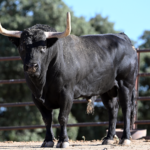
Owning a farm may have been a dream for many of us at some point, but life surrounded by livestock is not always as easy as it looks. A 58-year-old farmer in northern Spain has died after being gored by one of his own bulls, surviving the initial attack before his condition deteriorated in hospital and he developed a bacterial infection in intensive care.

The farmer, from Llerana in Saro, Cantabria, was attacked on August 6 while handling the animal on his family’s farm. He was badly injured but managed to secure the bull before he was found and taken to hospital. 

The attack happened while he was giving the bull water

The incident occurred at around 07.38pm on August 6, according to information from the 112 Cantabria emergency service. Municipal sources report that the farmer had released the bull so it could drink water when the animal attacked him. Despite suffering serious injuries, he managed to tie the bull up again.

He could not, however, get himself out of the area or call for assistance. His brother eventually found him after becoming concerned that he had not started the day’s milking. The family owns 80 head of cattle, and the farmer’s absence from that work was unusual enough for his brother, who is also a councillor in Saro, to go looking for him.

Cattle farmers are the backbone of rural Spain

Cattle farming is far more than a source of food for Spain. Across rural areas, livestock holdings support families, local businesses and entire communities, with farmers working every day to care for their animals regardless of the season or weather.

Spain has around 6.5 million cattle, with approximately 110,000 cattle-producing establishments across the country, according to the Ministry of Agriculture. The beef sector accounts for around 15 per cent of the value of Spain’s final livestock production, underlining its importance to the wider agricultural economy.

For families who depend on livestock, however, the work is intensely personal. Feeding, milking, checking animals and dealing with emergencies are responsibilities that cannot simply be put aside. When a farmer dies, the loss can therefore affect not only relatives but also the future of the farm, the livelihood and community built around it.

Emergency crews were sent to the farm

The 112 emergency coordination centre mobilised the 061 service after receiving the alert. An advanced life-support ambulance travelled to the property, where medical staff treated the injured farmer before taking him to Hospital Universitario Marqués de Valdecilla in Santander. 

The hospital is one of Cantabria’s main medical centres and was where the farmer remained under treatment for approximately two weeks. His condition initially improved, according to the reports. That improvement was followed by a serious complication while he was in intensive care.

A bacterial infection developed in the ICU

The man subsequently developed a bacterial infection during his stay in the intensive care unit. The available reports do not identify the bacterium involved or provide further medical details about the infection. They also do not establish that the bacteria came from the bull or that the infection was caused directly by the injuries sustained during the attack. 

His health deteriorated after the infection developed and he ultimately died following around two weeks of hospital treatment. The circumstances indicate that the initial injuries and the later infection form two separate parts of the reported medical history. The farmer survived the attack long enough to reach hospital and showed signs of improvement before the infection complicated his recovery.

Llerana mourns his loss

The man passed away this week, with the funeral taking place on Friday, August 21, at the parish church of San Lorenzo in Llerana. His death has left his family dealing with the loss of someone who was part of the local community and a much loved local.

For those closest to him, the circumstances changed considerably after his first few days in hospital. He had survived the attack, received emergency treatment and initially showed signs of improvement we lead to hopes that he would we be returning home. His later infection in intensive care brought a different outcome when heartbreakingly the 58-year-old never returned to his farm.

Continue Reading

%

Ultra Runner Miguelito Valverde Finishes 192km Axarquia Challenge

Published

on

ultra-runner-miguelito-valverde-finishes-192km-axarquia-challenge

Starting off in the middle of the night. Credit: Emilio Gil Delgado FB

Ultra trail runner Miguelito Valverde has just crossed the finish line at the Faro de Torre del Mar after a punishing solo non-stop effort that took him right round all Axarquia. He covered more than 192 kilometres with over 6,000 metres of uphill climb and a matching descent in 29 hours and 25 minutes, well inside the 48-hour limit he set himself.

What started at midnight on August 22 as a personal test of endurance quickly became a shared effort across 19 towns and villages. From Torre del Mar the route swung inland through Rincon de la Victoria, Totalan, El Borge, Cutar, Comares, Colmenar, Riogordo, Alfarnatejo, Alfarnate, Periana, Alcaucin, Canillas de Aceituno, Sedella, Salares, Canillas de Albaida, Competa, Frigiliana and Nerja before looping back along the coast. Hot late-summer temperatures, sleepless hours and tough mountain tracks tested every step, yet local people turned out with messages of support, company on the trail and practical help.

Money still coming in for AVOI families

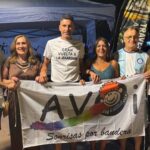
This whole Gran Vuelta a la Axarquia was never just about the kilometres. Miguelito and Club Deportivo Perianda organised the challenge to raise €14,000 for AVOI’s “Sueños que se hacen realidad” project. AVOI is the organisation that looks after young cancer sufferers and their families. That sum matches the original planned elevation gain and will help more families whose children have come through cancer treatment join the Camino de Santiago in 2027. Previous editions already gave dozens of youngsters, relatives, medical staff and volunteers an unforgettable shared journey; a Joëlette chair loaned by the club will make the next one even more inclusive. By the time Miguelito reached the lighthouse again, €3,670 euros had already been pledged.

Community spirit carried every step

Businesses, neighbours and fellow runners kept the momentum going. Alta Axarquia Digital, Alfonso Lopez Sanchez and the Grupo Espeleologico de la Axarquia all backed the effort, while ordinary residents offered water, encouragement and company through the long nights.

Miguelito’s own motto summed up the mood: “No se trata de llegar primero. Se trata de no rendirse jamás.” In English terms, finishing first never mattered – refusing to quit did.

Miguelito Valverde has proved the Axarquia can pull together when the cause is right. His 192-plus kilometres are done, yet the fundraising window remains open for a few more hours. Every euro now helps turn another family’s dream of walking the Camino into reality in 2027.

Continue Reading

%

Wild Mountain Race Swaps Bulls For Balls

Published

on

wild-mountain-race-swaps-bulls-for-balls

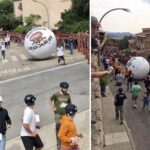
The Boloencierro drawing more runners each year. Credit: Ayto

Dozens of runners sprinting downhill through a Spanish village, chased not by charging bulls but by a massive sphere painted with a bull’s face. It’s somewhere between running with the bulls in Pamplona and the opening scenes of Indiana Jones and the Lost Ark.

Mataelpino’s Boloencierro delivers pure, but slightly mad, adrenaline every summer. Young and old, locals piled into the streets of this Sierra de Guadarrama spot on Saturday for the latest yearly celebration of this quirky tradition. Part of the San Bartolome fiestas in the municipality of El Boalo, Cerceda y Mataelpino, the event turns the usual idea of the encierro on its head. No horns, no livestock, just balls thundering after the crowd.

How a budget crisis created a legendary fiesta

Back in 2010, cash was tight with the economic crash, so councillors had slashed the budget for traditional bull runs. For this reason, a group of friends from the village cooked up an alternative. Why not chuck a huge ball of expanded polystyrene down the steep streets instead? What started as a bit of a laugh quickly stuck. Sixteen years on, the Boloencierro has become the village’s calling card, pulling in crowds from across Spain and now even across the world.

Mataelpino is about 55 kilometres from Madrid City at 1,120 metres up, home to just over 1,600 people. The run itself covers roughly 700 metres, beginning near Calle de la Iglesia and finishing in the bullring. Adult runners face a ball that once tipped the scales at nearly 300 kilos and measured up to three metres across. It could hit speeds around 50 kilometres an hour on the slopes, enough to leave a few people needing hospital treatment over the years, including one who spent days in intensive care and even a former mayor who got flattened in 2019.

Lighter ball, same thrill, helmets now essential

This year’s organisers switched to a rubber version weighing closer to 30 kilos. Festejos councillor Manuel Alonso called the old heavy one “too dangerous”, so the lighter model returns after occasional past use. Helmets are compulsory, along with proper trainers and sensible clothes. Trying to stop the ball or filming while running is a no-go.

Dozens of adults signed up and charged ahead of the decorated sphere on Saturday at midday. Kids got their own version earlier, with smaller, lighter balls, guided by adult helpers. A second children’s run took place on Sunday, August 23. Crowds lined the barriers, cheering as the big white ball, sporting a bull design, bounced and rolled its way to the plaza de toros. No major injuries were reported, just plenty of laughs and that familiar mix of nerves and excitement.

Why it keeps pulling in more crowds

Spanish fiestas love their unique twists, and this one hits the sweet spot. Safer and cheaper than live animals, seen as kinder too, yet still delivers that rush of outrunning something big and unstoppable. You can almost hear the Indiana Jones theme as the ball gathers pace on the steeper sections. Runners stay just ahead, spectators lean over the fencing, and the whole village turns out to watch.

Mataelpino’s version has inspired similar ball runs elsewhere, but the original remains the one to beat. It sits comfortably among Spain’s more offbeat summer celebrations, offering a family-friendly take on the classic encierro spirit without the same level of risk.

Continue Reading

Trending

Copyright © 2017 Spanish Property & News