Connect with us

%

New 400km Underwater Electricity Link

Published

on

new-400km-underwater-electricity-link

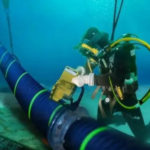
A 400km connection beneath the Mediterranean Credit: Pinterest/NetworkEncyclopedia

Hundreds of kilometres beneath the Mediterranean, a new electricity connection is set to reshape how Mallorca powers its homes, businesses and tourism industry, marking a significant milestone in the Balearic Islands’ transition towards cleaner energy.

Spain’s Council of Ministers approved its Electricity Transmission Grid Plan for 2030 on Friday, November 20, paving the way for a second electricity connection between Mallorca and mainland Spain, alongside major improvements to the islands’ existing infrastructure.

The developments form part of a record €17.143 billion national investment programme designed to strengthen electricity supplies, accommodate growing demand and increase the use of renewable energy.

A 400km connection beneath the Mediterranean

One of the most ambitious projects affecting the Balearics is a new electricity link connecting Castellón, on Spain’s eastern coastline, with a new converter station at Sant Martí in Mallorca.

Stretching approximately 400 kilometres, the connection will run beneath the Mediterranean for around 390 kilometres, with a combined transmission capacity of 400 megawatts.

According to Spanish electricity transmission operator Red Eléctrica, the new infrastructure, working alongside the existing mainland connection, will be capable of meeting 65 per cent of the Balearic Islands’ electricity demand.

The environmental benefits are also expected to be considerable, with the project forecast to prevent more than 900,000 tonnes of carbon dioxide emissions annually.

For an archipelago traditionally reliant on local power generation, strengthening its connection with mainland Spain represents an important step towards a more interconnected energy system.

What does it mean for Mallorca’s residents?

From air conditioning during the height of summer to the growing number of electric vehicles on Mallorca’s roads, the island’s electricity infrastructure must accommodate evolving demands from residents, businesses and visitors.

The approved plan includes improvements to the distribution network to support growing residential and industrial electricity requirements.

Inca has been identified as an area for infrastructure development, while new substations are planned in locations including Cala d’Or, Carnatge, Labritja and Figueral across the Balearics.

For homeowners and businesses, the wider objective is to create a more resilient electricity network capable of accommodating future demand while improving security of supply.

However, the announcement does not include any immediate reductions in household electricity bills, and the projected savings for Spain’s electricity system should not be interpreted as guaranteed savings for individual consumers.

Palma and Alcudia ports prepare for a greener future

The transformation will extend beyond homes and businesses, with the electrification of the Balearic Islands’ ports forming another important element of the investment programme.

Palma is set to benefit from a new electricity substation and a high-voltage connection between Santa Ponsa and the Port of Palma, alongside three additional power lines linking existing substations.

Infrastructure improvements are also planned to support the electrification of Alcudia’s port, as well as ports in Ibiza and Menorca.

Port electrification can enable vessels to connect to land-based electricity supplies while berthed, reducing the need to keep onboard engines running and potentially helping to improve air quality in surrounding areas.

This could be particularly significant for communities living close to Mallorca’s busy maritime gateways.

Mallorca and Menorca to become better connected

The mainland connection is not the only major underwater infrastructure project included in the approved plan.

A third electricity link between Mallorca and Menorca will connect Alcudia with Ciutadella, covering a total distance of 82 kilometres.

Approximately 64.5 kilometres of the connection will be submerged, reaching depths of up to 146 metres.

Red Eléctrica expects the project to improve the reliability of Menorca’s electricity supply, reduce its reliance on the Maó thermal power station and prevent approximately 154,000 tonnes of carbon dioxide emissions annually.

Spain’s biggest electricity grid investment

The nationwide programme represents the largest investment ever allocated to Spain’s electricity transmission network.

Plans include more than 6,700 kilometres of new power lines, 193 substation complexes and improvements to thousands of existing substations.

The government expects the measures to generate annual savings exceeding €3.5 billion across the electricity system, while enabling greater integration of renewable energy and accommodating future increases in consumption.

For Mallorca, where the demands of a thriving tourism industry must be balanced with the everyday needs of residents, the investment represents a significant development in the island’s long-term energy strategy.

While much of the infrastructure will remain invisible beneath the Mediterranean, its intended benefits could be felt across the islands for decades to come.

%

Munch And Picasso Together In Artistic First

Published

on

munch-and-picasso-together-in-artistic-first

Picasso and Munch side by side. Credit MPFB

Art enthusiasts can explore more than 100 works by two modern masters at the Costa del Sol museum until February 2027.

Malaga is welcoming an unusual meeting of two artistic giants, with a new exhibition bringing together the work of Norwegian painter Edvard Munch and the city’s own Pablo Picasso in an expressionism extravaganza.

Munch-Picasso opened at the Museo Picasso Malaga on October 30 and runs until February 28, 2027. Around 100 paintings, drawings and prints allow visitors to compare two artists who helped transform modern art. Although the pair never met, their work shares a fascination with human emotion, experimentation and the boundaries of traditional painting.

What makes the exhibition special?

Curated by art historian Paloma Alarcó, the exhibition explores how Munch and Picasso used art to express complex feelings and experiences. Munch is known for works such as The Scream, with its haunting portrayal of anxiety. Picasso, born in Malaga in 1881, became famous for his radical approach to form and perspective, particularly through Cubism.

Rather than suggesting one directly influenced the other, the exhibition presents an imaginary encounter between two artists who challenged convention in their own ways.

Their shared subjects include love, death, loneliness, desire and modern life. Visitors can see how Munch used intense colour and expressive lines, while Picasso experimented with fragmented forms and multiple viewpoints.

A journey through modern art

The exhibition is arranged across two floors of the museum, with themed sections examining the artists’ lives, creative processes and recurring interests.

Sections explore self-portraits, the impact of illness and loss, and the cafes and bohemian settings that shaped their work. The display also examines how both artists transformed the human figure, using distortion and fragmentation to communicate feelings that conventional representation could not easily express.

Organisers say the exhibition offers new perspectives on two of the most important figures in twentieth-century art.

How to visit Munch-Picasso

The Museo Picasso Malaga is housed in the Palacio de Buenavista on Calle San Agustín, in the city’s historic centre. The museum has previously received support to preserve and display Picasso’s work in his home city, as reported in this EWN article about funding for the Picasso Museum.

General admission costs €13 and includes access to the museum’s other current exhibitions. Visitors can check official museum tickets and opening times before travelling. The exhibition has been made possible with the collaboration of the Munch Museum in Oslo and the Fundación Almine y Bernard Ruiz-Picasso.

For readers planning a cultural day out, the show offers a chance to see how two very different artists explored many of the same questions about what it means to be human.

For more background on Malaga’s art scene, EWN has also covered a modernist exhibition at the Carmen Thyssen Museum.

Continue Reading

%

Black Friday Shock As Just 6% Of Deals Pass OCU’s Genuine Bargain Test

Published

on

black-friday-shock-as-just-6%-of-deals-pass-ocu’s-genuine-bargain-test

The OCU compared the proportion of bargains found on different retail websites. Photo credit:No-Mad/Shutterstock

Black Friday shoppers hoping to find a genuine bargain may have to search harder than expected. Just 6 per cent of more than 12,000 online prices checked by the Organisation of Consumers and Users (OCU) qualify as real and significant discounts, according to its analysis published on November 24.

The investigation covers electronics and household appliances, comparing current prices with the lowest prices at which the same products had been available in recent months. The monitoring covers several major online retailers. The results suggest that worthwhile offers remain scarce, even across categories heavily promoted during the annual sales event.

Which products offer the best chance of a bargain?

Sound equipment and robot vacuum cleaners are currently the strongest categories, with 26 per cent of prices checked in each group qualifying as significant offers. Kitchen robots follow at 17 per cent, while televisions reach 13 per cent. E-readers, headphones, smartwatches, activity trackers and computers also have more than one in ten prices meeting the OCU’s criteria.

The picture is less encouraging for anyone planning to replace a major household appliance. Just 3 per cent of prices checked for tumble dryers, washing machines, dishwashers and fridges were considered genuine bargains. These percentages show the share of prices meeting the OCU’s test, not the amount shoppers could save. They do not mean every model in a category is discounted.

Where are the strongest offers?

The OCU compared the proportion of bargains found on different retail websites. Xiaomi currently leads, with 24 per cent of monitored prices classed as significant discounts. Amazon follows on 19 per cent, ahead of MediaMarkt on 17 per cent and Fnac on 11 per cent. Carrefour, Cecotec and SiHogar each have up to 9 per cent of prices classed as worthwhile offers.

The figures are a starting point, not a guarantee of the lowest price for a particular product. Shoppers should compare the exact model and delivery costs before ordering.

How the OCU is judging a genuine deal

The key test is whether the current price beats the lowest price at which the product had been available on major online platforms during the preceding months. A discount against a higher reference price may look impressive without making the offer a good buy. The organisation says its analysis is finding more price rises than reductions overall and warns that some advertised promotions are not genuine.

Last year, the OCU reported nine online platforms to consumer authorities over alleged false discounts. It said reductions had been calculated using arbitrary reference prices, such as manufacturers’ recommended prices, rather than the lowest price applied during the previous 30 days.

Check the price before you buy

Under Spain’s Retail Trade Regulation Act, the previous price shown when a retailer advertises a reduction must generally be the lowest price it charged for the identical product during the 30 days before the discount. The OCU offers two free online tools: a deal-finding service and price adviser. They allow consumers to check prices and assess whether a promotion represents a real saving.

It is also asking shoppers who spot suspicious promotions to flag them on social media using #timofertasBF, so potential breaches can be passed to consumer authorities. With Black Friday falling on November 27, shoppers still have a few days to compare prices. A sale label alone is no reason to rush.

Continue Reading

%

Costa Del Sol Walking Football Grows

Published

on

costa-del-sol-walking-football-grows

At the Finca Naundrup in Cañahonda. Credit: RCFB

From six-a-side beginnings to international tournaments, Walking Football is attracting players across the coast.

Walking football in Costa del Sol is growing from Nerja to Estepona, with more Spanish-born players joining expatriates, according to Mark Coleman, founder of Spain Walking Football.

The game was created in Chesterfield, England, in 2009 by John Croot, chairman of Chesterfield FC. He wanted older players to keep enjoying football and support active ageing. “John invented Walking Football, a slower paced small sided hybrid of the chaotic 11 a side version that we all know,” Coleman told Euro Weekly News.

Usually aimed at men over 50 and women over 40, the game keeps football’s passing and teamwork but removes running. Smaller teams and modified rules make it accessible to people who want to stay active or return after years away.

Walking football is widely acknowledged by cardiologists and chief medical officers as an ideal activity after heart surgery. In the UK more than 100,000 people play every week, and the sport is now played in over 60 countries. Its rapid growth has also earned recognition from both UEFA and FIFA.

From expat beginnings to Spanish participation

Walking football arrived in Spain through expatriate players around 2015, Coleman said. Growth has accelerated over the past five years, with clubs now playing across mainland Spain. “More and more Spanish born players and clubs made up of entirely Spanish players are participating in the game,” he said.

Coleman said local interest is helping the sport develop beyond its original expatriate base. Players can take part socially at a nearby club or work towards selection for teams.

“Despite the project making huge progress and the opportunities for players to represent Spain multiplying fivefold in a relatively short space of time it is still the subject of criticism from those that see the project as a ‘Guiri group’ . ”

Team Spain expands fivefold

Team Spain Walking Football was formed in late 2022 after Coleman was approached to send a team to the World Nations Cup at St George’s Park, England’s national football centre. The men’s over-50s side reached the semi-finals at its first tournament, losing 1-0 to eventual winners England.

Since then, Team Spain has grown from one representative side to five: men’s over-50s and over-60s, plus women’s over-40s, over-50s and over-60s.

Coleman said the project developed through recruitment drives, trials and visits to groups around Spain. He said it gives players chances to represent Spain internationally while encouraging more people to try the sport.

Costa del Sol teams make their mark

Results show local progress. CD Marbella Walking Football won the fifth Esquina Park Rangers tournament in Torrevieja, finishing on 38 points — one ahead of hosts Esquina Park Rangers.

Sixteen clubs took part, representing England, Wales, Scotland, Argentina and regions of Spain. Marbella won all eight matches on the final day to claim the title.

The result adds to a competition calendar for Costa del Sol players. At the European Walking Football Championships in November, Spain’s women’s over-60s team won silver.

Why players keep coming back

Walking football offers more than a match. Coleman points to its physical and mental health benefits, social inclusion and community links as reasons for its growth.

The format is slower than traditional football, but still rewards passing, positioning and teamwork. Players can enjoy competition without the sprinting and physical contact of the full game. For many, the social side matters just as much: a session offers exercise, friendship and a reason to get together.

How to get involved

Players can find local clubs through the Spain Walking Football club directory, which lists teams and contact details. Costa del Sol clubs include Real Calahonda, Malaga WFC, Torrox Tornadoes, Nerja United and Benalmadena.

Those interested in Team Spain or trials can contact Coleman through the organisation’s contacts page. Newcomers should check with their chosen club about age groups, session times and whether they need to register before attending.

With participation spreading from Nerja to Estepona and more Spanish players joining, Coleman’s message is clear: walking football is becoming a game for the whole community.

Continue Reading

Trending

Copyright © 2017 Spanish Property & News