Connect with us

%

Marbella Council Begins Removal Of Six High-Voltage Pylons In Nueva Andalucia

Published

on

marbella-council-begins-removal-of-six-high-voltage-pylons-in-nueva-andalucia

Heavy machinery brought in to remove pylons. Credit: Ayuntamiento de Marbella

Marbella council has started works to remove six high-voltage pylons in the Nueva Andalucia district and bury nearly two kilometres of electrical cabling safely underground. The project targets lines for Marbella Paraiso and Cosol Nueva Andalucia, right in the heart of this residential zone and next to homes. Residents will benefit from improved safety once the structures and overhead wires go.

Council actions hope to clear these installations and return space to local people for everyday use. Investment reaches around €2 million, paid for by a private urban development now underway in the area.

Safety gains and neighbourhood space recovery

The council has called the district a priority area backed up over recent council terms. Similar tower removals have already finished in Calle Castilla and around Calle Salduba. Cable burial work continues at the moment in Calle Rio Real.

Older developments from past decades often ignored key requirements such as communications networks, sanitation systems, steady electricity supply and smooth urban fit for high-voltage lines. Current efforts are now looking at fixing these shortfalls and preparing the town for coming growth.

More areas targeted in coming phases

The council also plans similar works across zones such as Bello Horizonte, Las Medranas, Nueva Andalucia and Rio Real. These steps could eventually clear close to 50 high-voltage pylon towers across the whole city in the medium to long term.

Close ties with electricity provider Endesa have supported a specific plan for the removal and burial of medium voltage lines. One major element involves a new substation in the northern section of the San Pedro Alcantara industrial estate. Local business groups have long called for this facility to support future housing and commercial projects.

Impulse for modernised infrastructure across Marbella

The council has said that expansion in the district should also upgrade the town and make up for past infrastructure shortfalls. The approach looks past just new homes alone and is meant to raise daily living standards for people already there through better facilities overall.

%

Carnival Cruises Lost Passport Data Of 6,000,000 Passengers

Published

on

carnival-cruises-lost-passport-data-of-6,000,000-passengers

6 million Carnival cruise passengers data released. Credit: Mulevich – Shutterstock

Carnival Cruise Line has now confirmed a cyber attack in April that let unauthorised actors reach the passport numbers and personal details of nearly six million passengers. Hackers relied on social engineering to trick an employee rather than exploiting technical flaws. The company detected the intrusion on April 14 and moved quickly to limit further damage while bringing in outside experts.

Details of the April cyber attack

Carnival stated that the intruders reached only a limited section of its systems. The accessed information included names, home addresses, email addresses, phone numbers, dates of birth and government-issued identification such as driving licences and passports. Notifications to affected passengers started in late May. Carnival now provides two years of free credit monitoring and identity protection through TransUnion.

Scale of the attack and data exposed

A filing with the Maine Attorney General revealed the precise figure of 5,995,277 people potentially impacted. Carnival has expressed deep regret over the incident and any worry it may have caused. The operator added that it has introduced extra security controls and improved monitoring tools. It also pledged to carry out ongoing reviews to strengthen its security programmes.

Dangers for those with compromised passport information

People whose passport numbers now sit together with other personal details in the open and available for sale on the black market, now face a higher chance of identity theft and fraud. Criminals are able to combine the data to open bank accounts or credit cards in someone else’s name. They may also file false tax returns or apply for government benefits. Passport details prove especially useful for creating fake travel documents or attempting visa fraud.

Financial losses often follow when fraudsters make unauthorised purchases or damage credit scores through new accounts opened without permission. Victims can often spend months or years disputing charges and restoring their records. The information also can be used behind highly targeted scams. Messages that mention a recent cruise or specific travel history appear more believable and trick people into revealing further details or clicking on malicious links.

Longer-term effects include lasting credit rating harm that can affect mortgages or rentals. Many report anxiety and frustration after dealing with banks, credit agencies and passport offices. The data can circulate on criminal forums for years, so the threat does not go away that quickly. A passport number alone carries limited value, yet the full set of details from this breach creates a powerful package for misuse.

Immediate actions for affected individuals

Carnival has already begun contacting passengers and offers free credit monitoring, although many commentators on social media scoff at this. Experts advise placing a credit freeze with major agencies to block new accounts. Setting up fraud alerts adds another layer of protection.

People should keep an eye on bank statements, credit reports and email inboxes for unusual activity.

Those planning travel soon may consider applying for a replacement passport if they feel concerned, though replacement is not always required unless clear misuse appears.

GDPR breach compensation: The essential guide to your claim

Carnival’s previous security problems

Carnival has dealt with several earlier cyber incidents. In 2019 unauthorised persons reached systems linked to multiple brands and exposed customer and employee data. A ransomware attack followed that in 2020 that encrypted files and stole further records, including passport numbers in some cases. Data security specialists have criticised the operator for failing to prevent repeated breaches despite earlier warnings. One consultant noted that the latest case shows Carnival has not addressed weaknesses in employee training and access controls.

Comparable large-scale data incidents

In 2018 Marriott revealed that hackers had accessed records belonging to up to 500 million guests, including passport numbers. The breach exposed similar identity details and raised parallel concerns about fraud and travel document misuse. The 2017 Equifax incident compromised personal information of 147 million people, including social security numbers and dates of birth. Both cases led to years of monitoring offers and legal action as victims faced identity theft risks.

Continue Reading

%

Spain Has 15 Million Pets — But Hundreds Of Thousands Are Still Being Abandoned Each Year

Published

on

spain-has-15-million-pets-—-but-hundreds-of-thousands-are-still-being-abandoned-each-year

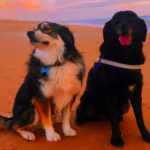
Dogs remain the most common domestic animal representing just over half of all pets. Photo credit: Molly Grace

According to new data published by the Ministry of Social Rights, Consumer Affairs and Agenda 2030, Spain has confirmed that more than 15 million domestic animals are currently living in households across the country. The figures form part of the first official national statistics on animal protection and provide the most detailed picture yet of pet ownership trends in Spain.

The data show that there are approximately 7.56 million dogs and 5.62 million cats registered nationwide. Together, they account for around 87% of all domestic animals. The remaining proportion includes rabbits, birds, reptiles and other small species, which collectively total just under two million animals.

The ministry report indicates that Spain’s pet population has increased by around 14% since 2021. It also highlights significant regional differences in distribution, with Andalucía recording the highest number of animals, followed by Cataluña, Madrid and the Valencian Community.

High pet ownership contrasts with abandonment figures

Alongside the growth in pet ownership, Spain continues to face a high level of animal abandonment. According to estimates from animal welfare organisations and the Fundación Affinity, around 292,000 dogs and cats were taken into shelters or collected by rescue services in 2024. This equates to roughly 800 animals per day, or around 33 every hour.

The figures are widely used as an indicator of abandonment and stray intake across the country. While not every animal collected has been deliberately abandoned, the data are considered one of the most consistent measures of pressure on shelters and rescue organisations.

Reports suggest that the number has remained broadly stable over recent years, but at a level that charities continue to describe as high. Seasonal peaks are also observed during the summer months, when travel and housing changes can increase the likelihood of animals being left behind or surrendered.

Spain compared with other EU countries on animal welfare

Despite the scale of pet ownership and a growing legal framework on animal protection, Spain is frequently cited by animal welfare organisations as one of the countries in the European Union facing persistent challenges in reducing abandonment rates. Animal protection groups have pointed to factors including regional variation in enforcement, limited public shelter capacity, and high reliance on private rescue organisations. However, comparative EU-wide statistics on abandonment are not standardised, making direct rankings complex.

Spain has introduced a national Animal Welfare Law, which came into force in 2023, aimed at strengthening identification requirements, improving breeding controls and increasing penalties for neglect. The legislation also introduced stricter obligations for pet owners, including mandatory identification and rules around care and supervision. Even so, welfare organisations argue that implementation varies between regions and that enforcement remains uneven, particularly in rural areas and in relation to stray animal management.

Abandonment patterns and seasonal pressure

Data from shelter organisations suggest that abandonment levels remain relatively consistent throughout the year, but increase during specific periods. Summer is traditionally the most pressured season for rescue centres, particularly in coastal and tourist-heavy regions.

Dawn, who runs a rescue shelter in Cádiz tells EWN about her first hand experience running a shelter and how the summer period places significant strain on facilities like hers.

“We dread every summer season, we have dogs pouring in at such a rate that we cannot house them all, we receive little help from the government and most of the expenses comes out of our own pockets,” she said. She adds, “I know most people get tired of hearing it, but please foster or adopt instead of buying.”

Estimates from welfare groups indicate that tens of thousands of animals may be surrendered or abandoned in the months leading up to the summer holiday period. In 2024, more than 290,000 animals were collected nationwide, and early indications from welfare bodies suggest that 2026 is expected to remain broadly in line with those figures if not more, based on historical intake levels.

Regional concentration of pets

The new government statistics also show that pet ownership is not evenly distributed across Spain. Andalucía accounts for the highest concentration of animals, with around 3.3 million registered pets. Cataluña follows with close to two million, while Madrid and the Valencian Community also record high numbers.

Dogs remain the most common domestic animal, representing just over half of all pets, while cats account for just over a third. Smaller exotic animals such as rabbits, ferrets, birds and reptiles make up the remaining share.

Officials say the data will be used to improve planning for animal welfare services and to support future policy development, including local-level coordination on shelter capacity and identification systems.

Ongoing policy debate

The publication of the figures has renewed debate over Spain’s approach to animal welfare. Supporters of recent reforms argue that legal changes represent significant progress in standardising care and reducing neglect. However, critics highlight that high abandonment levels continue to place pressure on shelters and local authorities.

Animal welfare organisations continue to call for stronger enforcement, improved public awareness campaigns and increased funding for rescue services. They also point to the importance of microchipping and owner accountability in reducing the number of animals entering the shelter system.

While Spain’s pet population continues to grow, the challenge remains how to ensure that welfare systems develop at a similar pace.

Continue Reading

%

Àngels Barceló Brings ‘Hoy Por Hoy’ To La Cala De Mijas For Its Traditional Welcome To Summer

Published

on

angels-barcelo-brings-‘hoy-por-hoy’-to-la-cala-de-mijas-for-its-traditional-welcome-to-summer

Alan Boardman, Sladana Obradovic. Àngeles Barceló and Ana Mata on Hoy por Hoy. Credit: Hoy por Hoy YouTube

Àngels Barceló, one of Spain’s most respected and popular journalists and presenter of the flagship morning radio programme Hoy por Hoy on Cadena SER, recently took the show on the road to Mijas. The special broadcast of the show which regularly pulls in 3 million listeners,  presented this time from La Cala de Mijas on Friday, June 5, was part of the programme’s traditional welcome to summer from the Costa del Sol.

In the studio, or rather, on location in the coastal heart of the municipality, Barceló was joined by Ana Mata, mayor of Mijas, and two much-loved members of the local expat community who perfectly illustrate the town’s open and multinational character: Dr Sladana Obradovic and Alan Boardman.

Ana Mata introduces Spain to the many colours of Mijas

Speaking with Barceló, mayor Ana Mata described Mijas as the perfect place to lose oneself. The municipality offers three distinct worlds in one: the mountains, the sea, and a lively centre where people live and work. While some destinations are chosen so you can be seen, according to Mata, Mijas draws those who prefer to disappear into one of its 16 beautiful beaches. “Here, we can feel foreign in our own land,” she said with evident fondness. In winter the town may look quiet, she said, but it is far from empty with its 12 golf courses that attract visitors from across Europe. Mata summed up the municipality’s greatest asset simply: “Mijas is nature — an ideal setting to reconnect with oneself.”

When asked how many nationalities call Mijas home, Mata gave the striking figure of 131. “A place where everyone feels at home,” she said. “Here, the rhythm of life is different from that of big cities.”

Dr Sladana Obradovic, earns the trust of El Pueblo

To highlight this rich diversity, Barceló introduced Dr Sladana Obradovic, originally from the former Yugoslavia. Dr Obradovic has run the night shift at the health centre in Mijas Pueblo for many years and has earned the deep trust and affection of all the local community.

Alan Boardman, responsible for shining a light on Mijas culture

Barceló then welcomed Alan Boardman, who has lived in Mijas with his wife Jenny for 21 years. A proud Mancunian and Manchester United supporter (something Barceló wanted to clarify from the outset), Alan explained how he and Jenny swapped their careers in a semi-precious stones shop for a life dedicated to charitable work. Noticing there was no English-language historical tour of the beautiful and historically rich village of Mijas Pueblo, he began offering guided tours. These are run entirely for charity, with all proceeds support local associations and causes on the Costa del Sol. Alan spoke movingly about the joy he feels when he sees the expressions on visitors’ faces as they discover the many fascinating layers of Mijas’s history and culture.

Àngels Barceló then asked Mayor Ana Mata about the deeper importance of initiatives like Alan’s tours. Mata stressed that they help prevent the formation of ghettos by encouraging newcomers to learn about their new home, its history, its present, and its future. “In the end, we’re a big family,” she said.

To close the conversation, Barceló asked each of her three guests to name their favourite place in Mijas. El Pueblo was the resounding answer from each.

Continue Reading
Advertisement
Advertisement

Spanish Real Estate Agents

Tags

Trending

Copyright © 2017 Spanish Property & News