
ElPais
Meta Reaches Nearly $17 Billion Settlement Over Social Media Harms To Children









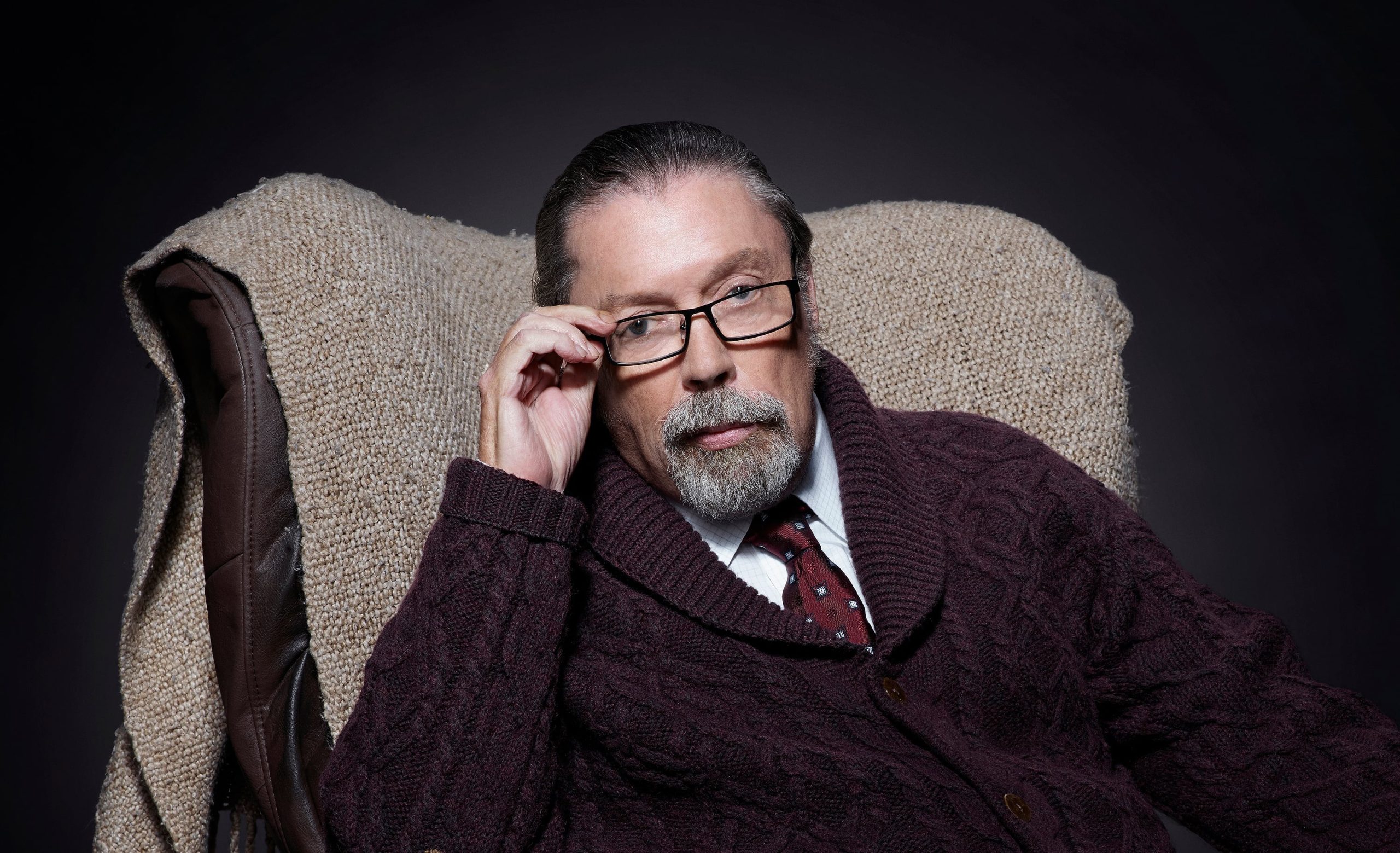
The British actor, who appeared in films such as ‘Muppet Treasure Island’ and was the first actor to play Pennywise in an adaptation of ‘It,’ suffered a stroke in 2012 and afterward withdrew from public life

British actor Tim Curry died on Tuesday night at his home in Los Angeles at the age of 80, according to TMZ. Curry had used a wheelchair and largely withdrawn from public life after suffering a stroke in 2012, the first in a series of health problems that gradually worsened his condition.
Gifted with a remarkable voice and an extraordinary ability to control every muscle in his face, Curry achieved worldwide fame as Dr. Frank-N-Furter in The Rocky Horror Picture Show (1975). He also appeared in Muppet Treasure Island as the pirate Long John Silver alongside Jim Henson’s beloved creations, and in popular films including Clue, Kinsey, Home Alone 2: Lost in New York, Annie, The Hunt for Red October, Scary Movie 2, and Congo. He also lent his distinctive voice to dozens of animated television series throughout his career.
Curry also portrayed the clown Pennywise in the 1990 adaptation of Stephen King’s It. Alongside his screen work, Curry enjoyed decades of acclaim and success on the stage, where he was equally respected for his theatrical performances.
This is a breaking story. Please refresh your browser for more updates.
Archived In
Cali
Displaced By Colombia’s Conflict, Now Uprooted Again By The Earthquake: ‘We Arrived With Nothing And We’re Back To Having Nothing’


Mario Suárez was already awake when the ground beneath his feet began to shake. He waited a few seconds, but the tremor did not stop. Grabbing his children by the hand, he and his wife rushed outside, where they watched their home crumble before their eyes. They were not alone: the three-story building in the Miraflores neighborhood of Buenaventura housed 22 families, nearly 100 people. All belonged to the Wounaan Nomaan Indigenous community, which had been driven from its ancestral lands four years earlier by the violence of Colombia’s armed conflict.
Two weeks after the August 10 earthquake that struck western Colombia and left more than 300 dead, these families are still living in a makeshift shelter. Their plight reflects that of hundreds of victims of forced displacement who had already lost everything once and now fear having to uproot their lives again amid deep uncertainty.
“We arrived in Buenaventura with nothing, and today we’re back to having nothing. This is a hard economic and psychological blow for the entire community,” Mario says by phone. His name has been changed for security reasons. A member of the Valledupar Indigenous council, he recalls that until a few years ago his community lived peacefully in Bajo San Juan, a Pacific region straddling the departments of Chocó and Valle del Cauca, north of Buenaventura. Everything changed five years ago.
“Armed groups began to move through the area. We tried to resist the recruitment of young people, the disappearances and killings, but in 2022 we couldn’t do it any longer, and that is why we left. We abandoned our homes, the school and our crops,” says Mario.
Several armed groups operate in the region, which remains fiercely contested territory. Colombia’s Ombudsman’s Office and other institutions have documented the presence of the Gulf Clan, the ELN guerrilla group and dissident FARC factions, all seeking to control drug-trafficking routes and access to the Pacific Ocean.
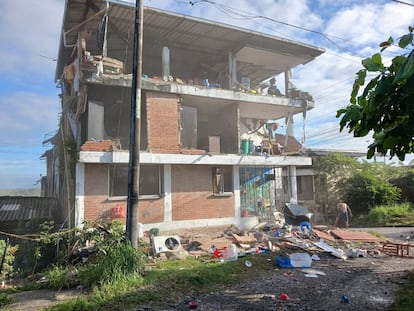
Until August 10, the roughly 20 families who had been forcibly displaced to the Pacific port city were living in a building that once operated as a local radio station. They worked as artisans and made a living from their handicrafts. All of their products were buried beneath the rubble. “We are victims twice over. It is a terribly sad situation,” Mario laments.
In the 15 days since the earthquake, which left their home uninhabitable, the nearly 100 residents of Buenaventura have gone from sleeping on the streets to sheltering in a makeshift refuge not designed for long-term use. The Indigenous leader explains that since their initial displacement, they have been waiting for the national government to relocate them permanently to a municipality in Valle del Cauca, close to the area where they lived before being driven out by armed groups.
This community is not an isolated case. Giovanni Rizzo, director of the Norwegian Refugee Council in Colombia, says the organization has documented several similar situations in the departments of Valle del Cauca and Chocó, both major hotspots of organized violence. Among the affected populations are not only internally displaced people but also Venezuelan migrants.
“The earthquake not only damaged infrastructure, it also deepens vulnerabilities and widens gaps in access to services such as education,” the expert says. The severity of the conflict must be taken into account because of its particular dynamics, he adds. “I met a woman who said she would rather have a roof collapse on her than sleep in the street because of her fear of armed groups.”
The international aid organization has documented several cases of displaced people who fear they may be forced to move once again after the earthquake damaged their homes. According to the Internal Displacement Monitoring Centre and local authorities, Colombia was home to 7.2 million internally displaced people as of last year.
Although the vast majority were forced to migrate because of the armed conflict, an increasing number are being displaced by natural disasters or extreme weather conditions such as droughts or floods. This phenomenon, known as climate migration, is recognized by the United Nations and affects more than 30 million people worldwide. Most displacements occur within the affected country.
This is a concern for Juan Carlos Palacios, president of the neighborhood action committee of La Victoria, located in Quibdó, the capital of Chocó. He himself is displaced. Palacios was born in Bojayá, one of those municipalities etched into Colombia’s collective memory, in this case because of the massacre in a church that claimed the lives of more than 100 people, according to figures from the National Center for Historical Memory.
“I am a victim, but I was lucky this time. My house has minor cracks, but schools in the area collapsed and many neighbors’ homes were destroyed,” he says by phone.
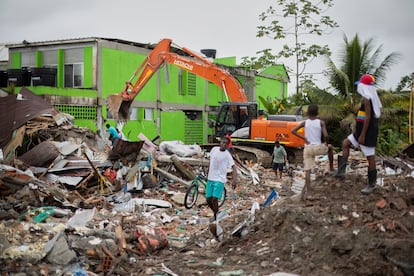
Among those who lost their homes were people who had already been displaced by violence. Some are now weighing whether to move again. “Some people have already moved to other neighborhoods or to relatives because they have nowhere to stay. They have to relocate because renting is very difficult,” says Palacios.
By difficult, he means rents have soared in the city, a trend that has also been reported in other cities, including in Cali. Those who remain in the neighborhood are staying in a shelter that was never equipped for an emergency of this scale. “We have mattresses and pillows, but no blankets. There are no bathrooms and no electricity.” About 40 families are currently living there.
Across the region, survivors of the earthquake are making the same appeal: that local authorities remain engaged beyond the immediate aftermath of the disaster, continue reconstruction efforts and take into account the additional vulnerabilities affecting hundreds of residents.
In the case of the Indigenous council in Buenaventura, Mario is urging authorities to allow the community to resettle as soon as possible and ensure they can remain together. “Some officials wanted to move us to shelters, but they only held two or three families. We must stay together because we risk losing our community organizing process,” he argues.
For his part, Palacios is calling on both authorities and civil society to maintain their support. “The rescue phase is over. What remains is relief efforts and reconstruction, which can take years.”
Sign up for our weekly newsletter to get more English-language news coverage from EL PAÍS USA Edition

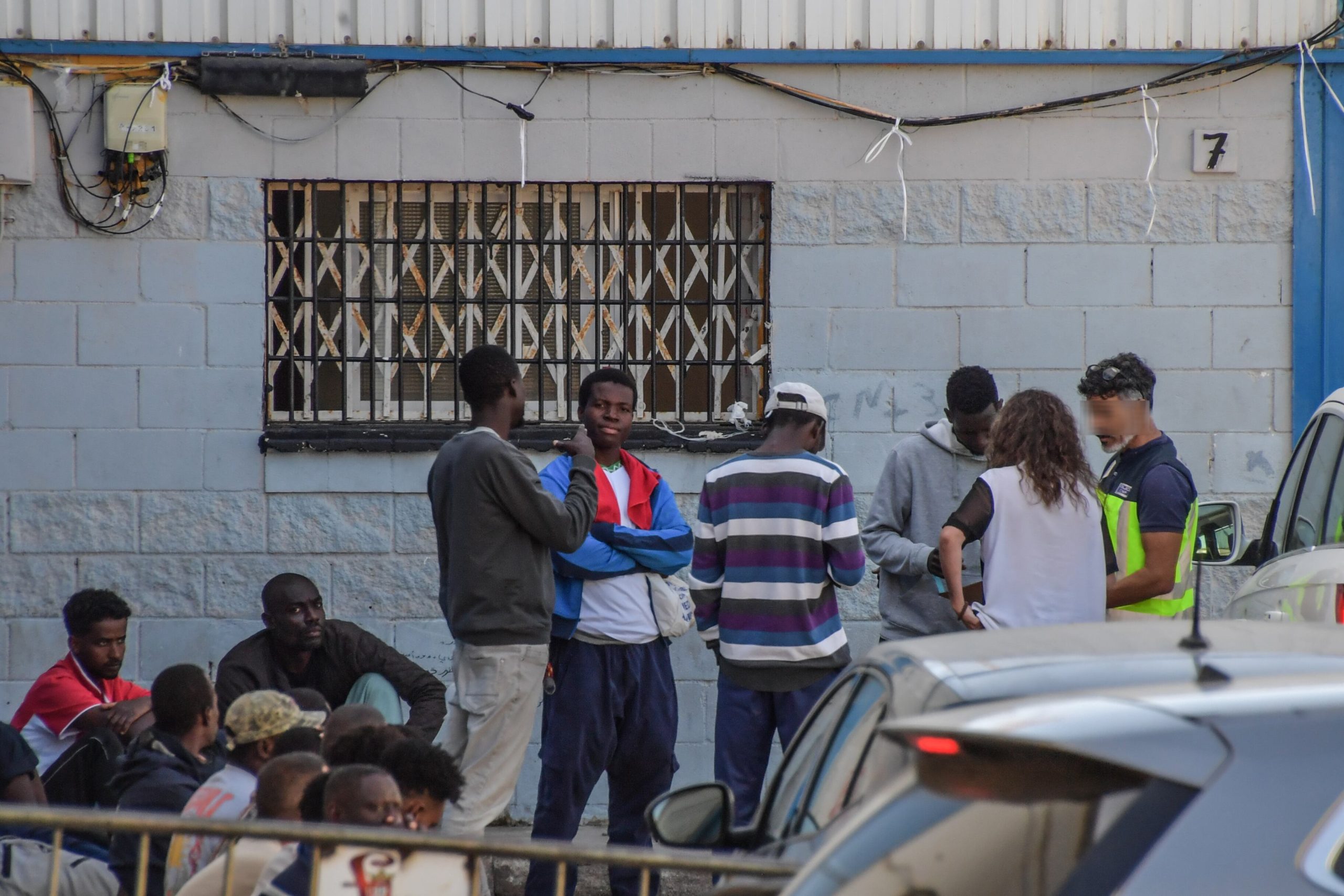
Since July 30 and 31, when some 80,000 people entered Ceuta, the streets leading to the Loma Margarita facilities in the western part of the city have become a vivid summary of all the wars, famines, and fundamentalist groups battering the Sahel, the belt of countries stretching from the Sahara to the Red Sea where unimaginable tragedies unfold.
Lying on the sidewalks, staring at their cellphones, or wandering aimlessly, these teenagers pass the hours like soldiers who were spared from having to carry a weapon in Mali. Others fled jihadist groups in Niger, and still others simply ran out of food when armed groups in Burkina Faso doused the entire village’s vegetable gardens with glyphosate to starve them to death. If there is any crisis left without a face, it can be found at the gates of the Temporary Immigrant Shelter (CETI), where more children from Chad, Mauritania, or Sudan spend their days. After many months of hardship, they all sleep in a bed and eat three meals a day.
Loma Margarita is a plateau owned by the Spanish army where huge olive-green tents have been set up to house 1,100 people. After days of chaos for migrants and staff, a measure of order has finally returned to the site, guarded inside by a private security firm and outside by a group of legionnaires.
Clinging to the fence, Abdallah, 21, says that returning to Sudan would mean having to “integrate into an armed group.” His friend, 17, says he left Sudan three months ago but is happy because he will be able to “legalize his situation and tell someone what is happening in his country,” he explains in fluent English. The youngest of the group, 15, has had an infected ankle wound for 25 days. He is reluctant to speak and only shows a photo on his phone of his mother’s cousin living in Madrid wearing a Spain national team shirt. “In Morocco we lived like dogs, but they told us here we would have an interview to get papers. If they take me to Sudan, they would end up killing me,” Abdallah says. Here they not only sleep in a bed, but can charge their phones and treat wounds.
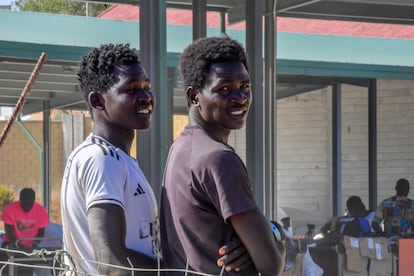
By rough estimates, of the 5,000 young people still roaming the city of Ceuta, between 1,100 and 1,500 are sub-Saharan Africans, housed mainly in two centers. According to the refugee NGO Accem, the police have begun interviews to determine who is eligible to apply for asylum. The first stage of the process, however, took place much earlier when authorities separated, on one hand, women and girls into a safe space to prevent sexual abuse; on another, sub-Saharan Africans into other facilities; and, finally, Moroccans. A couple of Algerians, however, prefer to keep sleeping on the beach because they feel they do not fit into any of the three spaces.
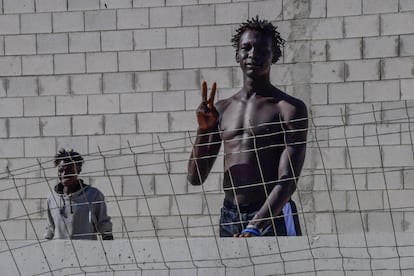
Everyone sleeping at Loma Margarita “are men aged between 18 and 35,” Accem, the organization contracted by the government to manage the situation, says. Most had been waiting in northern Morocco for a chance to cross into Spain when on July 31 they joined the caravan heading to the border. “The police told us to go by sea,” one recalls of that Thursday. It is possible to come and go freely from the Loma Margarita shelter, but during meal shifts the facility’s gates are closed to organize distributions. On El Trampolín beach, Mohamed Camara from Guinea-Conakry waits for the daily food distribution to begin. Camara is from the Siguizin region, known for its gold mines. At just 20, “most of my friends were seized for forced labor in the mines,” he says in French. As of this week, police have his name and he can begin the procedures to apply for asylum.
The Sahel is a semi-arid belt about 3,670 miles long, situated between the Sahara desert and the tropical savannas, from the Atlantic to the Red Sea. The region includes, according to the UN, Senegal, Gambia, Mauritania, Mali, Burkina Faso, Niger, northern Nigeria and Cameroon, Chad, Sudan, South Sudan and Eritrea — in other words, 400 million inhabitants across 12 countries. The government initially said everyone who entered Spain irregularly would be sent back, but the obligation to process asylum claims and laws regarding the return of minors makes that impossible. In Spain last year a total of 75,275 favorable resolutions for international protection and humanitarian statuses were approved, and applications originating from the Sahel top the lists, with approval rates close to 100%.
On the road that climbs past the equestrian center and leads to the CETI, a young man from Mali passes the time sitting with his back against the wall. Omar’s head rests on his outstretched legs. He doesn’t speak or play with his phone. He just stares into the distance and runs his hand over his companion’s head. Omar and Ahmed recount jihadist kidnappings that make a normal life impossible. After a while, they acknowledge they are a couple, and that is another reason they cannot go back.
Sign up for our weekly newsletter to get more English-language news coverage from EL PAÍS USA Edition

Ceuta Crisis Reaches Mainland Spain As Rallies Are Called Across The Country
Tim Curry dies at 80: Rocky Horror legend who redefined British stage flair

Brennan Vuelve A Rematar Otra Lanzadera Perfecta Del Visma En La Vuelta A España


-

 800 metros lisos2 weeks ago
Attaoui Saca Un Bronce En 800m De La Casi Nada
-
aragon wildfire2 weeks ago
Flames force Spanish troops to evacuate 1,000-year-old kings’ bones from burning monastery
-

 New Developments2 weeks ago
Inside The Most LUXURIOUS Apartment Building In Spain!
-
Costa del Sol2 weeks ago
Motril Port closing in on record cruise year with 47,000 summer passengers
-
 Altas temperaturas2 weeks ago
Francia Encara Su Quinta Ola De Calor En El Peor Verano Desde Que Hay Registros
-

 Accidentes tráfico2 weeks ago
Tráfico Prevé 5,6 Millones De Desplazamientos Este Fin De Semana
-
Axarquia2 weeks ago
Velez-Malaga’s €9.14m budget windfall to keep water bills steady for locals
-
Austria2 weeks ago
Electric cars can legally drive 30km/h faster than petrol cars in one European country: Will Spain be next?