
Alejandro Giammattei
Mining Giant Fenix, Accused Of The Destruction Of Maya Lands, Resumes Operations In Guatemala

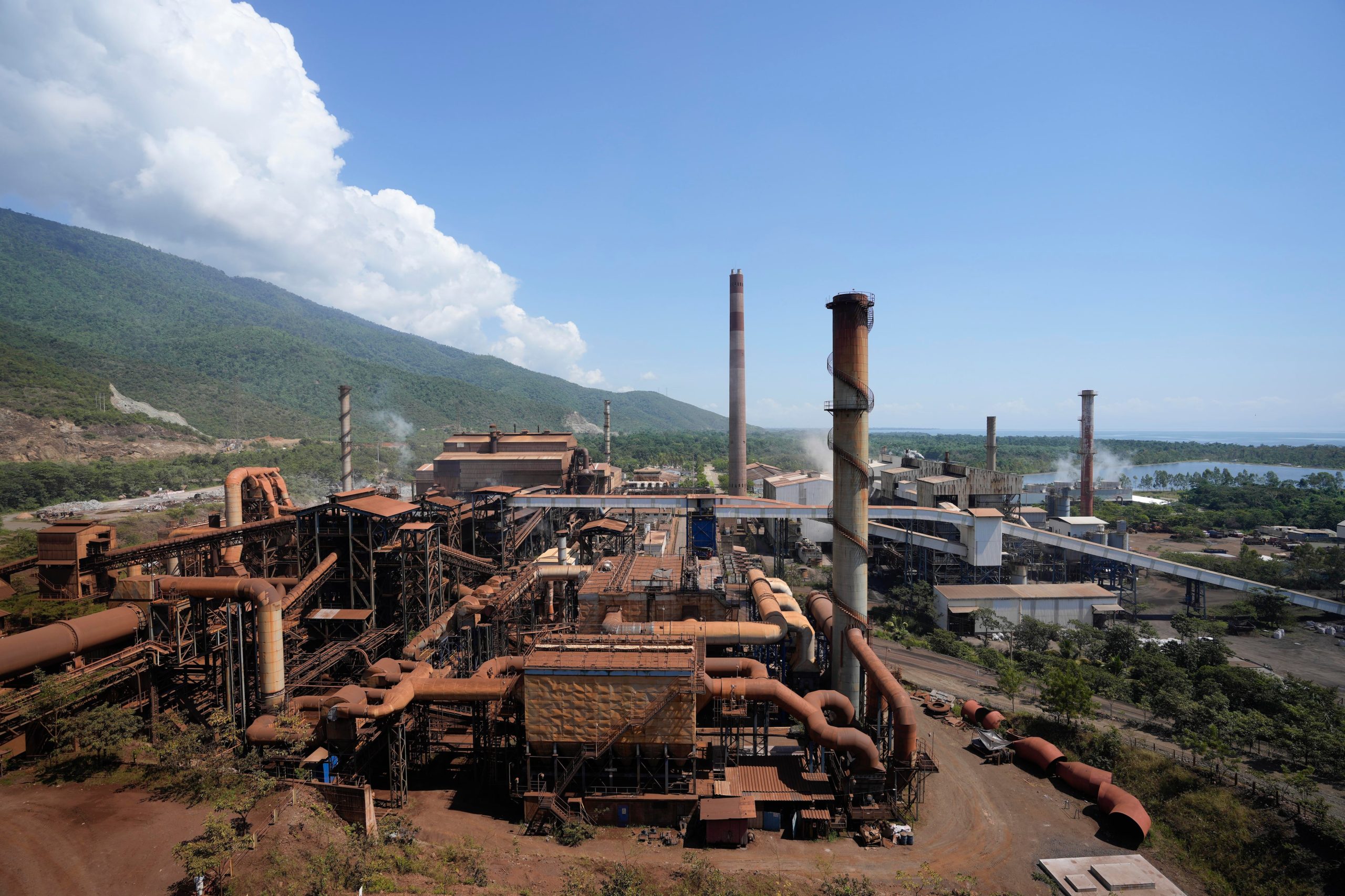
Fenix Nickel, the mining giant and one of Guatemala’s largest nickel extractive companies — accused of bribery, environmental destruction, and violence against Maya communities in the country’s north — has resumed operations after a three-year suspension, Indigenous leaders in the area and local media confirmed this week.
The mining project — with operations in the department of Izabal in northeastern Guatemala — was suspended in March 2023 after the U.S. Department of the Treasury’s Office of Foreign Assets Control (OFAC) sanctioned two executives with ties to the company over accusations of corruption and paying bribes to the Guatemalan government in exchange for concessions.
In November 2022 the U.S. Treasury alleged “Russian corruption in Guatemala’s mining sector” and sanctioned Russian national Dmitry Kudryakov and Belarusian Irina Litviniuk, who allegedly “ran multiple bribery schemes over several years, involving politicians, judges and government officials.”
Fenix, one of the largest open-pit mines in Central America, has exploited Maya lands in northern Guatemala since 2011 under the control of three local companies: Compañía Guatemalteca de Níquel (CGN), Compañía Procesadora de Níquel (Pronico) and Mayaníquel. According to the Treasury, the three operated as subsidiaries of Solway Investment Group, a Swiss-Russian-backed company that extracted between 22,000 and 25,000 tonnes of nickel a year, exporting mainly to Europe and Asia.

Nickel extracted in Guatemala is almost never turned into products within the country. It is exported for the manufacture of industrial machinery, cars, batteries for electric vehicles, and various electronic components.
A year before the suspension of operations, in March 2022, an investigative report that included EL PAÍS called Mining Secrets revealed — through a massive leak of the company’s internal emails — that Solway concealed years of environmental damage in the municipality of El Estor, where its main headquarters are located, and paid bribes to judges, police, Maya leaders and even then-president Alejandro Giammattei to continue operating.
Before the Treasury sanctions, in 2019, Guatemala’s Constitutional Court ordered the suspension of the mining company arguing that it had not carried out consultations with Maya communities to operate on their lands. Those lands are protected by International Labor Organization Convention 169, which grants Indigenous peoples the right to be consulted and to participate in decisions affecting their lives and territory. Now, the miner has resumed activities without holding those consultations, local leaders said.
This newspaper sought comment from Fenix Nickel by phone and email, but received no response.
“The Maya people must rise up”
The company has also been widely denounced by local leaders of the Q’eqchi’ Maya for death threats, forced displacement, and the creation of armed groups outside the law to seize their lands. At least two Indigenous leaders have been murdered in recent years and dozens have been attacked and prosecuted for taking part in protests against the mine’s reopening; one of them was Carlos Maaz, killed by the Guatemalan police during a demonstration over mining pollution in the waters of Lake Izabal, home to protected species such as the manatee.

Indigenous leaders have called on the government of Bernardo Arévalo to act over the mine’s reactivation and accused it of abandoning the communities — who were a key pillar in securing his inauguration in January 2024. This outlet sought an official response through the Presidency’s communications office, but by the time this story went to press there had been no reply.
A member of the ancestral Q’eqchi’ Maya authorities in Izabal, speaking on condition of anonymity, said they are waiting for the government to take action and that if it does not they could take to the streets again. “He [Arévalo] has the political will but also that weakness of not being able to take legal action against the extractive companies that have been dispossessing us of our lands,” the source said.
In October 2021 the Q’eqchi’ community blocked the main entrance to El Estor and prevented coal from reaching the mine, forcing it to partially halt operations. In response, the government of Alejandro Giammattei sent a police and military deployment to impose a state of siege, leading to heavy repression of protests by local leaders and fishermen from the municipality.
“This mine has cost the Q’eqchi’ people blood. However, we never forget that people have the right to rise up — they must rise up. That has happened in every previous decade and it will happen again if necessary,” the leader said.
The Indigenous leader also said the mine’s multimillion-dollar investment leaves only destruction of their lands and poverty for the population. “We only see dispossession and the plundering of our mother earth. The only thing they bring is death and destruction; threats, persecution, imprisonment, journalists persecuted and never development for the community. They only take our wealth,” he added.
The resurgence of Fenix
The Treasury sanctions against Fenix were lifted in 2024 and in August of that year Guatemala’s Ministry of Energy and Mines (MEM) restored its export credentials, local media reported. A year later, in mid-2025, the company announced via its social networks that it would resume activities and would soon be hiring local labor.
A report in Prensa Libre revealed that Fenix began “lighting the furnace” at the end of March, though it said the furnace takes “45 days to reach the required temperature.” The paper reported that on May 15 Fenix exported its first 1,200 tonnes of ferronickel to Taiwan. The outlet also reported that Fenix plans to invest $85 million between 2025 and 2026 for its reactivation and expects to be operating at full capacity by June, aiming to produce 25,000 tonnes of nickel a year.
According to Prensa Libre, the mining project carried out another maneuver to revive itself by reorganizing its companies and moving its headquarters to the United States. This time, Compañía Guatemalteca de Níquel (CGN) adopted the name Fenix Minerales, S.A. and holds the license for the Minera Fenix extraction project in Izabal; meanwhile, Compañía Procesadora de Níquel de Izabal (Pronico) became Fenix Metales, S.A. The project ceased to be owned by Solway, of Russian origin, and shifted its parent company to Nickel Company LLC, registered in New York, which it intends to use to export the extracted material, local media said.
Sign up for our weekly newsletter to get more English-language news coverage from EL PAÍS USA Edition





S

Mining Giant Fenix, Accused Of The Destruction Of Maya Lands, Resumes Operations In Guatemala

Colombia Chooses Its Next President Amid Renewed Violence


-

 Competiciones4 weeks ago
E
-
blackout April 20253 weeks ago
Insurance company Mapfre decides to pay out €14 million compensation for 2025 blackout
-
 Foreign demand3 weeks ago
Who Bought Where In The Second Half Of 2025?
-

 New Developments4 weeks ago
Stylish 3-Bedroom Apartment With Panoramic Sea Views – Benalmádena
-

 New Developments3 weeks ago
Inside The Most LUXURIOUS Apartment Building In Spain!
-

 New Developments4 weeks ago
Luxury Villas For Sale, Estepona – ProjectL1
-
Costa Blanca South3 weeks ago
Alicante police chief to retire after 17 years of service
-

 America4 weeks ago
E