Connect with us

%

Murcia Wildlife Centre Treats Nearly 4,400 Animals In 2025

Published

on

murcia-wildlife-centre-treats-nearly-4,400-animals-in-2025

Murcia wildlife centre treated nearly 4,400 injured animals in 2025. Photo Credit: Region of Murcia Department of Tourism

The El Valle Wildlife Recovery Centre, located in Alberca de las Torres, Murcia, has recently announced that in 2025, it cared for nearly 4,400 animals, representing a 41 per cent increase from the previous year. This means that, since 2009, the wildlife recovery centre has successfully carried out more than 34,000 interventions, saving vulnerable species and caring for the animals that call the Region of Murcia home.

Recovering and saving wild animals, releasing them back into their natural habitats

The El Valle Wildlife Recovery Centre is a facility in Murcia that focuses on recovering injured or distressed wild animals and returning them to their natural habitat once they are healthy. It has been in operation since 1984, and currently has a staff of 12 animal-loving professionals.

Record year for bird and reptile rehabilitation

In 2025, according to the El Valle Wildlife Recovery Centre, 1,356 animals were released back into the wild after being assessed and treated by the centre. In total, the centre cared for 4,393 animals during 2025, which is 1,287 more than the previous year.

Birds are far and away the most treated species at the centre, accounting for more than 87 per cent of the recorded treatments during 2025. In total, 2,323 birds were treated at the centre in 2025. There were 869 more birds treated at the centre than during the previous year. The most common species at the centre were the common swift (Apus apus) and the pallid swift (Apus pallidus).

As for reptiles, the spur-thighed tortoise, or Greek tortoise, was treated 292 times at the centre. Among the mammals, the species with the greatest presence was the European hedgehog, with 66 animals treated.

Kind-hearted local citizens drive the majority of animal rescues

These statistics are also notable for an interesting reason: nearly 80 per cent of the wild animals that are taken to the centre are brought there by Murcia citizens who stumbled upon them while enjoying the Region of Murcia’s natural areas.

The centre combating endangerment and extinction in Murcia

Of the 1,356 specimens that were recovered and returned to the wild, 80.3 per cent of the animals belonged to species that were included in various protection lists and catalogues, reinforcing the vital role the centre plays not only in helping injured animals, but conserving the wildlife in Murcia and its endangered species.

Plans to expand the centre with €700K investment

This good news for the local fauna comes along with even better news for the future of the El Valle Wildlife Recovery Centre: the regional government is preparing an investment of approximately €700,000 to modernise and expand the centre. One of the projects bookmarked for this investment includes the creation of a specialised area for the hospitalisation of sea turtles.

Educating locals about the importance of wildlife and conservation

But the work done at the El Valle Wildlife Recovery Centre is not limited to animal rescue and rehabilitation. The facility also carries out important environmental education activities for the locals. Activities offered by the centre allow the public to learn more about the work carried out there, as well as the importance of species conservation and the threats the animals face.

The centre’s Information Service received 14,155 visitors during 2025, and this year, between January and June alone, recorded another 9,400 visitors. 

%

Lidl’s German ‘big Brother’ Arrives In Spain With Millions Of Products To Challenge Amazon

Published

on

lidl’s-german-‘big-brother’-arrives-in-spain-with-millions-of-products-to-challenge-amazon

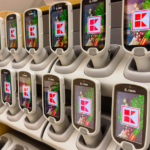
The immediate impact will be more competition in online shopping. Photo credit: Katarzyna Ledwon/Shutterstock

Spanish shoppers are about to get another major online retailer to compare before handing over their money, with millions of products, thousands of categories and another big European name entering an already crowded market.

For anyone who regularly checks several websites before buying electronics, furniture, clothes, garden equipment or household goods, the arrival could mean more choice and another opportunity to find a better price. The Spanish launch is initially an online marketplace, with hopes of a physical store in the near future.

What is actually coming to Spain?

The company behind the move is Kaufland, the German supermarket giant owned by the Schwarz Group, which also owns Lidl. With their online marketplace customers will be able to shop from third-party sellers across more than 6,400 product categories. The range includes electronics, fashion, home and household products, gardening, DIY, sports equipment and other non-food goods.

Sellers list their own products and fulfil orders directly, while Kaufland handles the marketplace, payment processing and customer service. That makes the Spanish operation much closer to Amazon or AliExpress than a conventional supermarket website. Kaufland is also explicitly positioning the marketplace as a European alternative to the major international e-commerce platforms, rather than simply another place to buy groceries. 

How big is it?

This is not a small retailer testing the Spanish market with a few hundred products. In Germany, Kaufland’s marketplace has more than 15,000 international sellers offering over 45 million products, attracting up to 32 million visitors every month. Spain and the Netherlands are being added to its marketplace network, taking the number of European markets to nine and giving sellers potential access to around 220 million online consumers. 

The platform has already expanded beyond countries where Kaufland has physical supermarkets. France, Italy and Austria are among the markets where its online operation has been able to grow without a physical Kaufland store network.  That is particularly relevant to Spain because shoppers should not expect to see a Kaufland supermarket suddenly appear in their town as a result of this launch.

Will it actually be cheaper?

This is the question most Spanish shoppers will want answered, but there is no honest blanket answer. Kaufland is a marketplace made up of independent sellers, so there is no single Kaufland price for a product in the way there is for a packet of coffee or a bottle of olive oil at a supermarket. Different sellers can offer the same product at different prices, and delivery costs also need to be taken into account.

The attraction for consumers is therefore the ability to compare another large marketplace against Amazon, AliExpress, Temu and specialist retailers. Kaufland’s scale could also put pressure on sellers to remain competitive. The company provides marketplace tools that allow sellers to monitor prices and compare their offers with competitors.  But shoppers should still compare the final price, including delivery, rather than assuming that a product is automatically cheaper simply because it is being sold through Kaufland.

Why has Kaufland become so popular?

The company already has considerable retail muscle behind it. Kaufland operates more than 1,600 physical stores across Europe, making its online marketplace an extension of an established supermarket business rather than a new internet company trying to build a customer base from scratch. 

Its online sales have also been growing rapidly in some of its newer markets. Marketplace revenue in Austria increased by 439 per cent last year, while Poland recorded growth of 322 per cent, according to figures reported by the company. Electronics are particularly popular in Germany, with desktop computer sales up around 60 per cent year-on-year, laptops up 32 per cent and mobile phone sales almost 30 per cent. Health and personal care products also recorded strong growth. 

What could change for Spanish buyers?

The immediate impact is more competition in online shopping. Spanish consumers will have another large European marketplace to check alongside the established names, while Spanish businesses will gain another route into customers at home and across other European markets. Kaufland says more than 500 Spanish sellers are already active on its marketplaces elsewhere in Europe, meaning the Spanish launch could work both ways: bringing international products to Spanish consumers while helping Spanish companies sell abroad.

For shoppers, however, the real test will come down to something much simpler, whether Kaufland can regularly offer products, prices and delivery options good enough to make people check it before clicking “buy” somewhere else. Its arrival does not mean Amazon, AliExpress or Spain’s existing retailers suddenly have a new supermarket competitor on every high street. It means Spanish shoppers now have another very large online shop to compare before spending their money

Continue Reading

%

Secondhand Torrevieja Appeals For Donations

Published

on

secondhand-torrevieja-appeals-for-donations

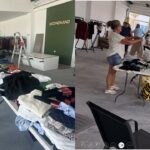
Secondhand Torrevieja appeals for more donations. Credit: Tore Tjomsland / Facebook.

Secondhand Torrevieja is appealing for more donations as volunteers prepare a new charity shop on Avenida de las Cortes Valencianas.

The premises at number 118, on the same site as Ballenoil, are gradually being fitted out and stocked ahead of opening, but organisers say considerably more good-quality second-hand items are needed to help fill the shop.

Clothes, books, furniture and household items are needed to stock the new Torrevieja shop

Residents are being encouraged to donate good-quality items that they no longer need and which could find a new home through the charity shop.

Secondhand Torrevieja is accepting clothes, shoes, bags, books, kitchenware and home decorations, along with small pieces of furniture and other reusable household items.

The appeal comes as volunteers continue preparing the premises for opening, with donations needed to build up enough stock for the new shop.

Items can currently be dropped off at the premises on Mondays, Wednesdays and Fridays between 10:00 AM and noon.

A collection service is also available for people who have suitable donations but are unable to bring them to the shop themselves. Collection arrangements can be made directly with the volunteers.

Charity shop proceeds will help support people facing difficult circumstances

Secondhand Torrevieja is organised as an association and is run by volunteers, with the new shop intended to turn donated goods into practical support for social projects.

Proceeds will support projects through the association’s main partner, the Norwegian Seamen’s Church in Torrevieja, helping people who are facing difficult circumstances.

By donating reusable goods rather than throwing them away, residents will also be giving clothes, furniture, books and household items an opportunity for a second life while contributing to the group’s community work.

More volunteers are wanted as preparations continue for the new charity shop

As well as asking for donations, Secondhand Torrevieja is looking for additional volunteers to become involved with the project.

Anyone interested in donating items, arranging a collection or finding out more about volunteering can contact Secondhand Torrevieja on (+34) 623 619 253.

The new shop is at Avenida de las Cortes Valencianas 118, Torrevieja, on the same site as Ballenoil.

Organisers have advised visitors that online maps do not always pinpoint the address accurately, so people delivering donations should look for the Ballenoil site when travelling to the premises.

Donations can be delivered between 10:00 AM and noon on Mondays, Wednesdays and Fridays while preparations for the opening continue.

Continue Reading

%

Local Freemasons In Mijas

Published

on

local-freemasons-in-mijas

Gemini Lodge No. 51 are welcoming women to an evening of dinner, dressing up and good company at Miraflores Golf Restaurant on Saturday, September 19.

Dinner starts at 8pm following a 7pm reception, with guests treated to a mouth-watering three-course meal, half a bottle of wine and water for €50 per person. Billed as “An Evening of Elegance and Celebration,”, grab your glam outfit and head along. The evening takes place at the locals favourite Bobby Jones and Spikes Restaurant, part of Miraflores Golf Club, loved locally for its gorgeous terrace views and private functions.

Who are Gemini Lodge No. 51?

The lodge has been active in the region for more than a century, built around the traditional masonic principles of Brotherly Love, Relief and Truth. Members come from a genuine mix of backgrounds and nationalities, brought together by fellowship, personal growth and community work rather than any shared profession or faith. English-speaking lodges have built a presence in this part of southern Spain over the years, with groups such as Freemasons Costa del Sol pointing to a growing, multinational membership around Fuengirola and Mijas.

Grab your handbag and head along to enjoy the ladies festival

Organisers frame the evening as a chance “to connect more with the community,” with places at the table coming with a delicious choice of starts mains and desserts, ranging from prawn cocktail and soup to, main fish and meat options and finishing off perfectly with dessert for those with a sweet tooth. Guests pick their preferred choices in advance, and a vegetarian main is available for anyone who needs it, so nobody has to worry about dietary requirements once the evening gets going.

Tickets are €50 per person, covering the full three-course dinner along with wine and water. Full details can be found via Bobby Jones & Spikes Restaurant’s Facebook page and Instagram channels.

Continue Reading
Advertisement
Advertisement

Spanish Real Estate Agents

Tags

Trending

Copyright © 2017 Spanish Property & News