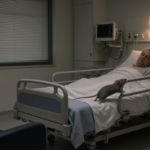
The union also says it identified a possible entry and exit point near the hospital garden. Photo credit: Ai generated image
If I was to ask you where you would expect to see a rat, I’m sure a Spanish hospital bed would probably be one of the last places you would say, particularly when you are recovering from an operation. Yet one patient in Cádiz had a very different kind of visitor during his stay, turning what should have been a routine night in hospital into a rather extraordinary encounter.
It is the latest in a string of unusual incidents involving unwanted creatures at Spanish hospitals, from insects turning up where they really should not be to reptiles making their way into patient areas. So, quite apart from the immediate disgust factor, it raises an uncomfortable question: are Spain’s hospitals doing enough when it comes to pest control and sanitation?
Rat jumps onto patient’s bed
The incident happened during Friday night, September 18, at Hospital Puerta del Mar in Cádiz. According to the patient’s relatives, a large rat somehow made its way into a third-floor hospital room. The animal initially hid behind the chair being used by a family member accompanying the patient. It did not stay there for long.
The rat eventually jumped onto the patient’s bed, where it was filmed by the family before they managed to get the animal out of the room. The patient was recovering from an operation at the time, making the unexpected visitor particularly disturbing for those present. But the incident has taken on a different significance because concerns about rats at the hospital had already been raised weeks earlier.
Staff had already sounded the alarm
UGT says it warned hospital management in August after rodents were reportedly seen in several areas of Puerta del Mar. Those areas included the kitchen, pathology, nuclear medicine and radiotherapy departments, according to the union, which also pointed to areas of the hospital basement. UGT says it identified a possible route through which the rodents could enter and leave the building, involving a drain close to the hospital garden.
Following the warnings, additional pest-control and monitoring measures were activated, with the hospital also coordinating with Cádiz City Council. The union says the checks carried out at the time found a low level of rat activity.The appearance of one inside a patient’s bedroom has therefore prompted UGT to call for the existing measures to be reviewed and for the hospital to establish exactly how the animal managed to reach the ward. There is no evidence from this incident alone that Puerta del Mar has an infestation, and UGT has not claimed that it does.
Not the only recent hospital visitor
The Cádiz rat is also not the only recent case in which an unwanted creature has found its way into a Spanish hospital. In August, two snakes were reportedly found inside the Hospital Alto Guadalquivir in Andújar, Jaén. One was discovered underneath a patient’s bed. The incidents prompted an investigation into how the reptiles had entered the hospital, involving the regional authorities and environmental officials.
Then there was a cockroach in a patients food at the Hospital Clínico de Santiago in Galicia. That incident happened on August 4 and was reported publicly in September. CCOO subsequently demanded explanations and action, while hospital management described the discovery as an isolated and exceptional incident. Additional pest-control measures were carried out afterwards.
Are standards slipping?
Three incidents at three hospitals alone do not establish that sanitation standards across Spain’s healthcare system are slipping, but it is sure enough makes you question them. Each hospital has also reported having pest-control procedures in place, and there is no evidence that these cases represent a nationwide deterioration. But the incidents do raise an awkward question for patients.
Hospitals have strict hygiene requirements precisely because people receiving treatment can be particularly vulnerable to infection and other risks. That makes the appearance of rodents, reptiles or insects inside patient areas, kitchens or food particularly uncomfortable.
In Cádiz, the most obvious question is now how a rat managed to get from wherever it entered the building to a third-floor hospital room, especially after concerns had already been raised. For the patient who was trying to recover from an operation, though, the issue was considerably simpler. He went into hospital expecting treatment and ended up with a visit from a rat and this one wasn’t there to collect his teeth!











 Argentina1 week ago
 Andalucia2 weeks ago
 Alex Saab6 days ago