
DGT
Spain’s new emergency corridor rule starts October 1. What every driver needs to do

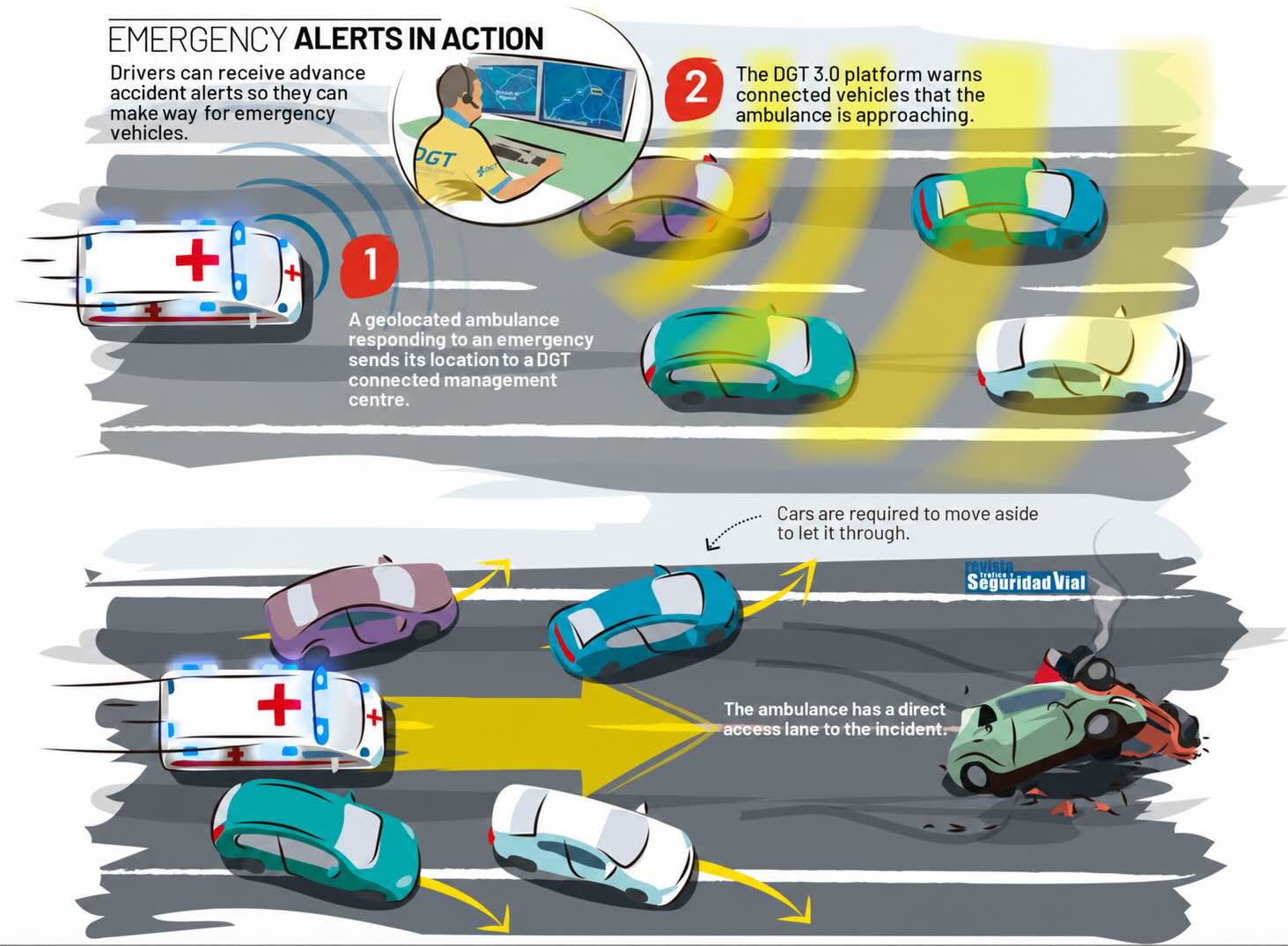
Ambulances face heavy motorway congestion as Spain prepares to require drivers to create an emergency corridor from October 1. Credit: DGT
A traffic jam on a Spanish motorway will soon mean more than slowing down and waiting. From October 1, drivers must create a clear route for ambulances, police, fire crews and other emergency vehicles whenever traffic is moving at walking pace or has stopped.
The new rule applies across Spain’s autopistas and autovías. It is designed to prevent emergency vehicles being trapped behind long queues after collisions, fires or medical incidents.
When do drivers have to form an emergency corridor?
The obligation starts when there is a traffic hold up and vehicles are either crawling at walking pace or stationary.
You do not have to wait until an ambulance is visible in the mirror. Once the queue forms, drivers should position their vehicles to leave the route open. Emergency vehicles can then get through immediately when they arrive.
The measure applies on motorways and dual carriageways, not ordinary single carriageway roads or town streets.
Where does the emergency corridor go on a two lane road?
On a motorway or dual carriageway with two lanes travelling in the same direction, the clear route must be created between the two lanes.
Drivers in the left lane should move as far left as safely possible. Drivers in the right lane should move as far right as safely possible.
The gap in the middle is for emergency services. It is not an extra lane for impatient drivers, motorcyclists or anyone trying to bypass the queue.
What happens when there are three or more lanes?
The rule changes slightly on larger motorways.
The emergency corridor must be formed between the far left lane and the lane immediately beside it. Drivers in the far left lane move as far left as possible, while vehicles in every other lane move as far right as possible.
This leaves a continuous route on the left side of the carriageway for ambulances, police, fire engines and rescue services.
What drivers should not do
Do not drive along the hard shoulder to escape the traffic. Do not follow an ambulance through the gap it has created. Do not block the corridor while trying to change lanes at the last moment.
Drivers should also avoid stopping so close to the vehicle in front that they cannot move aside. Leaving sensible space becomes particularly important in tunnels, on bridges and in heavy holiday traffic, where access for emergency services can be difficult.
Could you be fined?
The new emergency corridor requirement forms part of Spain’s updated General Traffic Regulations. Failing to follow lane use rules can be treated as a serious traffic offence, which normally carries a €200 fine.
The exact penalty will depend on the circumstances and enforcement decision. Where a driver obstructs an emergency vehicle or creates a genuine danger, the consequences may be more serious. Drivers should not rely on the corridor being merely a courtesy. From October 1, it is a legal obligation.
The rule is set out in Royal Decree 518 of 2026, published in the BOE, which updates Spain’s General Traffic Regulations.
For the wider list of traffic changes arriving this autumn, including new rules affecting cyclists, motorcyclists and scooters, read our guide to Spain’s road rule changes from October 1.







accident
19-year-old dies after car plunges into drainage ditch as questions grow over roadside safety in Spain
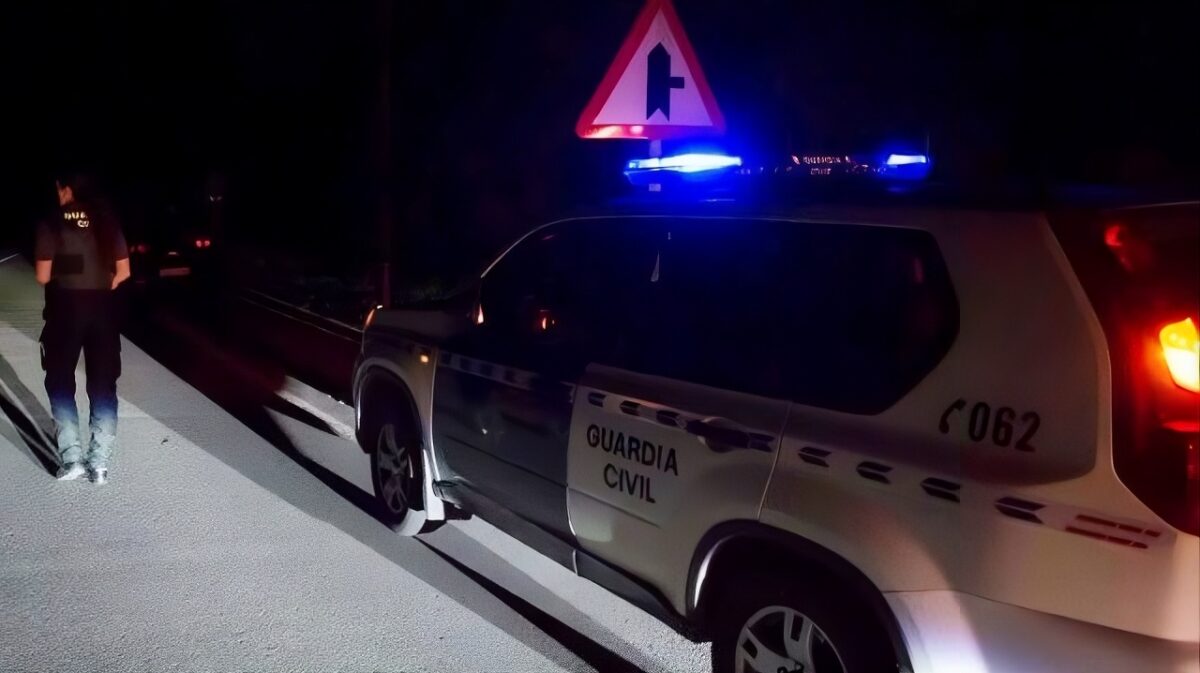
A 19-year-old man has died after the car he was driving in left the road and plunged down a drop in Alhaurin el Grande, Malaga province.
The fatal crash happened at around 11pm on Friday, September 18, on Calle Rio Guadalmedina, on the road between Alhaurin el Grande and Villafranco, according to Emergencias 112 Andalucia. Several witnesses instantly called emergency services after seeing that a car had left the road and fallen down a drainage ditch, with a person inside requiring medical assistance.
Firefighters, Guardia Civil, local police and emergency medical teams were sent to the scene. However, medical staff could only confirm the death of the 19-year-old. No further details have been released about why the vehicle left the road, and there is currently no suggestion that the roadside layout was responsible for the crash.
The tragedy does, however, draw attention to a familiar road-safety issue for motorists travelling on rural roads across Spain: what happens when a vehicle accidentally leaves the carriageway?
Spanish roads and the danger beyond the tarmac
Deep drainage ditches, steep slopes and sudden drops are common sights beside some rural roads, sometimes with little space between the edge of the road and the hazard. Near to the site of the accident, on the A-404 between Alhaurin el Grande and Coin, recent resurfacing and works have left newly built drainage ditches at the side of the road, in some spots, deeper that one metre.
Government recognised problem
Spanish road-safety guidance recognises that these features can make a crash more serious. The Directorate-General for Traffic (DGT) says around 500 people are killed every year in run-off-road crashes, with 482 deaths recorded in 2025. More than half of serious or fatal incidents occur on conventional single-carriageway roads.
The DGT also says the severity of a run-off-road crash is influenced by the characteristics of the roadside, including slopes, obstacles and whether a safety barrier is present. That does not mean every ditch or drop needs a guardrail.
When does a Spanish road need a barrier?
Spain’s national guidance takes a risk-based approach rather than simply requiring barriers beside every ditch. The Ministry of Transport’s Order Circular 35/2014 sets out criteria for vehicle restraint systems on the state road network. It requires roadside hazards to be assessed and says that dangerous obstacles or changes in level should, where possible, be removed, moved or redesigned before a barrier is installed.
The DGT specifically recommends redesigning roadside ditches and verges so that a vehicle leaving the road has a better chance of regaining control rather than encountering a sudden change in level. Its guidance reports a 6 per cent reduction in crashes associated with this type of treatment.
For drivers and residents in the campo, the question is therefore not simply whether a rural road has a guardrail. It is whether the roadside gives a driver who makes a mistake a realistic chance of recovering before a relatively minor departure from the carriageway becomes a much more serious accident.
The circumstances surrounding Friday night’s tragic crash in Alhaurin el Grande are still under investigation.
autonomous
Driverless Taxis To Hit Spain’s Streets This Year As Uber Gets Green Light To Launch Robotaxis In Madrid


 UBER will bring its range of robotaxis to the streets of Madrid by the end of 2026 after Spain’s DGT granted the company permission.
Spain’s new emergency corridor rule starts October 1. What every driver needs to do
Benidorm offers young drivers up to €250 towards driving lessons
Major Benidorm housing project gets green light after 20-year wait
The Vocabulary You Need To Understand The Spanish Citizenship Process
Ibiza council hits illegal tourist rental with €793,000 fine – but will the owner pay that much?

94% Of Spanish Homes Are Energy Inefficient – Could Tighter Rules Be Coming?


-
Latest1 week ago
The Vocabulary You Need To Understand The Spanish Citizenship Process
-
Holiday rentals2 weeks ago
Ibiza council hits illegal tourist rental with €793,000 fine – but will the owner pay that much?
-
 Energy efficiency & certificates2 weeks ago
94% Of Spanish Homes Are Energy Inefficient – Could Tighter Rules Be Coming?
-

 Argentina1 week ago
The Falklands: The Open Wound That Unites Argentines
-

 Andalucia2 weeks ago
There’s One Chief Consultant Orthopaedic And Trauma Surgeon In Marbella You Can Trust Under The Knife
-
easyJet1 week ago
146 slide off easyJet flight after powerbank fire at Milan airport
-

 Alex Saab6 days ago
Maduro Ally Alex Saab Pleads Guilty In US Money-Laundering Case
-
Affordable homes Spain2 weeks ago
Costa Blanca renters may be missing out on Spain’s new affordable homes