Connect with us

%

NASA Explains Mystery Boom That Shook Homes

Published

on

nasa-explains-mystery-boom-that-shook-homes

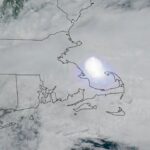
A satellite captured the moment a meteor exploded over New England, creating a shockwave heard across parts of Massachusetts and New Hampshire. Credit : X – CIRA @CIRA_CSU

For a few confusing moments on Saturday afternoon, residents across parts of Massachusetts and New Hampshire were left wondering what had just happened.

Some described hearing a loud boom that echoed across the area. Others said their homes shook unexpectedly.

As reports began appearing on social media, people searched for answers. Was it an explosion? An earthquake? Some kind of aircraft incident?

The explanation turned out to be far more unusual. According to NASA, a meteor travelling at around 120,000 kilometres per hour entered Earth’s atmosphere and broke apart above the Massachusetts and New Hampshire border at 2.06pm local time on 30 May. The event produced a powerful shockwave that was heard across a wide area and startled residents on the ground.

Although dramatic, the space agency says the object posed no threat to the public.

Why so many people heard the blast

Most meteors burn up in the atmosphere without attracting much attention.

This one was large enough to produce what astronomers call a fireball, a particularly bright meteor that can generate a powerful shockwave when it fragments.

NASA estimates that the energy released when the object broke apart was equivalent to roughly 300 tonnes of TNT.

That figure helps explain why residents reported such a strong boom.

Across social media, people shared similar experiences. Some said windows rattled. Others reported feeling vibrations inside their homes. Several described being startled by the sudden noise, especially as there had been no obvious warning beforehand.

The event happened in daylight, making it even more surprising for many people who were simply going about their normal Saturday afternoon when the boom occurred.

While the sound caused concern, experts stress that the meteor disintegrated high in the atmosphere.

The noise heard on the ground came from the shockwave created when the object fragmented during its passage through the sky.

NASA says it was a natural meteor and not space debris

Following events like this, one of the first questions often concerns the object’s origin.

NASA quickly clarified that the fireball was a natural meteor. The agency also stated that it was not linked to any active meteor shower and was not caused by the re-entry of a satellite or other human made space debris.

That distinction is important because objects returning from orbit can sometimes create bright streaks across the sky and attract similar attention.

In this case, however, researchers concluded that the object was a naturally occurring piece of space rock entering Earth’s atmosphere.

The clarification helped answer speculation that had begun circulating online shortly after the boom was heard.

Why events like this remain relatively rare

Every day, Earth encounters material from space.

Most of it is tiny.In many cases, these objects are no larger than grains of dust and burn up harmlessly before anyone notices.

Larger meteors are far less common.

When they enter the atmosphere at high speed and begin to break apart, they can create spectacular fireballs visible across large areas. Under certain conditions, they can also generate shockwaves powerful enough to be heard many kilometres away.

That appears to be what happened over New England on Saturday.Scientists study these events because they provide valuable information about the objects moving through our solar system and how they behave when they encounter Earth’s atmosphere.

For residents who heard the blast, though, the scientific explanation came later.

At the time, many were simply trying to understand why a peaceful afternoon had suddenly been interrupted by a boom loud enough to shake houses and send people searching for answers.

Within a few hours, NASA had provided the explanation. The source was not on the ground at all.

It had travelled through space before ending its journey high above Massachusetts and New Hampshire in a brief but dramatic burst of light and energy.

%

Princess Leonor Makes Her Debut Appearance At Military Parade Alongside King Felipe VI

Published

on

princess-leonor-makes-her-debut-appearance-at-military-parade-alongside-king-felipe-vi

Large crowds gathered along the waterfront to watch the procession. Photo credit: La casa de S.M el Rey on X

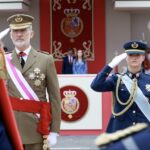
Princess Leonor has attended the Día de las Fuerzas Armadas (Armed Forces arade) for the first time alongside King Felipe VI and Queen Letizia, appearing with her father during the national military parade held in Vigo on Saturday May 30.

The event, which brings together Spain’s armed forces each year in a different city, was presided over by King Felipe VI and marked a significant moment in the public military role of the Princess of Asturias, who is currently completing her military training.

Leonor joined the Royal Family on the tribune and took part in the official programme as the parade unfolded along the Galician city’s waterfront, where thousands of service personnel were deployed.

First participation in a major military ceremony

This was the first time Princess Leonor has attended the central Día de las Fuerzas Armadas parade alongside the King, making it her most prominent appearance to date in a national military ceremony of this scale. According to official reporting, she attended as part of her ongoing military instruction, which has included training across the Army, Navy and Air Force.

Her presence had been confirmed shortly before the event following an adjustment to the Royal Household’s schedule. The King and Queen were accompanied by their daughter during the tribune ceremony, where they observed the march-past of military units and equipment. Leonor is expected to continue participating in major institutional events as part of her preparation for her future role as Commander-in-Chief.

Large-scale military display in Vigo

The parade was part of a programme of defence activities held in Vigo over several days. More than 3,700 personnel took part, supported by units from the Army, Navy, Air Force, Guardia Civil and the Military Emergency Unit.

The display included infantry formations, cavalry units, military vehicles and coordinated marching groups. A naval and aerial programme had also been planned as part of the wider celebrations, reflecting the operational capabilities of the armed forces.

Large crowds gathered along the waterfront to watch the procession, which began in the morning under overcast conditions. The city had hosted several related demonstrations in the days leading up to the main parade, including naval and amphibious exercises.

Weather disruption and cancellation of aerial display

The event was affected by adverse weather conditions, which led to the cancellation of the scheduled aerial display. The decision was taken shortly before the parade began due to safety concerns linked to cloud cover and wind conditions.

As a result, the planned flypast by aircraft formations and parachute units did not take place. The cancellation was communicated during the event, with the ground parade continuing as scheduled.

Despite the disruption, the ground procession proceeded without alteration, with military units maintaining the planned route and timings.

Incident during flag ceremony

A separate incident occurred during the flag-raising ceremony at the start of the event when the national flag fell to the ground after a technical failure in the hoisting mechanism. Reports from the scene indicate that the malfunction was caused by a mechanical issue with the mast system.

The incident prompted an immediate response from organisers, and the King later instructed that the ceremony continue with an alternative flag display from the Guardia Real in order to maintain the formal sequence of the event.

The moment drew attention from attendees and was visible during the live broadcast of the ceremony.

Significance of Leonor’s role

Princess Leonor’s presence at the parade is seen as part of her gradual integration into official military duties. As heir to the throne, she is expected to assume the role of Supreme Commander of the Spanish Armed Forces in the future, following the constitutional role held by the monarch.

Her participation in Vigo follows previous appearances at other national military events, including the National Day parade in Madrid. However, the Vigo ceremony represents her first attendance at the Día de las Fuerzas Armadas alongside King Felipe VI during a full-scale national parade outside the capital.

Officials present included the Minister of Defence, Margarita Robles, and senior military commanders responsible for coordinating the event.

Final take 

The Día de las Fuerzas Armadas in Vigo combined large-scale military participation with ceremonial significance for the Royal Family. While the event was disrupted by weather conditions and a technical failure during the flag ceremony, it also marked a notable step in Princess Leonor’s public military role, as she appeared for the first time alongside King Felipe VI at the national parade in this context.

Continue Reading

%

Portugal Notifies Of Temporary Suspension Of EU Border Biometric Checks

Published

on

portugal-notifies-of-temporary-suspension-of-eu-border-biometric-checks

Portuguese authorities have previously used similar measures during periods of disruption at airports. Photo credit: Andrei Antipov/Shutterstock

Portugal has notified the European Commission that it may temporarily suspend the collection of biometric data under the EU Entry/Exit System (EES) at certain border crossing points, in order to manage passenger congestion at airports.

The notification allows Portuguese border authorities to pause the collection of biometric data in specific locations when passenger flows exceed processing capacity. The measure is applied on a limited, case-by-case basis.

According to EU rules, member states may temporarily suspend the biometric registration process at specific border points, but they must inform the Commission in advance and specify where and for how long the suspension applies.

Purpose of the notification

The notification made by Portugal relates to the use of this contingency measure when operational conditions require it, particularly during periods of high passenger volumes. The aim is to reduce delays at border control while maintaining overall border management procedures.

Under the EES framework, suspensions are not permanent changes to the system. They are time-limited operational measures used when standard biometric processing creates congestion or long waiting times.

Portuguese authorities have previously used similar measures during periods of disruption at airports, including Lisbon, where queues increased following the introduction and phased rollout of the system.

Operational context in Portugal

Portugal has already experienced repeated congestion at border control points since the phased introduction of the Entry/Exit System. At Lisbon airport in particular, waiting times increased significantly during earlier stages of implementation, with authorities at times reverting to manual checks when queues became excessive or when infrastructure capacity was exceeded. 

In December 2025, the government temporarily suspended full use of the EES at Lisbon airport for a period of three months after admitting operational constraints in the arrivals area. The measure was taken to manage passenger flow and reduce delays while border staffing and processing capacity were adjusted. 

The system has since been reintroduced in phases, with Portuguese authorities confirming that EES processing is now active again across border points, although they continue to apply operational adjustments where necessary depending on passenger volumes.

What the suspension means in practice

The notification does not mean the suspension of the EES itself. Instead, it refers only to the temporary suspension of biometric data collection at specific border control points when needed.

For travellers arriving in Portugal, this may mean:

  • In normal operation, non-EU travellers will continue to be registered in the EES and provide fingerprints and a facial image on first entry 
  • During suspension periods at specific locations, border authorities may revert temporarily to manual passport checks 
  • Any suspension is expected to be limited in time and location, and does not affect the overall requirement to comply with Schengen entry rules 

In practice, this means most travellers will not notice a change unless they arrive during a period when the contingency measure is activated at a particular airport or border post.

What it means for people travelling to Portugal

For passengers travelling to Portugal from outside the EU and Schengen area, entry requirements remain the same under EU law. Travellers must still present a valid passport and comply with the 90/180-day rule for short stays.

Where the EES is fully operating, first-time visitors will still be required to provide biometric data, and their entry and exit movements will be recorded electronically.

Once the temporary suspension is activated at a specific border point, travellers may experience:

  • Faster processing times at passport control 
  • Reduced use of biometric kiosks during peak congestion 
  • A return to manual document checks in some cases 

However, this does not change eligibility requirements for entry, visa rules, or the legal limits on stay in the Schengen area.

Administrative oversight

The European Commission oversees the implementation of the EES across member states, while national border authorities are responsible for deciding when contingency measures are necessary and notifying Brussels accordingly.

In Portugal, border management operations are carried out by national police authorities at airports and external borders, who apply the system in line with EU regulation and operational guidance.

Outlook

Portugal’s notification to Brussels relates to a temporary operational safeguard within the EU Entry/Exit System rather than a change in policy. It allows biometric processing to be paused at specific border points when necessary to manage congestion, while maintaining the wider requirement for electronic entry and exit recording for non-EU travellers.

Continue Reading

%

UK Dad Stranded In Greece By Little-Known Passport Rule

Published

on

uk-dad-stranded-in-greece-by-little-known-passport-rule

Kyle and Ruth Harris stick in Greece. Credit: kyleharris7777 – Instagram

A British father faces a holiday nightmare after being barred from boarding a Jet2 flight home from Kefalonia, Greece, due to recently updated border controls. Kyle Harris, a 39-year-old dual national from Wheatley in South Yorkshire, was separated from his family when airport staff enforced strict electronic travel rules. Born in Maryland, United States, Harris moved to Britain as an infant, before celebrating his first birthday, in fact, and has contributed to the UK system for 24 years through taxes, national insurance and even being schooled in the UK.

New rules catch holidaymakers unaware – More to come?

The story does not bode well for the upcoming summer holiday peak, and it is a reminder of what may come starting from a month’s time. Changes implemented in February 2026 mandate that all British citizens enter the country using a British passport. Dual citizens cannot rely solely on foreign documentation anymore. The recently introduced Electronic Travel Authorisation (ETA) system monitors this policy, bringing UK border controls in line with rules seen in Canada, Australia, and the US.

Jet2 staff told the stranded father to apply for a British passport from the British Consulate in Greece or buy a Certificate of Entitlement, which carries a hefty £589 price tag and takes up to eight weeks to arrive. However, because Harris is a British citizen, he remains entirely ineligible to fill out a standard ETA form.

Health fears cause holiday panic

Medical worries have complicated the family’s unexpected extension abroad. Harris suffers from a pituitary tumour and only packed a one-week supply of essential medication for the trip. His wife, Ruth, refused suggestions from airline operators to fly back to South Yorkshire alone with their two young sons, pick up more medication and return to Greece, opting instead to wait out the emergency documentation process at the British consulate.

Jet2 stated its staff followed government rules and consulted the Home Office before making the final decision. Home Office officials maintained that awareness campaigns regarding the Electronic Travel Authorisation protocols have run publicly since 2023. Mixed-nationality families across Britain are tracking the situation closely, or at least, should be as frustration grows over the clarity of public border announcements.

Still, there are worse places one could be stranded.

Continue Reading

Trending

Copyright © 2017 Spanish Property & News