Connect with us

%

Princess Leonor Completes Parachuting Course In Murcia Military Training

Published

on

princess-leonor-completes-parachuting-course-in-murcia-military-training

Princess Leonor completes parachuting course during final phase military training. Photo Credit: Royal Household of Spain

Princess Leonor of Asturias has officially completed her parachuting course, taking place at the Alcantarilla air base in Murcia, as part of her military training at the General Air and Space Academy. The heir presumptive to the Spanish throne completed the course, called the Basic Parachuting Course, at the Méndez Parada Military Parachuting School, alongside about fifty of her peers from the academy.

Princess Leonor of Asturias, the first royal to receive parachute training

During this course, the princess learned to perform automatic mode parachute jumps, which are common among different units with parachuting capability of the Air and Space Army, the Army, the Navy, and the Guardia Civil. Leonor is the first member of the royal family to have trained for this exercise, as neither her father nor grandfather did so during their time at the academies.

As a distinction for passing the course, Princess Leonor, along with the rest of her classmates, received the accreditation diploma and a parachutist badge. The Royal Household also released photos of the princess taking her first parachuting jumps, typically made at a height of around 400 metres, and which included one that was carried out at night.

Leonor to complete her final year of military training this July

Leonor, the daughter of King Felipe and Queen Letizia, is currently in the process of completing her third and final year of military training. She will officially finish her training in July. To carry out her training, she has attended the General Military Academy, the Naval Military School, and the General Air and Space Academy.

After her military training is officially completed, the princess will begin her Political Science degree next September at the Getafe campus of the Carlos III University of Madrid.

Princess Leonor is also due to receive the Region of Murcia’s highest distinction, the Gold Medal of the Region of Murcia, this week.

%

Jazz Artist Dean DeMerritt Concert Malaga

Published

on

jazz-artist-dean-demerritt-concert-malaga

Eddy’s Music Factory in Malaga is treating jazz lovers to an evening of world-class music this Friday, as acclaimed American bassist Dean DeMerritt makes a special appearance for a free, one-night-only performance on Friday, June 5.

A lifetime of jazz pedigree and a country Grammy

DeMerritt’s musical career spans more than four decades, covering jazz, country, and classical music. Born and raised in Tulsa, Oklahoma, DeMerritt grew up performing in his father’s jazz band before formalizing his education at the University of Tulsa, where he studied classical and jazz bass.

While in college and throughout his early career, he shared the stage with jazz heavyweights including Stanley Clarke, Max Roach, Billy Cobham, Thad Jones, and Mel Lewis.

Following his graduation, DeMerritt joined the celebrated western swing band Asleep at the Wheel. During his four-year tenure with the group, he recorded multiple albums, won a Grammy Award for Best Country Instrumental Performance, and toured alongside country icons Willie Nelson, Waylon Jennings, and George Strait.

High-energy improvisation all in one evening

Joining DeMerritt on stage Friday to form a classic jazz trio are talented local pianist Carlos Gonzalez and drummer Johnny Bebop.

The trio’s performance will be an interesting mix of traditional jazz standards and contemporary interpretations, prioritizing the live improvisation and spontaneous musical interaction that defines the style. The vibe at Eddy’s Music Factory allows the audience to experience the performance perfect for jazz, up close and personal.

Open jam session to follow the main event

Following the main concert, the venue will host an open jam session. Local musicians are invited to bring their instruments to collaborate on stage and connect with the visiting artists, a rare, exciting and great opportunity for any lover of the genre.

Eddy’s Music Factory, located in Malaga’s Churriana area near IKEA hosts live concerts, rehearsals, and workshops throughout the year.

Admission to the event is free of charge, with no advance ticketing required.

Event details

Date: Friday, June 5
Time: 9pm
Venue:Eddy’s Music Factory, Calle Pascal 2, Churriana
Admission:Free entry
Telephone:+34 639 93 00 10

Continue Reading

%

Velez-Malaga Council To Absorb 40% Water Bill Rise

Published

on

velez-malaga-council-to-absorb-40%-water-bill-rise

Swimming pool in Torre del Mar. Credit: Ayuntamiento de Velez

People living in Velez-Malaga and surrounding areas are about to get some noticeable financial relief as the local council has decided to fully absorb a 40 per cent price increase in bulk water bills. This decision prevents any direct pass-through to household bills, supporting families, self-employed workers, and local businesses during a period of economic pressure.

Financial shield for households and businesses

Council funds will cover an extra €3.5 million to handle the full rise in bulk water prices. Families will benefit from continued stability in essential services without unexpected charges on their monthly statements. Self-employed individuals and commercial outlets will also avoid added expenses that could affect their operations and viability in the community.

Key factors behind the bulk water adjustment

Bulk water price revisions come from several practical updates. Accumulated inflation adjustments since 2015 form one element. Expansion to serve new urban developments and zones adds another layer. Axaragua, the bulk water supplier, implemented its first tariff update in over a decade. Temporary charges related to water transfers from Malaga during recent drought conditions complete the picture, reflecting challenges at La Vinuela reservoir.

Community benefits and service stability

Local decision-makers prioritise protection for everyday users by keeping water charges steady at the consumer level. This approach delivers reassurance that one of the most affordable essential resources remains accessible. Households will therefore experience no immediate bill shock, allowing better budgeting and reduced financial strain.

Absorbing these costs demonstrates commitment to easing pressures on residents facing tight budgets. Businesses maintain operational continuity without water-related cost burdens. The measure supports overall community wellbeing by safeguarding access to reliable water supplies.

Velez-Malaga residents are going to receive clear confirmation that essential services stay protected. This plan helps families, independent workers, and traders navigate external cost pressures while ensuring uninterrupted access to clean water. Local authorities reinforce their focus on practical solutions that deliver tangible benefits across the area.

Continue Reading

%

Beachgoers Face Painful Sting Risk As Venomous Fish Spreads Across Spain

Published

on

beachgoers-face-painful-sting-risk-as-venomous-fish-spreads-across-spain

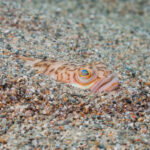
The sting of a weever fish can be extremely painful. Photo credit: Jesus Cobaleda/Shutterstock

Spanish coastal authorities are warning beachgoers about the seasonal presence of the weever fish (pez araña), a small but venomous species that can cause intense pain if stepped on in shallow water. The alert has recently been highlighted in Huelva, in western Andalucía, but experts say the fish can be found along much of Spain’s coastline, both in the Atlantic and the Mediterranean.

The warning has renewed attention on a risk that often increases during the warmer months, when more people enter shallow waters and the fish move closer to shore to bury themselves in sand.

Huelva alert highlights seasonal beach risk

In Huelva, local beach users were recently advised to be cautious after sightings of weever fish near the shoreline. The species is known to hide just beneath the sand in very shallow water, making it difficult to see and easy to step on accidentally.

Authorities in the area have reminded swimmers and walkers to avoid dragging their feet through the seabed and to be particularly careful in calm, sandy stretches close to the shore, where the fish are more likely to be present.

Although the alert has been reported locally in Huelva, marine specialists stress that this is not an isolated issue. The species is widely distributed along Spanish coasts, and similar warnings are issued periodically in other regions depending on conditions at sea.

Where the fish is found in spain

The weever fish is common in both Atlantic and Mediterranean waters surrounding Spain. On the Atlantic side, it can be found along Galicia, Asturias, Cantabria, the Basque Country and parts of Andalucía. On the Mediterranean coast, sightings are reported in Catalonia, the Valencian Community, Murcia and the Balearic Islands.

It tends to favour shallow sandy seabeds, often in water shallow enough for people to stand or wade in. This habitat preference is what brings it into contact with swimmers, especially during summer when beaches are busiest.

Marine biologists note that the fish buries itself almost completely under the sand, leaving only its eyes and the tips of its dorsal spines exposed. These spines contain venom used for defence, which is released when pressure is applied, such as when someone steps on it.

What makes the sting dangerous

The sting of a weever fish is not usually life-threatening, but it can be extremely painful. The venom causes immediate sharp pain at the site of the injury, which can spread quickly through the affected limb.

Common symptoms include:

  • severe and sudden pain 
  • swelling and redness 
  • dizziness or nausea in some cases 
  • occasional vomiting or fainting due to pain response 

While serious complications are rare, medical attention may be required if the reaction is severe or if the person is vulnerable due to allergies or other health conditions.

The main concern for authorities is not mortality risk but the intensity of the pain and the speed at which symptoms develop, which can cause distress in shallow water environments.

What residents and tourists should do

Beach users are being advised to take simple precautions to reduce the risk of injury. These include avoiding walking barefoot in shallow sandy areas where the fish may be buried and instead wearing protective footwear such as water shoes.

Swimmers are also encouraged to shuffle their feet rather than step normally when entering the sea, as this can disturb fish in the sand and encourage them to move away.

If someone is stung, the recommended first response is to:

  • leave the water safely and avoid further pressure on the affected area 
  • rinse the wound with seawater (not freshwater initially, as this can worsen pain) 
  • apply heat to the affected area, typically by immersing it in hot water as tolerated 
  • seek medical assistance if pain is severe or does not improve 

Heat is commonly advised because the venom is heat-sensitive, and warm water can help reduce its effects.

Wider seasonal pattern across spain

Experts say incidents involving weever fish tend to rise during late spring and summer. Warmer sea temperatures, calmer waters and increased beach activity all contribute to a higher likelihood of encounters.

Local authorities across Spain do not treat the fish as a rare or emerging threat, but rather as a known seasonal hazard. As a result, warnings are often issued when cases are reported in specific areas or when conditions suggest a higher risk.

In tourist-heavy regions, these reminders are considered particularly important, as many visitors may be unaware of the fish or unfamiliar with how to respond to a sting.

Awareness as the key prevention measure

Officials emphasise that the risk can be significantly reduced through awareness and simple behaviour changes. Most injuries occur when people unknowingly step on the fish in shallow, sandy water.

For this reason, coastal safety campaigns often focus on education rather than restriction, encouraging beachgoers to understand where the fish live and how to avoid accidental contact.

While the weever fish remains a small and largely hidden presence beneath Spain’s coastal waters, its sting is a reminder that even familiar beaches can carry seasonal risks that are not immediately visible from the surface.

Continue Reading

Trending

Copyright © 2017 Spanish Property & News